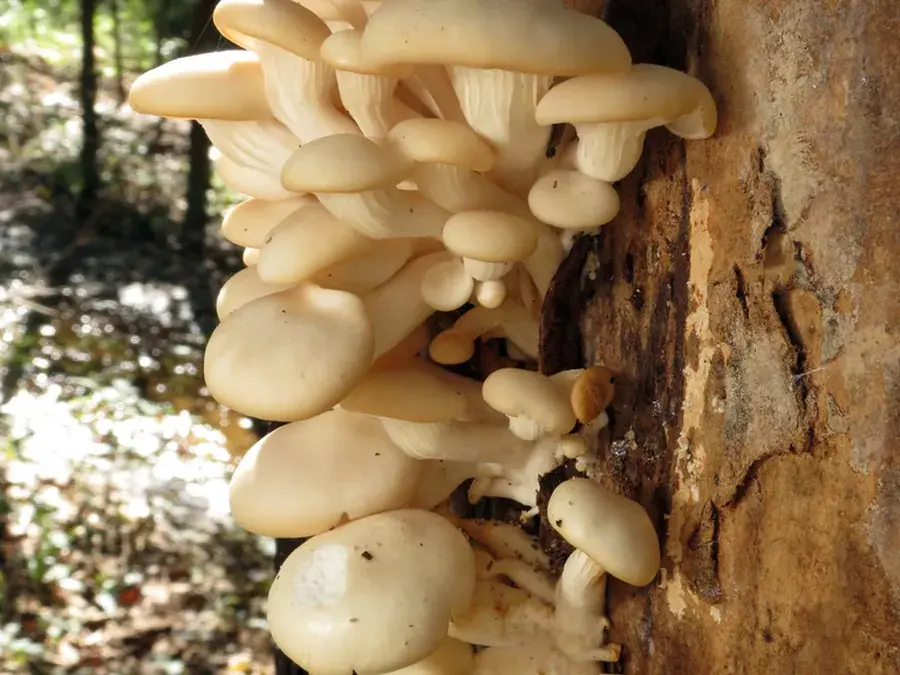
Photo by Katja Schulz on iNaturalist · CC BY 4.0
Oyster mushroom
Pleurotus ostreatus
- When
- Typically April – December — April, May, September, October, November, December. Earlier in the south, later in the north.
- Where it grows
- Dead and dying hardwood — poplar, willow, beech, maple. Fruits after cool rain, often in winter.
- How to know it
- Shelving clusters of oyster-shaped caps with white gills that run down a stubby off-centre stem or none at all. Faint anise smell.
- Look-alikes
- Ghost fungus and jack-o'-lantern are orange and grow from soil or buried roots. Little brown mushrooms with rings on the stem are never oysters.
- Harvest and use
- One of the safest and best beginner mushrooms. Roast hard so the edges crisp.
Found in these regions
- Boreal North & Taiga
- Boreal Forest & Shield
- Acadian Forest & Atlantic Coast
- Great Lakes & St. Lawrence Lowlands
- Northeast Atlantic Coast & Piedmont
- Appalachian Highlands
- Central Hardwoods & Interior Plateaus
- Southeastern Piedmont & Coastal Plain
- Gulf Coast & Mississippi Lowlands
- Florida Peninsula
- Prairies & Great Plains
- Western Mountains & Interior Plateaus
- Pacific Maritime
- Mediterranean California
- Deserts & Dry Basins
- Hawaiʻi & the Tropics
Is it ready near you?
Get this week's foraging guide for your area
Enter a town, postal code or ZIP and we'll tell you what's in season right there this week — from your local climate, this week's weather and your ecological region.
Also ready in September
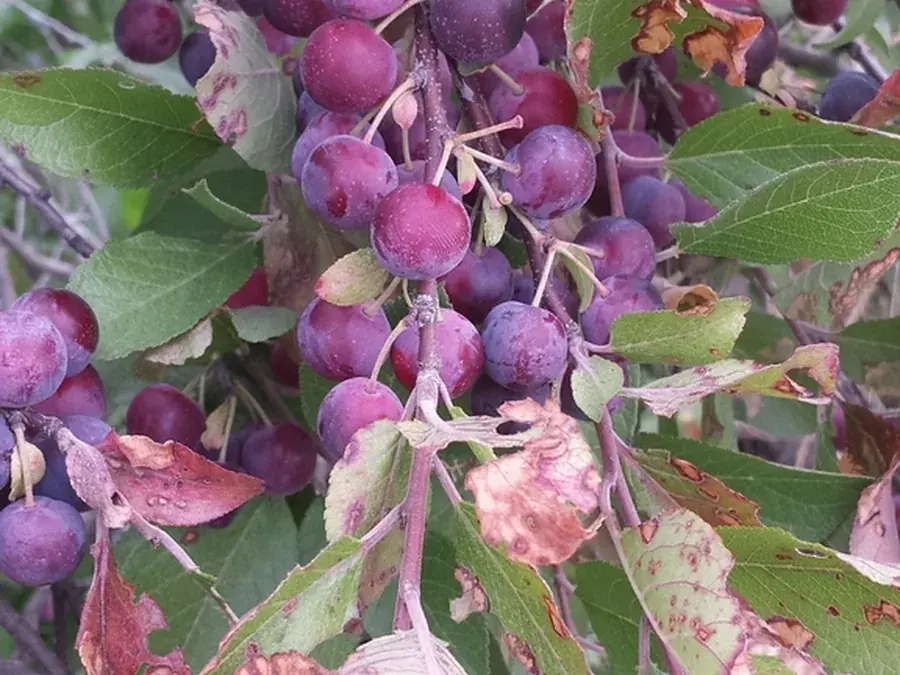 FruitAugust – September
Beach plum
Prunus maritima
Low sprawling shrub in the sand, with dusty purple plums about the size of a marble.
How to know it & its look-alikes →Photo: Tom Norton · CC BY 4.0
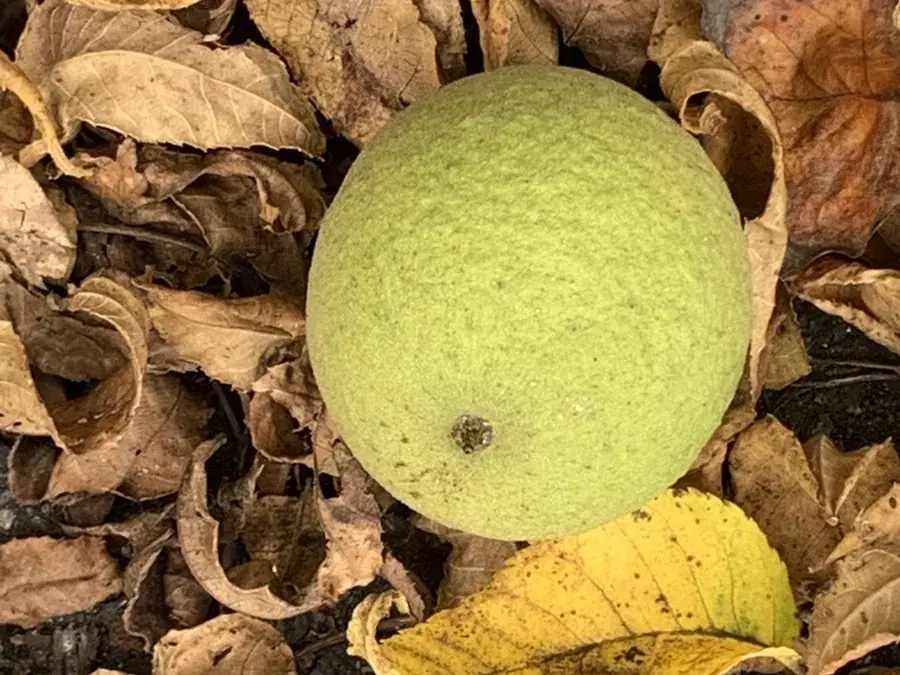 NutSeptember – October
Black walnut
Juglans nigra
Tennis-ball green husks lying under a tall tree with long compound leaves; the husk stains everything it touches brown.
How to know it & its look-alikes →Photo: Sandy Wolkenberg · CC BY 4.0
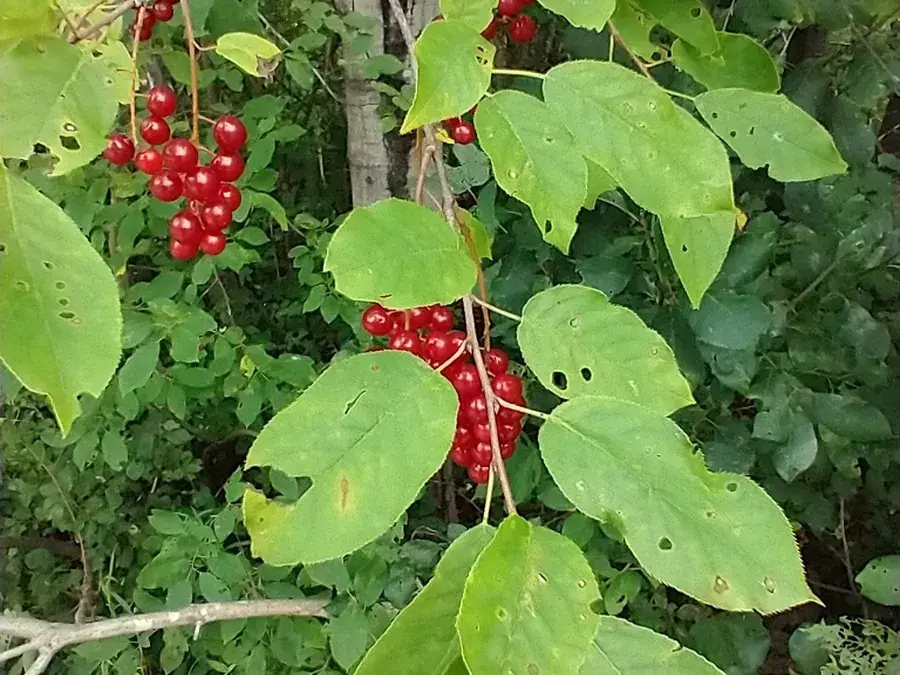 FruitAugust – September
Chokecherry
Prunus virginiana
Long drooping clusters of dark red-to-black cherries on a small tree with finely toothed oval leaves.
How to know it & its look-alikes →Photo: Tom Norton · CC BY 4.0
Educational information only. Never eat a wild plant or mushroom identified from a single photograph or description — confirm with a regional field guide or an experienced forager, and know the poisonous species in your area first.