Foraging · Calendar
The foraging year
Every wild edible in our guide, by the month it is usually ready. Dates are for the middle of each species' range — the south runs weeks earlier, the north weeks later, and your local guide narrows it to this week.
Right now · September
40 in season across the continent
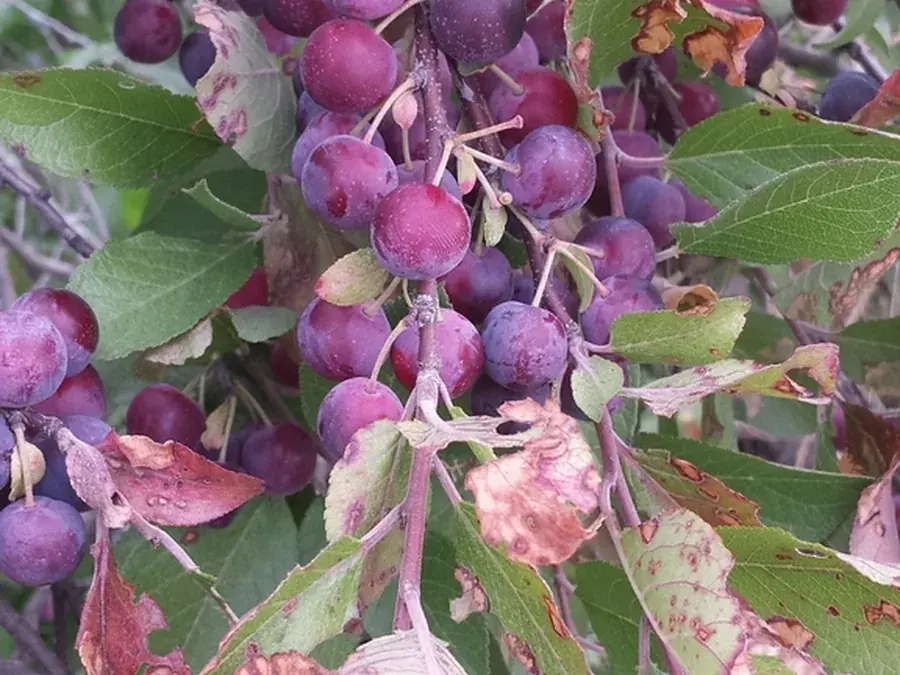 FruitAugust – September
Beach plum
Prunus maritima
Low sprawling shrub in the sand, with dusty purple plums about the size of a marble.
How to know it & its look-alikes →Photo: Tom Norton · CC BY 4.0
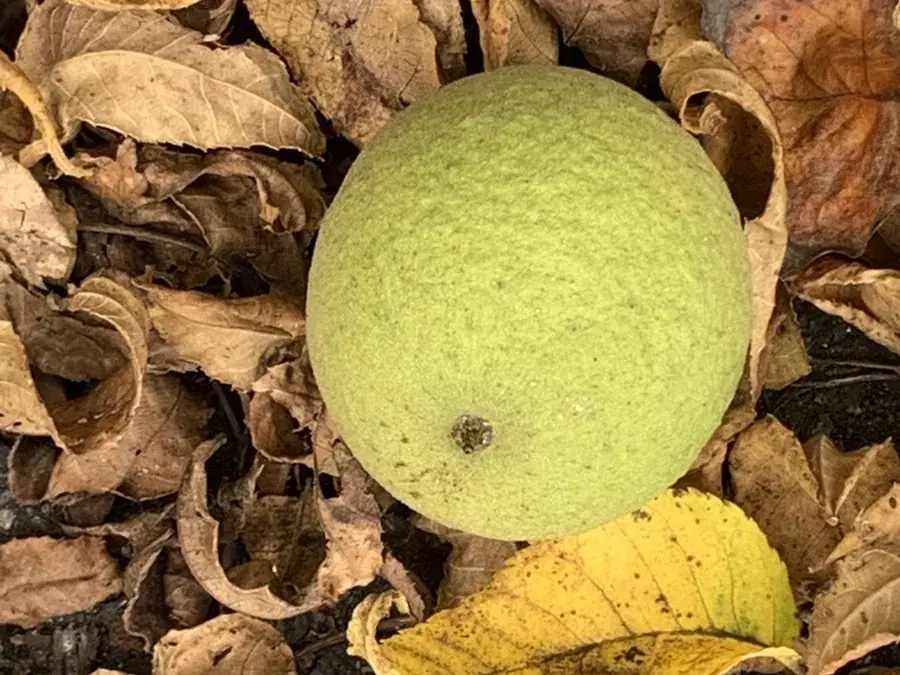 NutSeptember – October
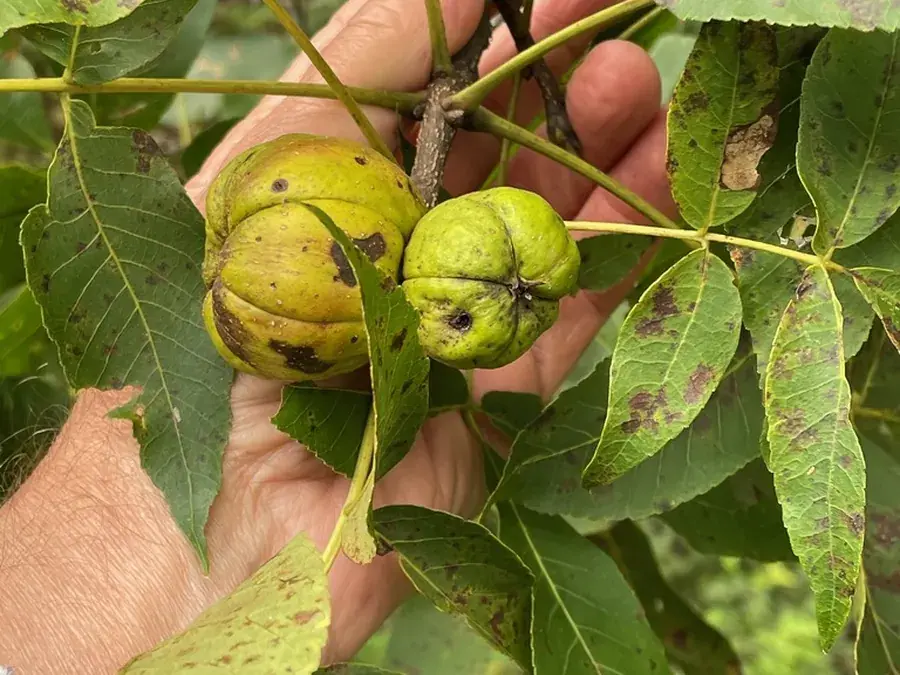
Black walnut
Juglans nigra
Tennis-ball green husks lying under a tall tree with long compound leaves; the husk stains everything it touches brown.
How to know it & its look-alikes →Photo: Sandy Wolkenberg · CC BY 4.0
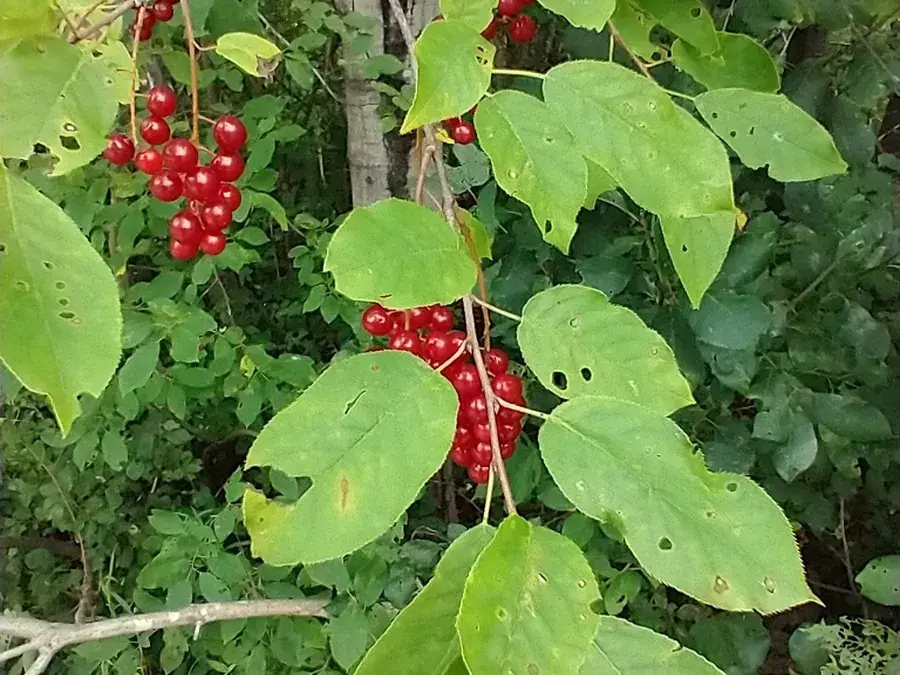 FruitAugust – September
Chokecherry
Prunus virginiana
Long drooping clusters of dark red-to-black cherries on a small tree with finely toothed oval leaves.
How to know it & its look-alikes →Photo: Tom Norton · CC BY 4.0
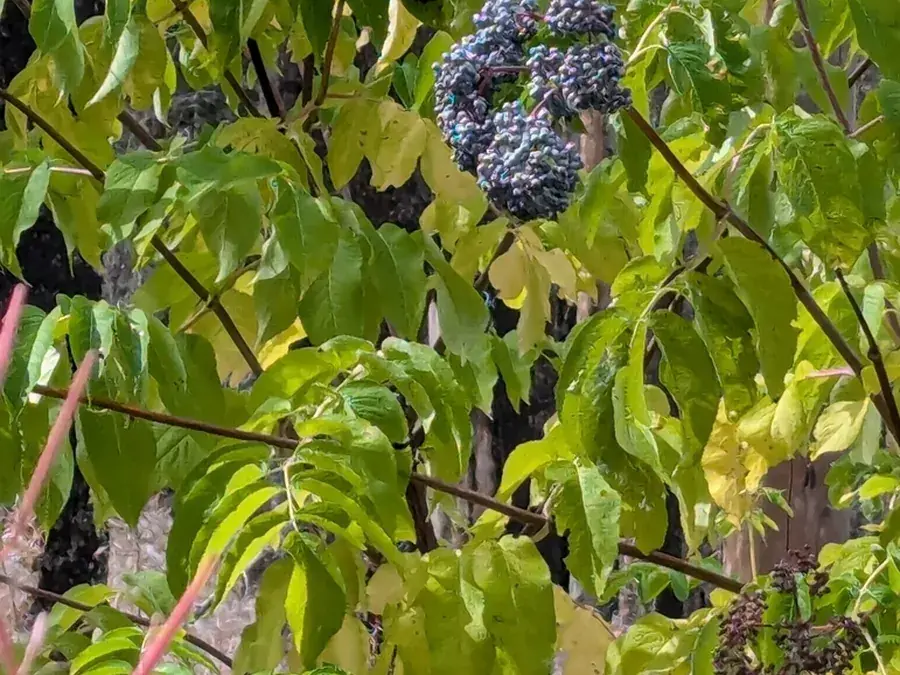 BerryAugust – September
Elderberries
Sambucus canadensis
Flat, heavy clusters of tiny purple-black berries on red-tinged stems, on a shrub with opposite compound leaves.
How to know it & its look-alikes →Photo: David Anderson · CC BY 4.0
 FruitSeptember – October
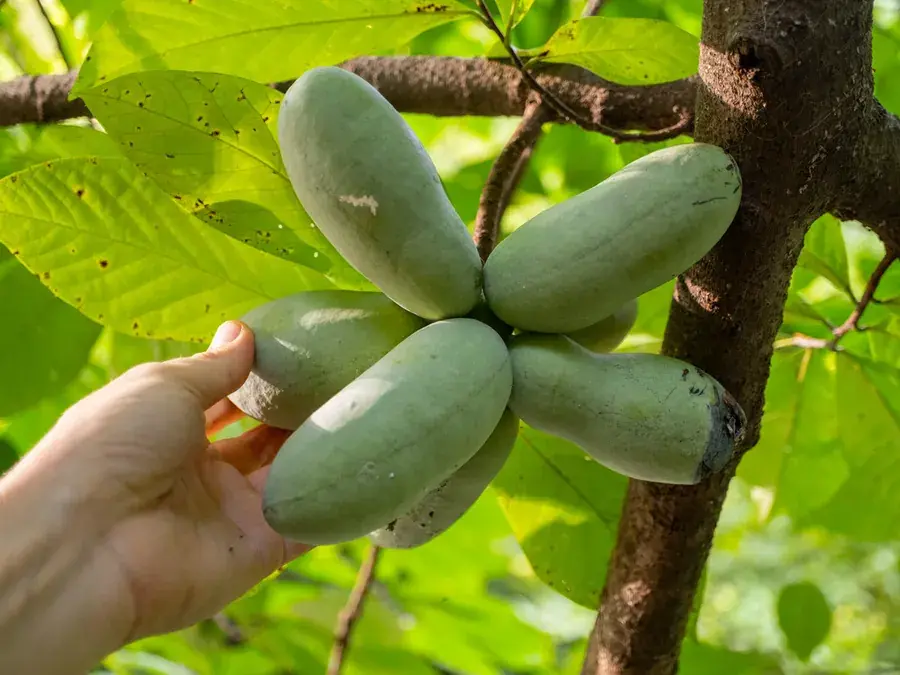
Pawpaw
Asimina triloba
Understorey tree with huge drooping leaves and green mango-shaped fruit; ripe ones fall and give to a gentle squeeze.
How to know it & its look-alikes →Photo: Alex Abair · CC BY 4.0
 BerryAugust – September
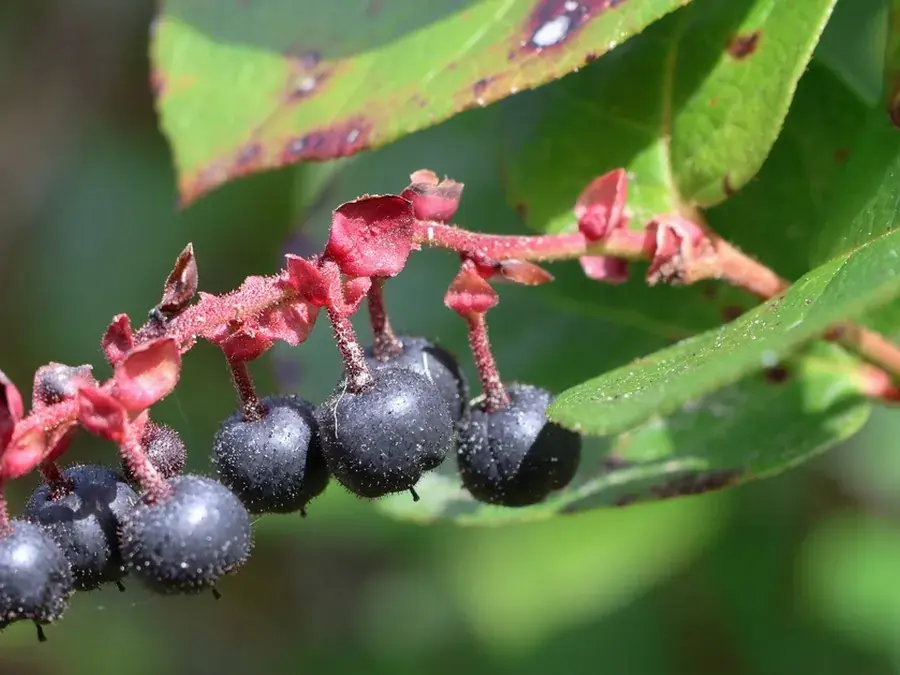
Salal
Gaultheria shallon
Leathery, glossy, egg-shaped leaves on a knee-to-shoulder-high shrub; hairy dark blue-black berries in a row along a reddish stalk.
How to know it & its look-alikes →Photo: Gail A Baker · CC BY 4.0
 NutSeptember – October
Shagbark hickory nuts
Carya ovata
Unmistakable bark peeling off in long vertical shaggy plates; husks split cleanly into four to release a pale, sweet nut.
How to know it & its look-alikes →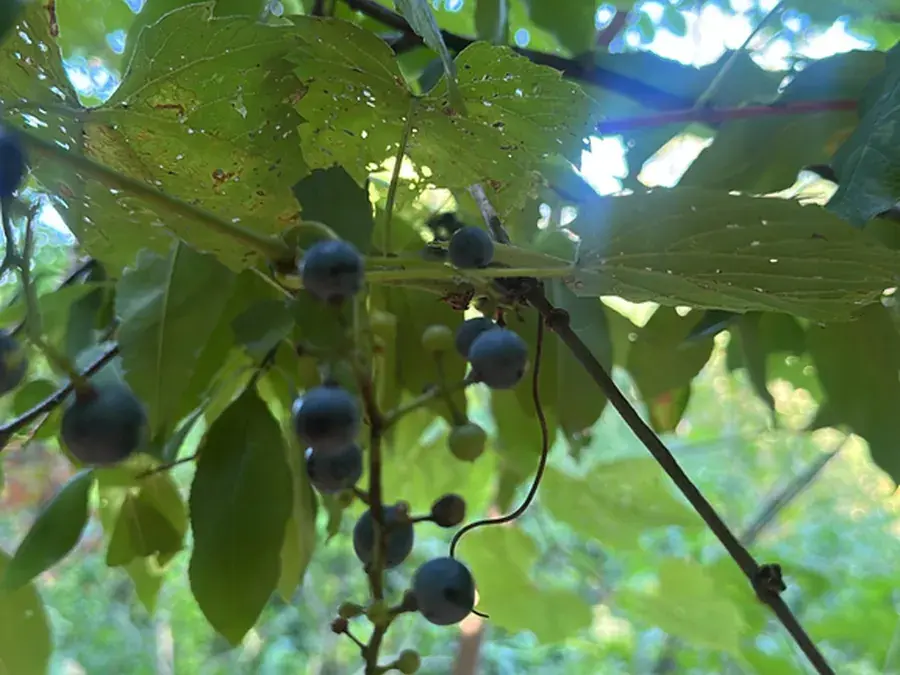 Has a dangerous look-alikeFruitSeptember – October
Wild grapes
Vitis riparia
Woody vine with shreddy bark and forked tendrils opposite the leaves; small purple-black grapes with seeds.
How to know it & its look-alikes →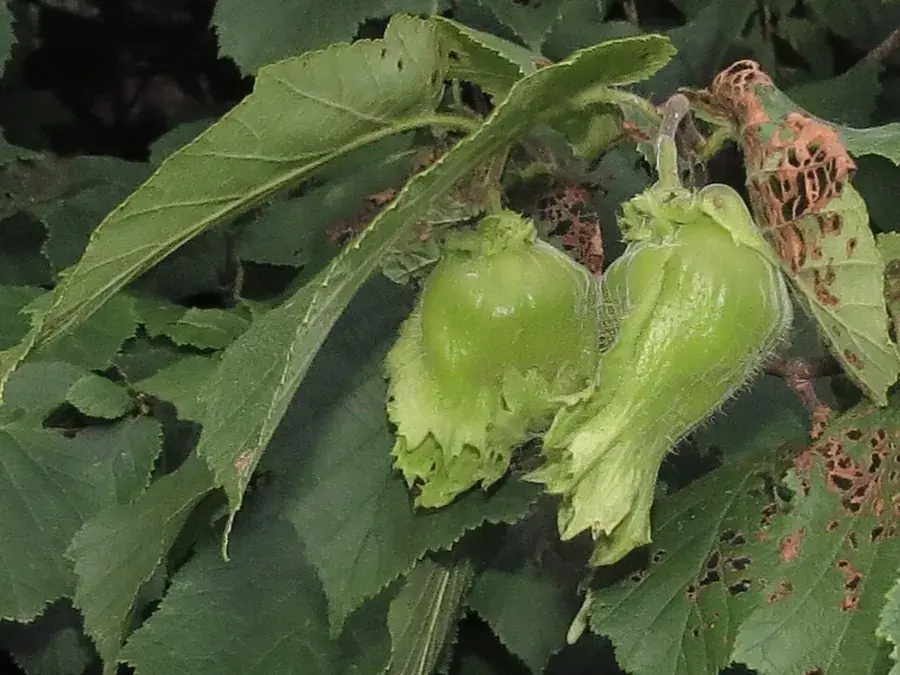 NutAugust – September
Wild hazelnuts
Corylus americana
Multi-stemmed shrub; nuts in clusters wrapped in ragged leafy husks.
How to know it & its look-alikes →Photo: Ilona · CC BY-SA 4.0
 GreenAugust – September
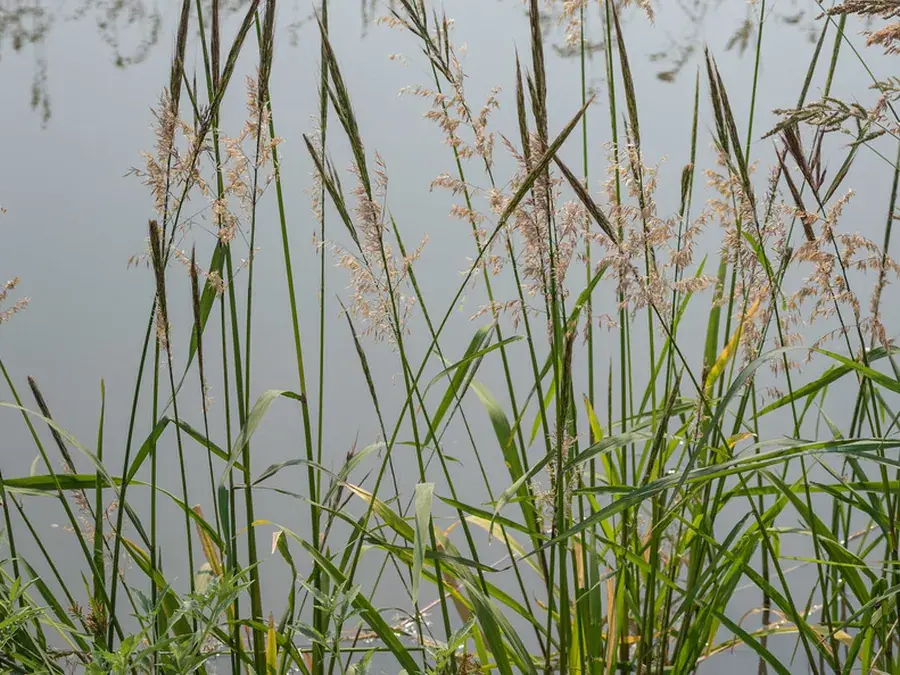
Wild rice
Zizania palustris
Tall grass standing above the water with a branching seed head; grain is long, dark and slips free when ripe.
How to know it & its look-alikes →Photo: Tim Messick · CC BY 4.0
 Has a dangerous look-alikeMushroomAugust – October
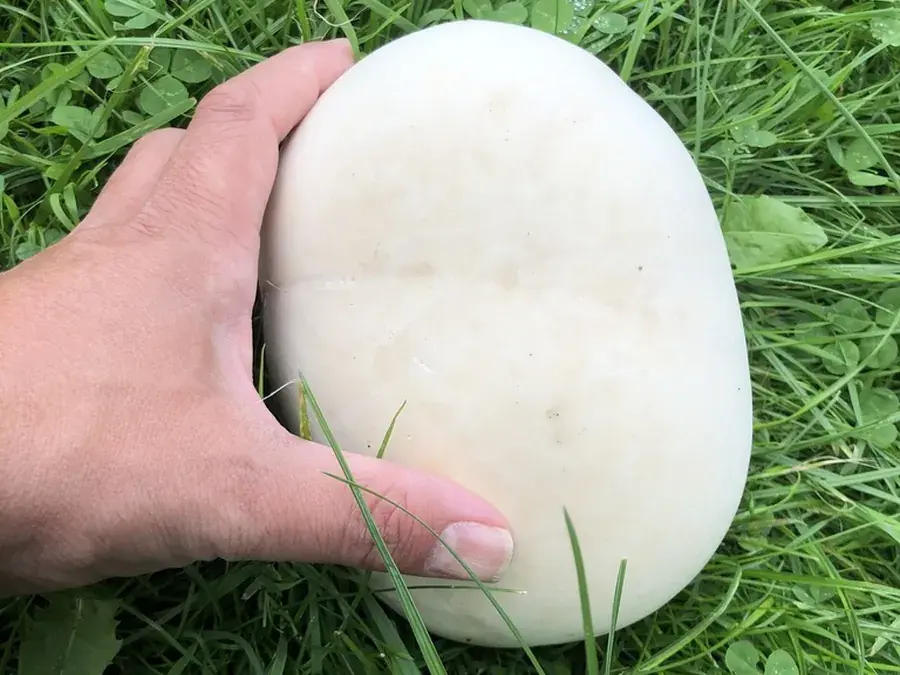
Giant puffball
Calvatia gigantea
Smooth white ball, football-sized or larger. Slice it top to bottom: it must be pure white and uniform like a marshmallow, with no gills, no outline of a mushroom, no yellowing.
How to know it & its look-alikes →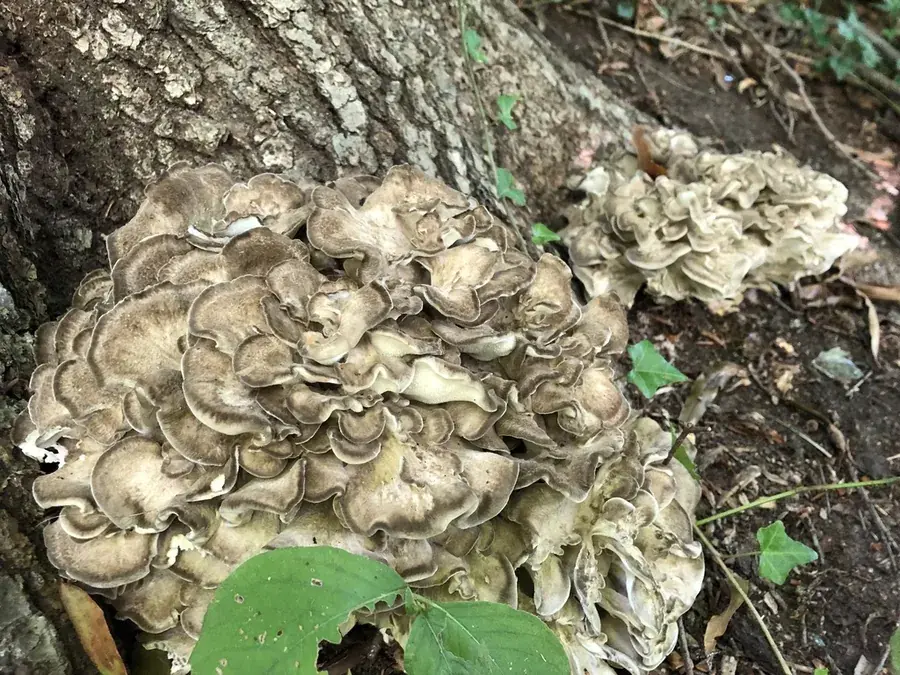 MushroomSeptember – November
Hen of the woods (maitake)
Grifola frondosa
A big grey-brown rosette of overlapping spoon-shaped fronds on a branching white stem, with pores underneath.
How to know it & its look-alikes →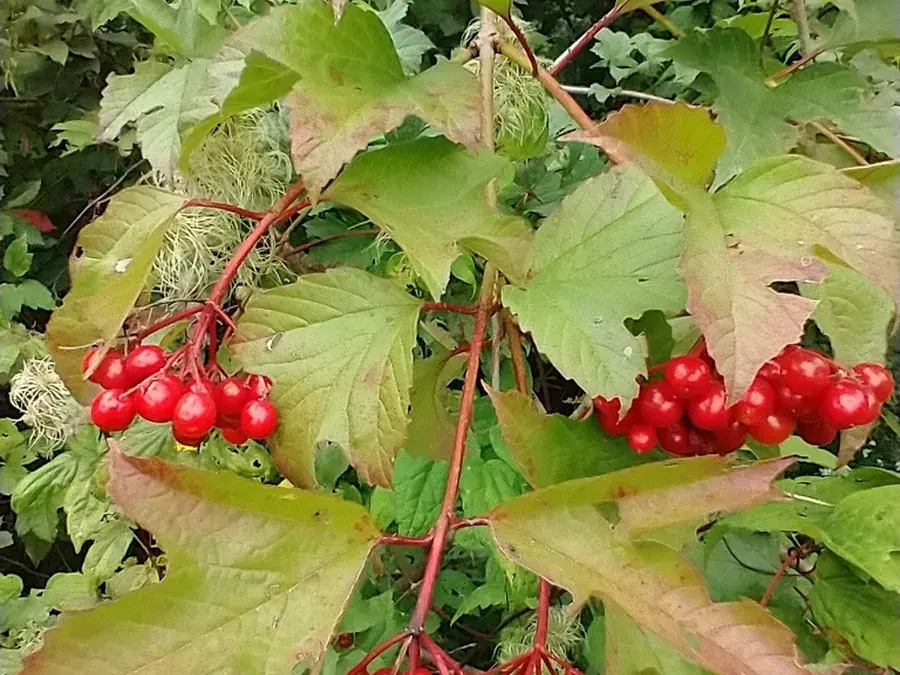 BerrySeptember – November
Highbush cranberry
Viburnum trilobum
Maple-like three-lobed leaves and translucent scarlet berries in flat clusters, each with one flat stone.
How to know it & its look-alikes →Photo: Tom Norton · CC BY 4.0
 BerryJuly – September
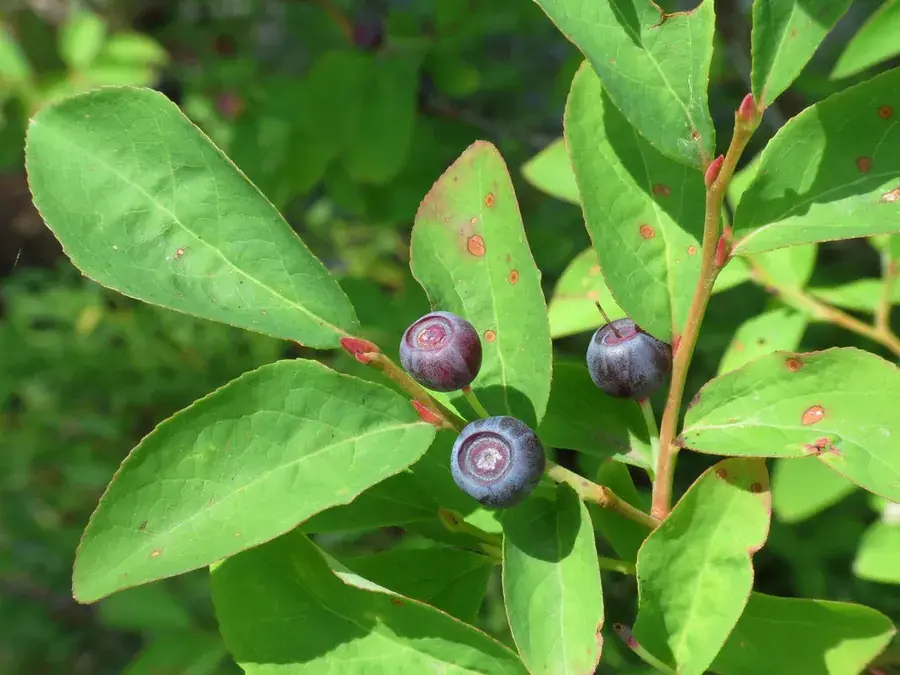
Huckleberries
Vaccinium membranaceum
Waist-high shrubs, thin oval leaves, single dark purple berries in the leaf axils — one per stem, not in clusters.
How to know it & its look-alikes →Photo: Katja Schulz · CC BY 4.0
 Has a dangerous look-alikeTreeSeptember – November
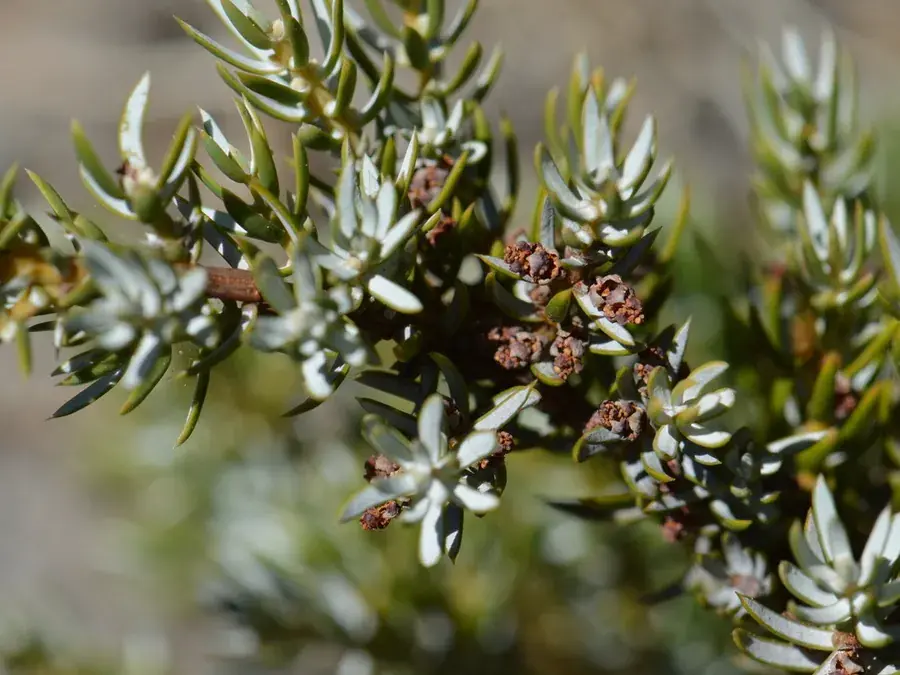
Juniper berries
Juniperus communis
Low spiky evergreen with needles in whorls of three, each with a white stripe on top; the 'berries' are fleshy blue cones that take two years to ripen.
How to know it & its look-alikes →Photo: David Anderson · CC BY 4.0
 MushroomSeptember – November
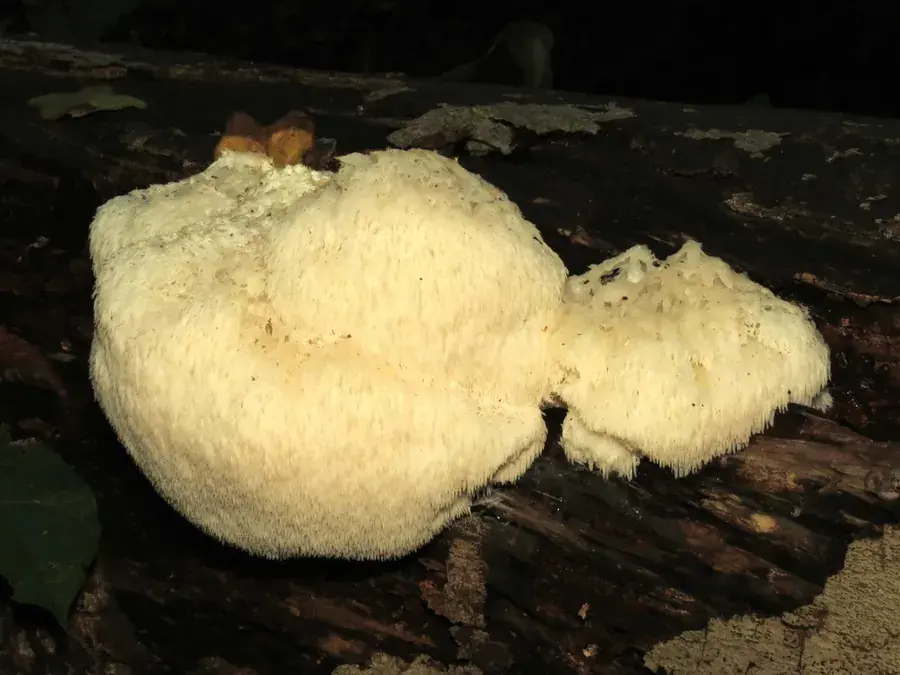
Lion's mane
Hericium erinaceus
A white pom-pom of soft downward-hanging spines, growing straight out of a tree trunk.
How to know it & its look-alikes →Photo: Katja Schulz · CC BY 4.0
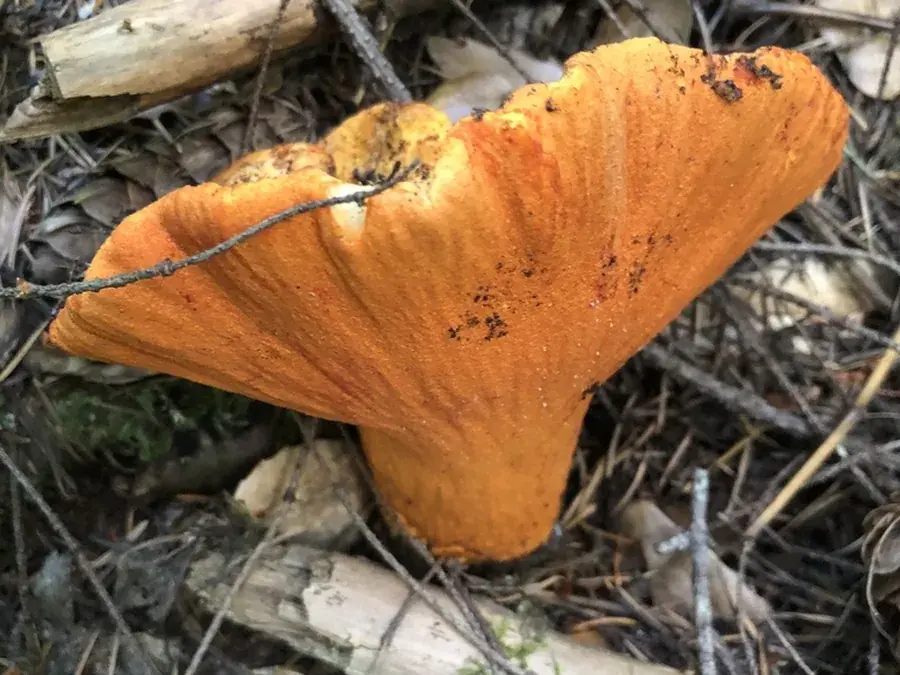 MushroomAugust – October
Lobster mushroom
Hypomyces lactifluorum
Not a mushroom but a parasitic mould that turns its host bright orange-red and pimply, with a hard, seafood-smelling white flesh.
How to know it & its look-alikes →Photo: Matt D'Agrosa · CC BY 4.0
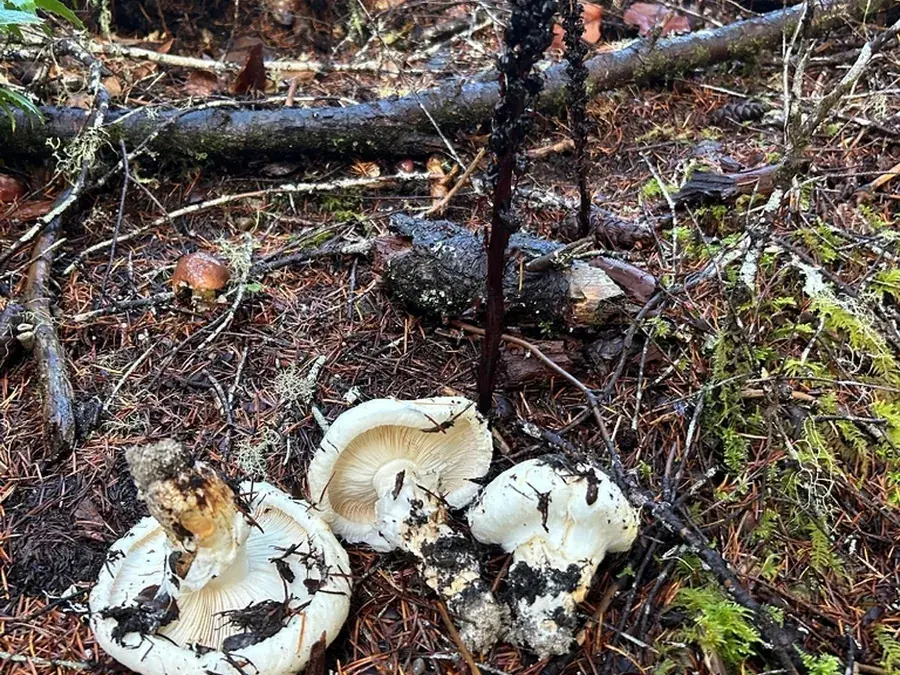 Has a dangerous look-alikeMushroomSeptember – November
Matsutake (pine mushroom)
Tricholoma murrillianum
White to buff, dense and heavy, with a distinctive cinnamon-and-gym-socks smell you can identify blindfolded. Gills white, with a partial veil.
How to know it & its look-alikes →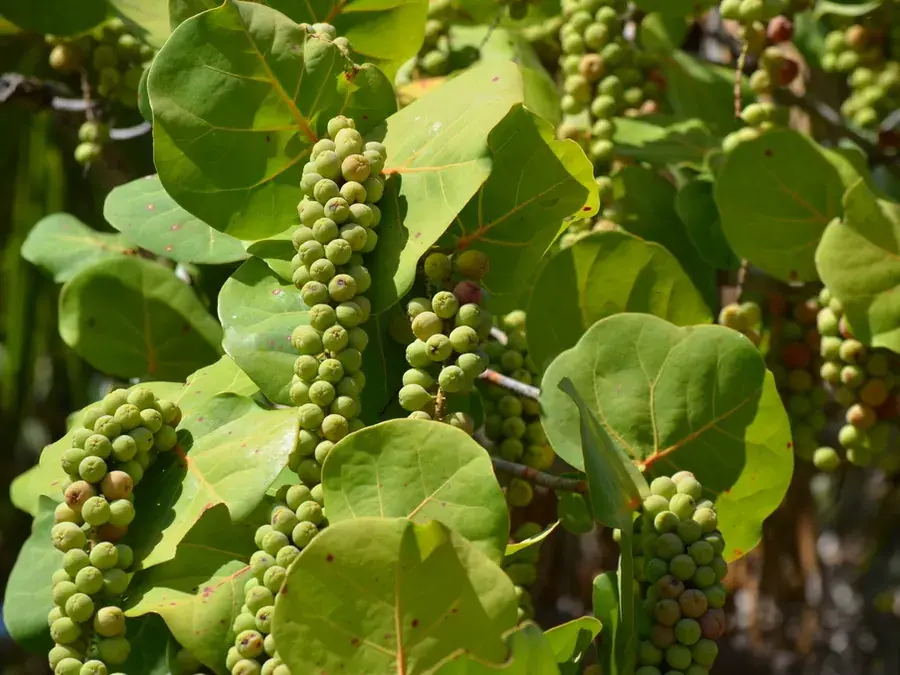 Has a dangerous look-alikeFruitAugust – October
Sea grape
Coccoloba uvifera
Big round leathery leaves with red veins; grape-like clusters that ripen unevenly to purple.
How to know it & its look-alikes →Photo: Josiah Londerée · CC BY 4.0
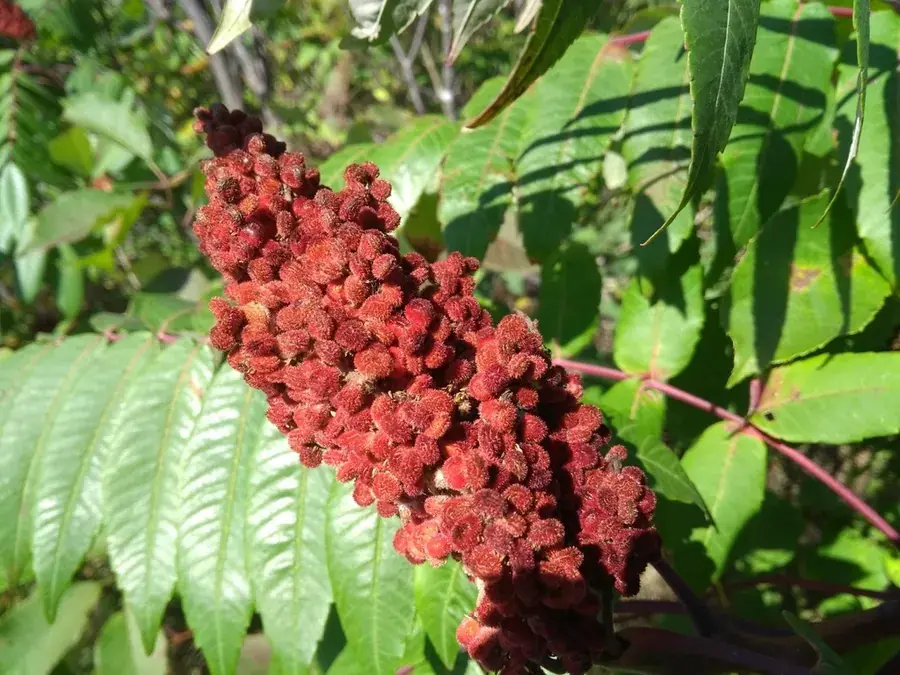 FruitAugust – October
Staghorn sumac
Rhus typhina
Upright, fuzzy, deep-red cone-shaped clusters on velvety branches. Red and upright is the rule.
How to know it & its look-alikes →Photo: Liren Varghese · CC BY 4.0
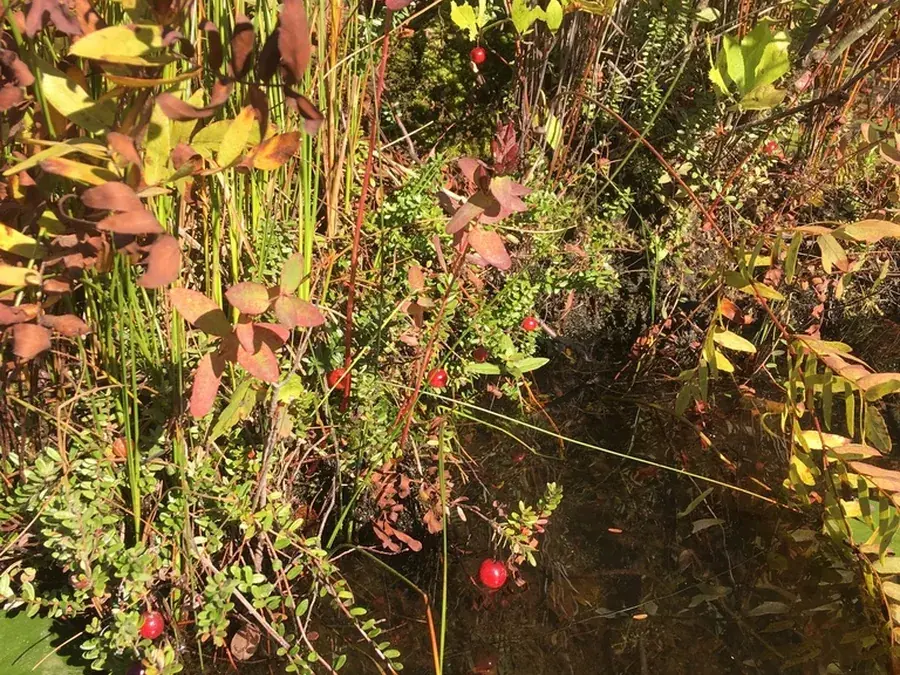 BerrySeptember – November
Wild cranberry
Vaccinium macrocarpon
Thin trailing vines through the moss with tiny evergreen leaves; hard red berries sitting on top of the moss.
How to know it & its look-alikes →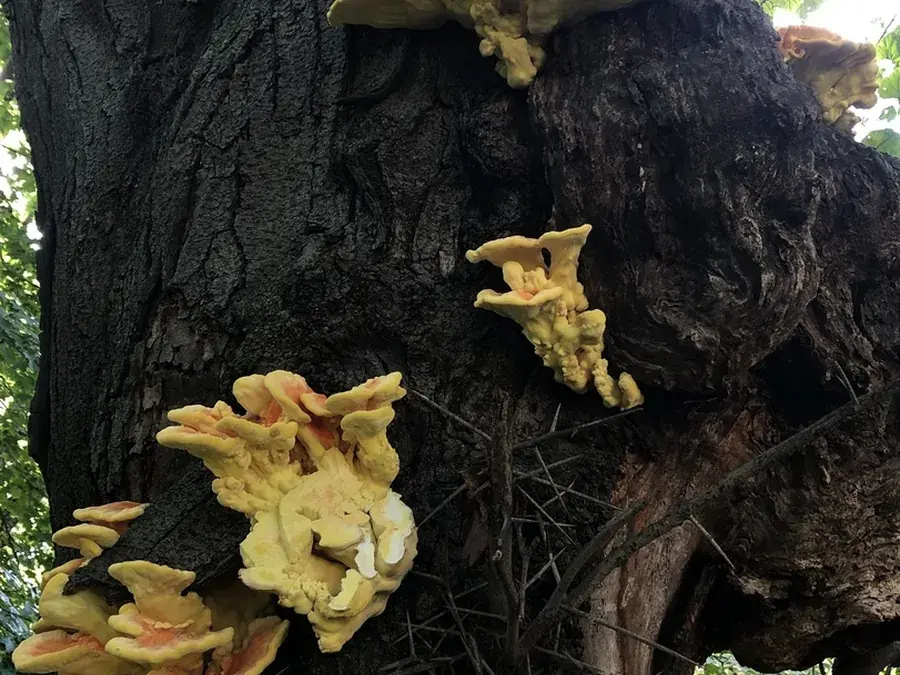 MushroomJuly – October
Chicken of the woods
Laetiporus sulphureus
Overlapping fan-shaped brackets, bright orange on top, sulphur-yellow underneath with tiny pores — never gills.
How to know it & its look-alikes →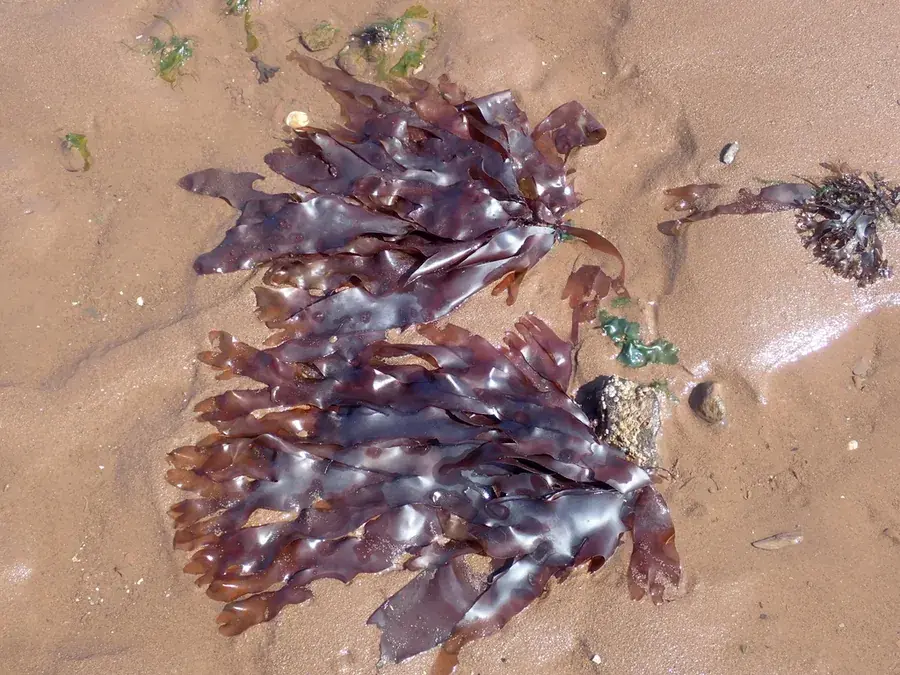 CoastalJune – September
Dulse
Palmaria palmata
Flat, hand-shaped, deep red-purple fronds with no midrib, attached by a small disc.
How to know it & its look-alikes →Photo: Ian Manning · CC BY 4.0
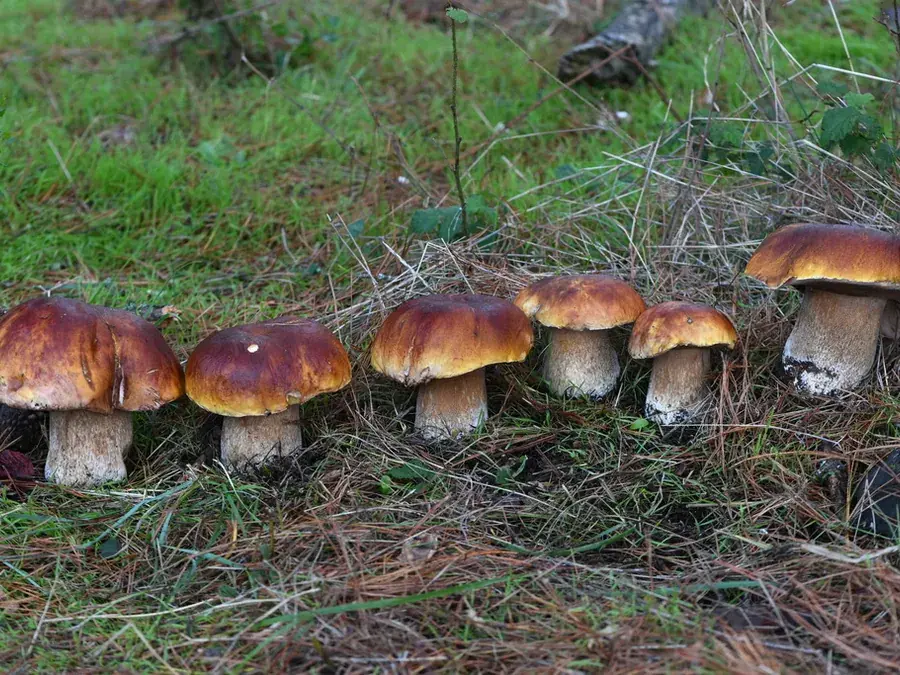 MushroomAugust – November
King bolete (porcini)
Boletus edulis
Fat white stem with a fine raised net near the top, brown 'bun' cap, and a sponge of white-to-yellow pores that never stain blue.
How to know it & its look-alikes →Photo: Alan Rockefeller · CC BY 4.0
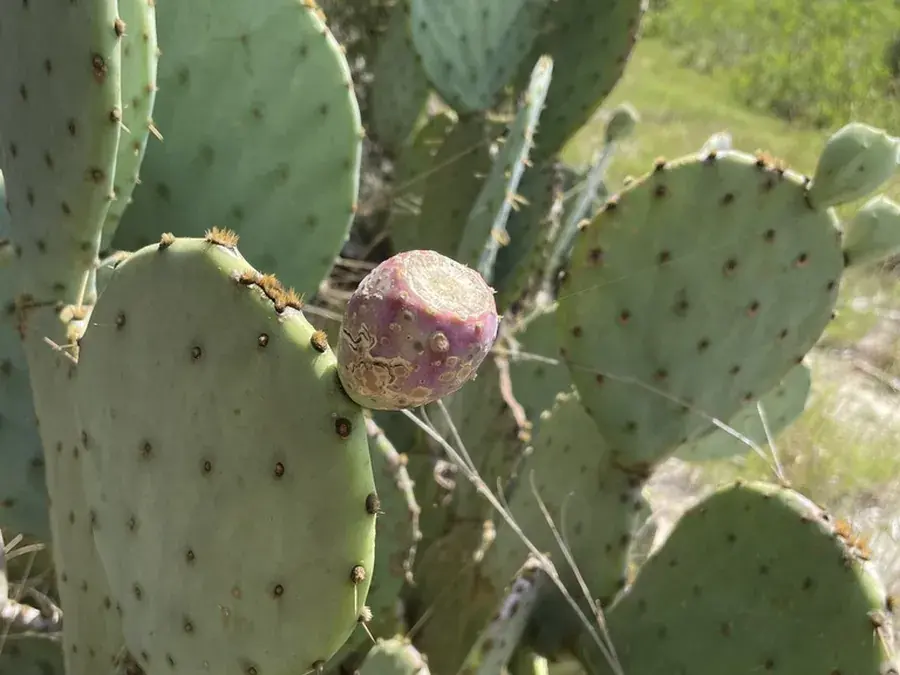 FruitJune – September
Prickly pear (tunas & nopales)
Opuntia engelmannii
Flat paddle cactus; the fruit (tuna) sits on the paddle rim and ripens deep magenta. Both fruit and young pads are used.
How to know it & its look-alikes →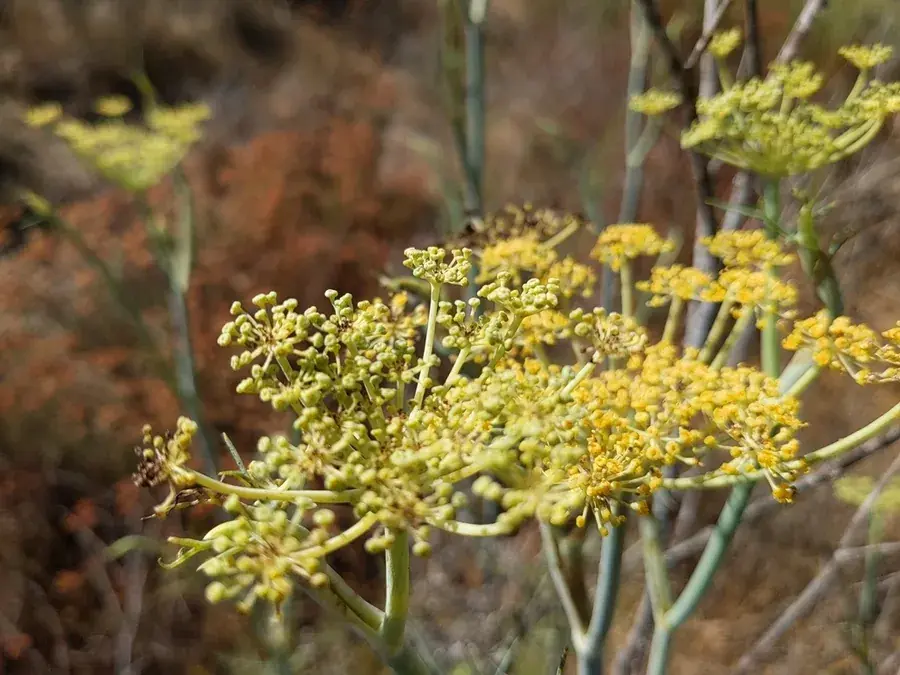 Has a dangerous look-alikeGreenMay – October
Wild fennel
Foeniculum vulgare
Tall feathery blue-green plant with an unmistakable anise smell; ribbed, solid green stems and yellow umbels.
How to know it & its look-alikes →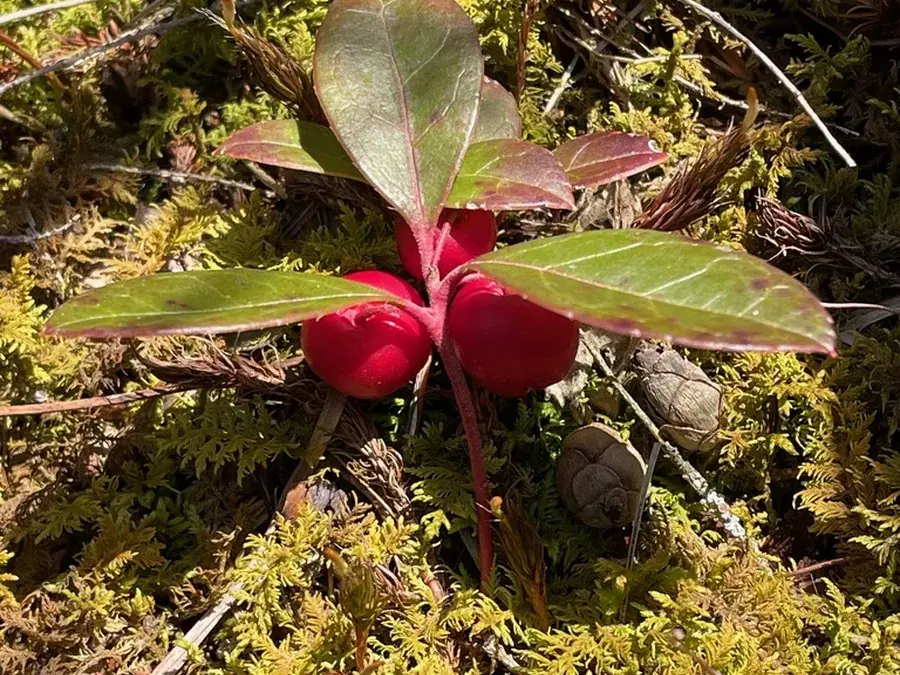 BerrySeptember – April
Wintergreen (teaberry)
Gaultheria procumbens
Ankle-high evergreen with thick glossy oval leaves and a bright red berry; crush a leaf and it smells exactly of wintergreen.
How to know it & its look-alikes →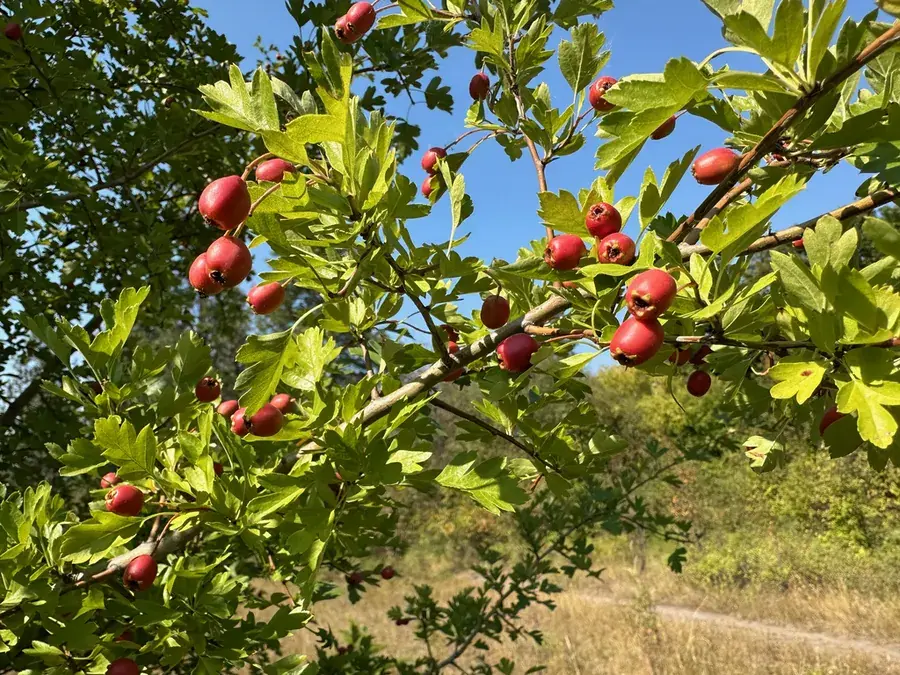 FruitSeptember – October
Hawthorn berries
Crataegus spp.
Thorny small tree with lobed leaves and clusters of small red haws, each holding one to five hard stones. Cut one open to see the stones.
How to know it & its look-alikes →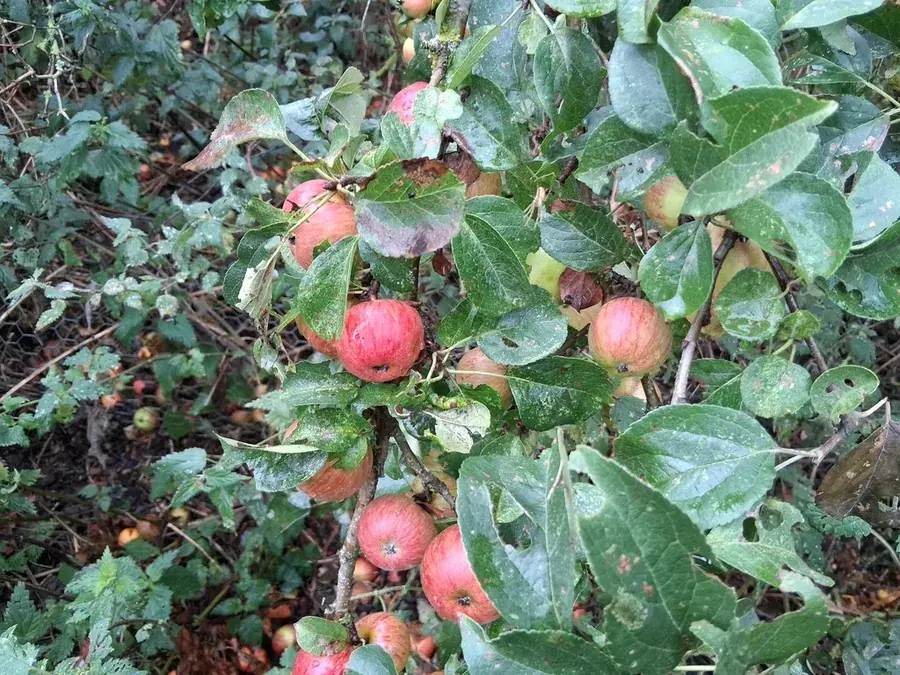 FruitSeptember – October
Wild and abandoned apples
Malus pumila
An apple tree gone feral: small, spotty, often superb fruit. Every seedling tree is genetically unique.
How to know it & its look-alikes →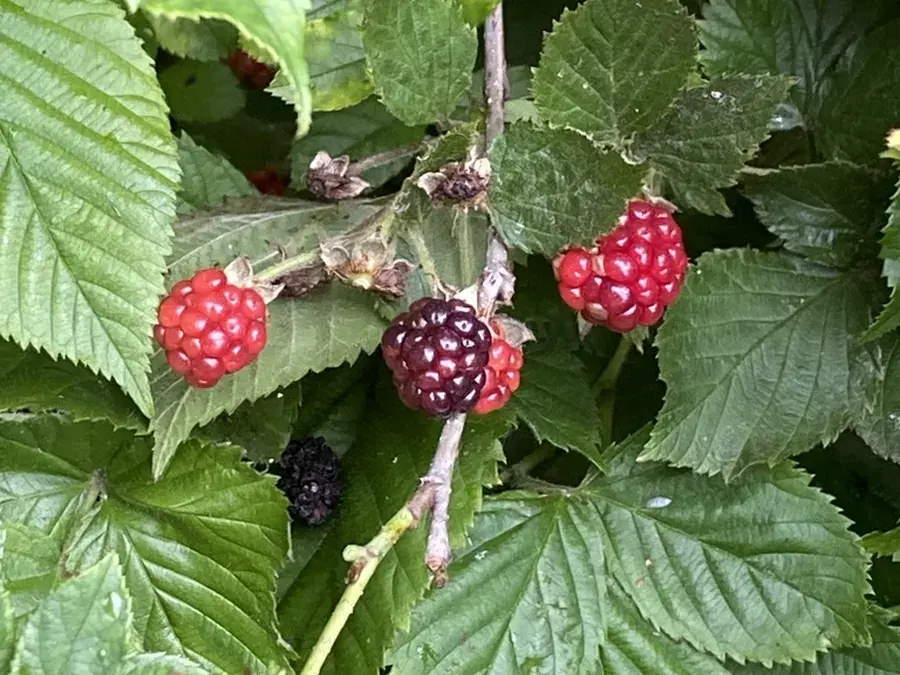 BerryAugust – September
Wild blackberries
Rubus allegheniensis
Berry keeps its white core when picked (unlike raspberry). Thorny arching canes, five leaflets.
How to know it & its look-alikes →Photo: Sandy Wolkenberg · CC BY 4.0
 NutSeptember – November
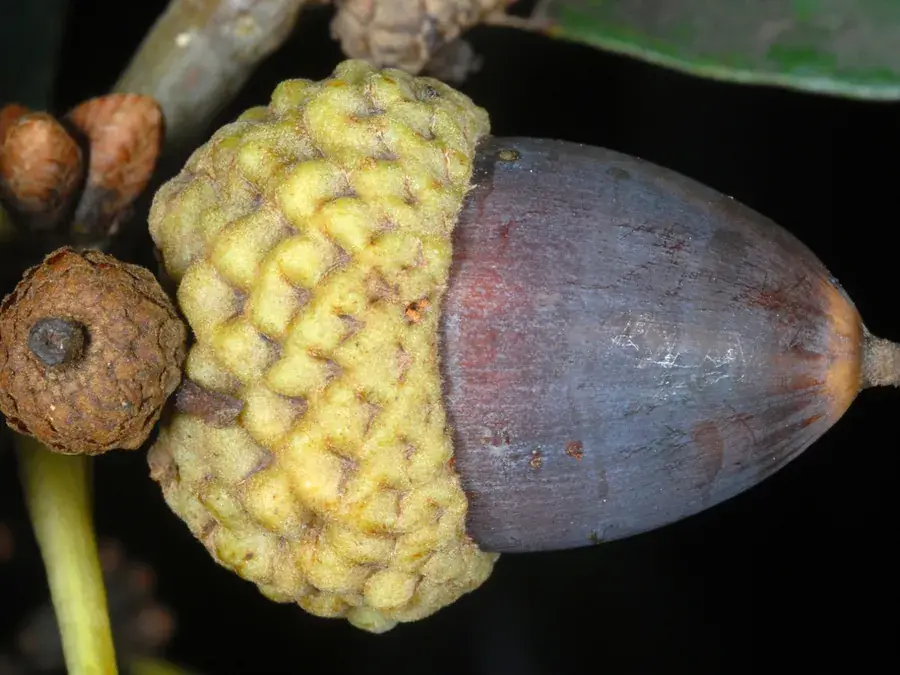
Acorns
Quercus spp.
Collect brown, freshly fallen nuts with no weevil holes; float them in water and discard the ones that swim.
How to know it & its look-alikes →Photo: Douglas Goldman · CC BY-SA 4.0
 FruitSeptember – November
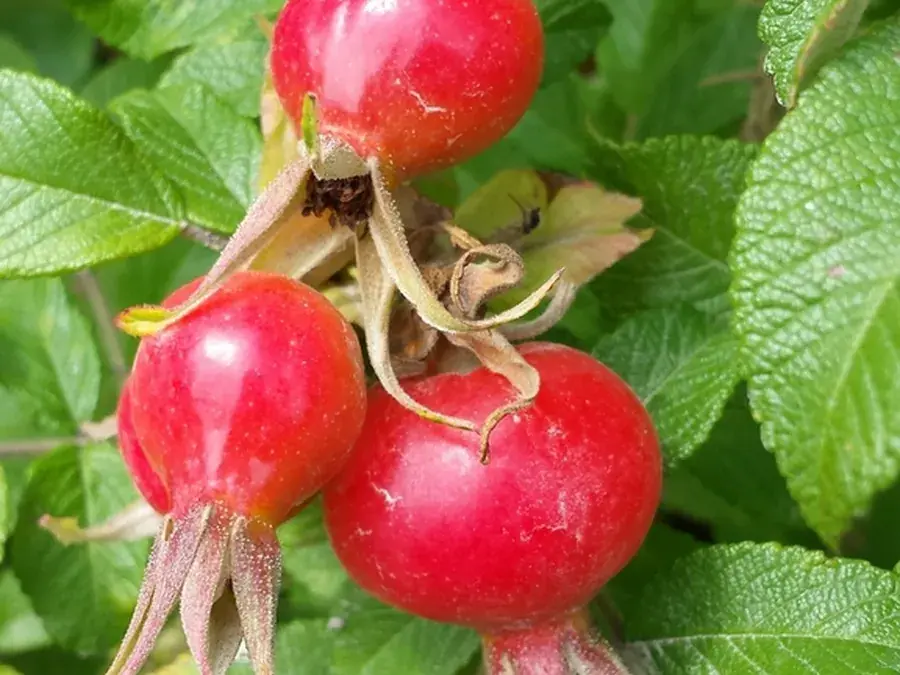
Rose hips
Rosa rugosa
The red-orange fruit left after a wild rose blooms, topped with a dried five-pointed crown of sepals.
How to know it & its look-alikes →Photo: Tom Norton · CC BY 4.0
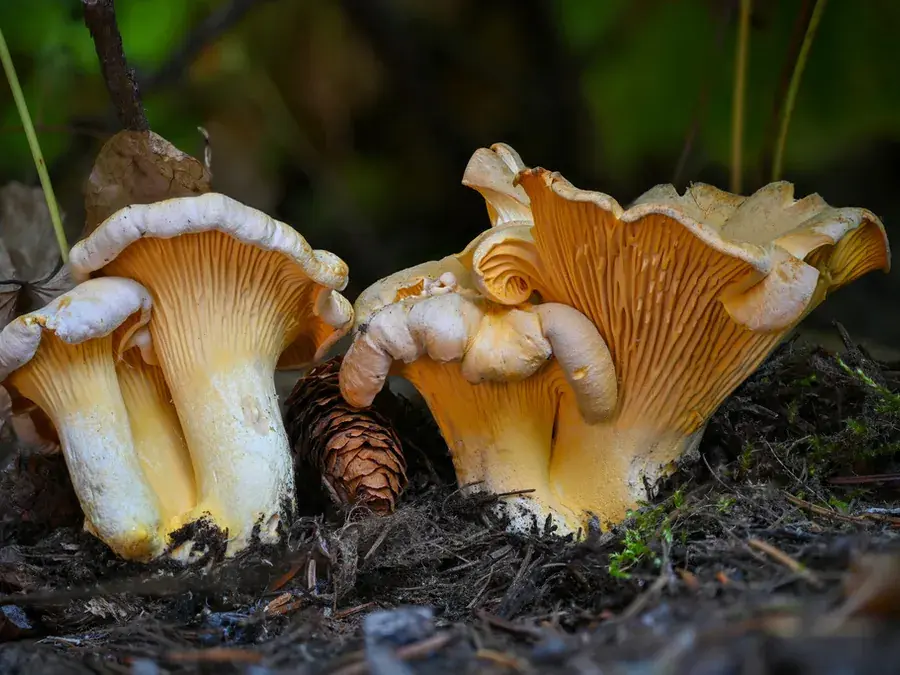 MushroomJuly – October
Golden chanterelle
Cantharellus cibarius
Egg-yolk to apricot yellow, vase or trumpet shaped, with blunt forking false gills that run down the stem like melted wax. Smells of apricots.
How to know it & its look-alikes →Photo: Alan Rockefeller · CC BY 4.0
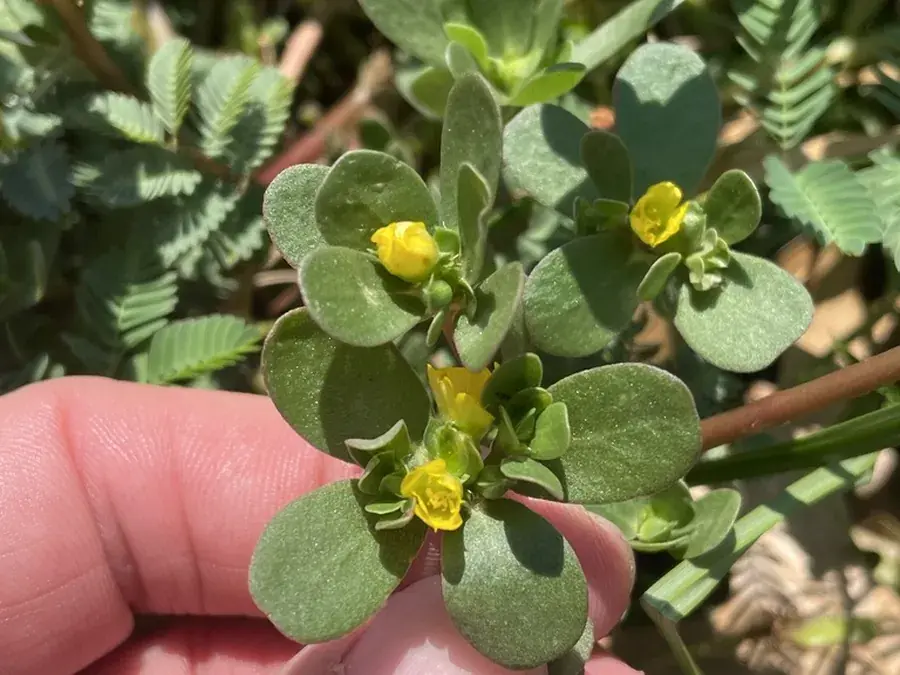 GreenJune – September
Purslane
Portulaca oleracea
Prostrate mats of smooth red stems with fat, glossy, paddle-shaped succulent leaves. No hairs, no milky sap.
How to know it & its look-alikes →Photo: Sam Kieschnick · CC BY 4.0
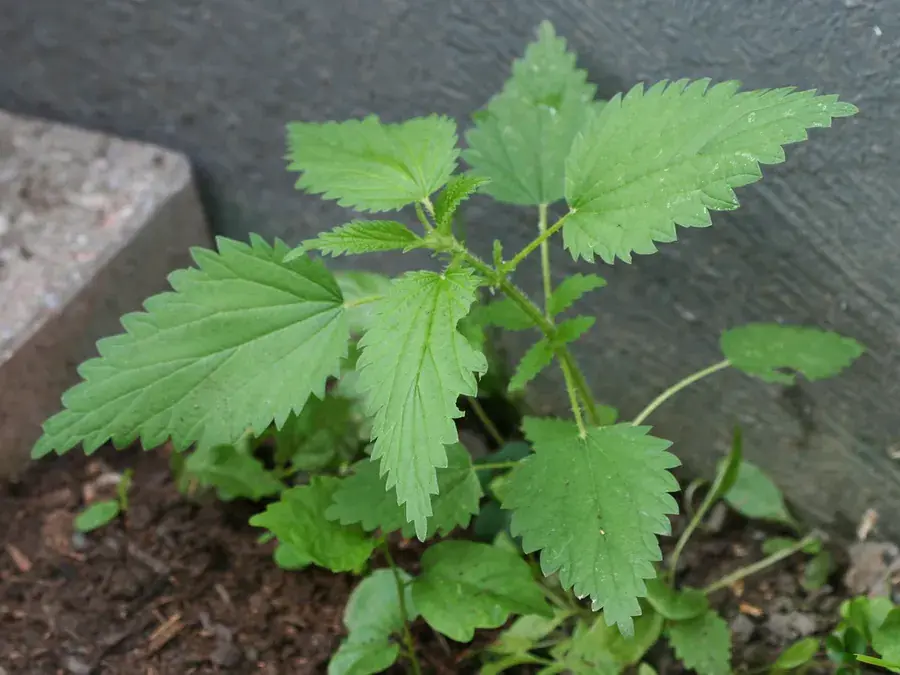 GreenApril – September
Stinging nettle
Urtica dioica
Opposite, deeply toothed, heart-based leaves on a square stem, covered in stinging hairs. The sting is the identification.
How to know it & its look-alikes →Photo: Randy A Nonenmacher · CC BY 4.0
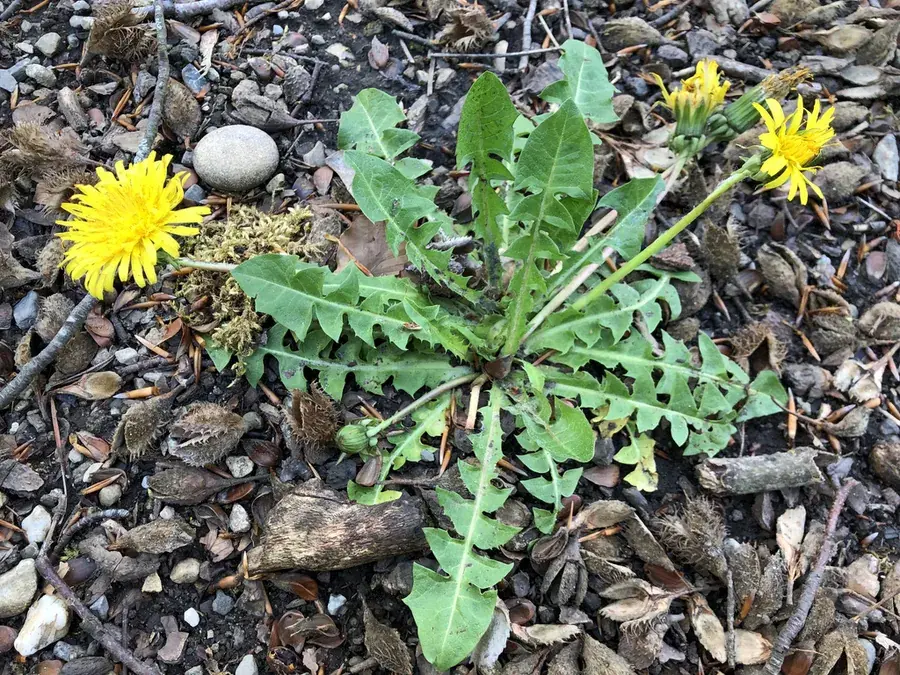 GreenMarch – October
Dandelion
Taraxacum officinale
A basal rosette of jagged, backward-pointing lobes, a hollow leafless stalk with milky sap, and one flower per stalk.
How to know it & its look-alikes →Photo: Jason Grant · CC BY 4.0
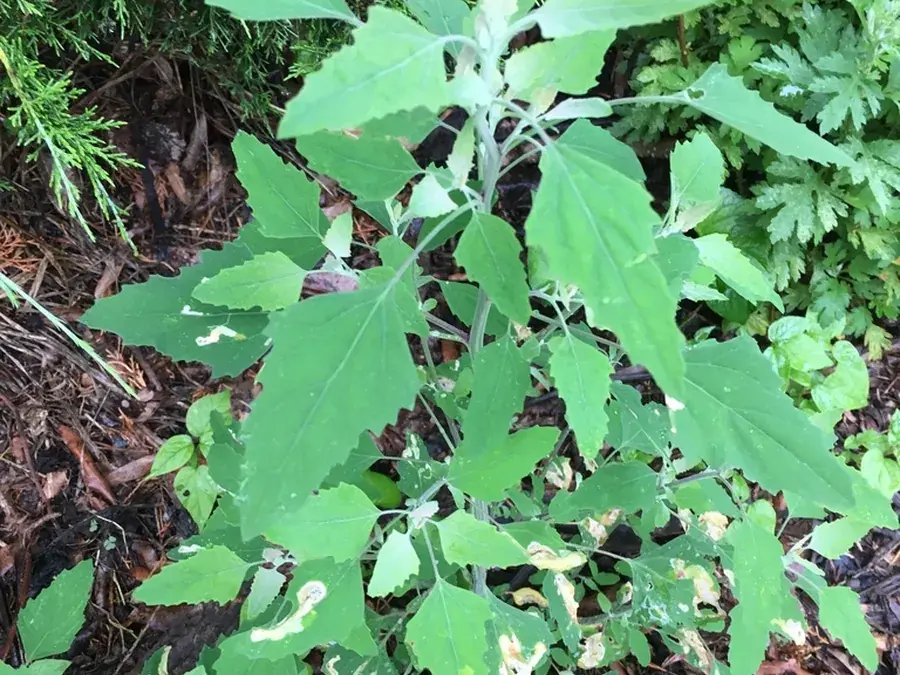 GreenMay – September
Lamb's quarters
Chenopodium album
Goosefoot-shaped leaves with a mealy white bloom on the undersides that beads water; ridged stems, often red-streaked.
How to know it & its look-alikes →Photo: Antonia Bookbinder · CC BY-SA 4.0
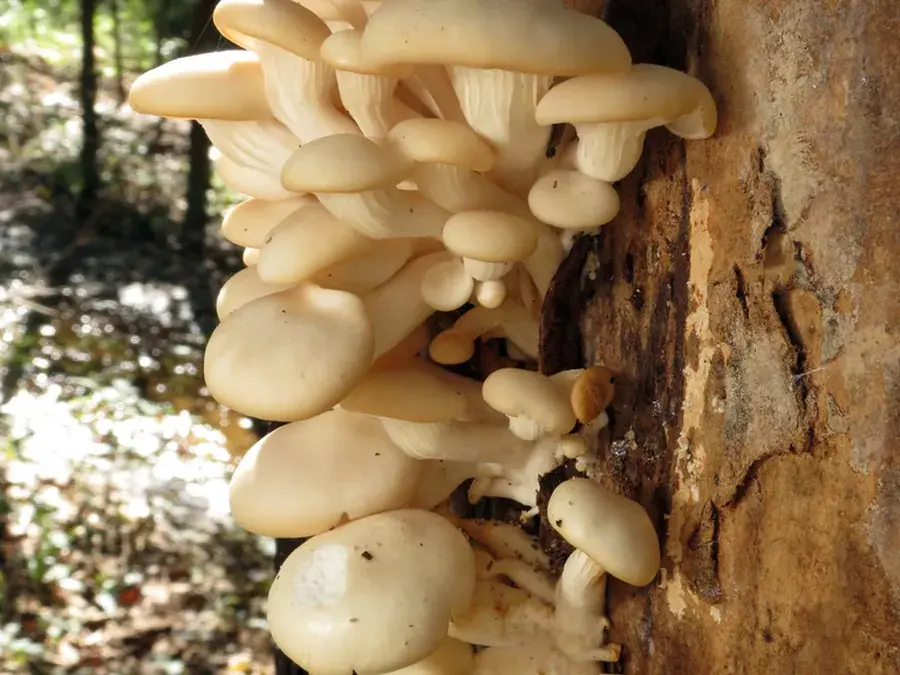 MushroomApril – December
Oyster mushroom
Pleurotus ostreatus
Shelving clusters of oyster-shaped caps with white gills that run down a stubby off-centre stem or none at all. Faint anise smell.
How to know it & its look-alikes →Photo: Katja Schulz · CC BY 4.0
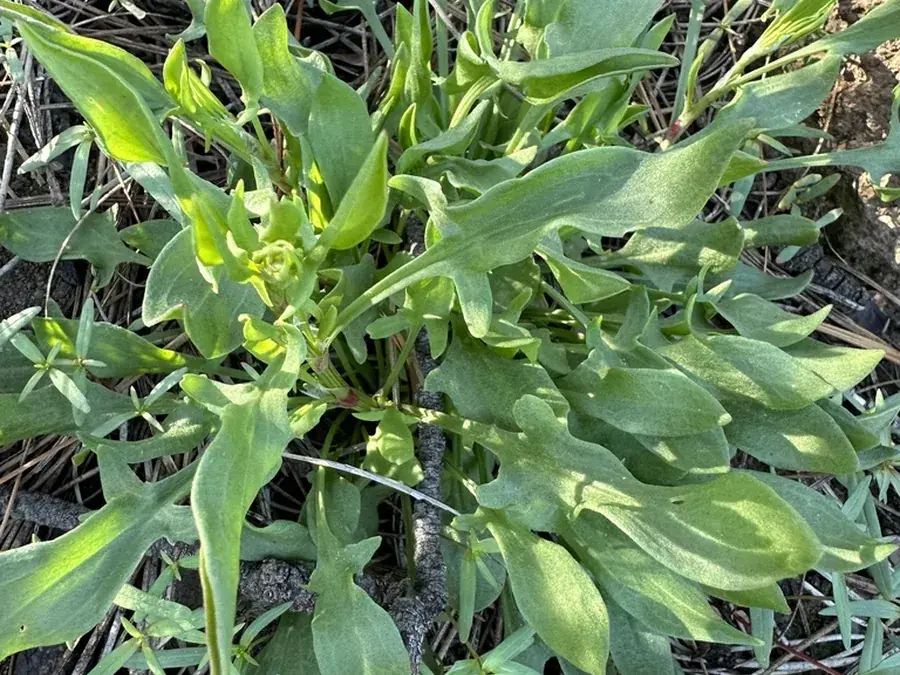 GreenApril – September
Sheep sorrel
Rumex acetosella
Small arrow-shaped leaves with two backward-pointing lobes at the base, on a wiry reddish stem. Sharply lemony taste.
How to know it & its look-alikes →Photo: Kieran Hanrahan · CC BY 4.0
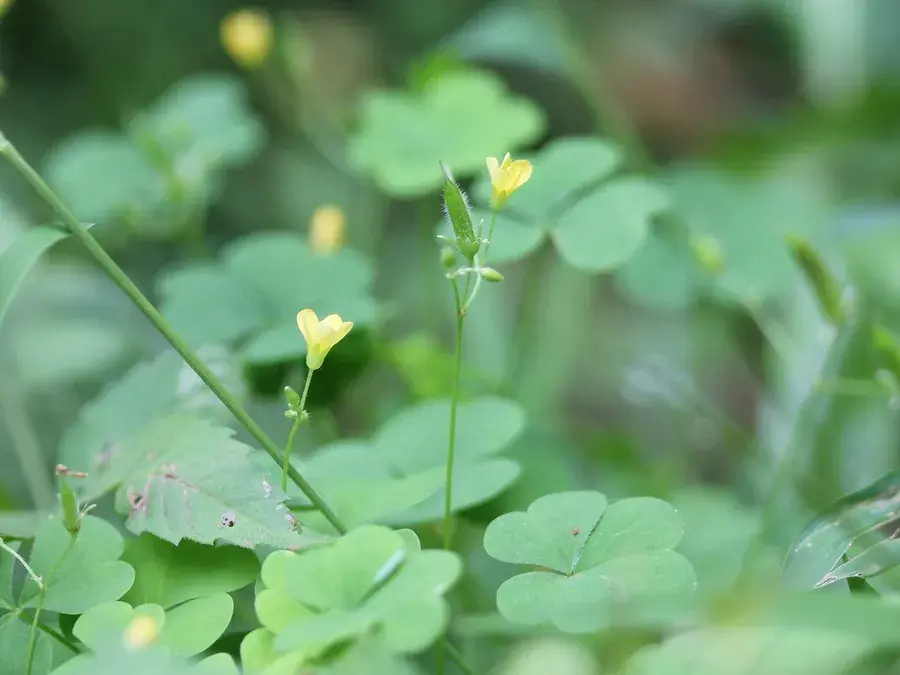 GreenMay – October
Wood sorrel
Oxalis stricta
Three heart-shaped leaflets that fold down at night, small yellow five-petalled flowers, and a sharp lemon taste.
How to know it & its look-alikes →Photo: Even Dankowicz · CC BY 4.0
Month by month
The whole year
April
15May
16June
17July
18August
25- Beach plum
- Chokecherry
- Elderberries
- Salal
- Thimbleberry
- Wild blueberries
- Wild hazelnuts
- Wild rice
- Giant puffball
- Huckleberries
- Lobster mushroom
- Sea grape
- Staghorn sumac
- Chicken of the woods
- Dulse
- King bolete (porcini)
- Prickly pear (tunas & nopales)
- Wild fennel
- Wild blackberries
- Wild raspberries
- Golden chanterelle
- Purslane
- Lamb's quarters
- Sheep sorrel
- Wood sorrel
September
40- Beach plum
- Black walnut
- Chokecherry
- Elderberries
- Pawpaw
- Salal
- Shagbark hickory nuts
- Wild grapes
- Wild hazelnuts
- Wild rice
- Giant puffball
- Hen of the woods (maitake)
- Highbush cranberry
- Huckleberries
- Juniper berries
- Lion's mane
- Lobster mushroom
- Matsutake (pine mushroom)
- Sea grape
- Staghorn sumac
- Wild cranberry
- Chicken of the woods
- Dulse
- King bolete (porcini)
- Prickly pear (tunas & nopales)
- Wild fennel
- Wintergreen (teaberry)
- Hawthorn berries
- Wild and abandoned apples
- Wild blackberries
- Acorns
- Rose hips
- Golden chanterelle
- Purslane
- Stinging nettle
- Dandelion
- Lamb's quarters
- Oyster mushroom
- Sheep sorrel
- Wood sorrel
October
30- American persimmon
- Black walnut
- Pawpaw
- Shagbark hickory nuts
- Wild grapes
- Wild pecans
- Giant puffball
- Hen of the woods (maitake)
- Highbush cranberry
- Juniper berries
- Lion's mane
- Lobster mushroom
- Matsutake (pine mushroom)
- Sea grape
- Staghorn sumac
- Wild cranberry
- Chicken of the woods
- King bolete (porcini)
- Wild fennel
- Wintergreen (teaberry)
- Hawthorn berries
- Wild and abandoned apples
- Acorns
- Rose hips
- Burdock root
- Golden chanterelle
- Dandelion
- Oyster mushroom
- Wood sorrel
- Chickweed
November
16All species
Every wild edible in the guide
- AcornsSeptember – November
- American persimmonOctober – November
- Beach plumAugust – September
- Black walnutSeptember – October
- Burdock rootMarch – November
- Cattail shootsMay – June
- ChagaNovember – April
- Chicken of the woodsJuly – October
- ChickweedOctober – May
- ChokecherryAugust – September
- DandelionMarch – October
- DulseJune – September
- ElderberriesAugust – September
- ElderflowerJune – July
- Fiddleheads (ostrich fern)April – May
- Giant puffballAugust – October
- Golden chanterelleJuly – October
- Hawthorn berriesSeptember – October
- Hen of the woods (maitake)September – November
- Highbush cranberrySeptember – November
- HuckleberriesJuly – September
- Juniper berriesSeptember – November
- King bolete (porcini)August – November
- Lamb's quartersMay – September
- Lion's maneSeptember – November
- Lobster mushroomAugust – October
- Maple sapFebruary – April
- Matsutake (pine mushroom)September – November
- Miner's lettuceDecember – May
- MorelsApril – June
- MulberriesJune – July
- Oyster mushroomApril – December
- PawpawSeptember – October
- Prickly pear (tunas & nopales)June – September
- PurslaneJune – September
- Ramps (wild leeks)April – May
- Rose hipsSeptember – November
- SalalAugust – September
- SalmonberryJune – July
- Sea grapeAugust – October
- Serviceberry (saskatoon)June – July
- Shagbark hickory nutsSeptember – October
- Sheep sorrelApril – September
- Spruce and fir tipsMay – June
- Staghorn sumacAugust – October
- Stinging nettleApril – September
- ThimbleberryJuly – August
- Wild and abandoned applesSeptember – October
- Wild asparagusApril – June
- Wild blackberriesAugust – September
- Wild blueberriesJuly – August
- Wild cranberrySeptember – November
- Wild fennelMay – October
- Wild grapesSeptember – October
- Wild hazelnutsAugust – September
- Wild pecansOctober – November
- Wild raspberriesJuly – August
- Wild riceAugust – September
- Wild strawberryJune – July
- Wild violetsApril – May
- Wintergreen (teaberry)September – April
- Wood sorrelMay – October