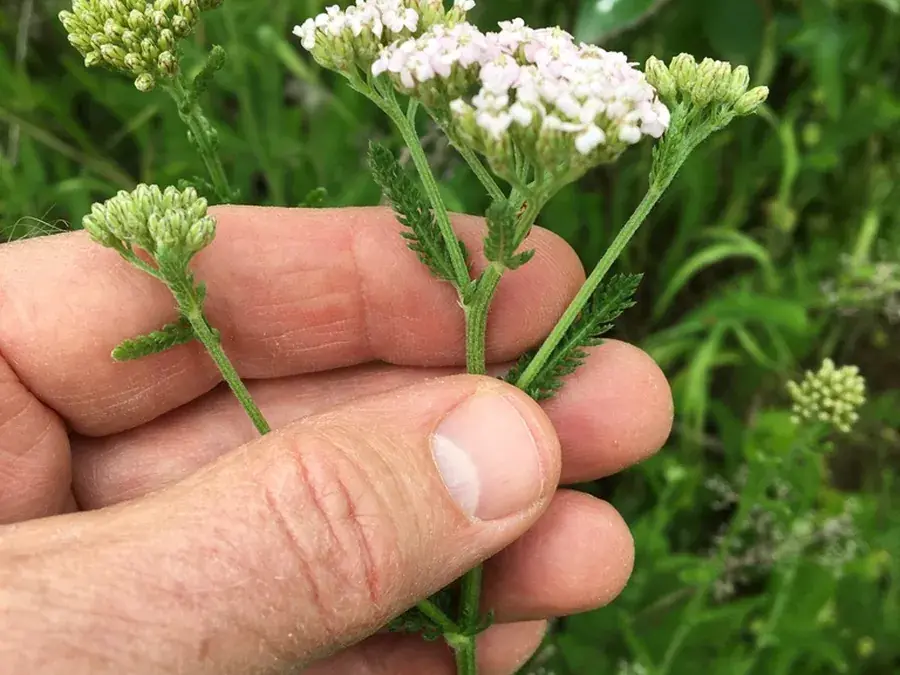
Photo by Ed Alverson on iNaturalist · CC BY 4.0 · photographed specimen identified as Achillea borealis borealis, a close relative
Yarrow
Achillea millefolium
This one has a dangerous look-alike
Poison hemlock and water hemlock have similarly feathery foliage and are lethal. Their stems are smooth and hollow, often purple-blotched, and they smell rank rather than aromatic. Yarrow's leaves are flat and soft and its stem is solid and hairy. If there is any doubt at all, walk away.
- When
- Typically May – September — May, June, July, August, September. Earlier in the south, later in the north.
- Where it grows
- Meadows, road verges, old fields and dry open ground right across the continent.
- How to know it
- Soft, flat, very finely divided ferny leaves — the species name means a thousand leaves — a solid hairy stem, flat-topped clusters of small white or pink flowers, and a strong sharp aroma when crushed.
- Harvest and use
- A bitter herb used sparingly; mostly gathered for tea and as the traditional wound herb rather than as food.
- Caution
- In the daisy family, a common allergen. Avoid in pregnancy. Can cause sensitivity to sunlight.
Traditional medicinal use
Traditional use onlyWhat Yarrow has been used for
The tradition
The battlefield wound herb of European tradition, named for Achilles, and a hot tea for feverish colds.
Part used, and how
Leaf and flower — fresh leaf pressed on a cut, or dried flowers as a tea.
What is actually known
Long tradition, laboratory support for anti-inflammatory activity, no good human trials.
Documented traditional use, but little or no clinical testing. Historical use is not evidence of effect or of safety.
Before you use it
- Poison hemlock and water hemlock have similar feathery foliage and are lethal. Yarrow's leaves are flat, soft and strongly aromatic; hemlock's stems are smooth and often purple-blotched. If you are not certain, do not pick it.
- Avoid in pregnancy.
- In the daisy family — a common allergen — and it can cause photosensitivity.
- May add to the effect of blood thinners and sedatives.
This is a record of traditional use, not medical advice, and nothing here is a treatment for any condition. Wild plants interact with prescription medicines and several are unsafe in pregnancy or with kidney, liver or heart conditions. Talk to a doctor or pharmacist before using any of them — especially if you take regular medication — and never delay real medical care.
Found in these regions
- Boreal North & Taiga
- Boreal Forest & Shield
- Acadian Forest & Atlantic Coast
- Great Lakes & St. Lawrence Lowlands
- Northeast Atlantic Coast & Piedmont
- Appalachian Highlands
- Central Hardwoods & Interior Plateaus
- Southeastern Piedmont & Coastal Plain
- Gulf Coast & Mississippi Lowlands
- Florida Peninsula
- Prairies & Great Plains
- Western Mountains & Interior Plateaus
- Pacific Maritime
- Mediterranean California
- Deserts & Dry Basins
- Hawaiʻi & the Tropics
Hardiness zones 2–9.
Is it ready near you?
Get this week's foraging guide for your area
Enter a town, postal code or ZIP and we'll tell you what's in season right there this week — from your local climate, this week's weather and your ecological region.
Also ready in September
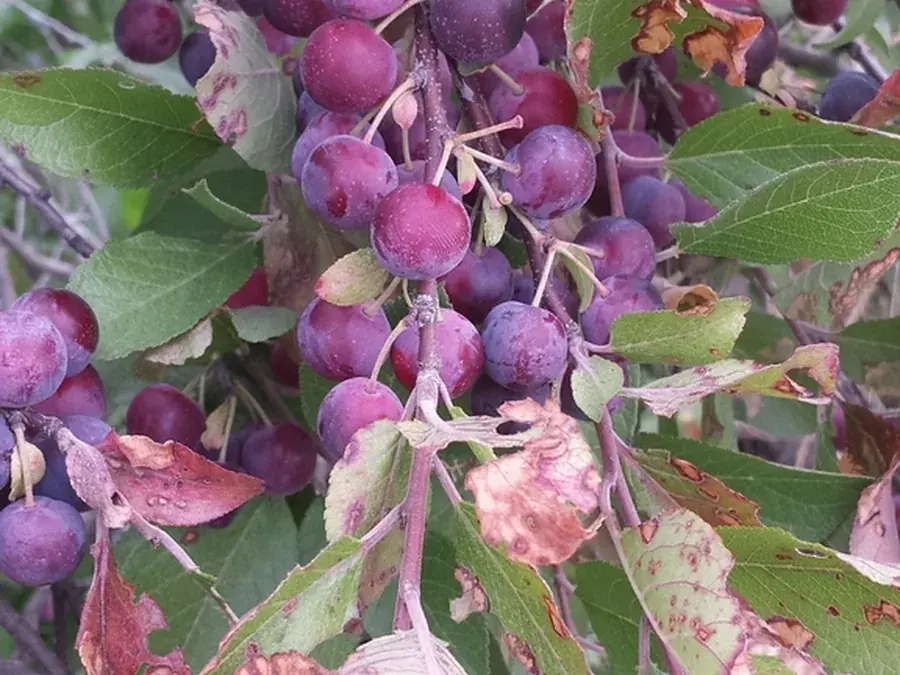 FruitAugust – September
Beach plum
Prunus maritima
Low sprawling shrub in the sand, with dusty purple plums about the size of a marble.
How to know it & its look-alikes →Photo: Tom Norton · CC BY 4.0
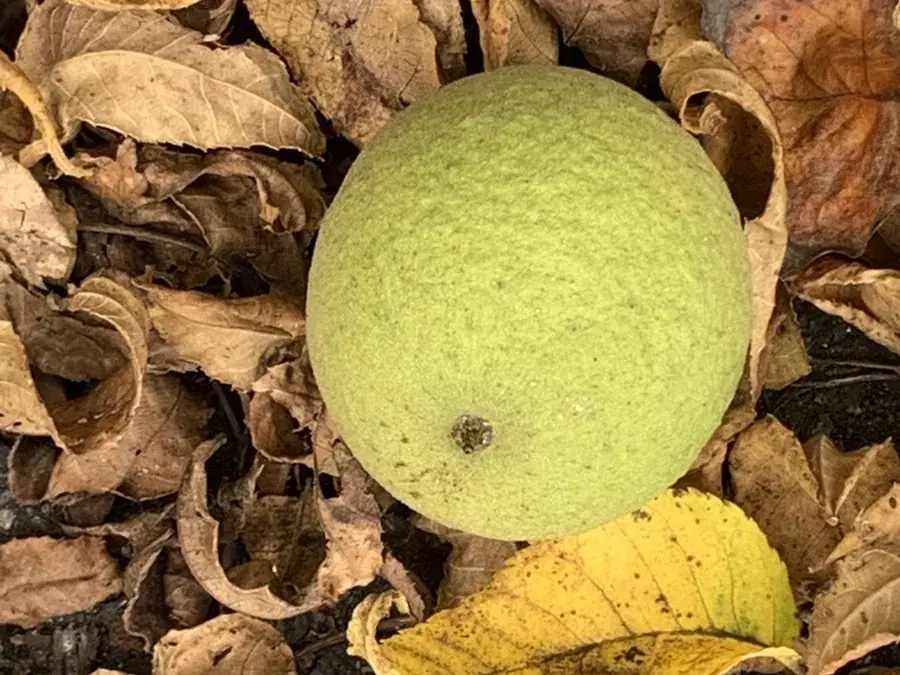 NutSeptember – October
Black walnut
Juglans nigra
Tennis-ball green husks lying under a tall tree with long compound leaves; the husk stains everything it touches brown.
How to know it & its look-alikes →Photo: Sandy Wolkenberg · CC BY 4.0
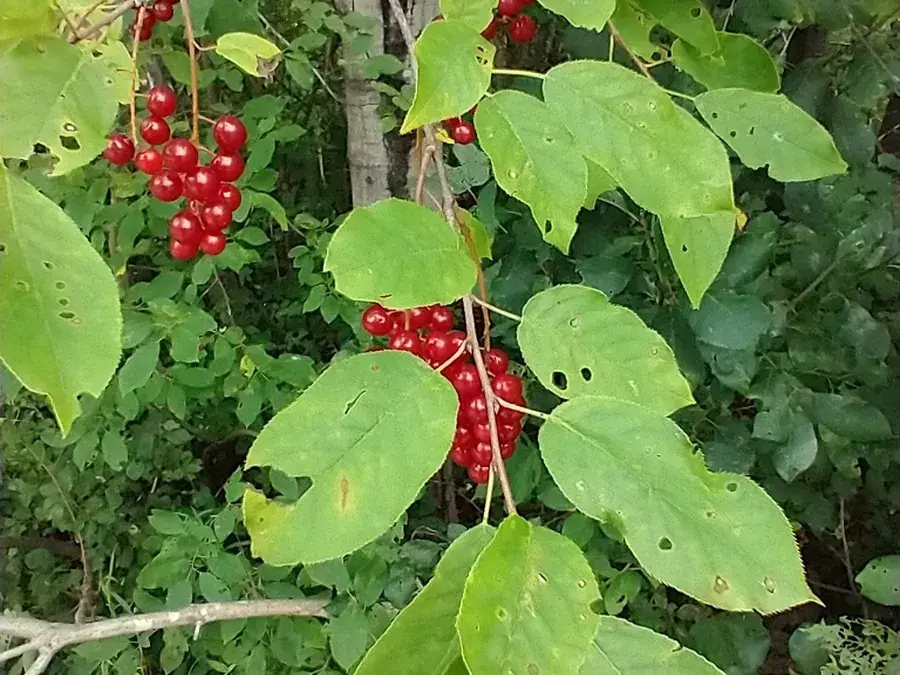 FruitAugust – September
Chokecherry
Prunus virginiana
Long drooping clusters of dark red-to-black cherries on a small tree with finely toothed oval leaves.
How to know it & its look-alikes →Photo: Tom Norton · CC BY 4.0
Educational information only. Never eat a wild plant or mushroom identified from a single photograph or description — confirm with a regional field guide or an experienced forager, and know the poisonous species in your area first.