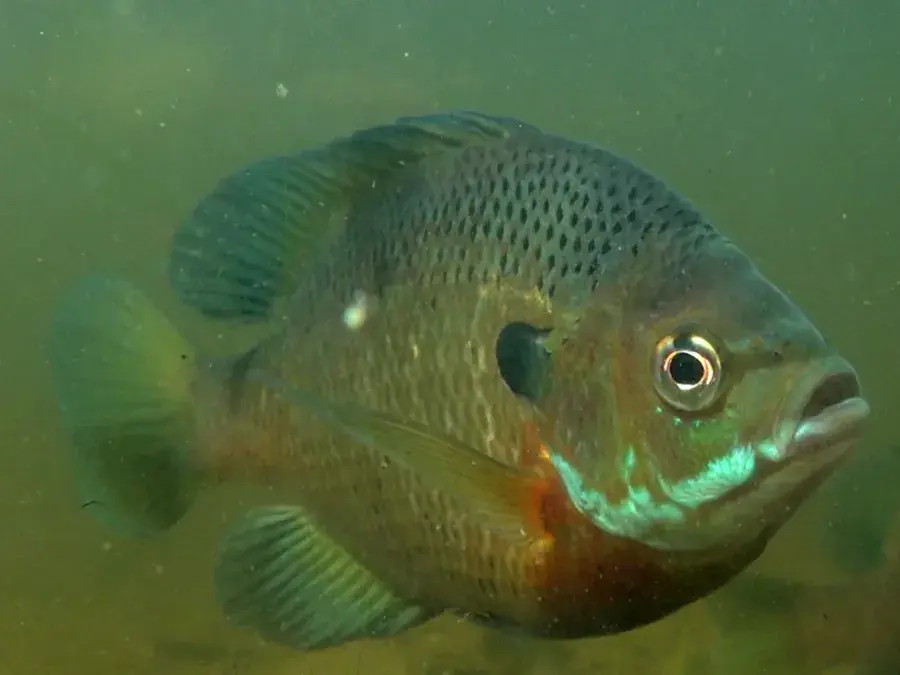
Photo by Kristiina Hurme on iNaturalist · CC BY 4.0
Bluegill
Lepomis macrochirus
- When
- Apr–Sep — April, May, June, July, August, September. Earlier in the south, later in the north.
- Where it holds
- Shallow weedy bays, docks and beds in gravel; everywhere warm and slow.
- How to know it
- Deep round body, a solid black ear flap, and a small mouth.
- What to know
- The fish that teaches children to fish. Beds appear as pale saucers in the shallows in early summer.
- The tactic
- A worm under a bobber. That is the whole method.
Seasons, size limits and catch limits change every year and differ by water body. Check the current regulations for your province or state before you fish.
Found in these regions
- Boreal North & Taiga
- Boreal Forest & Shield
- Acadian Forest & Atlantic Coast
- Great Lakes & St. Lawrence Lowlands
- Northeast Atlantic Coast & Piedmont
- Appalachian Highlands
- Central Hardwoods & Interior Plateaus
- Southeastern Piedmont & Coastal Plain
- Gulf Coast & Mississippi Lowlands
- Florida Peninsula
- Prairies & Great Plains
- Western Mountains & Interior Plateaus
- Pacific Maritime
- Mediterranean California
- Deserts & Dry Basins
- Hawaiʻi & the Tropics
Is it active near you?
Get this week's guide for your area
Enter a town, postal code or ZIP and we'll tell you what's happening right there this week — from your local climate, this week's weather and your ecological region.
Also active in September
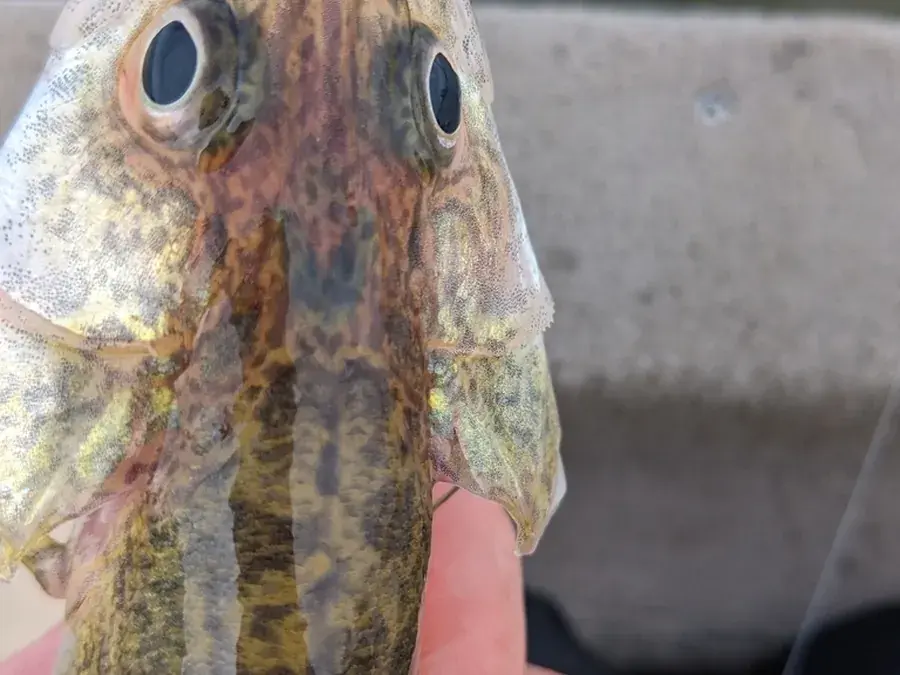 FishYear-round
Walleye
Sander vitreus
Olive-gold flanks, a spiny first dorsal, and the big glassy eye that gives it the name and lets it hunt in low light.
Where and how to catch it →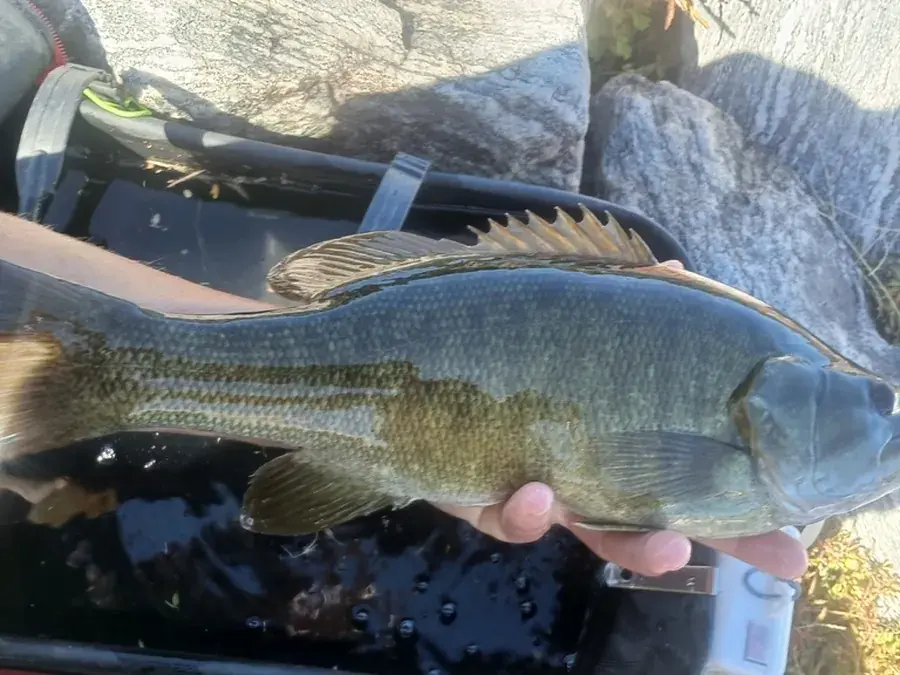 FishMay–Oct
Smallmouth bass
Micropterus dolomieu
Bronze-brown with vertical bars, red eye, and a jaw that ends level with the eye — not past it.
Where and how to catch it →Photo: Joshua Johnson · CC BY 4.0
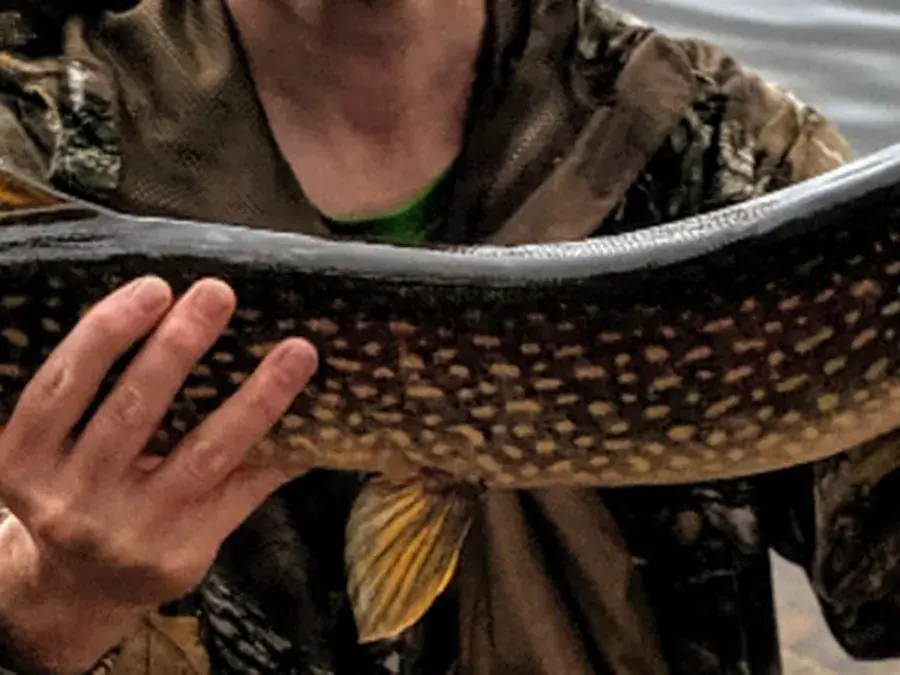 FishJan–Jun
Northern pike
Esox lucius
Long torpedo body, duck-like jaws, light bean-shaped spots on a dark green flank.
Where and how to catch it →Photo: Daughter Dad · CC BY 4.0