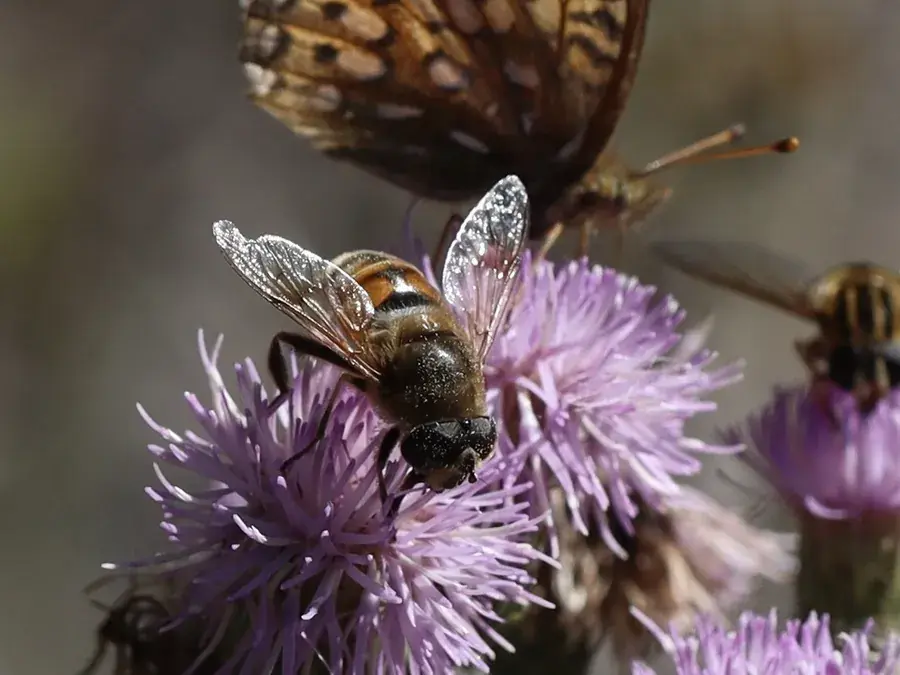
Photo by Public domain (iNaturalist) on iNaturalist · CC0 (public domain) · specimen identified as Eristalis tenax
PollinatorActive now (September)
Hoverfly
Syrphidae
- When
- Apr–Sep — April, May, June, July, August, September. Earlier in the south, later in the north.
- Where to look
- Umbels — dill, fennel, coriander gone to flower — and anywhere aphids live.
- How to know it
- Wasp-striped but a true fly: two wings not four, huge eyes, and it hovers dead still in mid-air.
- What it does for you
- Double value: the adult pollinates, and its slug-like larva eats hundreds of aphids. Plant an umbel and you get both.
Found in these regions
- Boreal North & Taiga
- Boreal Forest & Shield
- Acadian Forest & Atlantic Coast
- Great Lakes & St. Lawrence Lowlands
- Northeast Atlantic Coast & Piedmont
- Appalachian Highlands
- Central Hardwoods & Interior Plateaus
- Southeastern Piedmont & Coastal Plain
- Gulf Coast & Mississippi Lowlands
- Florida Peninsula
- Prairies & Great Plains
- Western Mountains & Interior Plateaus
- Pacific Maritime
- Mediterranean California
- Deserts & Dry Basins
- Hawaiʻi & the Tropics
Is it active near you?
Get this week's guide for your area
Enter a town, postal code or ZIP and we'll tell you what's happening right there this week — from your local climate, this week's weather and your ecological region.
Also active in September
 PollinatorMay–Oct
Monarch butterfly
Danaus plexippus
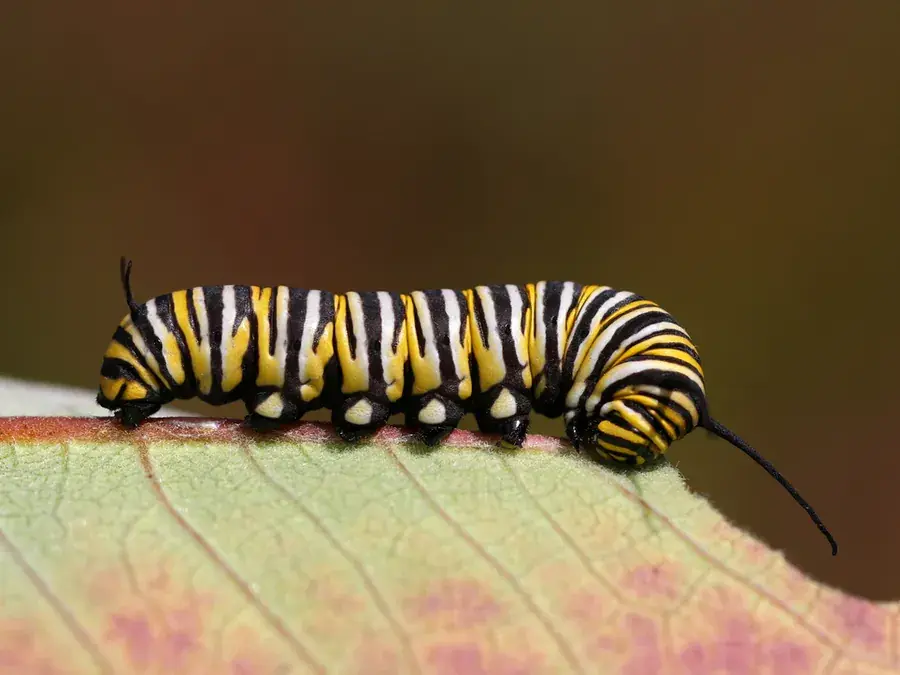
Orange with heavy black veins and a white-spotted black border. The caterpillar is banded yellow, white and black.
What it does in the garden →Photo: Christine Young · CC BY 4.0
 PollinatorMay–Sep
Ruby-throated hummingbird
Archilochus colubris
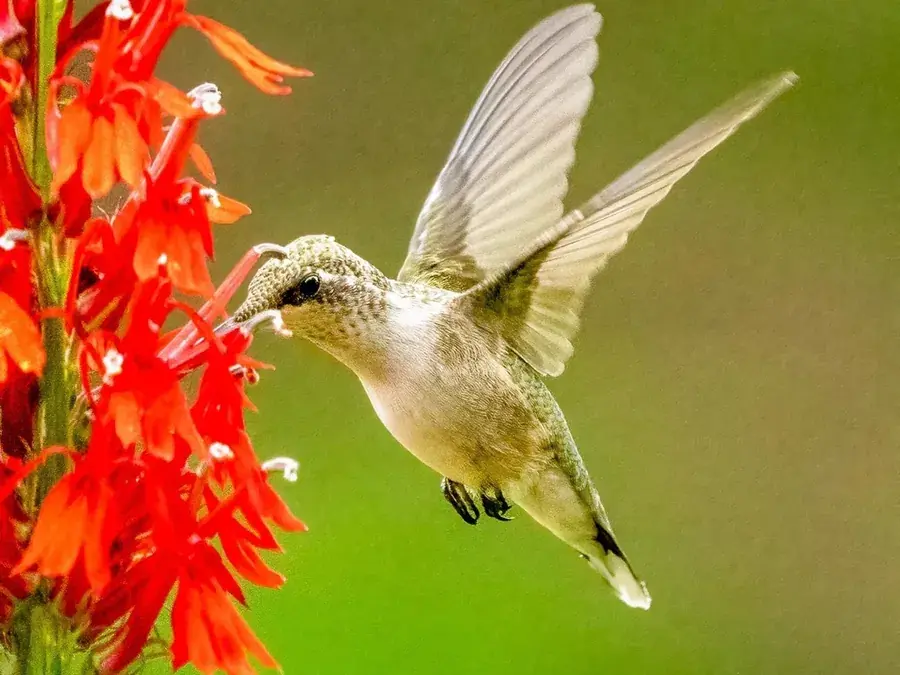
Tiny, iridescent green above; the male has a black-looking throat that flares ruby in the right light.
What it does in the garden →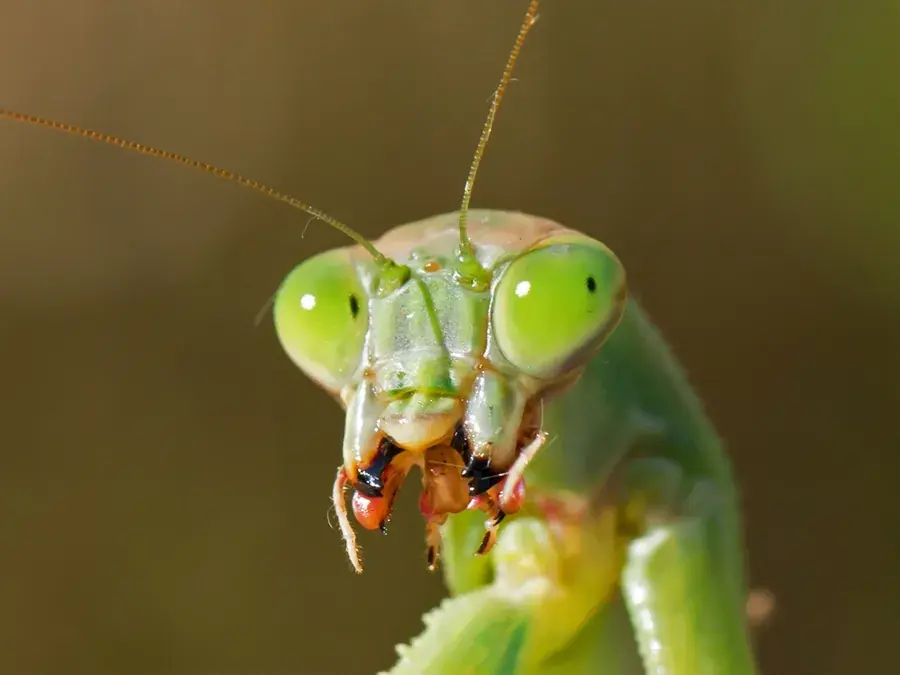 BeneficialJul–Oct
Praying mantis
Mantidae
Long green or brown body, triangular head that swivels, and folded raptorial front legs.
What it does in the garden →