For Kids · The land and the sky · What’s an ecosystem?
Everything out there is connected
Ecology is the study of how living things fit together with each other and with the sun, the water and the ground. It sounds big, but it is six ideas a four-year-old can hold — and each one below is something to play with first, then go and find outside.
Six big ideas
Big idea 1
Living things and non-living things, working together
Try it
What is an ecosystem?
Tap each thing at the pond, then tap Living or Not living. When everything is sorted, see how they all connect.
Tap something in the picture. Is it living, or not living?
Still to sort (13) — tap one here or in the picture:
Say it like this
- Age 2“Frog is alive! Rock is not alive.” Point, name it, and let them pick the basket.
- Age 4“Living things eat and grow and have babies. Does a rock eat? Does a frog?”
- Age 6“An ecosystem is the living things in a place plus the non-living things they need — sun, water, air and soil.”
Go outside: Lay a skipping rope in a circle on the ground and name everything inside it: living, or not living?
For the grown-up
An ecosystem is a place and everything in it — the living things (plants, animals, fungi, the tiniest bacteria) and the non-living things they need (sunlight, water, air, rock and soil) — all working together. A pond is one; so is a forest, a meadow, or the underside of a log. The test a four-year-old can use for 'living' is the one scientists start with too: does it eat (or make its own food), grow, and have babies?
Words to know
- ecosystem
- a place and all its living and non-living things, working together
- living
- it eats or makes food, it grows, it has young
- habitat
- the home an animal needs: food, water, shelter and space
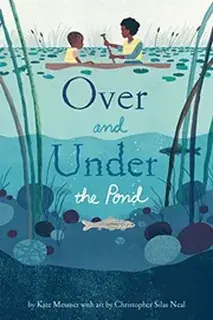
Read together · ages 4–8
Over and Under the Pond
Kate Messner
A boy and his mother canoe across a still pond and discover the busy world beneath it — fish, frogs, nesting birds — from morning to dusk.
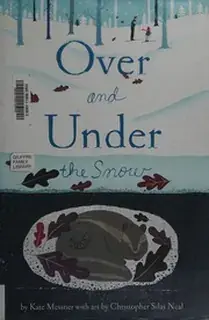
Read together · ages 3–7
Over and Under the Snow
Kate Messner
Skiing through the winter woods with her dad, a girl learns who lives in the hidden world under the snow — squirrels, snowshoe hares, sleeping bears, bullfrogs.
The Boreal Forest (60 seconds)
Hinterland Who's Who / Faune et flore du pays
A one-minute Hinterland Who's Who portrait of Canada's boreal forest, the wide northern belt of spruce, lakes and wetlands where loons, moose and caribou live.
Big idea 2
All the energy starts with the sun
Try it
Food chains
Pick a meadow, a pond or a forest. Start with the sun, then tap who eats what, in order.
Where does the energy come from? Tap the sun.
Why do the arrows point that way? Each arrow goes from the one that gets eaten to the one that eats it — that’s the way the energy goes.
- Producermakes its own food from sunlight
- Consumergets energy by eating other living things
- Top predatortop of this chain — nothing here eats it
Say it like this
- Age 2“Grasshopper eats grass. Snake eats grasshopper. Crunch!” Tap the cards together, one at a time.
- Age 4“Plants make food from sunshine. Animals get their energy by eating.”
- Age 6“The arrows show where the energy goes: from the one that's eaten to the one that eats it.”
Go outside: Find a leaf with nibble holes in it, then look underneath and nearby for who has been eating it.
For the grown-up
Plants are the only living things that make food out of sunlight, air and water — they are the producers. Everything else is a consumer: a grasshopper eats the grass, a snake eats the grasshopper, a hawk eats the snake. The arrows in a food chain point from the eaten to the eater, because they show where the energy goes. At each step most of the energy is used up for living, which is why there are always fewer hawks than grasshoppers.
Words to know
- producer
- a plant: it makes its own food from sunlight
- consumer
- an animal: it eats other living things
- predator / prey
- the hunter, and the one it hunts
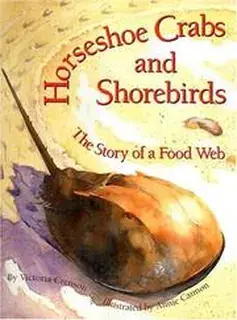
Read together · ages 5–9
Horseshoe Crabs and Shorebirds: The Story of a Food Web
Victoria Crenson
Each May on Delaware Bay, horseshoe crabs lay millions of eggs just as migrating shorebirds arrive to feast. A clear first food-web book.
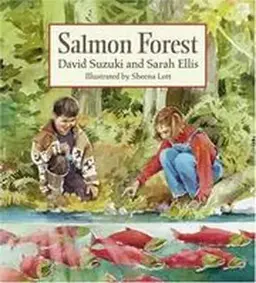
Read together · ages 5–9
Salmon Forest
David Suzuki
Walking a BC coastal rainforest with her father, Kate learns how spawning salmon feed the bears, eagles and giant trees.
Big idea 3
Everything is connected
Try it
Food webs, and taking one away
Tap an animal to see what it eats and what eats it. Then take the wolves away — or the mice — and watch what happens to everyone else.
Tap a plant or an animal. Green arrows show what it eats; red arrows show what eats it.
Lots of animals eat the same things, and most get eaten by more than one hunter. The lines cross and join like a web — that’s why it’s called a food web.
Say it like this
- Age 2“Owl eats mouse. Fox eats mouse too!” Trace an arrow with your finger from the mouse to the owl.
- Age 4“Lots of animals eat the same things — so it's not a line, it's a web.”
- Age 6“Take one away and the others change: no wolves, more deer, fewer young trees.”
Go outside: Hunt for clues of who eats what near you: nibbled twigs, chewed pine cones, acorn shells, tracks in mud or snow.
For the grown-up
Real animals eat more than one thing, so food chains cross and join into a food web. That is why taking one kind away changes the others. When wolves were brought back to places like Yellowstone, the elk (a big kind of deer) had to keep moving, and in some places young trees along the rivers began to grow again. The story is simpler here than in real life, but the idea is exactly right: a web is only as strong as its threads.
Words to know
- food web
- all the food chains in a place, joined together
- balance
- enough of each kind, not too many and not too few
Read together · ages 5–9
Horseshoe Crabs and Shorebirds: The Story of a Food Web
Victoria Crenson
Each May on Delaware Bay, horseshoe crabs lay millions of eggs just as migrating shorebirds arrive to feast. A clear first food-web book.
Big idea 4
Nothing is wasted
Try it
Decomposers: turning old things into soil
Slide time forward — or hold to speed it up — and watch a fallen log turn back into soil, and something new grow out of it.
The log
A big maple tree blew down in a storm. Now it is a log lying on the forest floor, with red and yellow leaves all around it.
Decomposers turn dead things back into soil, so new things can grow. Nothing is wasted.
Say it like this
- Age 2: “Old log. Soft, soft. Look — mushrooms! Who lives under the log?”
- Age 4: “Fungi, bugs and worms eat the old log a tiny bit at a time, and it turns into soil.”
- Age 6: “Where did the wood go? The decomposers turned it into soil, and now it feeds a new tree.”
Go outside: Find an old rotting log, gently roll it towards you, count who lives underneath, then roll it back just the way it was.
For the grown-up
When a tree falls, the forest's recyclers move in: bark beetles, fungi, carpenter ants, millipedes, woodlice, worms and bacteria far too small to see. Bit by bit they eat the wood and turn it back into soil, full of the food new plants need. In a northern forest a big log can take decades to disappear, and seedlings often sprout right on top of it — foresters call it a nurse log. (Around here yellow birch and hemlock are the famous ones.)
Words to know
- decomposer
- a living thing that breaks down dead things into soil
- fungus
- a mushroom's family: not a plant, and a great recycler
- nurse log
- a rotting log that new trees grow out of
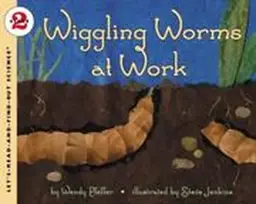
Read together · ages 4–7
Wiggling Worms at Work
Wendy Pfeffer
How earthworms tunnel, eat and build garden soil, with a simple worm-farm activity. Let's-Read-and-Find-Out Science.
Big idea 5
The same water goes round and round
Try it
The water cycle
Drag the sun up to warm the lake, then blow the cloud over the mountain, and follow one drop all the way round.
1. Evaporation
Warm water floats up as invisible vapour.
2. Condensation
High up it’s cold, so vapour makes a cloud.
3. Precipitation
Heavy clouds drop rain — or snow where it’s cold.
4. Collection
Water runs back to the lake and into the ground.
Our little water drop is resting in the lake. The sun is low and the water is cool. Drag the sun up high, or press “Warm it up”.
The same water goes round and round — the water in your glass might once have been in a dinosaur’s puddle.
Say it like this
- Age 2: “Sun is hot. Water goes up, up, up! Rain comes down, down, down!”
- Age 4: “The sun warms the water, it floats up and makes a cloud, and the cloud rains it back down.”
- Age 6: “Can you say all four steps — evaporation, condensation, precipitation, collection — and where our drop goes next?”
Go outside: On a sunny day, paint a wet patch on a warm rock or sidewalk with water and watch it disappear. Where did the water go?
For the grown-up
The sun warms the lake and the leaves, and water rises as invisible vapour (evaporation — plants breathe water out too). High up where it is cold the vapour gathers into clouds (condensation). When the drops get heavy they fall as rain or snow (precipitation), and run downhill in streams or soak into the ground (collection), back to the lake and the sea. No new water is ever made: the water in your glass has been round this loop many, many times.
Words to know
- evaporation
- water warming up and rising into the air
- condensation
- water vapour cooling into cloud drops
- precipitation
- rain, snow or hail falling from a cloud
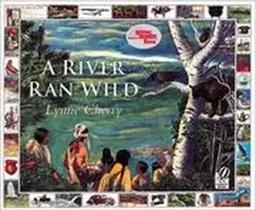
Read together · ages 5–9
A River Ran Wild
Lynne Cherry
Environmental history of the Nashua River in Massachusetts and New Hampshire: polluted by mills until people cleaned it and the wildlife came back.
Water and Wind
White Sands National Park
White Sands National Park explains how water and wind build its brilliant white gypsum dunes in New Mexico's Chihuahuan Desert — geology children can see.
Big idea 6
One animal can build a home for hundreds
Try it
The beaver: a keystone species
Tap the beaver to add sticks to the dam, and watch the stream become a pond — and who moves in.
Before
4
Now
4
kinds of
living things
A little stream runs through the valley, and a beaver has moved in. Tap the beaver to help it build a dam!
- Beaver
- Brook trout
- Belted kingfisher
- Black-capped chickadee
By building one dam, the beaver made a home for many other living things. That’s why beavers are called a keystone species.
Say it like this
- Age 2: “Beaver builds a dam. Tap, tap! Look — a duck! Quack, quack!”
- Age 4: “The beaver’s dam made a pond. Who came to live in it? Let’s count them!”
- Age 6: “One beaver made a home for fifteen kinds of living things. What would happen to the heron and the ducks if the beaver left?”
Go outside: Visit a pond or stream with a grown-up and look for beaver signs — pointy chewed stumps, wood chips, a mound of sticks. How many different living things can you count?
For the grown-up
A keystone is the stone at the top of an arch that holds the others up; a keystone species is an animal that holds an ecosystem together. A beaver's dam turns a narrow stream into a pond and a wetland, and in come frogs, ducks, herons, dragonflies, muskrats, moose, otters and fish that could never live in the stream. Take the beaver away and the pond drains, and they leave again.
Words to know
- keystone species
- an animal the whole place depends on
- wetland
- land that is wet much of the time: marsh, swamp, pond edge
- biodiversity
- how many different kinds of living things live in a place
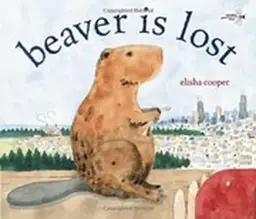
Read together · ages 2–5
Beaver Is Lost
Elisha Cooper
A beaver drifts downriver on a log into a city and finds its way home to the pond. Almost wordless — great for toddlers to narrate.
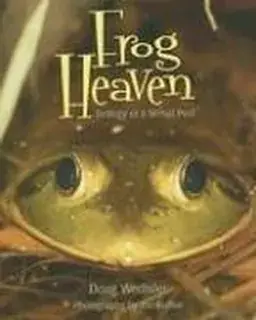
Read together · ages 6–10
Frog Heaven: Ecology of a Vernal Pool
Doug Wechsler
Photo essay on a woodland vernal pool through the year — wood frogs, spring peepers, salamander eggs — the puddle worth checking every April.
The Beaver
Hinterland Who's Who / Faune et flore du pays
Hinterland Who's Who on the beaver, Canada's national animal and master builder of dams and lodges, in the calm narrated style kids can watch again and again.
Keep playing
The same ideas, in The Big Outside
The pictures are simple on purpose: real food webs have far more threads, and real numbers go up and down for many reasons at once. Every animal and plant in them lives in Canada or the northern United States. The books were each checked against their library record; the videos play from YouTube’s privacy-enhanced player only when tapped. Back to For Kids