BerryIn season now (October)
Autumn olive
Elaeagnus umbellata
- When
- Typically September – October — September, October. Earlier in the south, later in the north.
- Where it grows
- Old fields, roadsides, highway banks, reclaimed mines and pasture edges — anywhere it was planted for ‘wildlife’ in the last century and everywhere birds have carried it since.
- How to know it
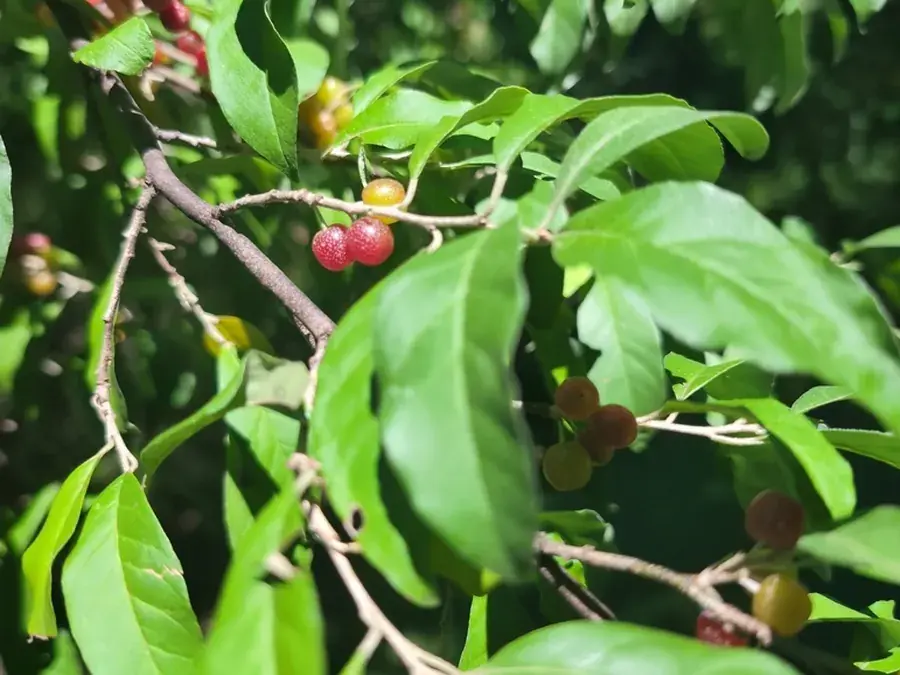
- A sprawling thorny shrub whose leaves flash silver underneath; in autumn it is weighed down with small red berries finely speckled with silver and brown scales, each with one soft seed.
- Look-alikes
- Bush honeysuckle berries are red but glossy and unspeckled, hang in pairs, and are mildly poisonous; its leaves are green beneath, not silver. Common buckthorn has black berries and no silver. Russian olive, its western cousin, has narrower willow-like leaves and mealy silver-yellow fruit, and is also edible.
- Harvest and use
- Eat the berries once they are fully red and soft after a frost — before that they pucker the mouth; run them through a food mill for juice, fruit leather, sauce and jam. Pick as many as you like: it is invasive wherever it grows, and every berry you take is one a bird does not plant.
- Caution
- Berries from roadsides and old mine sites can carry road salt and metals the shrub pulls from the soil; pick away from traffic. Do not plant it or move the seed — it is a restricted invasive in several states and spreading in Ontario and the Maritimes.
Autumn olive at a glance
- Also called
- Autumnberry, Japanese silverberry, oleaster, chalef en ombelles (Quebec). Russian olive (Elaeagnus angustifolia) is the western relative; silverberry (E. commutata) the native one.
- Family
- Elaeagnaceae, the oleaster family (which also includes Russian olive, silverberry and the buffaloberries).
- Where it grows
- Introduced from east Asia in the 1800s and planted by the million through the twentieth century for erosion control, mine reclamation and ‘wildlife food’. It is now invasive from New England and southern Ontario through the mid-Atlantic, the Appalachians and the whole Midwest to Nebraska and Kansas, south to the Carolinas and Tennessee, with newer footholds in Nova Scotia, New Brunswick, Minnesota and the Pacific Northwest. Michigan and several other states list it as restricted or prohibited; Minnesota lists it as a Restricted noxious weed — no sale or transport. Expect it on roadsides, highway banks, old fields, pasture edges and reclaimed strip mines.
- When to pick
- Late September and October in southern Ontario, Quebec and the northern US, from mid-September in the mid-Atlantic. The berries turn red in late summer but stay chalky and astringent for weeks; wait until they are deep red, soft, and sweet-tart rather than mouth-drying — usually after the first frost — and strip them from the twig by the handful. A heavy bush gives kilograms, and the fruit hangs into November if the birds leave it.
- Parts used
- The ripe berries, eaten fresh, or run through a food mill to leave the single soft seed behind: the pulp makes juice, a bright red fruit leather, sauce, jam and a sorbet, and freezes well. The seed is harmless but chewy. Leaves and flowers are not eaten. Autumn olive fruit was found by USDA researchers to carry up to 17 times the lycopene of a raw tomato, which is a pleasant fact about a free fruit, not a reason to eat it.
- Is any of it poisonous?
- Nothing in the plant is poisonous. Two practical cautions: unripe berries are astringent enough to upset a stomach if eaten in quantity, and because the shrub was planted on reclaimed mines and roadsides, Penn State notes it can move metals from contaminated soil into its fruit — so pick from old fields and pasture edges rather than mine spoil or the shoulder of a highway.
- More look-alikes to know
- Russian olive (Elaeagnus angustifolia), the planted and invasive tree of the Prairies and the West, has long narrow silver leaves and mealy, yellowish-silver fruit, edible but dry. Silverberry (E. commutata), native across the Prairies and the north, is silver on both leaf faces and bears dry silver fruit. Thorny olive (E. pungens) is an evergreen invader of the South with fruit in spring. Among the red-berried natives, the autumn olive’s speckled, silver-scaled fruit and silver leaf undersides rule out dogwood, viburnum and holly at a glance, and the honeysuckles have paired, unspeckled berries and green leaves.
Questions people ask about autumn olive
Are autumn olive berries edible?
Yes — the small red berries of autumn olive, identified by their silver speckles and the silver undersides of the leaves, are edible and good once fully ripe, with a sweet-tart taste like a sour cherry. Picked too early they are chalky and astringent. There is nothing poisonous in the plant, and because it is invasive you can pick as much as you want.
How do you identify autumn olive?
A spreading shrub 3–5 m (10–16 ft) tall with scattered thorns, leaves that are dull green above and silver-white underneath so that the bush flickers in wind, and in autumn thousands of small red berries, each finely dotted with silver or brown scales, each with one soft seed. In May it is covered in small cream trumpet flowers with a heavy sweet scent. Young twigs are silvery-brown and scaly.
When are autumn olive berries ripe?
From late September into October across southern Canada and the northern US, often best right after the first frost; mid-September farther south. Colour alone misleads — the berries are red for weeks before they are ripe. Taste one: ripe fruit is soft and sweet-tart; unripe fruit dries your mouth out. Once ripe they strip off the twig by the handful.
What looks like autumn olive but is poisonous?
Bush honeysuckle, which fruits red on roadsides at the same time: its berries are glossy and translucent, never speckled, hang in pairs at the leaf joints, and its leaves are green beneath, not silver — and they are mildly poisonous. Common buckthorn has black berries and green leaves. Any red berry dusted with silver scales on a silver-leaved shrub is an oleaster-family plant — autumn olive, or one of the native buffaloberries (Shepherdia), which have opposite leaves and are edible but bitter and best not eaten by the handful.
Is it okay to pick autumn olive in a park or nature reserve?
Usually, and often welcomed — autumn olive is an invasive shrub that land managers cut and spray, and every berry picked is a seed not planted by a bird. Rules on harvesting still apply in national, provincial and state parks, so ask; many conservation areas run autumn olive pulls and are glad of pickers. Never plant it, compost whole berries, or move the seed.
Is autumn olive safe for children and dogs?
Yes — the ripe berries are harmless to both, and the seed passes through. The useful lesson is the tell: silver speckles and a silver leaf underside mean autumn olive, while a shiny, unspeckled red berry in pairs is honeysuckle and goes in the bin. Keep children off busy roadsides, where most of these bushes grow.
Found in these regions
- Acadian Forest & Atlantic Coast
- Great Lakes & St. Lawrence Lowlands
- Northeast Atlantic Coast & Piedmont
- Appalachian Highlands
- Central Hardwoods & Interior Plateaus
- Southeastern Piedmont & Coastal Plain
- Prairies & Great Plains
Hardiness zones 4–9.
Is it ready near you?
Get this week's foraging guide for your area
Enter a town, postal code or ZIP and we'll tell you what's in season right there this week — from your local climate, this week's weather and your ecological region.
Also ready in October
 FruitOctober – November
American persimmon
Diospyros virginiana
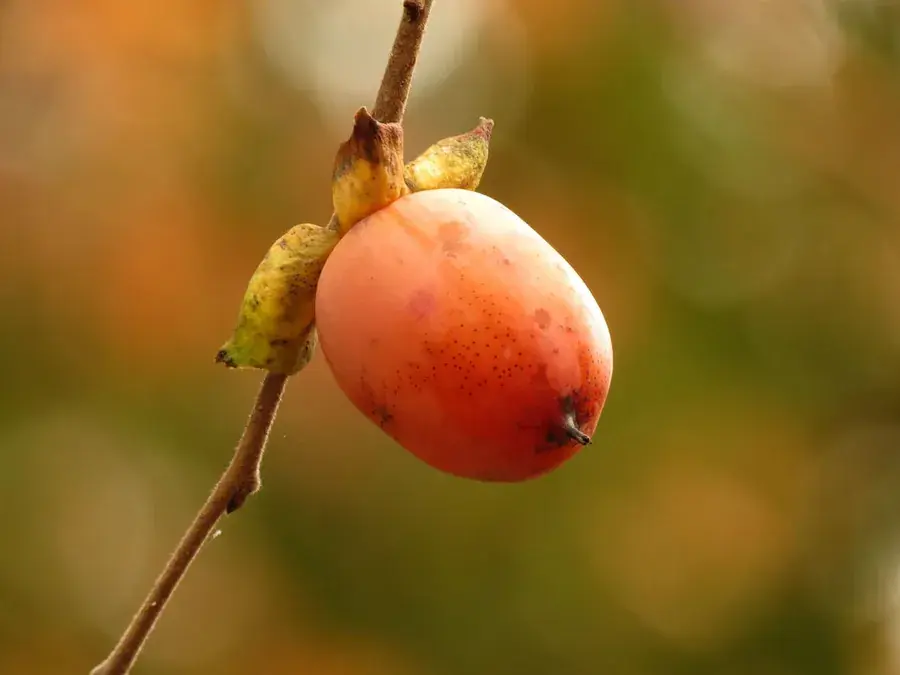
Blocky alligator-hide bark; orange fruit the size of a plum, only ripe when it is wrinkled, squishy and usually on the ground.
How to know it & its look-alikes →Photo: Katja Schulz · CC BY 4.0
 NutSeptember – October
Beechnuts
Fagus grandifolia
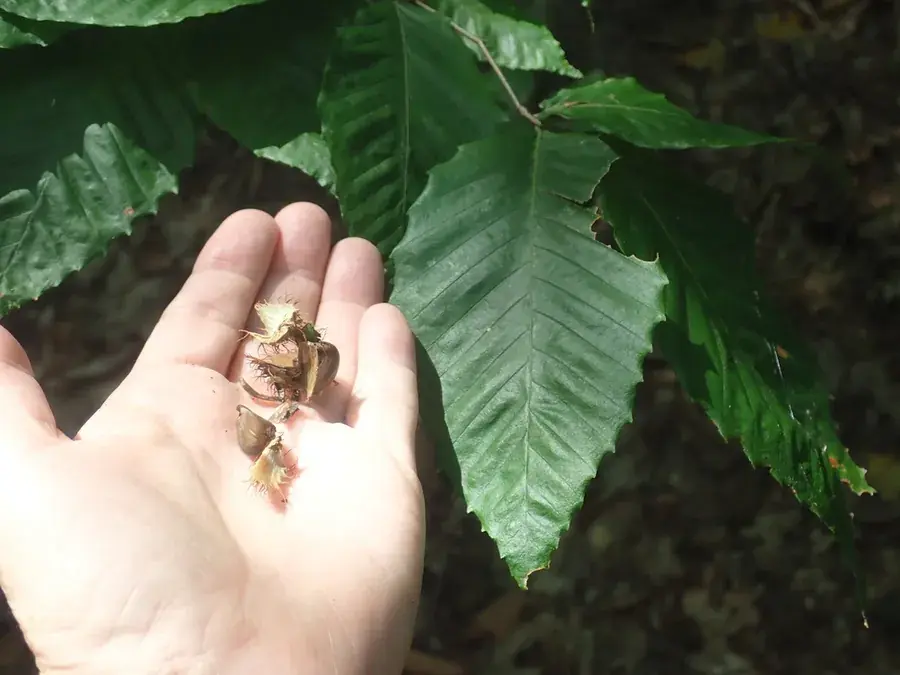
Smooth, pale grey bark on a tall tree; long, sharp, cigar-shaped buds; oval leaves with coarse teeth and straight parallel veins, many held, bleached, through winter. The nuts are small, three-sided and come two to a soft-bristled husk that splits into four.
How to know it & its look-alikes →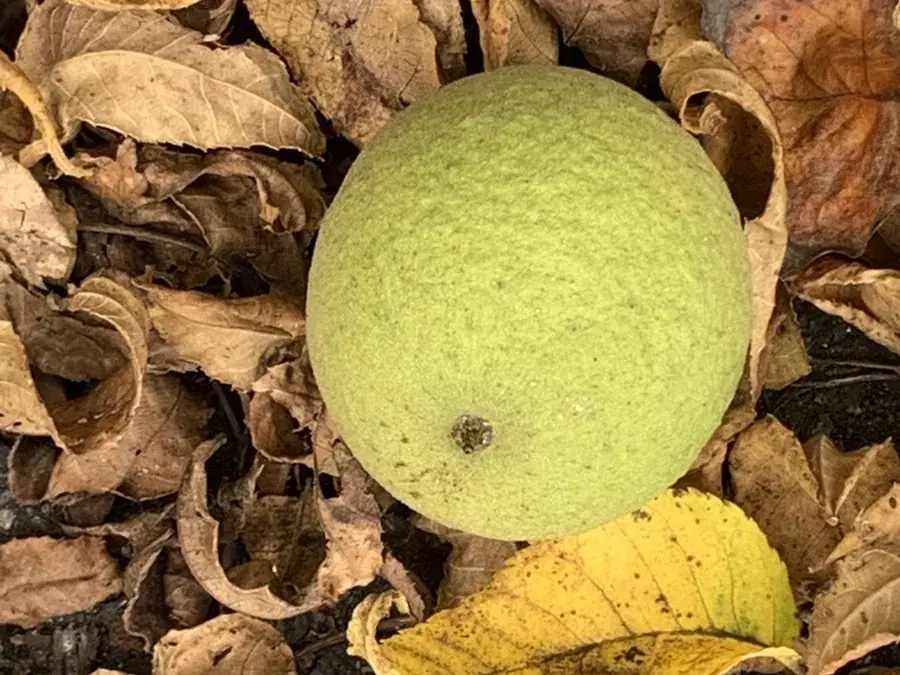 NutSeptember – October
Black walnut
Juglans nigra
Tennis-ball green husks lying under a tall tree with long compound leaves; the husk stains everything it touches brown.
How to know it & its look-alikes →Photo: Sandy Wolkenberg · CC BY 4.0
Checked against these sources ·
- Penn State Extension — Autumn olive
- Minnesota Wildflowers — Autumn olive
- NC State Extension — Elaeagnus umbellata
- USDA Agricultural Research Service (2001) — Tiny berry tops tomatoes in lycopene
- Michigan Invasive Species Program — Autumn olive
- VASCAN (Database of Vascular Plants of Canada) — Elaeagnus umbellata
Seasons are typical for the middle of the range and move by weeks north and south, and up and down hills.
Educational information only. Never eat a wild plant or mushroom identified from a single photograph or description — confirm with a regional field guide or an experienced forager, and know the poisonous species in your area first.