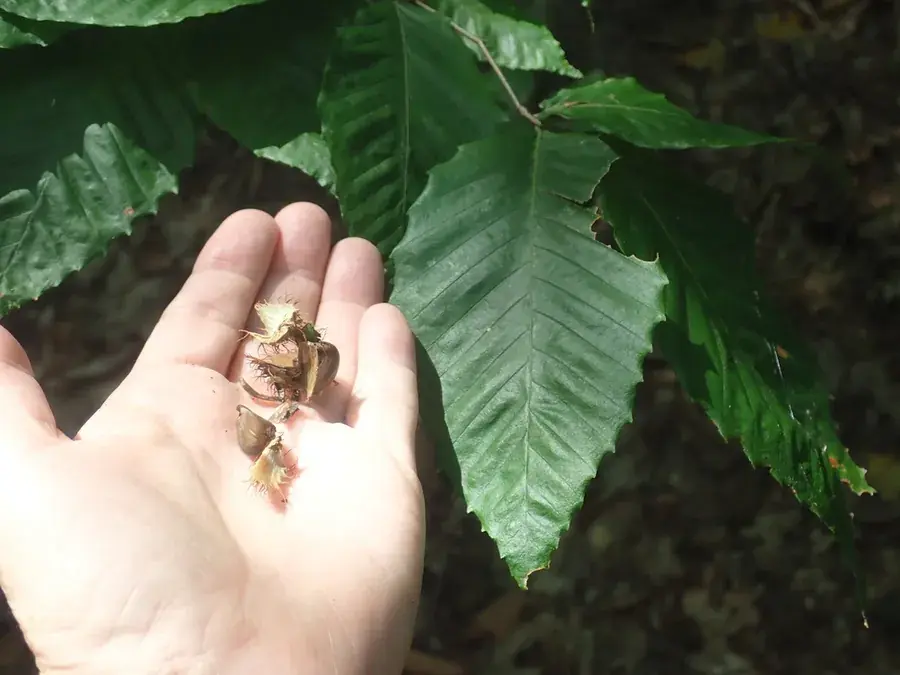
Photo by Public domain (iNaturalist) on iNaturalist · CC0 (public domain)
NutIn season now (October)
Beechnuts
Fagus grandifolia
- When
- Typically September – October — September, October. Earlier in the south, later in the north.
- Where it grows
- Rich, well-drained hardwood slopes with sugar maple, yellow birch and hemlock; old beech stands often have a carpet of root-sprout saplings beneath them.
- How to know it
- Smooth, pale grey bark on a tall tree; long, sharp, cigar-shaped buds; oval leaves with coarse teeth and straight parallel veins, many held, bleached, through winter. The nuts are small, three-sided and come two to a soft-bristled husk that splits into four.
- Look-alikes
- Horse chestnut and buckeye (Aesculus) drop big glossy brown nuts with a pale eye from a smooth or spiny leathery husk, one or two to a husk, and they are poisonous. A beechnut is tiny, sharply triangular and sits in pairs inside a soft-prickled four-part husk. Chestnut burrs are far larger and viciously spiny.
- Harvest and use
- Gather freshly fallen husks after the first hard frosts and shell the nuts; roast them lightly before eating more than a handful, since raw beechnuts in quantity upset the stomach. Big crops come only every few years — take a modest share and leave the rest for bears, turkeys and jays.
- Caution
- Many large beeches across the east are dying of beech bark disease and, more recently, beech leaf disease; sick trees make few nuts, and many husks are empty. Never eat a quantity raw.
Beechnuts at a glance
- Also called
- American beech, beech mast, hêtre à grandes feuilles (Quebec). The planted European beech (Fagus sylvatica), with darker bark and fewer, blunter leaf teeth, bears the same kind of nut.
- Family
- Fagaceae, the beech family (which also includes the oaks and chestnuts).
- Where it grows
- Native across the eastern forest: Nova Scotia, Prince Edward Island, New Brunswick, southern Quebec and Ontario west to the Lake Huron shore, and south through New England, the Appalachians and the Ohio Valley to the Gulf states, with its western edge in Wisconsin and Illinois in the north and east Texas and south-eastern Oklahoma in the south. It is a tree of rich, well-drained slopes in company with sugar maple, yellow birch and hemlock, and of the beech–magnolia forests of the Gulf coastal plain.
- When to pick
- Late September and October. The soft-bristled husks open on the tree after the first hard frosts and the nuts shower down over a week or two, so gather fast — squirrels, jays, bears and turkeys are after the same crop. A beech starts bearing at about 40 years and makes a big crop only every two or three years; in the years between, most husks are empty, and even in a mast year many nuts on a lone tree are hollow. Pinch a nut: a full one is firm and plump, an empty one caves in.
- Parts used
- The kernel inside the small three-sided nut, after you peel off the thin brown shell. Roast lightly in a dry pan before eating any quantity; roasted nuts can also be ground into a flour or a coffee-like drink. The husk is discarded. Young spring leaves are recorded as a cooked green, and the inner bark as a famine flour, but neither is a reason to harm a tree.
- Is any of it poisonous?
- Raw beechnuts eaten by the handful can cause stomach upset — the seed carries a bitter glycoside (sometimes called fagin) and oxalates that heat breaks down. NC State Extension rates the whole genus a low-severity poison for this reason. A few raw nuts are the traditional nibble; a bowlful should be roasted.
- More look-alikes to know
- American chestnut and planted Chinese chestnut (Castanea) drop burrs the size of a tennis ball armoured in needle-sharp spines, holding two or three big flat-sided nuts — edible, and nothing like a beechnut in scale. Horse chestnut and buckeye (Aesculus) are the poisonous ones: a smooth or sparsely spined leathery husk that splits to free one or two large, glossy, mahogany nuts with a pale eye, under a tree with hand-shaped compound leaves in opposite pairs. Beech leaves are simple and alternate, and its nut would fit three abreast on a buckeye.
Questions people ask about beechnuts
Can you eat beechnuts raw?
A few, yes — they taste sweet and a little like a pine nut. More than a small handful raw can upset the stomach, because the seed contains a bitter glycoside and oxalates that cooking destroys. Toast them briefly in a dry pan before snacking in earnest, and roast any batch you grind for flour.
When do beechnuts fall?
Late September into October, after the first hard frosts open the husks. The drop is fast, a week or two, and wildlife clears the ground almost as it falls. Good crops come only every two or three years; in an off year nearly every husk is empty.
How do you identify an American beech?
By its bark first: smooth, pale grey and unbroken even on a trunk a metre across, which is why people carve it. Then the buds, long, slender and sharply pointed like a cigar; the oval, coarsely toothed leaves with straight parallel veins; and the pale dead leaves that hang on young trees all winter. The nuts come two to a soft-prickled husk that splits into four.
What looks like a beechnut but is poisonous?
Buckeye and horse chestnut nuts, which are big, round, glossy brown with a pale scar, and come one or two to a smooth leathery or lightly spined husk under a tree with hand-shaped compound leaves. They are toxic and can be fatal. A beechnut is a small three-sided triangle, barely 2 cm (¾ in) long, in a bristly four-part husk under a smooth grey-barked tree with simple leaves.
Why are the beech trees dying?
Beech bark disease, a scale insect followed by a canker fungus, has been killing large beeches across the Maritimes, Quebec, Ontario and the north-eastern US for decades. Since 2012 beech leaf disease, caused by a microscopic nematode, has spread from Ohio through the north-east into southern Ontario and kills saplings within a few years; its sign is dark bands between the leaf veins. Diseased trees make few sound nuts.
Are beechnuts safe for children?
Shelled and roasted, yes, in small amounts, like any tree nut — and anyone with a tree-nut allergy should treat them as a nut. Teach children the husk: beechnuts come in a soft, bristly four-part husk and are tiny; a big shiny brown nut from a leathery husk is a buckeye or horse chestnut and must not go in the mouth.
Found in these regions
- Acadian Forest & Atlantic Coast
- Great Lakes & St. Lawrence Lowlands
- Northeast Atlantic Coast & Piedmont
- Appalachian Highlands
- Central Hardwoods & Interior Plateaus
- Southeastern Piedmont & Coastal Plain
- Gulf Coast & Mississippi Lowlands
Hardiness zones 3–9.
Is it ready near you?
Get this week's foraging guide for your area
Enter a town, postal code or ZIP and we'll tell you what's in season right there this week — from your local climate, this week's weather and your ecological region.
Also ready in October
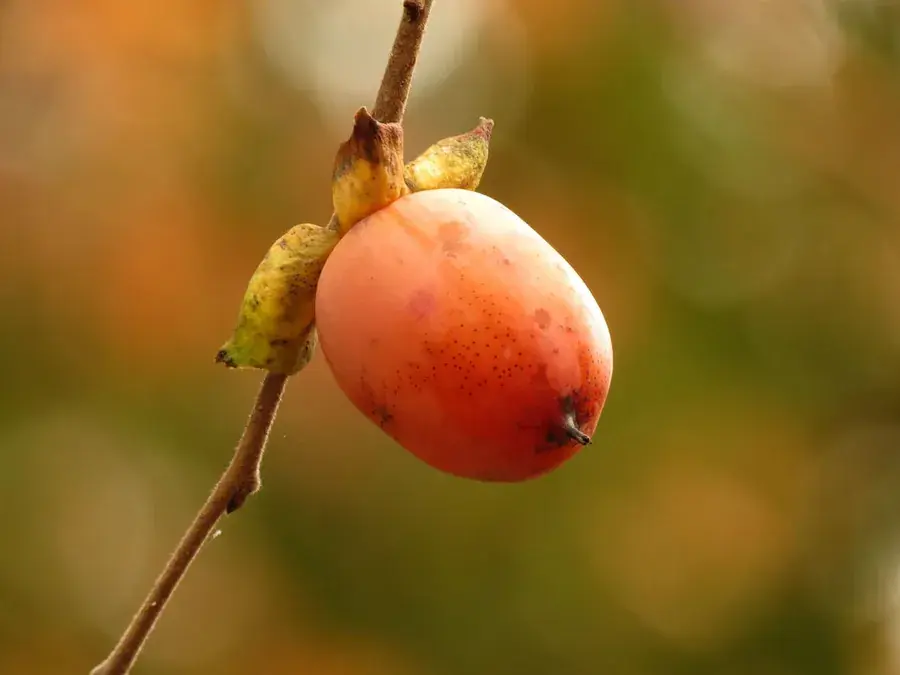 FruitOctober – November
American persimmon
Diospyros virginiana
Blocky alligator-hide bark; orange fruit the size of a plum, only ripe when it is wrinkled, squishy and usually on the ground.
How to know it & its look-alikes →Photo: Katja Schulz · CC BY 4.0
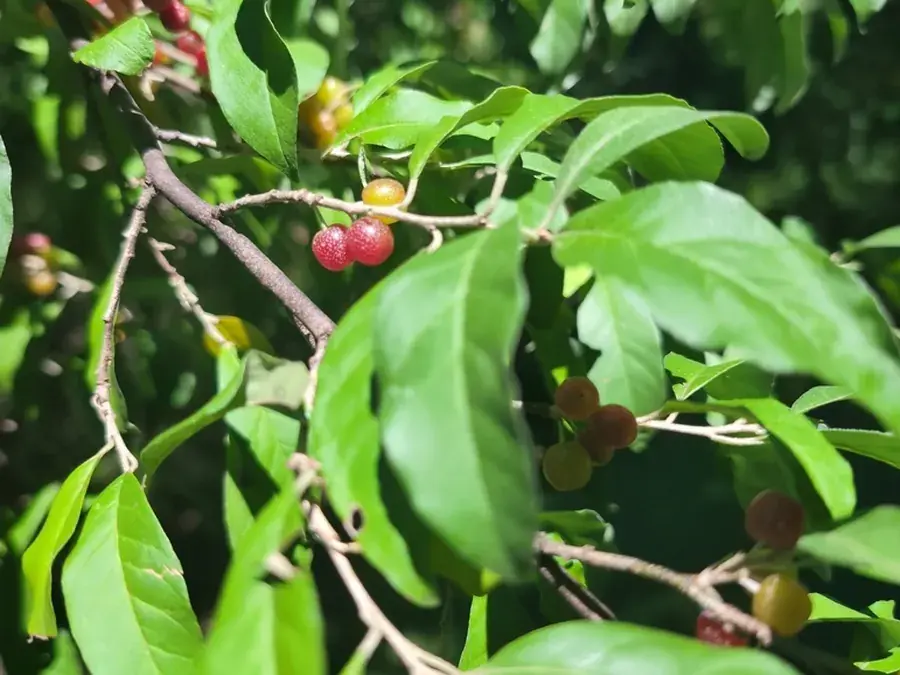 BerrySeptember – October
Autumn olive
Elaeagnus umbellata
A sprawling thorny shrub whose leaves flash silver underneath; in autumn it is weighed down with small red berries finely speckled with silver and brown scales, each with one soft seed.
How to know it & its look-alikes →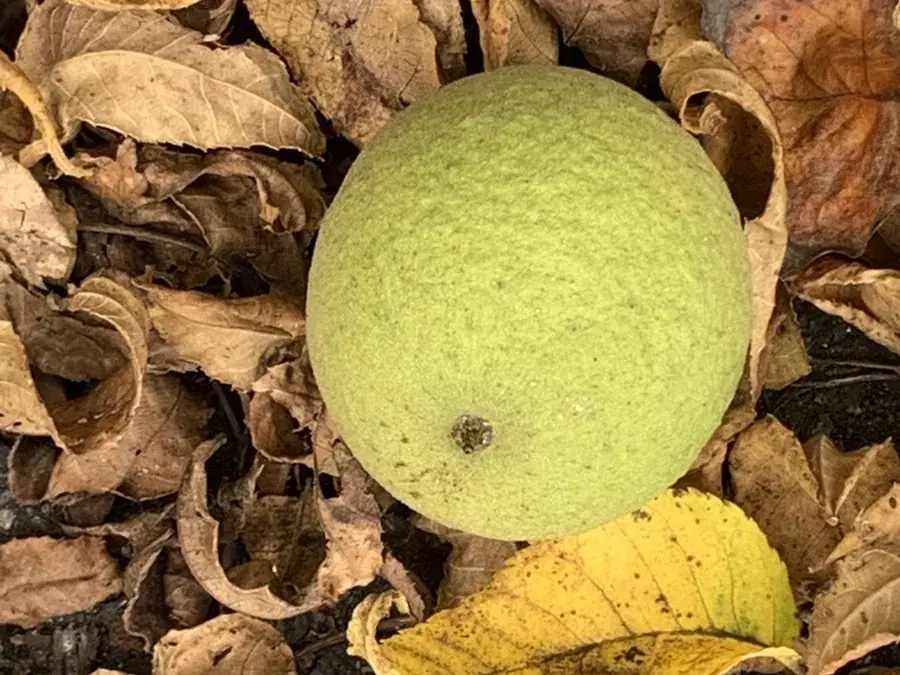 NutSeptember – October
Black walnut
Juglans nigra
Tennis-ball green husks lying under a tall tree with long compound leaves; the husk stains everything it touches brown.
How to know it & its look-alikes →Photo: Sandy Wolkenberg · CC BY 4.0
Checked against these sources ·
- NC State Extension — Fagus (beech)
- Go Botany (Native Plant Trust) — Fagus grandifolia
- Nova Scotia Woodlot Management — Silvics of beech
- Ontario.ca — Beech bark disease
- US Forest Service pest alert — Beech leaf disease
- NC State Extension — Aesculus hippocastanum (horse chestnut)
Seasons are typical for the middle of the range and move by weeks north and south, and up and down hills.
Educational information only. Never eat a wild plant or mushroom identified from a single photograph or description — confirm with a regional field guide or an experienced forager, and know the poisonous species in your area first.