Rhubarb
Rheum × hybridum
The first harvest of the Canadian year and the toughest plant in the garden — eat the stalks, never the leaves.
- Ready when
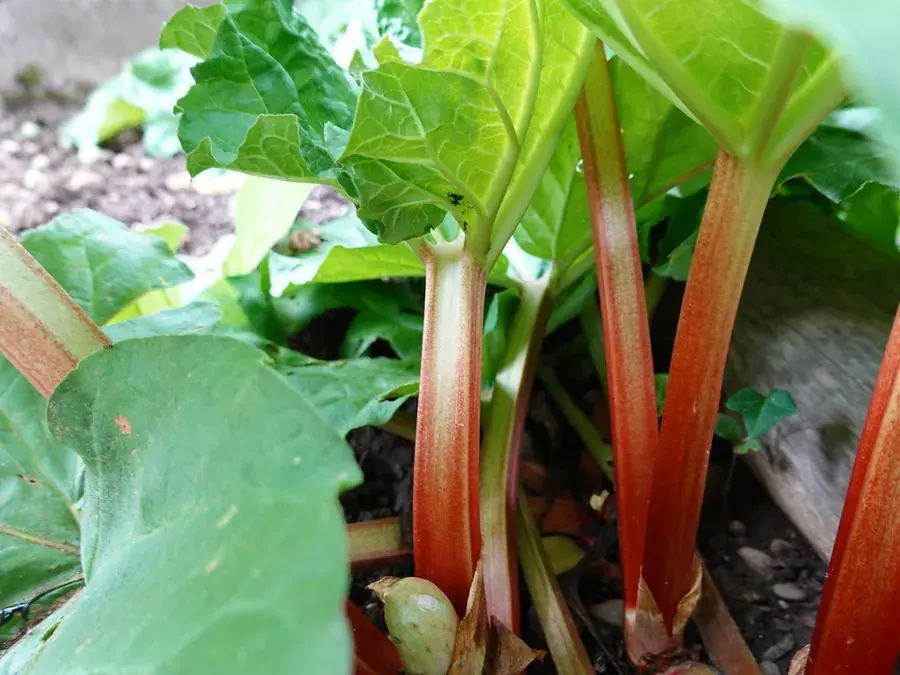
- Stalks 25–40 cm (10–15 in) long and as thick as a thumb, from late April in zone 6 to mid-May in zone 3. Colour tells you the variety, not the ripeness — a green-stalked rhubarb is ready when it is green. Take nothing the year you plant, a light picking the second year, and a full 8–10 weeks from the third year on. When the new stalks come up thin and spindly, the crown is telling you it has given enough.
- How to pick
- Grasp the stalk at its base, pull and twist it to one side; it comes away cleanly. Do not cut with a knife — the stub left behind is where crown rot gets in. Take no more than a third to half of the stalks at any one pass and stop by the end of June or the first days of July, so the plant keeps a full head of leaves to rebuild the crown for next year. Cut the leaves off straight away (they draw water out of the stalk) and compost them. Snap out any flower stalk the day you see it — it drains the crown and the stalks go stringy.
- On a frost night
- Autumn frost needs nothing from you. The leaves collapse after a few degrees of frost, the crown is already shutting down, and that is exactly what it wants; rhubarb survives winters across the prairies with nothing but snow on it. In spring it is the reverse question: new stalks take light frosts in stride, and a stalk that is still firm and upright after a frost is fine to eat. A stalk that has frozen hard and gone soft and limp is not — a severe freeze can move oxalic acid from the leaf into the stalk — so after a bad spring night, pull the mushy ones and compost them and wait for the next flush.
Where it keeps
Storing rhubarb
| Where | Temperature | Humidity | Keeps | How |
|---|---|---|---|---|
| On the plant | 5–20 °C41–68 °F | high | Through June — pull as you need it | Rhubarb keeps best where it grows; harvest the morning you cook. |
| Fridge crisper | 0–4 °C32–39 °F | high | 2–3 weeks | Leaves off, unwashed, in a plastic bag. Limp stalks firm up again in a jug of cold water for an hour. |
Putting it up
What to do with too many rhubarb
The freezer is the method, and rhubarb is the easiest thing in the garden to freeze: wash, trim, cut into 2 cm pieces, spread on a tray, freeze, bag. No blanching is needed; a one-minute blanch holds the colour a little better if you care, and you can pack raw pieces in syrup for a dessert fruit. Stewed rhubarb water-baths safely because it is strongly acid: the tested recipe heats 1 litre of cut rhubarb with 125 ml (½ cup) sugar until the juice runs and it boils, hot-packs it with 1 cm headspace, and processes 500 ml and litre jars 15 minutes at 0–300 m. The sugar is for quality, not safety. Strawberry-rhubarb jam is the classic — use a tested pectin recipe, since rhubarb on its own is short of pectin. What does not work: drying (leathery, sour, pointless), canning stalks that have frozen soft in the garden, and anything at all made from the leaves.
The fastest route and the one that keeps flavour best.
Jars boiled in a big pot — for high-acid food only.
- Water-bath canning
Strawberry rhubarb jam with Original Fruit Pectin
June in a jar: the first strawberries and the last tender rhubarb, set with powdered pectin so the tartness stays sharp.
About 6 × 250 ml jars · 40 minutes active
The recipe → - Drying
Fruit leather, apple or berry
Purée poured thin and dried into a roll-up: the snack children ask for by name, made from the fruit that was too soft for anything else.
500 ml (2 cups) of purée makes one 33 × 38 cm (13 × 15 inch) sheet, about 8 roll-ups · 20 minutes active
The recipe →
Saving seed
Grown from tubers, cloves, crowns or runners, not seed
Rhubarb is grown from crowns, not seed: seedlings are variable, slow (three years to the first picking) and rarely as good as the parent. Divide an established crown when it is 5–10 years old and the stalks have gone thin and crowded. Extension services prefer early spring, as soon as the ground can be worked and before the buds open; many gardeners do it in fall once the leaves have died back, and that works too. Dig the whole crown, cut it with a sharp spade into pieces that each have two or three fat pink buds and a good chunk of root, and replant them 1 m apart with the buds 5 cm (2 in) below the surface. A healthy crown gives five to ten new plants. Water them weekly through dry weather in their first season and take nothing from them that year.
Keeps: Not grown from seed in practice. Divisions give a light picking in their second spring and a full crop in the third.
The seed-saving guide →Next year
Planning rhubarb for next season
Rhubarb is a permanent resident, so it goes at the edge of the garden where the roots will never be dug over, in full sun and rich, well-drained soil — it rots in a wet spot. After the leaves die back, spread 5 cm of compost or rotted manure around (not on top of) the crown; that is the whole fertiliser program. Keep flower stalks cut, keep it watered in a July drought, and leave every leaf on after the harvest ends. Plant crowns 1 m apart in early spring. Hardiness is not the question in Canada: it is grown from zone 2 up, and the prairies are full of fifty-year-old plants. In hot zone 7 summers it needs afternoon shade more than anything.
Rhubarb at a glance
- Botanical name
- Rheum × hybridum
- Group
- Perennials
- Picked
- April, May, June
- Frost
- Very hardy: takes −8 °c and below; overwinters.
- Best put up as
- freezing, water-bath canning
- Seed
- Grown from tubers, cloves, crowns or runners, not seed
Questions people ask about rhubarb
When should you stop harvesting rhubarb?
By the end of June or the first week of July in most of Canada, and sooner if the new stalks are coming up thin. The leaves left standing through summer feed the crown for next year’s crop; keep pulling into August and the plant comes back weak. A stalk or two for a pie in July will not hurt an old crown, but the main harvest is April to June.
Are rhubarb leaves poisonous?
Yes. The leaves contain high levels of oxalic acid and are not food for people or animals; the rule in a family garden is that the leaf comes off before the stalk goes in the basket, and nothing from a rhubarb leaf goes in a mouth. They are fine in the compost — the oxalic acid breaks down quickly there and does not harm the pile or the garden it goes on.
Can you freeze rhubarb without blanching?
Yes. Cut the stalks into 2 cm pieces, freeze them on a tray and bag them; they keep a year and go straight from the freezer into a crumble or a pot of sauce. A one-minute blanch keeps the colour slightly brighter, which matters for a pink variety and not at all for a green one.
Is rhubarb safe to eat after a frost?
If the stalk is still firm and standing, yes — light frosts do not hurt it and the first stalks of the year usually come through several. If a hard freeze has left stalks soft, limp and mushy, pull and compost those; a severe freeze can move oxalic acid from the leaf down into a damaged stalk. New stalks will replace them within a couple of weeks.
When and how do you divide rhubarb?
When a crown is 5–10 years old and the stalks have become thin and crowded. Early spring, before the buds open, is the time extension services recommend; fall after the leaves die down also works. Dig the crown, chop it into pieces with two or three buds and plenty of root each, and replant with the buds 5 cm below the surface and 1 m apart. Take nothing from the divisions their first year.
Can kids pick rhubarb?
It is one of the best first harvests: the stalk comes off with a pull and a twist that a four-year-old can manage, and nothing needs a knife. Two rules — only the stalks, and the leaf comes off and goes to the compost before anything else happens. A raw stalk dipped in a saucer of sugar is the traditional reward, and it is safe.
Your own frost dates
When does this come in where you are?
Enter a town, postal code or ZIP and the garden year, the frost watch and this week’s guide are built from your own weather.
Checked against these sources ·
- Ohio State University Extension: Growing rhubarb in the home garden
- University of Minnesota Extension: Growing rhubarb
- NCHFP: Freezing and canning rhubarb
- Utah State University Extension: Rhubarb in the garden
- Iowa State University Extension: When can I divide rhubarb plants?
Harvest months are typical for zones 4–6 and move by weeks north and south. Storage figures are for the ideal; a house without a cold room will get the shorter end of each range.