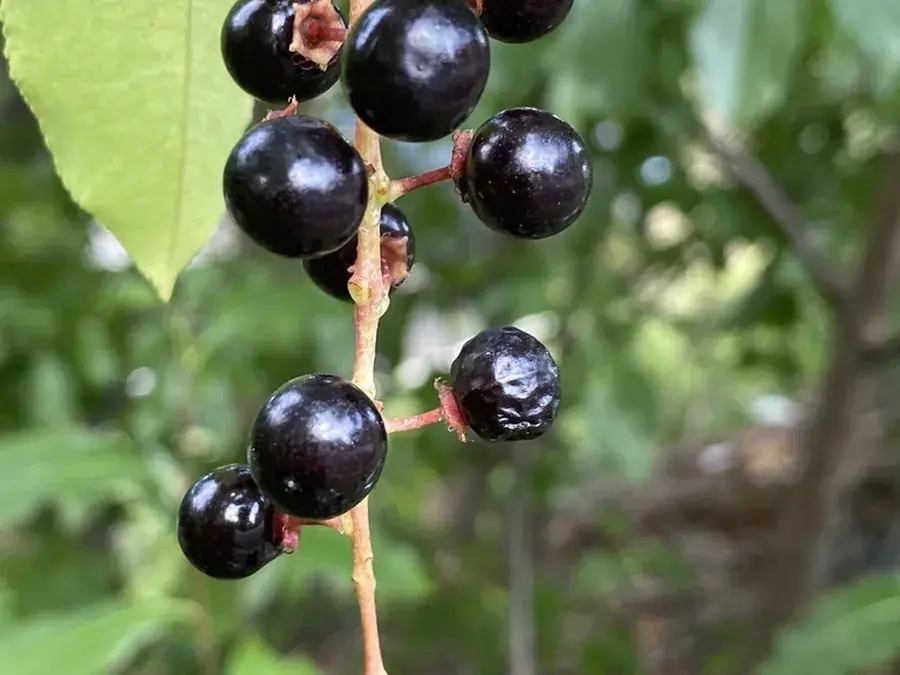
Photo by Sandy Wolkenberg on iNaturalist · CC BY 4.0
FruitSeason: August – September
Black cherry
Prunus serotina
- When
- Typically August – September — August, September. Earlier in the south, later in the north.
- Where it grows
- Fence lines, roadsides, old fields and the edges of hardwood forest; one of the first trees to seed into an abandoned pasture.
- How to know it
- A tall tree — the only cherry that grows to timber size — with young bark banded by horizontal pores and old bark broken into dark ‘burnt potato chip’ plates. Turn a leaf over: a line of rusty hairs runs along the base of the midrib. A snapped twig smells of bitter almond.
- Look-alikes
- Common buckthorn is the dangerous twin: black berries clustered along the twig at the leaf joints instead of in hanging chains, a short thorn at the tip of most twigs, no almond smell, and a fruit that acts as a violent purgative. Chokecherry is a shrub or small tree with denser, more astringent clusters and is edible too; pin cherry has bright red fruit on long stalks and is also edible.
- Harvest and use
- The dark, bittersweet cherries, strained for syrup, jelly, juice and wine; spit out or sieve every pit. Pick from low branches by hand and never break limbs — wilted cherry leaves kill grazing animals.
- Caution
- The pits, leaves, bark and twigs contain cyanide-forming compounds, and wilted leaves are the most dangerous of all. Eat only the flesh of the ripe fruit.
Black cherry at a glance
- Also called
- Wild black cherry, rum cherry, cerisier tardif (Quebec). Its smaller relatives chokecherry (Prunus virginiana) and pin cherry (P. pensylvanica) have their own uses and the same cyanide caution.
- Family
- Rosaceae, the rose family (which also includes the plums, apples, hawthorns and serviceberries).
- Where it grows
- Native from Nova Scotia and southern Quebec across southern Ontario, and throughout the eastern US from Maine to Florida and west to Minnesota, the eastern Plains and the Texas Hill Country; distinct varieties grow in the mountains of Arizona, New Mexico and west Texas. It is a pioneer of fence lines and old fields, so it is as common on a Toronto ravine edge or a Pennsylvania roadside as in the forest. In Europe it is a serious invader.
- When to pick
- August into early September in southern Ontario, Quebec and the Great Lakes states; from late July in the south and into mid-September in the Maritimes. The hanging clusters turn from red to purple-black over a couple of weeks and are at their best when fully black, slightly soft and sweet behind the bitterness. Birds strip a tree within days of ripening, so check often.
- Parts used
- The flesh of the fully ripe fruit, cooked and strained: syrup, jelly, juice, wine and the old ‘cherry bounce’. Simmer whole, mash gently and sieve so the pits stay intact and out of the pot. Raw, the cherries are bittersweet and seedy, fine for a taste. Nothing else from the tree is food: not the pits, the leaves, the bark or the twigs, though the bark’s almond smell has made it a traditional flavouring.
- Is any of it poisonous?
- Leaves, twigs, bark and pits contain cyanogenic glycosides (prunasin and amygdalin) that release hydrogen cyanide when crushed or digested. Wilted leaves on a broken or cut branch are the most dangerous form and kill cattle, horses, sheep and goats every year — Purdue puts the lethal dose for a sheep at well under half a kilogram (a pound). A swallowed whole pit passes through intact; crushed pits, or a child chewing a mouthful of them, are the risk. Strain every pit out of anything you cook down.
- More look-alikes to know
- Glossy buckthorn (Frangula alnus), another invader of wet ground, has untoothed leaves, red berries ripening to black scattered along the twig, no thorn and no almond smell — purgative like common buckthorn. Serviceberry has purple-black fruit in small clusters, but the fruit has a crown of dried sepals at its tip, like a tiny apple, and the leaves and twigs have no almond smell; it is edible. Peach-leaved and planted sweet cherries have larger fruit on long stalks in bunches, not in a hanging chain.
Questions people ask about black cherry
Are wild black cherries edible?
Yes — the ripe, purple-black fruit of a tree you have identified with certainty is edible, though bitter enough that most people cook and strain it for syrup, jelly or juice rather than eating it by the handful. Remove every pit. The leaves, bark, twigs and pits contain cyanide-forming compounds and are not food.
How do you identify a black cherry tree?
Three things. Young bark is smooth and dark with horizontal lines of pores, and old bark breaks into curled-up dark scales that people compare to burnt potato chips. The underside of each leaf has a row of rusty-brown hairs along the lower midrib. And a broken twig smells sharply of bitter almond. The fruit hangs in chains of 10 to 20 small cherries, each with its own stalk.
What is the difference between black cherry and chokecherry?
Size and texture, mostly. Black cherry is a forest tree that can reach 25 m (80 ft) with scaly plated bark; chokecherry is a shrub or small tree with smooth bark and broader, more sharply toothed leaves. Chokecherry’s clusters are denser and its fruit far more astringent. Both are edible once cooked and strained, and both carry cyanide in pits and leaves.
What looks like black cherry but is poisonous?
Common buckthorn, an invasive shrub of hedgerows and woodland edges. Its black berries sit in tight clusters at the leaf joints along the twig, not in hanging chains; most twigs end in a short thorn; the leaf veins curve toward the tip; and a scratched twig shows bright orange under the bark with no almond smell. The berries are a violent laxative. Cherry twigs are never thorny.
Why are wilted cherry leaves dangerous?
Because wilting breaks down the leaf cells and lets the cyanide-forming compounds react, so a branch blown down in a pasture or a pile of prunings becomes far more toxic than the living leaves. Livestock eating wilted cherry leaves can die within hours. If you have black cherry on a fence line, clear fallen limbs before animals reach them, and do not toss prunings over a fence.
Are black cherries safe for kids and dogs?
A child who eats a few ripe cherries and spits out the pits is fine; the worry is a mouthful of chewed pits or a child nibbling leaves or twigs, and in that case call poison control. For dogs the same applies — the flesh is harmless, the pits, stems and leaves are not, and a dog chewing a fallen branch should be stopped.
Found in these regions
- Great Lakes & St. Lawrence Lowlands
- Acadian Forest & Atlantic Coast
- Northeast Atlantic Coast & Piedmont
- Appalachian Highlands
- Central Hardwoods & Interior Plateaus
- Southeastern Piedmont & Coastal Plain
- Gulf Coast & Mississippi Lowlands
- Florida Peninsula
- Prairies & Great Plains
Hardiness zones 3–9.
Is it ready near you?
Get this week's foraging guide for your area
Enter a town, postal code or ZIP and we'll tell you what's in season right there this week — from your local climate, this week's weather and your ecological region.
Also ready in October
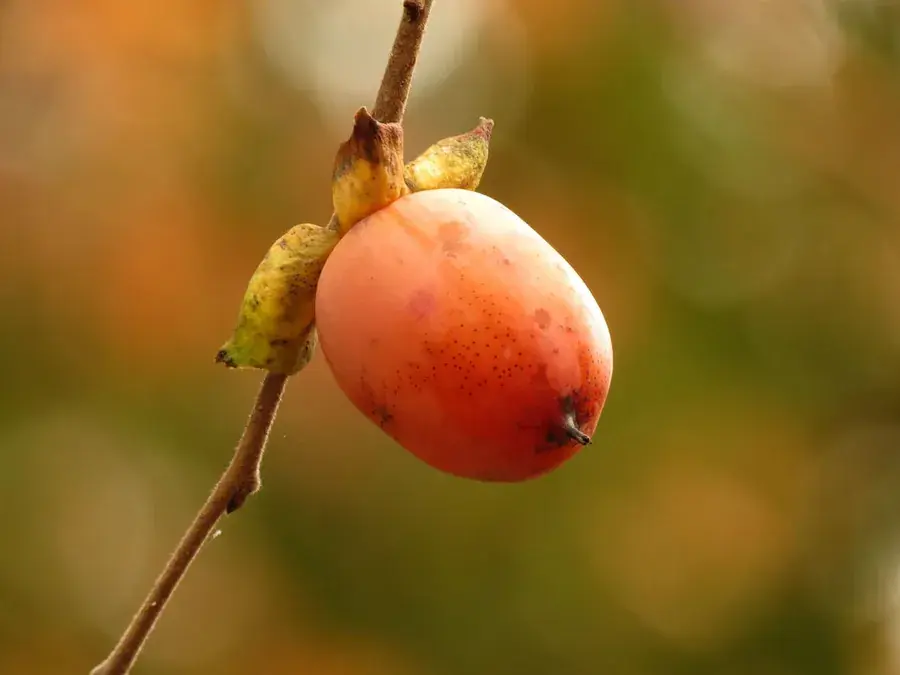 FruitOctober – November
American persimmon
Diospyros virginiana
Blocky alligator-hide bark; orange fruit the size of a plum, only ripe when it is wrinkled, squishy and usually on the ground.
How to know it & its look-alikes →Photo: Katja Schulz · CC BY 4.0
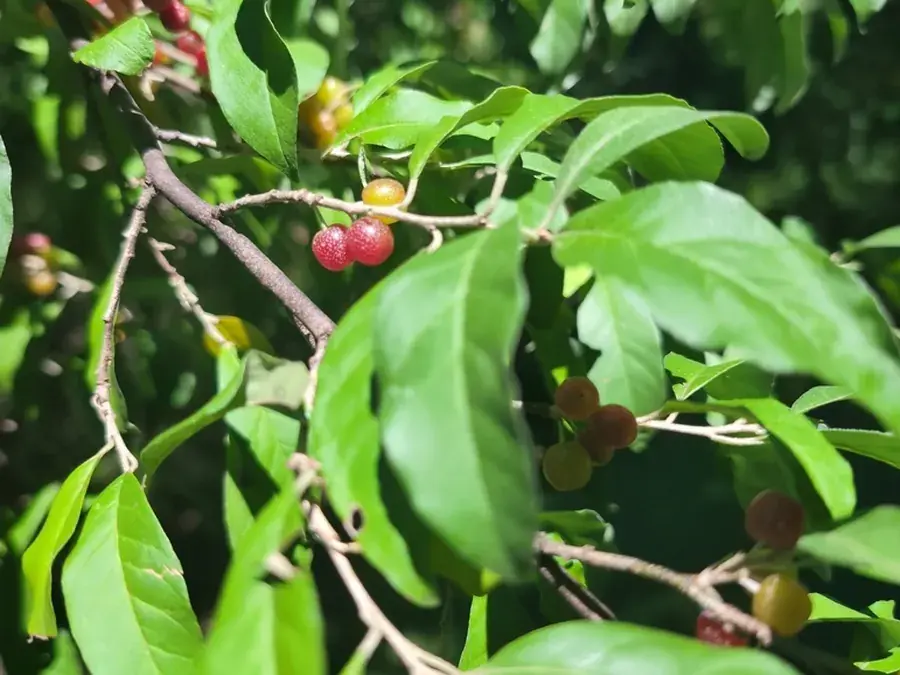 BerrySeptember – October
Autumn olive
Elaeagnus umbellata
A sprawling thorny shrub whose leaves flash silver underneath; in autumn it is weighed down with small red berries finely speckled with silver and brown scales, each with one soft seed.
How to know it & its look-alikes →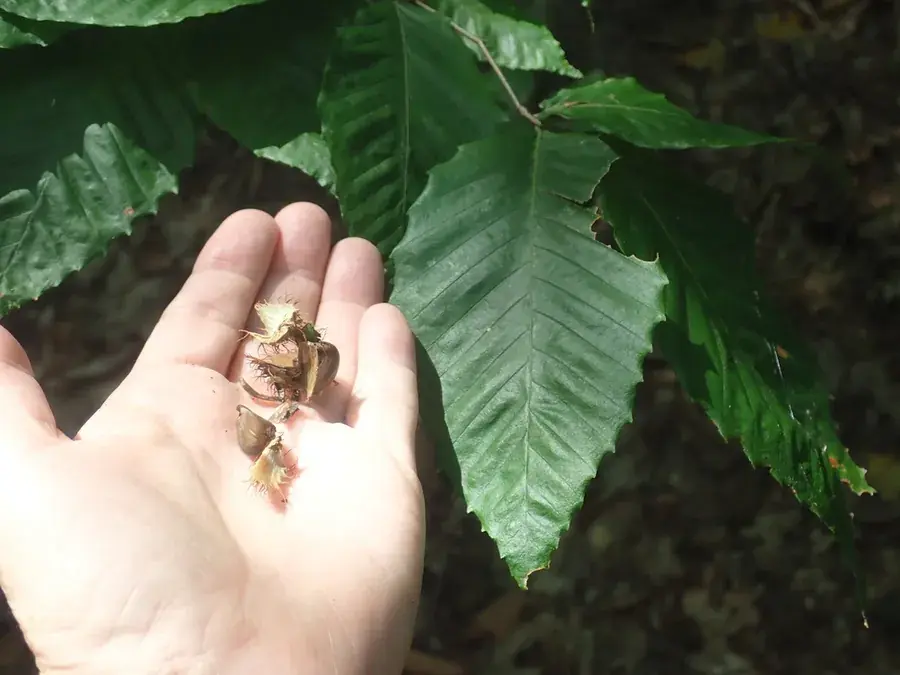 NutSeptember – October
Beechnuts
Fagus grandifolia
Smooth, pale grey bark on a tall tree; long, sharp, cigar-shaped buds; oval leaves with coarse teeth and straight parallel veins, many held, bleached, through winter. The nuts are small, three-sided and come two to a soft-bristled husk that splits into four.
How to know it & its look-alikes →
Checked against these sources ·
- Minnesota Wildflowers — Black cherry
- NC State Extension — Prunus serotina
- Purdue University Extension — Toxic plants: Black cherry
- Minnesota Wildflowers — Common buckthorn
Seasons are typical for the middle of the range and move by weeks north and south, and up and down hills.
Educational information only. Never eat a wild plant or mushroom identified from a single photograph or description — confirm with a regional field guide or an experienced forager, and know the poisonous species in your area first.