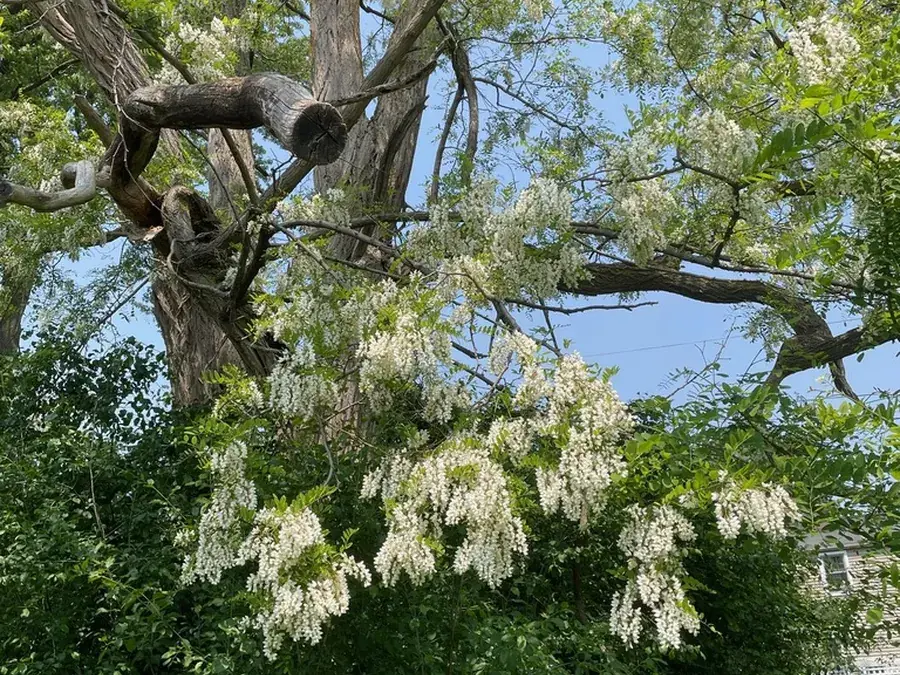
TreeSeason: May – June
Black locust flowers
Robinia pseudoacacia
This one has a dangerous look-alike
Wisteria hangs similar racemes, usually purple but sometimes white, from a twining vine, not a tree, and its seeds and pods are poisonous. Honey locust has branched thorns on the trunk, no showy white flowers, and long twisted pods; bristly locust is a pink-flowered shrub. Redbud has heart-shaped leaves and magenta flowers tight to the bark.
- When
- Typically May – June — May, June. Earlier in the south, later in the north.
- Where it grows
- Native to the Appalachians and Ozarks, now planted and run wild on roadsides, railway banks, old fields and city edges across the continent.
- How to know it
- Only the flowers are food: hanging 10–20 cm (4–8 in) clusters of white, sweet-scented pea flowers in late May or June on a deeply furrowed tree with feathery compound leaves and a pair of short spines at the base of each leaf.
- Harvest and use
- Pull the open flowers off the stems and eat them fresh, dip whole clusters in batter for fritters, or steep them for syrup and cordial. The window is one to two weeks; pick from several trees and never strip a branch.
- Caution
- The bark, leaves, seeds and wood of black locust are poisonous — children have been poisoned chewing the bark and horses have died of it. Eat the flowers only, and only once they are open. Invasive in parts of the Midwest and West.
Black locust flowers at a glance
- Also called
- False acacia, yellow locust, robinier faux-acacia (Quebec); the flowers are the ‘acacia’ of French and Italian acacia fritters and acacia honey.
- Family
- Fabaceae, the pea and bean family (which also includes redbud, honey locust and wisteria).
- Where it grows
- Native only to the central and southern Appalachians and the Ozarks. It was planted so widely for fence posts, honey and erosion control that it now grows wild in every one of the lower 48 states and in southern Ontario, Quebec, the Maritimes and British Columbia. It is counted invasive in parts of the Midwest, the Great Plains and the West, and Minnesota lists it as a noxious weed. It is abundant on roadsides, railway banks and old farmland from Toronto to Portland.
- When to pick
- Late May into June in southern Ontario, Quebec and the Great Lakes region; May in the mid-Atlantic and the Ozarks; mid-June in the Maritimes. Each tree flowers for about ten days and a neighbourhood for two or three weeks, so watch for the first white clusters and the heavy honey scent and go that week. Pick clusters whose lower flowers are open and upper buds still closed; brown-edged flowers are past.
- Parts used
- Only the flowers. Strip the open blossoms from the green stalk for salads, pancakes and ice cream, or dip whole clusters in a thin batter and fry them as fritters, stalk left on as a handle. Steep the flowers in hot sugar syrup for cordial, or in white wine. Remove as much of the green stem as you can; the flowers themselves are the sweet part. Bark, leaves, seeds, pods and wood are poisonous and never used.
- Is any of it poisonous?
- Every part of black locust except the flowers is poisonous: the bark, the leaves, the seeds in the flat brown pods, and the wood. The toxins, robin and robitin, are lectins related to those in raw kidney beans; symptoms are weakness, vomiting, bloody diarrhea, a weak pulse and cold limbs, and NC State rates it a high-severity poison for people, livestock and pets. Horses have died from chewing the bark of fence posts, and children have been poisoned by chewing twigs and bark. Nobody should eat the pods or seeds, raw or cooked.
- More look-alikes to know
- Clammy locust (Robinia viscosa) and bristly locust (R. hispida) are shrubby relatives with pink flowers and sticky or bristly stems; their flowers are not the tradition and their other parts carry the same toxins. Yellowwood (Cladrastis kentukea) hangs white pea flowers in June too but has no spines and smooth grey bark; it is not a food plant. Kentucky coffeetree has huge doubly compound leaves and thick woody pods. A true acacia (Acacia) has yellow or cream pompom flowers and grows only in the far south.
Questions people ask about black locust flowers
Are black locust flowers edible?
Yes — the open white flowers of black locust, picked in their one- to two-week season in late spring, are eaten raw, fried as fritters and made into syrup, and have been for centuries in Europe under the name acacia. Everything else on the tree — bark, leaves, seeds, pods, wood — is poisonous, so be certain of the tree and eat the flowers alone.
How do you identify a black locust tree?
A medium tree with deeply furrowed, ropy grey-brown bark; feathery compound leaves of 7 to 19 small oval leaflets; a pair of short, sharp spines at the base of each leaf on young growth; and in late May or June, drooping 10–20 cm (4–8 in) clusters of white, sweet-smelling pea flowers followed by flat brown pods 5–10 cm (2–4 in) long that hang on through winter.
What parts of black locust are poisonous?
The bark, leaves, seeds and pods, and the wood, all of which contain the lectins robin and robitin. Poisoning causes weakness, vomiting, bloody diarrhea and a slow, weak pulse and can be serious; it is best known in horses that chew fence posts or bark, and in children who chew twigs. The flowers are the exception and are the only part eaten.
What looks like black locust but is poisonous?
Wisteria hangs similar racemes of pea flowers in May, but from a thick twining vine over a fence or pergola rather than a tree, nearly always in purple or lilac, with pods and seeds that are poisonous. Honey locust is a tree with branched thorns on the trunk and small greenish flowers, nothing you could mistake for a white cluster; the sweet pulp of its pods is a separate, edible matter. Redbud puts magenta flowers directly on the bark.
When do black locust trees bloom?
For about ten days per tree between mid-May and mid-June, depending on where you live — earlier in Virginia and Missouri, late May around Toronto and Montreal, into June on the Maritime coast. The scent carries, and bees swarm the trees; when you smell honey on a warm evening, go and look.
Is black locust safe around children and dogs?
The flowers, yes; the tree, no. Children should not chew the twigs or the bark, and the flat brown pods that litter the ground in autumn are not a bean to play at eating. Dogs and horses that chew the bark can be poisoned. If a child or pet has eaten any part but the flowers, call poison control.
Found in these regions
- Acadian Forest & Atlantic Coast
- Great Lakes & St. Lawrence Lowlands
- Northeast Atlantic Coast & Piedmont
- Appalachian Highlands
- Central Hardwoods & Interior Plateaus
- Southeastern Piedmont & Coastal Plain
- Prairies & Great Plains
- Western Mountains & Interior Plateaus
- Pacific Maritime
- Mediterranean California
Hardiness zones 3–9.
Is it ready near you?
Get this week's foraging guide for your area
Enter a town, postal code or ZIP and we'll tell you what's in season right there this week — from your local climate, this week's weather and your ecological region.
Also ready in October
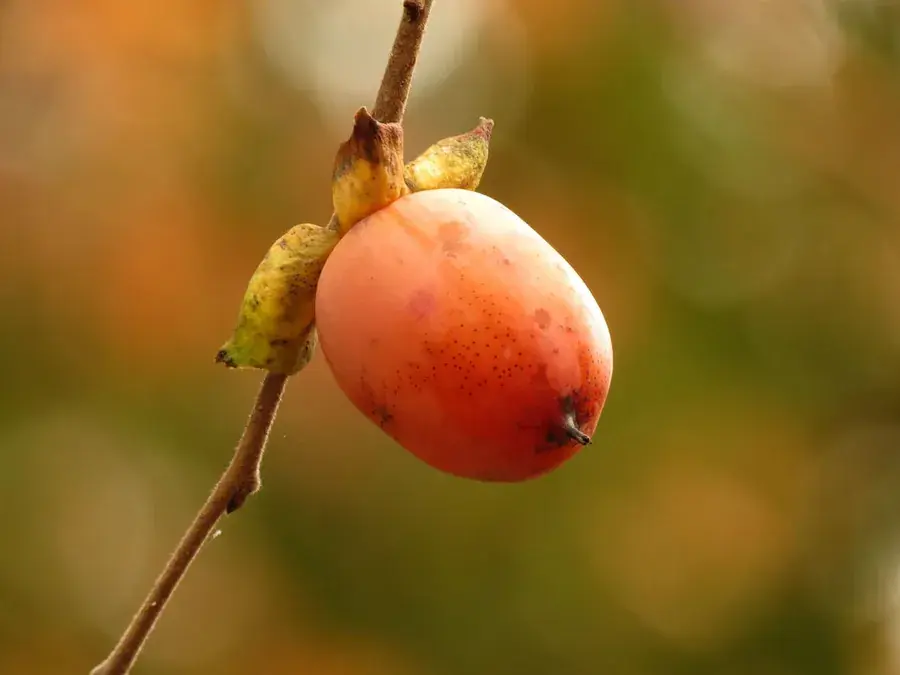 FruitOctober – November
American persimmon
Diospyros virginiana
Blocky alligator-hide bark; orange fruit the size of a plum, only ripe when it is wrinkled, squishy and usually on the ground.
How to know it & its look-alikes →Photo: Katja Schulz · CC BY 4.0
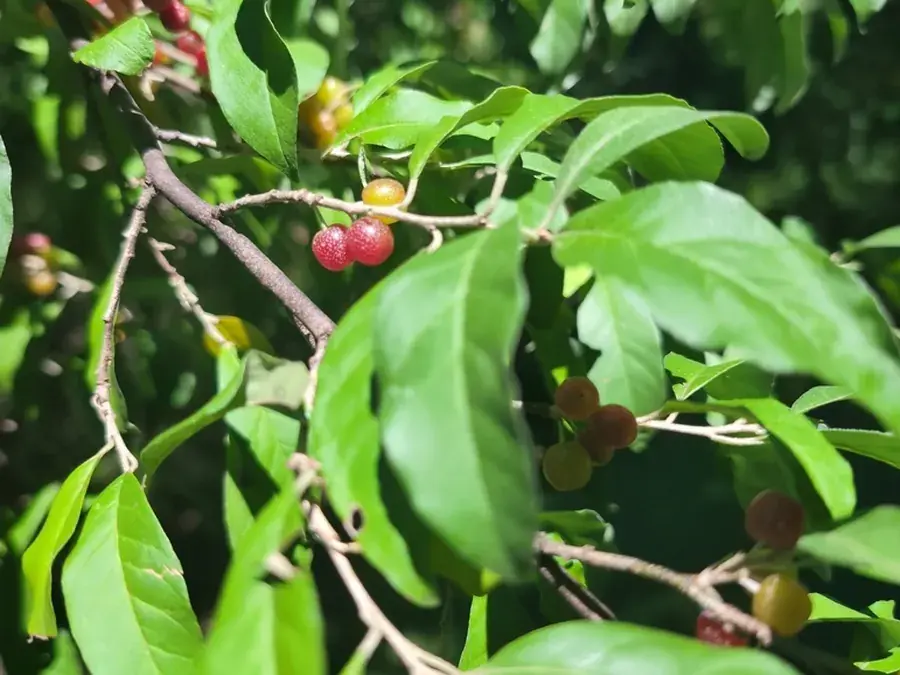 BerrySeptember – October
Autumn olive
Elaeagnus umbellata
A sprawling thorny shrub whose leaves flash silver underneath; in autumn it is weighed down with small red berries finely speckled with silver and brown scales, each with one soft seed.
How to know it & its look-alikes →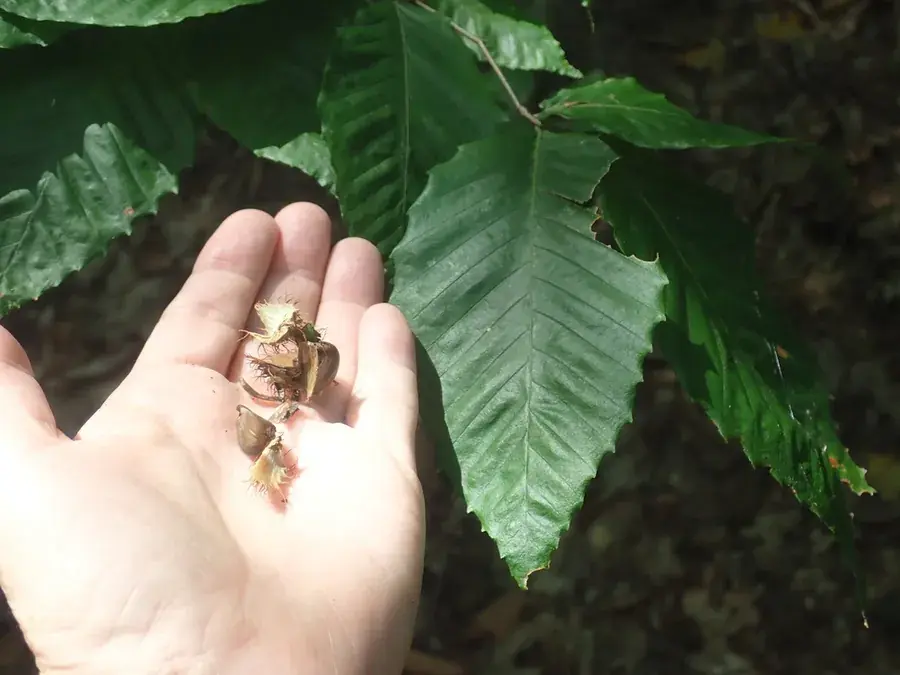 NutSeptember – October
Beechnuts
Fagus grandifolia
Smooth, pale grey bark on a tall tree; long, sharp, cigar-shaped buds; oval leaves with coarse teeth and straight parallel veins, many held, bleached, through winter. The nuts are small, three-sided and come two to a soft-bristled husk that splits into four.
How to know it & its look-alikes →
Checked against these sources ·
- NC State Extension — Robinia pseudoacacia
- Minnesota Wildflowers — Black locust
- Poison Control (America’s Poison Centers): Are black locust trees toxic?
- NC State Extension — Wisteria sinensis
- NC State Extension — Gleditsia triacanthos (honey locust)
- VASCAN (Database of Vascular Plants of Canada) — Robinia pseudoacacia
Seasons are typical for the middle of the range and move by weeks north and south, and up and down hills.
Educational information only. Never eat a wild plant or mushroom identified from a single photograph or description — confirm with a regional field guide or an experienced forager, and know the poisonous species in your area first.