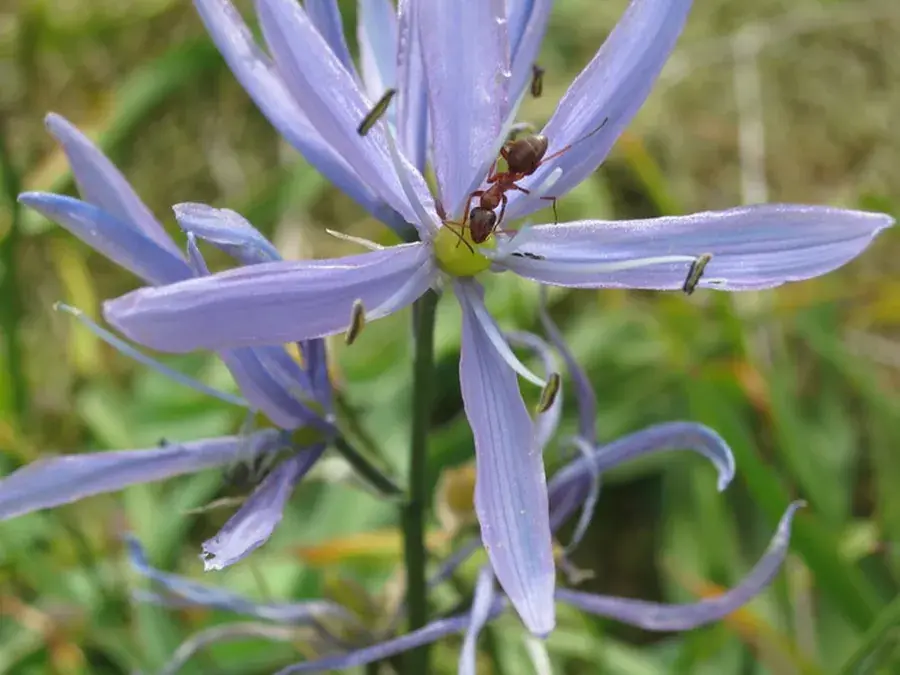
Photo by Ed Alverson on iNaturalist · CC BY 4.0
RootSeason: June – July
Camas
Camassia quamash
This one has a dangerous look-alike
Death camas (Toxicoscordion venenosum) grows bulb to bulb with camas and has killed people who dug by the bulb. Its flowers are cream-white in a denser spike; camas flowers are blue. Identify and flag every plant in bloom, dig nothing you did not flag, and discard any bulb you are unsure of.
- When
- Typically June – July — June, July. Earlier in the south, later in the north.
- Where it grows
- Meadows and prairies that are wet in spring and dry by midsummer: Garry oak savannah, vernal swales, Palouse grassland and mountain meadows, in sheets that look like standing water when in bloom.
- How to know it
- Grass-like basal leaves and an upright spike of starry six-petalled blue to violet flowers in April–June; the bulb below is a plain white onion-shape with no smell. Mark plants while they are in flower and dig only those — the bulb alone cannot be told from death camas.
- Harvest and use
- The bulb, dug after the flowers fade in June–July and traditionally pit-roasted for 24–48 hours until dark and sweet; raw or briefly cooked it is starchy and gassy because its inulin has not broken down. This is a keystone food of Coast Salish, Nez Perce, Kalapuya and other Plateau and Northwest peoples, who tended camas prairies for millennia. Harvest only on private land with an invitation, and leave wild meadows to those with rights and knowledge.
- Caution
- Camas prairies are rare and culturally significant; most are protected, and digging in parks and reserves is illegal. Many documented poisonings come from this one confusion. Not a plant for a first-time forager.
Camas at a glance
- Also called
- Common camas, small camas, blue camas, quamash, kwetlal (Lekwungen), qém’es (Nez Perce). Great camas (Camassia leichtlinii), taller and later, is the second food species west of the Cascades; both are simply ‘camas’ to the people who harvest them.
- Family
- Asparagaceae, the asparagus family (subfamily Agavoideae, with agave and yucca); older books put it in the lily family. Death camas is in a different family, Melanthiaceae.
- Where it grows
- Native to the Pacific Northwest and the interior west: southern Vancouver Island and the Gulf Islands, southwestern BC and the southwestern corner of Alberta; western Washington and Oregon, the Willamette Valley, and east of the Cascades through the Palouse, Idaho, western Montana, Utah and Wyoming; south to northern California. Camas prairies once covered tens of thousands of hectares; most have gone to farmland, pasture and towns, and the surviving meadows are small and often protected.
- When to pick
- Bulbs are dug after flowering, when the seed pods have formed and the flowers have faded — June into July in lowland prairies, July at elevation — because that is the last moment the plant can be told from death camas by its flower stalk. Flowering is April–May on the coast and May–June inland. Bulbs dug in spring are smaller and the plant has not set seed.
- Parts used
- The bulb, 1–3 cm (½–1 in) across, dug with a digging stick after the plant has been identified and flagged in flower. Traditionally it is pit-cooked for 24–48 hours, which converts its inulin to sweet, digestible fructose and turns the bulb dark brown and soft like a roasted fig; the cooked bulbs were eaten, pressed into cakes and dried for winter and trade. Leaves, flowers and seeds are not food. Slow-cooked a day or more in a modern oven or slow cooker it works; quickly cooked it is starchy and causes wind.
- Is any of it poisonous?
- Camas itself is not poisonous, but raw or briefly cooked bulbs are hard to digest and famously flatulent because the inulin has not broken down. The hazard is death camas, which grows in the same meadows and has an identical-looking bulb.
- More look-alikes to know
- Mountain death camas (Anticlea elegans) joins meadow death camas in the mountains and north, with the same cream-white flowers and the same poison. Wild hyacinth (Camassia scilloides) is the eastern camas of the Midwest, pale blue and edible, outside this entry’s range. Blue-eyed grass and grass widows share the spring meadows with blue or purple flowers but have no bulb worth digging. Any plant with grass-like leaves and no flower stalk is unidentified and must stay in the ground.
Questions people ask about camas
How do you tell camas from death camas?
Only by the flowers. Camas has blue to violet six-petalled stars in a loose spike; meadow death camas (Toxicoscordion venenosum) has small cream-white flowers in a denser spike, and mountain death camas (Anticlea elegans) has larger cream stars with a green heart on each petal. Below ground the bulbs are the same shape, colour and size and neither smells of anything. Mark plants in bloom with flags and dig only flagged plants after they fade.
Is camas edible?
Yes — camas bulbs, correctly identified in flower and slow-cooked for a day or more, were one of the most important plant foods of western North America and are still harvested and pit-roasted by Coast Salish, Nez Perce, Kalapuya and other Plateau and Northwest nations. Raw or quickly cooked they are starchy and indigestible. Misidentified, the ‘camas’ may be death camas, which has killed foragers and livestock.
Can I harvest camas?
In most places, no. Camas prairies are rare and culturally significant, nearly all surviving meadows are in parks, reserves, Garry oak restoration sites or Indigenous harvest areas where digging is prohibited, and many First Nations and Tribes are actively restoring them. If you want to taste camas, look for a community harvest event you have been invited to, or grow your own from nursery bulbs. Digging wild camas uninvited is both illegal in most places and a quiet kind of theft.
Why is camas cooked for so long?
Because the bulb stores its energy as inulin, a fibre people cannot digest; 24–48 hours of steady, moist heat breaks it into fructose, which is why a pit-roasted camas bulb is sweet and brown like a roasted fig. Traditional pit ovens used hot rocks, wet vegetation and earth. A slow cooker on low for 24–36 hours does the same job; a quick boil does not.
Who are the traditional camas harvesters?
Camas was a staple and a trade good for peoples from Vancouver Island to the Snake River: the Lekwungen and other Coast Salish nations tended camas meadows on southern Vancouver Island, the Kalapuya managed the Willamette Valley prairies with fire, and for the Nez Perce it was the most important root in trade, dug for weeks each summer at inherited family grounds. Lewis and Clark survived on it in 1805. Loss of camas prairies to settlers and grazing was one grievance behind the Nez Perce and Bannock wars.
Is camas safe for children?
Not as a foraged food. The plant that kills in camas meadows is death camas, and no child can be expected to hold the flag-it-in-flower rule for weeks. Children can admire the blue meadows in May and learn why the white-flowered plant among them matters; the digging, where it is done at all, is adult work with permission.
Found in these regions
Hardiness zones 4–8.
Is it ready near you?
Get this week's foraging guide for your area
Enter a town, postal code or ZIP and we'll tell you what's in season right there this week — from your local climate, this week's weather and your ecological region.
Also ready in October
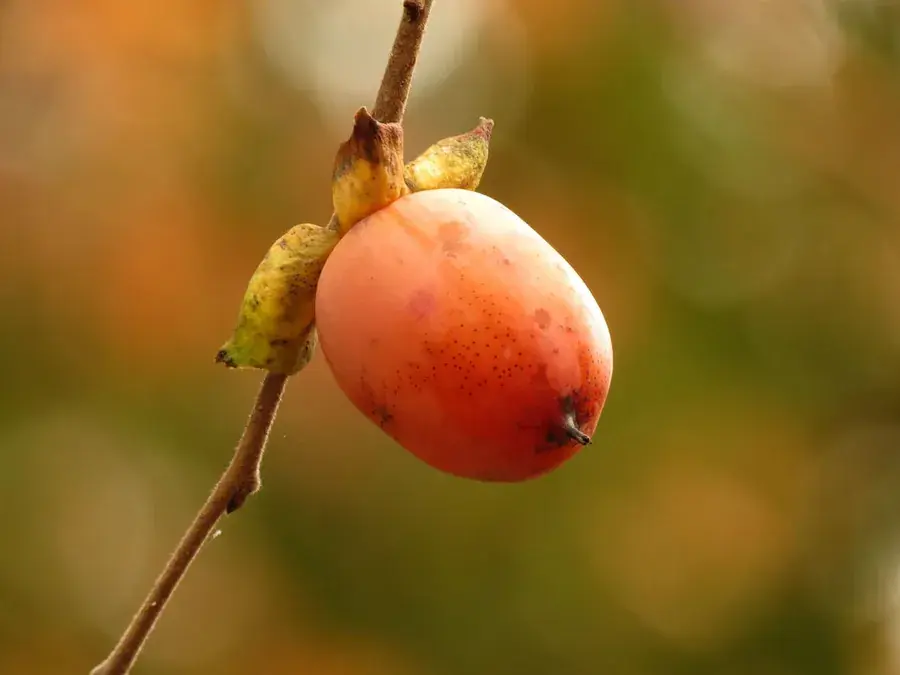 FruitOctober – November
American persimmon
Diospyros virginiana
Blocky alligator-hide bark; orange fruit the size of a plum, only ripe when it is wrinkled, squishy and usually on the ground.
How to know it & its look-alikes →Photo: Katja Schulz · CC BY 4.0
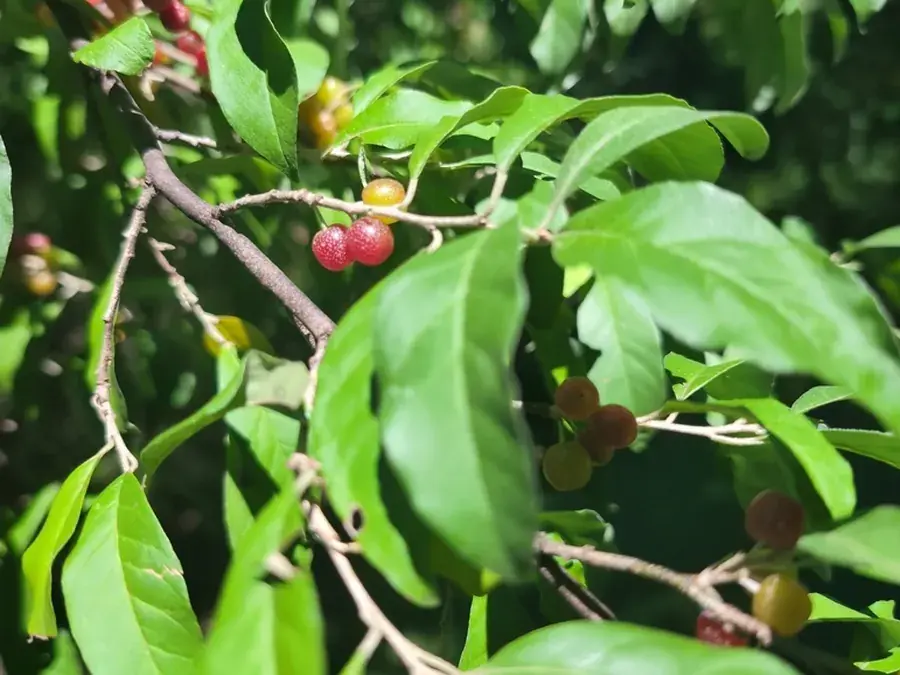 BerrySeptember – October
Autumn olive
Elaeagnus umbellata
A sprawling thorny shrub whose leaves flash silver underneath; in autumn it is weighed down with small red berries finely speckled with silver and brown scales, each with one soft seed.
How to know it & its look-alikes →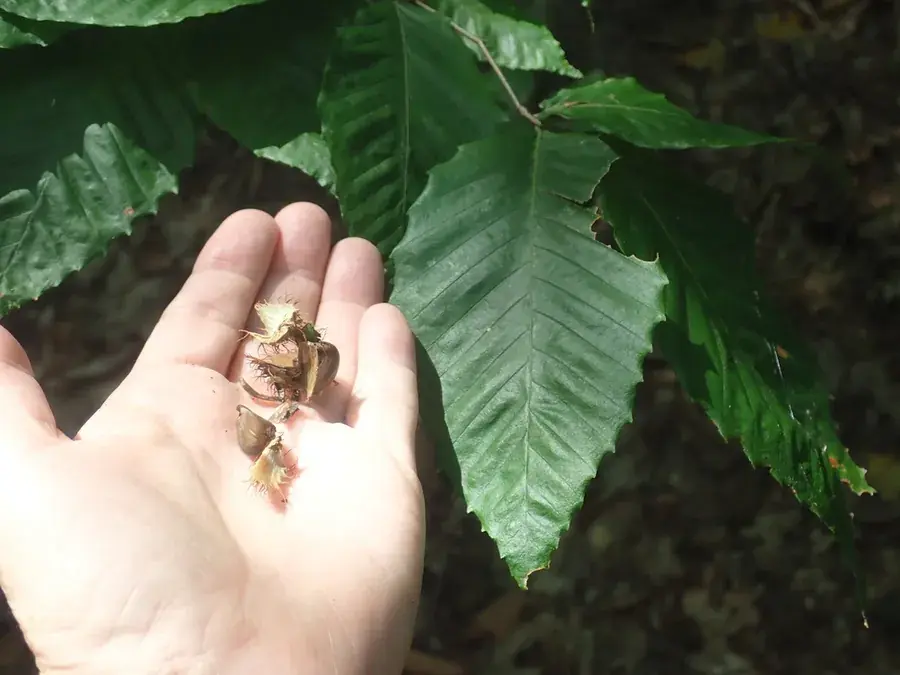 NutSeptember – October
Beechnuts
Fagus grandifolia
Smooth, pale grey bark on a tall tree; long, sharp, cigar-shaped buds; oval leaves with coarse teeth and straight parallel veins, many held, bleached, through winter. The nuts are small, three-sided and come two to a soft-bristled husk that splits into four.
How to know it & its look-alikes →
Checked against these sources ·
- USDA NRCS Plant Guide — Camassia quamash ssp. quamash (titled ‘Great camas’ by NRCS)
- USDA Forest Service Fire Effects Information System — Camassia quamash
- Oregon State University Extension — Meadow deathcamas in the Pacific Northwest (PNW 104)
- Minnesota Wildflowers — Mountain death camas (Zigadenus elegans)
- VASCAN — Camassia quamash
- Wikipedia — Camassia quamash
Seasons are typical for the middle of the range and move by weeks north and south, and up and down hills.
Educational information only. Never eat a wild plant or mushroom identified from a single photograph or description — confirm with a regional field guide or an experienced forager, and know the poisonous species in your area first.