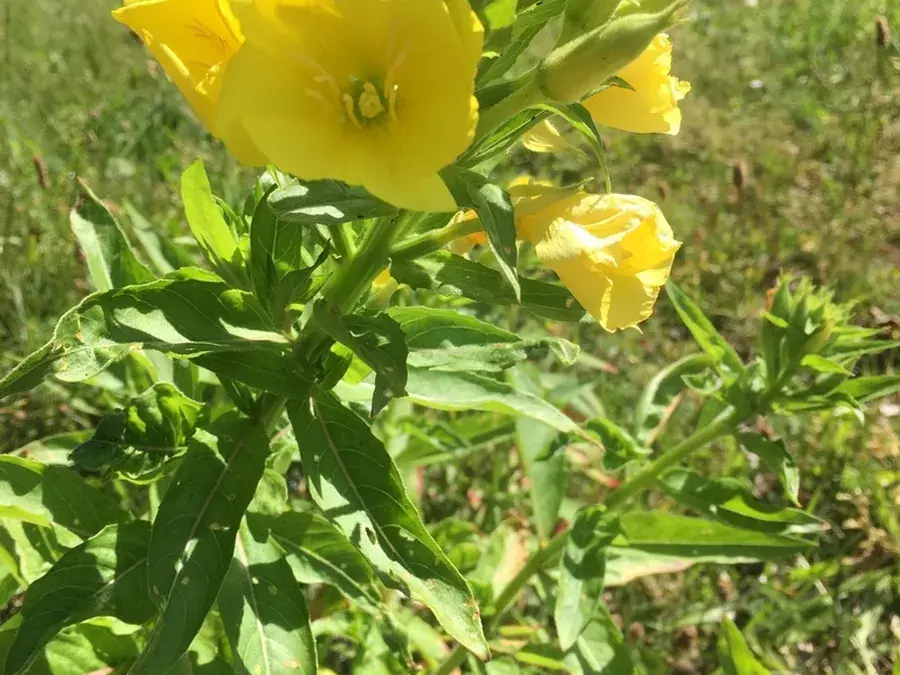
Photo by maureen_c-m on iNaturalist · CC BY 4.0
RootIn season now (October)
Evening primrose
Oenothera biennis
- When
- Typically March – April, October – November — October, November, March, April. Earlier in the south, later in the north.
- Where it grows
- Dry, open, disturbed ground — roadsides, railway banks, gravel pits, dunes, old fields and garden edges — in full sun.
- How to know it
- A first-year rosette of long, narrow, slightly hairy leaves, each with a prominent white or pink midrib and often red flecks; the second-year stalk is 1–2 m (3–6 ft), reddish and hairy, with four-petalled yellow flowers that open at dusk and a cross-shaped stigma.
- Look-alikes
- Mullein rosettes are thick and woolly like felt; curly dock is hairless with crisped, wavy edges and no white midrib. Foxglove, naturalized in the Pacific Northwest and common in gardens, also makes a rosette: its leaves are soft, wrinkled and woolly underneath with no white midrib, and every part is deadly.
- Harvest and use
- The pink-red taproot of first-year rosettes, dug in fall or very early spring and boiled in a change of water — peppery and parsnip-like. Young leaves and shoots cooked, flower buds and flowers, and the tiny seeds. Leave some rosettes to flower.
- Caution
- Raw, the root and shoots sting the throat, and a few people find them irritating even cooked — taste a little first. Only first-year plants are worth digging.
Evening primrose at a glance
- Also called
- Common evening primrose, evening star, king’s cure-all, onagre bisannuelle (Quebec). The oil sold in capsules is pressed from its seeds.
- Family
- Onagraceae, the evening primrose family (which also includes fireweed and fuchsia). Not related to true primroses.
- Where it grows
- Native across southern Canada from British Columbia to Newfoundland and through most of the United States east of the Rockies, commonest in the northeast, the Great Lakes, the Ohio Valley and the Southeast; introduced and scattered on the Pacific coast. A plant of disturbed ground that has followed roads and railways everywhere.
- When to pick
- Roots in October and November from first-year rosettes — no stalk, just the flat rosette — or in March and April before they bolt; once a stalk shows, the root is tough and bitter. Young leaves and shoots in spring, flower buds and flowers July–October, seeds from the dry capsules in fall. Rosettes stay green under snow, so warm spells all winter are fair game in the south.
- Parts used
- The pinkish taproot of first-year plants, scrubbed, sliced and boiled in one or two changes of water — peppery, with a parsnip sweetness. Young leaves and the first spring shoots, cooked. Flower buds and flowers, raw or cooked. The tiny seeds, toasted or ground. Second-year roots and mature leaves are too tough and strong to bother with.
- Is any of it poisonous?
- Nothing seriously poisonous, but the raw root and shoots carry an irritant that makes the throat tickle and burn, and a minority of people find them scratchy even after cooking. Taste a small cooked piece before you commit to a dish. The real caution is the rosette stage, where several unrelated plants look alike — see foxglove below.
- More look-alikes to know
- Foxglove (Digitalis purpurea): a biennial rosette, naturalized across the Pacific Northwest and common as a garden escape elsewhere, with soft, downy, deeply wrinkled grey-green leaves, woolly underneath, on winged stalks, and no clean white midrib; every part contains cardiac glycosides and can kill. Common mullein: a thick felted rosette, grey-woolly on both sides. Curly dock: hairless, with strongly crisped wavy edges and a papery sheath at the leaf base. Other evening primroses (cutleaf, small-flowered, biennial relatives): lookalike rosettes that are not dangerous and are used the same way. Learn the white-midribbed, lightly hairy, often red-flecked leaf, and never dig a rosette you cannot name.
Questions people ask about evening primrose
How do you identify evening primrose in its first year?
A flat rosette of long, narrow, slightly hairy leaves 10–30 cm (4–12 in) long, each with a conspicuous white or pink midrib and often red flecks, over a pink-red taproot. Nearby you will usually find last year’s dead stalks, 1–2 m (3–6 ft) tall, with woody four-chambered seed capsules up the stem. Mullein is woolly and dock is hairless and crisped; neither has the white midrib.
What part of evening primrose is edible?
The first-year root, cooked; young leaves and shoots, cooked; the flower buds and flowers; and the seeds. The root is the main harvest — peppery and parsnip-like after boiling in a change of water. Second-year roots are woody.
When do you dig evening primrose root?
Late fall or very early spring, from rosettes that have not bolted — October and November, or March and April in the Great Lakes and northeast. In mild regions any winter thaw works. Once the flower stalk appears, leave the plant to bloom and set seed for next year’s rosettes.
Can you eat evening primrose raw?
The flowers and buds, yes. The root and shoots are better cooked: raw they leave a peppery, scratchy burn in the throat that some people feel even after cooking. Boil the root in a change of water and taste a piece before serving it.
What poisonous plant looks like evening primrose?
Foxglove, at the rosette stage. Foxglove leaves are soft, wrinkled and downy, woolly underneath, with no white midrib; evening primrose leaves are narrower, lightly hairy and have that white or pink midrib. Foxglove is deadly — it is the source of digitalis — and is common in Pacific Northwest clearings and in gardens. If you are not sure of the rosette, wait for the flowers.
Is evening primrose safe for children?
The flowers are a fine thing for a child to taste at dusk, and the cooked root is harmless beyond a throat tickle. Keep the digging to an adult, because the rosette can be confused with foxglove in gardens and in the west. Nothing about the plant is toxic to dogs.
Found in these regions
- Boreal Forest & Shield
- Acadian Forest & Atlantic Coast
- Great Lakes & St. Lawrence Lowlands
- Northeast Atlantic Coast & Piedmont
- Appalachian Highlands
- Central Hardwoods & Interior Plateaus
- Southeastern Piedmont & Coastal Plain
- Gulf Coast & Mississippi Lowlands
- Prairies & Great Plains
- Pacific Maritime
Hardiness zones 3–9.
Is it ready near you?
Get this week's foraging guide for your area
Enter a town, postal code or ZIP and we'll tell you what's in season right there this week — from your local climate, this week's weather and your ecological region.
Also ready in October
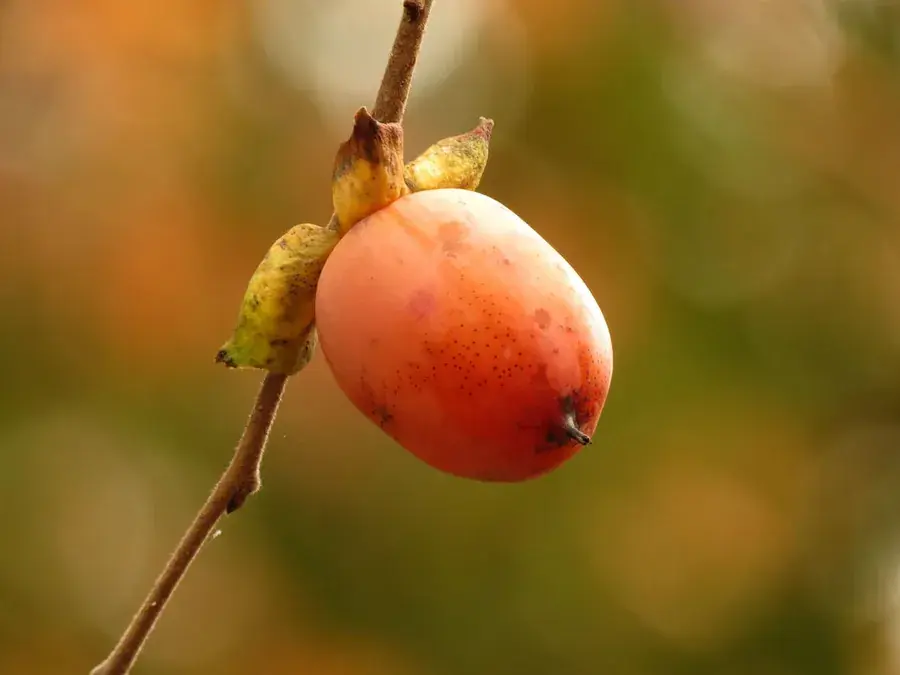 FruitOctober – November
American persimmon
Diospyros virginiana
Blocky alligator-hide bark; orange fruit the size of a plum, only ripe when it is wrinkled, squishy and usually on the ground.
How to know it & its look-alikes →Photo: Katja Schulz · CC BY 4.0
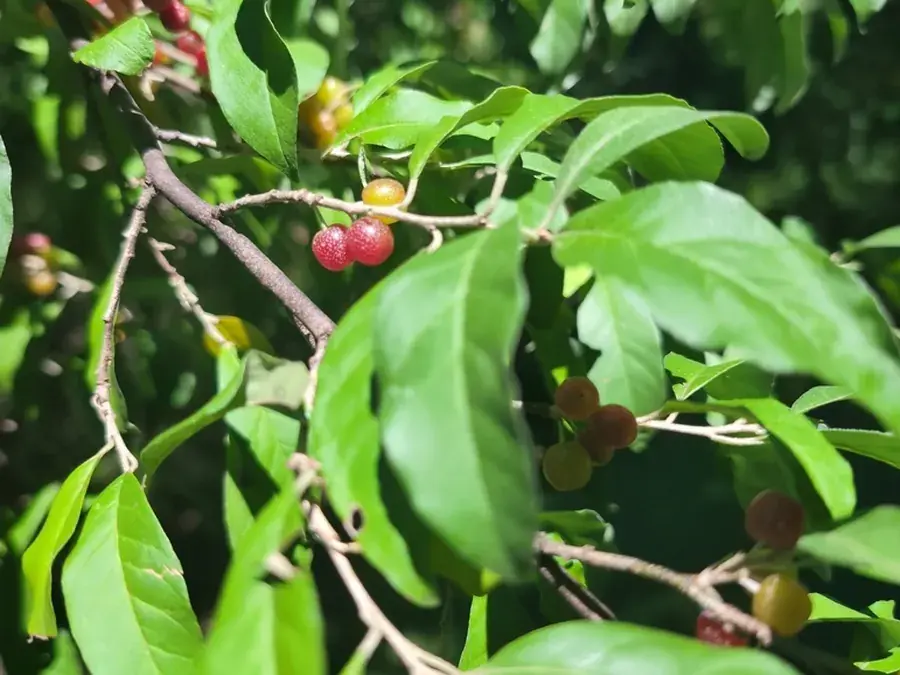 BerrySeptember – October
Autumn olive
Elaeagnus umbellata
A sprawling thorny shrub whose leaves flash silver underneath; in autumn it is weighed down with small red berries finely speckled with silver and brown scales, each with one soft seed.
How to know it & its look-alikes →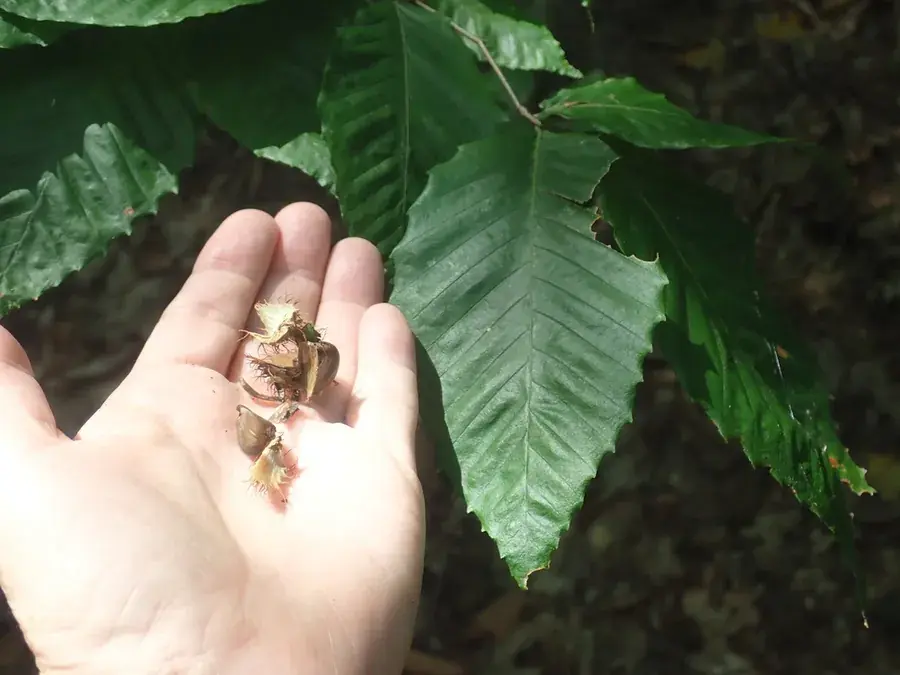 NutSeptember – October
Beechnuts
Fagus grandifolia
Smooth, pale grey bark on a tall tree; long, sharp, cigar-shaped buds; oval leaves with coarse teeth and straight parallel veins, many held, bleached, through winter. The nuts are small, three-sided and come two to a soft-bristled husk that splits into four.
How to know it & its look-alikes →
Checked against these sources ·
- Minnesota Wildflowers: Common evening primrose
- Ontario weed identification guide: Yellow evening-primrose
- UMass Extension weed identification: Common evening primrose
- Missouri Department of Conservation: Common evening primrose
- Eat The Weeds: Oenothera biennis, foraging standby
- Cornell University poisonous plants: Digitalis (foxglove)
Seasons are typical for the middle of the range and move by weeks north and south, and up and down hills.
Educational information only. Never eat a wild plant or mushroom identified from a single photograph or description — confirm with a regional field guide or an experienced forager, and know the poisonous species in your area first.