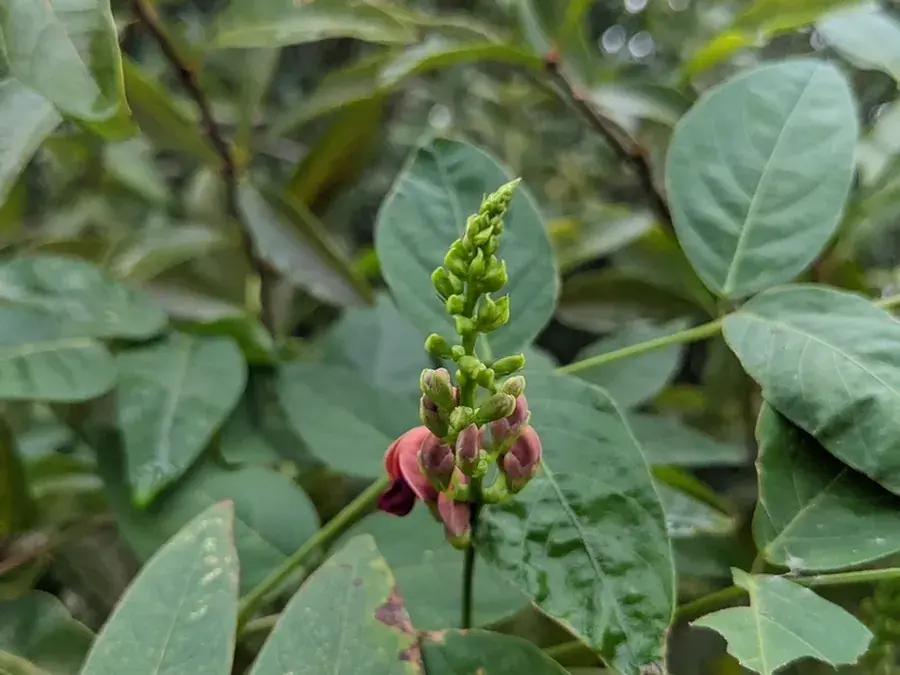
Photo by Public domain (iNaturalist) on iNaturalist · CC0 (public domain)
RootIn season now (October)
Groundnut (hopniss)
Apios americana
- When
- Typically March – April, October – November — October, November, March, April. Earlier in the south, later in the north.
- Where it grows
- Moist thickets, riverbanks, lakeshores and the brushy edges of wetlands, twining up shrubs and tall herbs.
- How to know it
- A twining herbaceous vine with milky sap — unusual in a pea — and leaves of 5–7 oval, pointed leaflets; dense clusters of fragrant maroon-brown pea flowers in July–September. Follow the thin root and you find tubers strung along it like beads on a cord.
- Look-alikes
- Hog peanut (Amphicarpaea bracteata) climbs the same thickets but has only three leaflets per leaf, pale pink flowers and no chain of tubers. Wild yam (Dioscorea villosa) has heart-shaped single leaves and is not a pea. Neither is dangerous; the beaded tubers on a milky-sapped pea vine are the identification.
- Harvest and use
- Tubers 1–5 cm (0.5–2 in) across, dug from fall after frost through early spring, scrubbed and boiled 20–30 minutes, then fried or roasted. Nutty, potato-like and high in protein. Replant the smallest beads where you dug.
- Caution
- A small share of people react to groundnut with vomiting, cramps and diarrhoea, often not on the first meal but on a later one. Eat a small portion the first several times, cook it thoroughly, and stop at any sign of trouble.
Groundnut (hopniss) at a glance
- Also called
- Hopniss (from the Lenape name), Indian potato, wild bean, potato bean, pénacs or patates en chapelet (Quebec). Not the peanut, which is also called groundnut in Britain.
- Family
- Fabaceae, the pea family (which also includes beans, clover and hog peanut).
- Where it grows
- Native from Nova Scotia, New Brunswick, Prince Edward Island and southern Quebec through southern Ontario, and south through all of the eastern United States — New England, the Great Lakes, the Ohio and Mississippi valleys, the Appalachians, the Southeast and the Gulf coast — to Florida and east Texas. Scarce west of the Missouri; a few outliers reach Colorado.
- When to pick
- Fall after frost has killed the vines, through to early spring before new growth — October and November in most of the range, and any thaw in winter. The tubers are edible all year but are fullest and sweetest in the cold months, and the dead vines in fall lead you to the roots. Note where a stand flowers in July–September and come back.
- Parts used
- The tubers, strung along thin cord-like rhizomes just under the surface, usually 1–5 cm (0.5–2 in) across in wild plants and occasionally fist-sized. Scrub and cook thoroughly — boiled 20–30 minutes, then roasted, fried or mashed. The seeds in the pods are also edible cooked but small. The vine, leaves and flowers are not eaten.
- Is any of it poisonous?
- Raw tubers contain protease inhibitors, as beans do, and should always be cooked. More importantly, a small share of people react to groundnut — cramps, vomiting and diarrhoea, occasionally severe — and the reaction typically appears not on the first meal but on a later one, which points to an allergy. Cultivariable’s grower, after a bad reaction of his own, now boils them 30 minutes and advises keeping portions small for the first ten times you eat it; Sam Thayer reports a similar reaction in Nature’s Garden. Eat a little, wait a day, and stop at the first sign of trouble.
- More look-alikes to know
- Hog peanut (Amphicarpaea bracteata): a thread-thin vine of the same thickets with three leaflets, pale pink-white flowers and a single edible seed that ripens underground — edible, but not this plant. Wild yam (Dioscorea villosa): heart-shaped single leaves, no pea flowers, a knotted horizontal root; not food. Trailing wild bean (Strophostyles helvola): three leaflets, pink flowers. Wisteria: a woody vine with 7–15 leaflets and blue-purple flower chains. Poison ivy: three leaflets on a woody, hairy-rooted climber — do not handle vines with threes. Groundnut is the only one with 5–7 leaflets, milky sap, maroon flowers and a chain of tubers.
Questions people ask about groundnut
How do you identify groundnut?
A soft twining vine, 1–3 m (3–10 ft), with pinnate leaves of 5–7 oval, pointed leaflets and, in July–September, dense clusters of fragrant maroon-brown pea flowers. Break a stem and it bleeds a little milky sap, which almost no other pea does. Trace the thin root and you find the tubers strung along it like beads.
When do you dig groundnuts?
From fall frost to early spring — October and November are easiest, when the dead vines still mark the spot and the tubers are full. Any winter thaw works. Spring digging is fine until the new shoots appear and start drawing the tubers down.
Are groundnuts safe to eat?
Cooked thoroughly and identified with certainty, they are a good food — nutty, dense and about three times the protein of a potato. The caveat is the allergy: a minority of people get violently sick after a few meals. Start with a few tubers, wait a day, and keep portions small the first several times.
What looks like groundnut?
Hog peanut is the closest vine, but it has three leaflets and no tuber chain. Wild yam has heart-shaped leaves. Nothing with 5–7 leaflets, milky sap and beaded tubers is anything else. Avoid handling any three-leaflet climber until you have ruled out poison ivy.
Is groundnut the food the Pilgrims ate?
Yes — groundnut was a staple for Indigenous peoples across the east, and the New England colonists leaned on it through their first hard winters. ‘Hopniss’ comes from the Lenape. The tubers store well, which is what made it a cold-weather food.
Can kids eat groundnuts?
Cooked, in small amounts, once the family has eaten them a few times without trouble. Because the allergic reaction tends to show up on a later meal, do not make it a big part of a child’s dinner until you know how everyone responds.
Found in these regions
- Acadian Forest & Atlantic Coast
- Great Lakes & St. Lawrence Lowlands
- Northeast Atlantic Coast & Piedmont
- Appalachian Highlands
- Central Hardwoods & Interior Plateaus
- Southeastern Piedmont & Coastal Plain
- Gulf Coast & Mississippi Lowlands
- Florida Peninsula
Hardiness zones 4–9.
Is it ready near you?
Get this week's foraging guide for your area
Enter a town, postal code or ZIP and we'll tell you what's in season right there this week — from your local climate, this week's weather and your ecological region.
Also ready in October
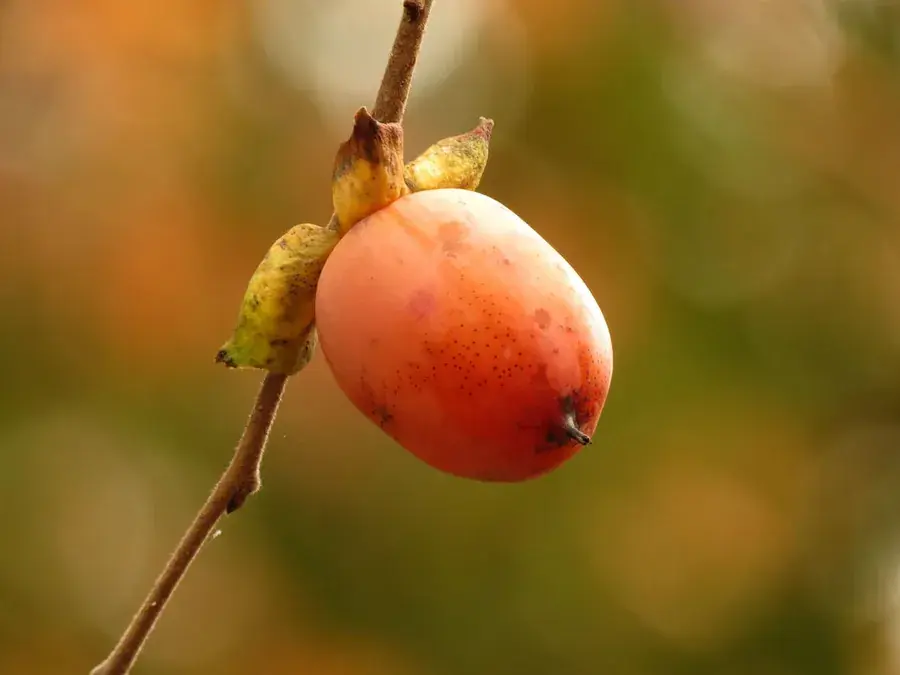 FruitOctober – November
American persimmon
Diospyros virginiana
Blocky alligator-hide bark; orange fruit the size of a plum, only ripe when it is wrinkled, squishy and usually on the ground.
How to know it & its look-alikes →Photo: Katja Schulz · CC BY 4.0
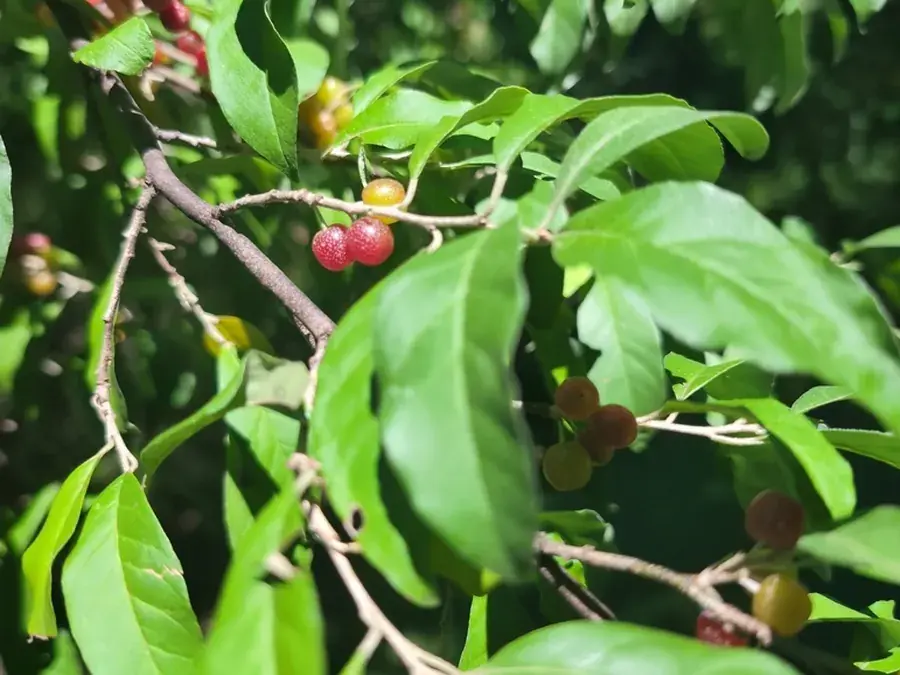 BerrySeptember – October
Autumn olive
Elaeagnus umbellata
A sprawling thorny shrub whose leaves flash silver underneath; in autumn it is weighed down with small red berries finely speckled with silver and brown scales, each with one soft seed.
How to know it & its look-alikes →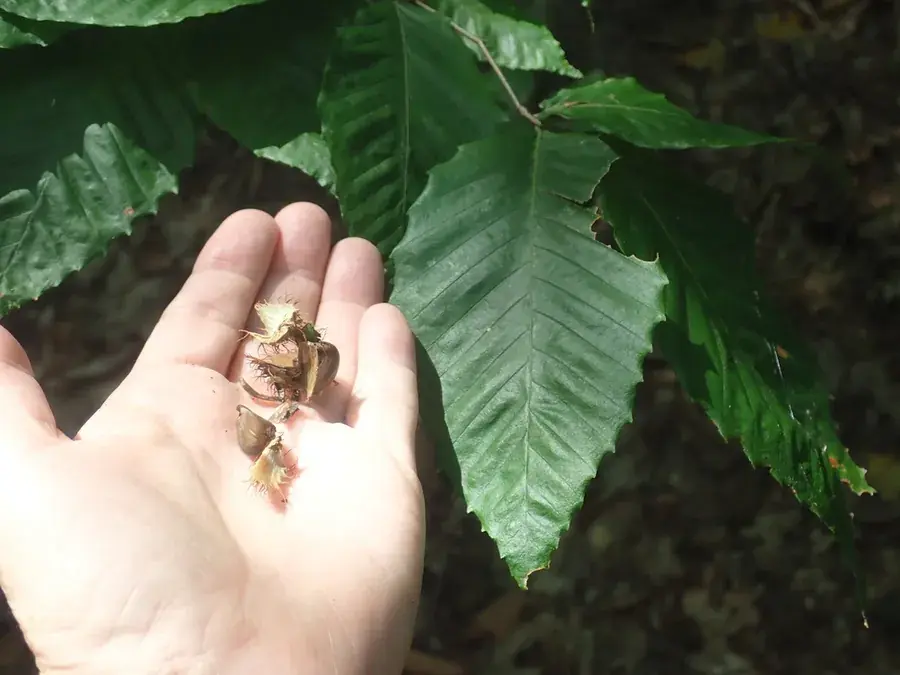 NutSeptember – October
Beechnuts
Fagus grandifolia
Smooth, pale grey bark on a tall tree; long, sharp, cigar-shaped buds; oval leaves with coarse teeth and straight parallel veins, many held, bleached, through winter. The nuts are small, three-sided and come two to a soft-bristled husk that splits into four.
How to know it & its look-alikes →
Checked against these sources ·
- Illinois Wildflowers: Groundnut
- Northern Woodlands: Groundnuts
- Cultivariable: How to grow groundnut (with the allergy notes)
- University of Michigan Herbarium, Climbers of Michigan: Apios americana
- VASCAN (Database of Vascular Plants of Canada): Apios americana
Seasons are typical for the middle of the range and move by weeks north and south, and up and down hills.
Educational information only. Never eat a wild plant or mushroom identified from a single photograph or description — confirm with a regional field guide or an experienced forager, and know the poisonous species in your area first.