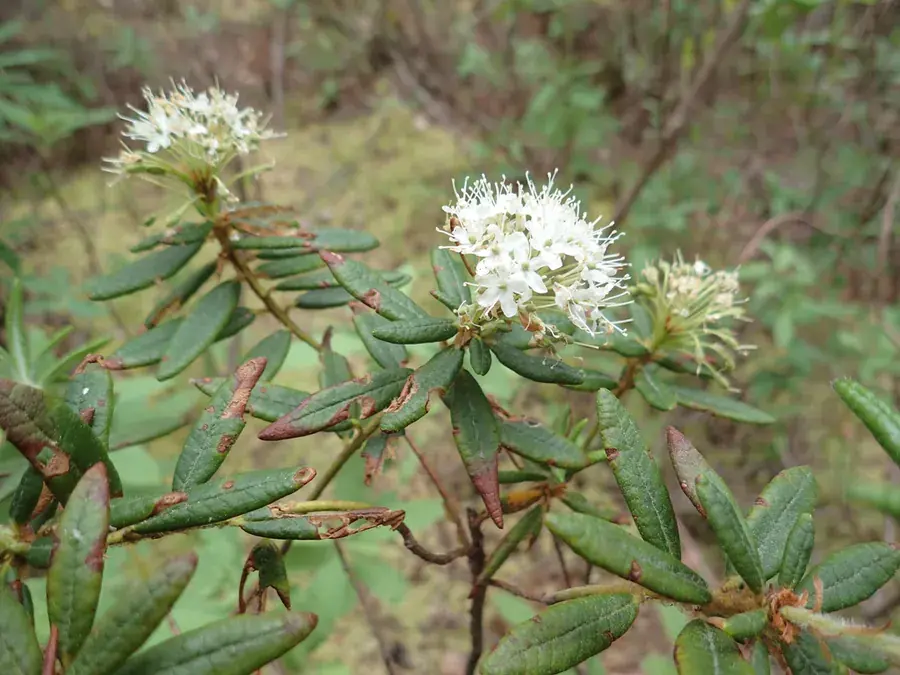
Photo by CatherineK on iNaturalist · CC BY-SA 4.0
GreenSeason: May – September
Labrador tea
Rhododendron groenlandicum
This one has a dangerous look-alike
Bog laurel (Kalmia polifolia) and sheep laurel (K. angustifolia) are poisonous and share the bog: opposite or whorled leaves that are smooth, pale or whitish beneath — never rusty-woolly — and pink saucer-shaped flowers. Bog rosemary (Andromeda polifolia) is also toxic: narrow blue-green leaves with a powdery white underside and pink urn-shaped flowers. White flowers and orange wool, or leave it.
- When
- Typically May – September — May, June, July, August, September. Earlier in the south, later in the north.
- Where it grows
- Sphagnum bogs, muskeg, wet black-spruce woods and acid lakeshores, often shoulder to shoulder with the poisonous bog laurel it is mistaken for.
- How to know it
- A knee-high evergreen shrub whose leathery, alternate leaves have edges rolled under and a thick rusty-orange wool on the underside — dense, felted and unmistakable on mature leaves. White flowers in rounded clusters in June. No rusty wool, no Labrador tea.
- Harvest and use
- Only the leaves, and only as a weak tea in moderation: a few leaves per cup, boiling water poured over and steeped 5–10 minutes, never boiled or stewed. A traditional beverage of Cree, Innu and Inuit households across the north. Pick a few leaves from each plant.
- Caution
- Labrador tea contains ledol and grayanotoxins; strong or boiled tea, or many cups, can cause vomiting, dizziness, slowed pulse and worse. Avoid in pregnancy and for young children. Check every leaf you pick, not just the first plant.
Labrador tea at a glance
- Also called
- Bog Labrador tea, Hudson’s Bay tea, muskeg tea (kâkikêpakwa and maskêkopakwa in Cree), mamaittuqutik (Inuktitut), thé du Labrador and lédon du Groenland (Quebec); formerly Ledum groenlandicum. Northern Labrador tea (R. tomentosum) replaces it in the Arctic and western Labrador tea / trapper’s tea (R. columbianum) in the western mountains, both used the same way with the same cautions.
- Family
- Ericaceae, the heath family (which also includes the toxic bog laurel, sheep laurel and bog rosemary it grows beside, and the blueberries).
- Where it grows
- Native in every province and territory of Canada, from the Yukon and Northwest Territories to Newfoundland and Labrador, and across Alaska. In the US it follows peatland south through New England, the Adirondacks, northern Pennsylvania and New Jersey’s pine barrens, the upper Great Lakes states, and the mountains of Idaho, Montana, Washington and Oregon. Wherever there is sphagnum and black spruce, it is usually there.
- When to pick
- The leaves are evergreen and can be gathered whenever the bog is reachable, but the safest time to learn and pick is June, when the white flower clusters confirm the plant and the pink-flowered laurels beside it are also in bloom and easy to rule out. New leaves are pale and lightly woolly; the rusty felt thickens through the summer. Many northern households gather in late summer and dry the leaves for the year.
- Parts used
- Leaves only, fresh or dried, a few per cup. Pour water that has just boiled over them and steep 5–10 minutes, no longer, and do not boil or simmer the leaves. Flowers, stems and roots are not used. Keep it to a weak cup, not a daily pot.
- Is any of it poisonous?
- The whole plant contains ledol and grayanotoxins, the same family of compounds as in rhododendrons and mountain laurel. In weak, briefly steeped tea the amount is small; strong tea, boiled leaves, or several cups can cause headache, dizziness, vomiting, slowed pulse, low blood pressure and, at the extreme, cramps and loss of coordination. Pharmacological references note that safety in pregnancy and breastfeeding has not been established; the cautious tradition is to avoid it then, and to keep it from young children. Honey made from these heaths can carry the same toxins.
- More look-alikes to know
- Sheep laurel or lambkill (Kalmia angustifolia) is the most dangerous because it is so common on the same ground: opposite or whorled leaves, flat and pale green beneath with no wool, and deep pink saucer flowers in a ring below the new growth; it has killed livestock and sickened people. Bog rosemary (Andromeda polifolia and A. glaucophylla) has narrow, needle-like blue-green leaves, powdery white and hairless beneath, with pink urn flowers; poisonous. Leatherleaf (Chamaedaphne calyculata) has small brown-scurfy leaves and a row of white bells; not toxic in the same way but not a tea plant. Every one of them fails the rusty-wool test.
Questions people ask about labrador tea
How do you identify Labrador tea?
Turn a mature leaf over. Labrador tea has a dense rusty-orange felt covering the underside, leaf edges that roll under, alternate (not paired) leaves, and rounded clusters of small white flowers in June. The wool is the whole identification: pale, smooth, white or powdery undersides belong to the poisonous laurels and bog rosemary.
Is Labrador tea poisonous?
In quantity, yes. It contains ledol and grayanotoxins, and strong or boiled tea or many cups can cause dizziness, vomiting and a slowed pulse. A weak cup steeped a few minutes is how it has always been drunk, and that is the only way to use it. Pregnant people and young children should skip it.
What is the difference between Labrador tea and bog laurel?
Bog laurel (Kalmia polifolia) has opposite leaves that are whitish and smooth underneath and pink saucer-shaped flowers; Labrador tea has alternate leaves with rusty wool underneath and white flowers. Bog laurel and its cousin sheep laurel are poisonous — grayanotoxins strong enough to kill sheep. The Alaskan rhyme is ‘pink, poisonous’.
How do you make Labrador tea?
Put a few fresh or dried leaves — a teaspoon’s worth — in a cup, pour over water that has just come off the boil, and steep 5–10 minutes before straining. Do not boil the leaves in the pot, do not steep longer than 15 minutes, and do not drink several cups a day. The flavour is resinous and piney; it takes honey well.
Who traditionally drinks Labrador tea?
It is a long-standing beverage across the north: Cree communities know it as muskeg tea (maskêkopakwa), Innu and Inuit households in Labrador and Nunavik gather it every summer, and Dene and Athabascan peoples use it in Alaska and the Northwest Territories. Hudson’s Bay Company traders adopted it when black tea ran short. Treat it as what it is, a traditional drink taken weak and in moderation.
Is Labrador tea safe for children?
Not as a drink. The grayanotoxins that make strong tea risky for adults matter more in a small body, and there is no tradition of giving it to young children. Children can learn the plant — the orange wool under the leaf is a satisfying thing to find — but the tea is for adults, weak, and occasional.
Found in these regions
- Boreal North & Taiga
- Boreal Forest & Shield
- Acadian Forest & Atlantic Coast
- Great Lakes & St. Lawrence Lowlands
- Western Mountains & Interior Plateaus
- Pacific Maritime
Hardiness zones 1–6.
Is it ready near you?
Get this week's foraging guide for your area
Enter a town, postal code or ZIP and we'll tell you what's in season right there this week — from your local climate, this week's weather and your ecological region.
Also ready in October
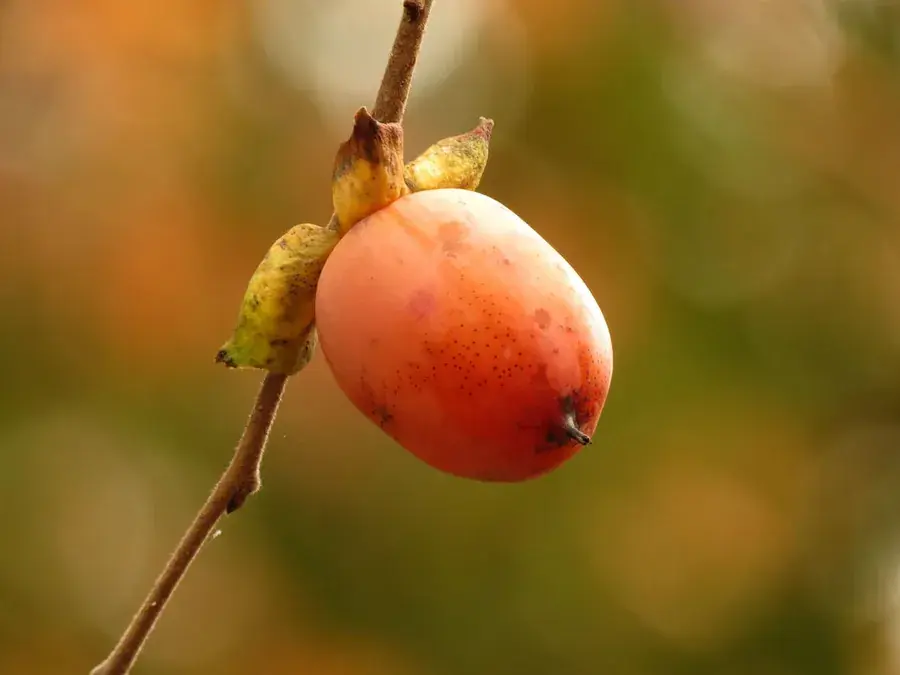 FruitOctober – November
American persimmon
Diospyros virginiana
Blocky alligator-hide bark; orange fruit the size of a plum, only ripe when it is wrinkled, squishy and usually on the ground.
How to know it & its look-alikes →Photo: Katja Schulz · CC BY 4.0
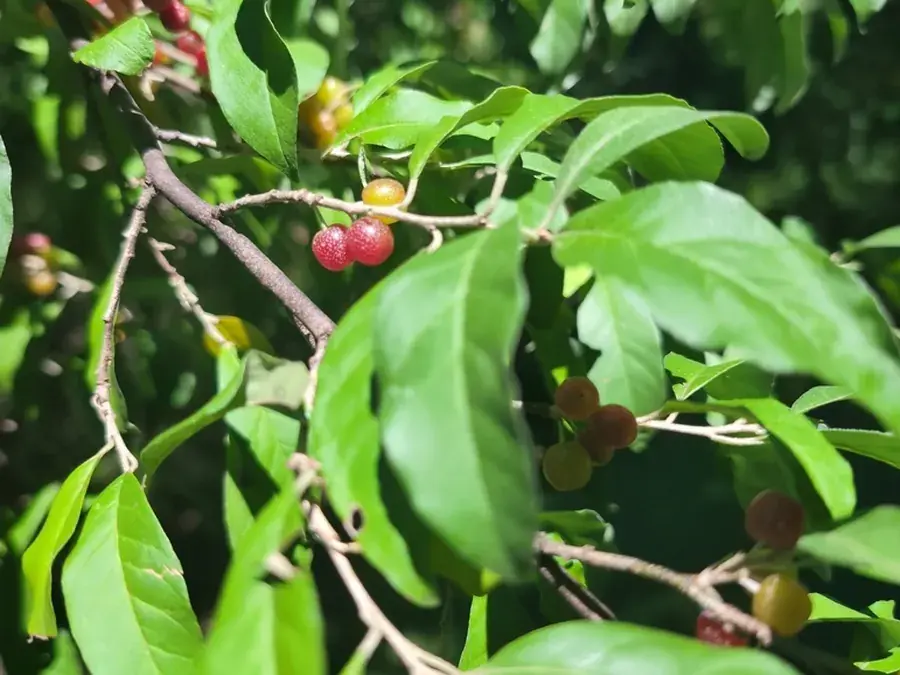 BerrySeptember – October
Autumn olive
Elaeagnus umbellata
A sprawling thorny shrub whose leaves flash silver underneath; in autumn it is weighed down with small red berries finely speckled with silver and brown scales, each with one soft seed.
How to know it & its look-alikes →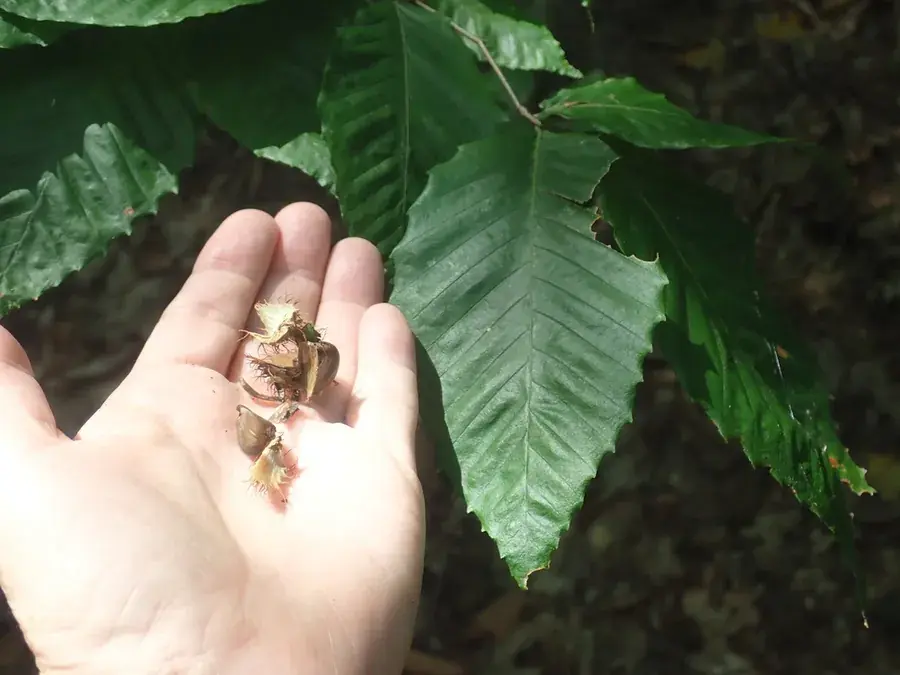 NutSeptember – October
Beechnuts
Fagus grandifolia
Smooth, pale grey bark on a tall tree; long, sharp, cigar-shaped buds; oval leaves with coarse teeth and straight parallel veins, many held, bleached, through winter. The nuts are small, three-sided and come two to a soft-bristled husk that splits into four.
How to know it & its look-alikes →
Checked against these sources ·
- UBC Coastal Plants — Rhododendron groenlandicum (Labrador tea)
- Juneau Empire, Planet Alaska — One of these could kill you, the other makes great tea
- Drugs.com professional monograph — Labrador tea
- Minnesota Wildflowers — Bog laurel (Kalmia polifolia)
- Cree Literacy Network — Muskeg tea: kâkikêpakwa, maskêkopakwa
- VASCAN — Rhododendron groenlandicum
Seasons are typical for the middle of the range and move by weeks north and south, and up and down hills.
Educational information only. Never eat a wild plant or mushroom identified from a single photograph or description — confirm with a regional field guide or an experienced forager, and know the poisonous species in your area first.