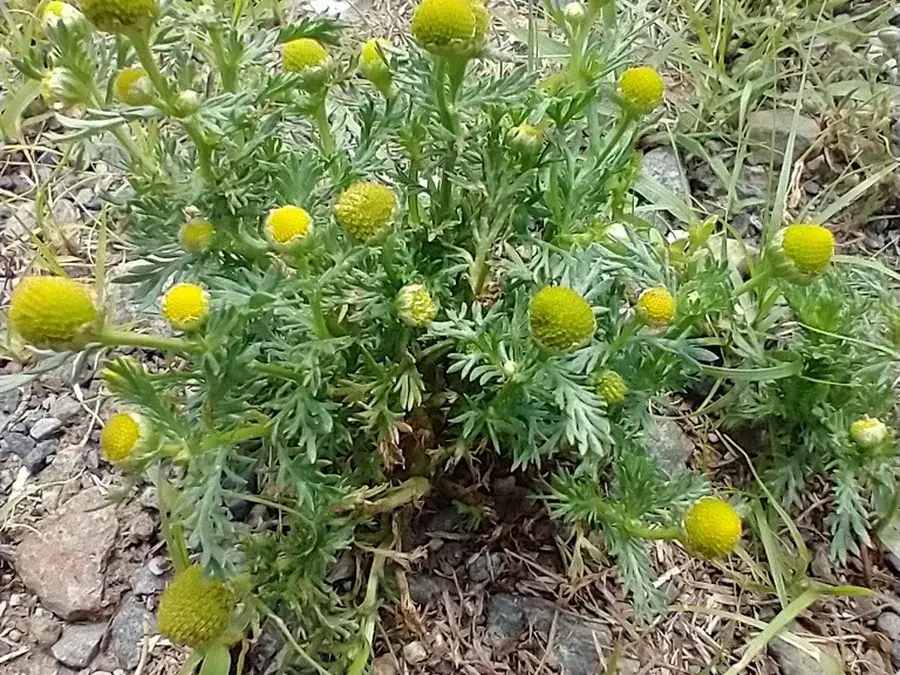
Photo by Tom Norton on iNaturalist · CC BY 4.0
GreenSeason: May – August
Pineapple weed (wild chamomile)
Matricaria discoidea
- When
- Typically May – August — May, June, July, August. Earlier in the south, later in the north.
- Where it grows
- Trampled, compacted ground: gravel driveways, the edge of the ball diamond, farm gateways, sidewalk cracks and the middle of dirt roads.
- How to know it
- A low, hairless, ferny-leaved plant 5–30 cm (2–12 in) tall with cone-shaped yellow-green flower heads that have no petals at all. Crush a head: it smells unmistakably of pineapple. No pineapple smell, no pineapple weed.
- Look-alikes
- Stinking chamomile (mayweed, Anthemis cotula) and scentless chamomile grow on the same ground with the same ferny leaves, but both carry white petals around a yellow centre, and mayweed smells foul and can blister skin. Pineapple weed never has petals and always smells of pineapple.
- Harvest and use
- Flower heads, fresh or dried, for a chamomile-like tea, in lemonade and syrup, or scattered over fruit. Pinch heads from many plants; they keep coming all summer.
- Caution
- Daisy family, so a chamomile or ragweed allergy is a reason to try a sip first. It grows where cars park and dogs stop — pick off the path and away from oil stains.
Pineapple weed (wild chamomile) at a glance
- Also called
- Wild chamomile, disc mayweed, rayless chamomile, matricaire odorante (Quebec). Older names: Matricaria matricarioides, Chamomilla suaveolens.
- Family
- Asteraceae, the daisy family (which also includes true chamomile, the mayweeds, yarrow and ragweed).
- Where it grows
- Native to the Pacific Northwest and north-east Asia — botanists still disagree which side of the Bering Strait it started on — and spread along roads and railways across the rest of the continent in the 1800s and 1900s. It is now in every province and territory, Alaska, Yukon and the Northwest Territories, New England, the Great Lakes, the Appalachians, the Midwest, the Plains, the mountain West and California. A cool-season plant, it is scarce in the hot humid Southeast, the Gulf coast and Florida, nearly absent from the low deserts, and only an occasional stray in Hawaii.
- When to pick
- May to August in southern Canada and the northern US, with the heads at their most fragrant in June and July; from April in the mid-Atlantic and the Pacific Northwest, and July and August in the Yukon and interior Alaska. It is an annual that keeps flowering on trampled ground all summer, so pick the plump green-yellow heads whenever they smell strongly of pineapple and leave the ones going brown. New seedlings often appear again in September.
- Parts used
- The flower heads, fresh or dried, for tea, cordial, lemonade and syrup, or scattered fresh over fruit and ice cream; the young leaves can go in salads but taste mostly of green. Stems and roots are not used. Dry the heads on a screen out of the sun and they keep their scent for months.
- Is any of it poisonous?
- Nothing poisonous in pineapple weed, and it has been drunk as a tea for generations. As a daisy-family plant it can set off a reaction in people allergic to chamomile or ragweed, so take a sip before a cup. The risk lies in the ground it likes — gravel lots, driveways and road edges — and in the look-alike mayweed, whose sap blisters some people’s skin.
- More look-alikes to know
- Stinking chamomile or mayweed (Anthemis cotula) grows on the same farm gateways and waste ground with the same ferny leaves, but it stands taller, carries white petals around a yellow dome, and smells rank and sour; its sap causes a rash and blisters in many people and it is not for tea. Scentless chamomile (Tripleurospermum inodorum), a noxious weed on the Prairies, is a bushy white daisy with no smell at all. German chamomile (Matricaria chamomilla), the tea plant, has white petals and a hollow receptacle, and smells sweet — it is edible and sometimes escapes. Dog fennel (Eupatorium capillifolium) of the South is a tall feathery plant with a balsam smell. The two tells together — no petals, and a pineapple smell when crushed — leave only pineapple weed.
Questions people ask about pineapple weed
Is pineapple weed edible?
Yes, once identified with certainty — crush a head and it must smell of pineapple, and the head must have no petals. The flower heads make a tea close to chamomile, and go into lemonade, syrup and desserts. The only cautions are a chamomile or ragweed allergy and the dirty ground it grows on.
How do you identify pineapple weed?
A low, hairless plant 5–30 cm (2–12 in) tall with finely divided, ferny leaves and cone- or dome-shaped yellow-green flower heads 5–10 mm (¼–⅓ in) across that have no petals at all — just the cone. Crush one between your fingers and it smells distinctly of pineapple. It grows on trampled, compacted ground: gravel, driveways, paths and farm gateways.
What is the difference between pineapple weed and chamomile?
They are close cousins. German chamomile has white petals around its yellow cone and a sweet apple scent; pineapple weed has no petals and smells of pineapple. Both make a similar tea. The one to avoid is mayweed (stinking chamomile), which has white petals, a foul smell and sap that blisters skin.
When do you pick pineapple weed?
From May through August across southern Canada and the northern US, best in June and July when the heads are plump and most fragrant; from April farther south, and in July and August in the far north. Pinch the heads off between finger and thumb, a few from each plant, and use them fresh or dry them on a screen in the shade.
What looks like pineapple weed?
Mayweed, scentless chamomile and German chamomile all have the same ferny leaves and a yellow-centred head, but every one of them has white petals. Pineapple weed never does. Mayweed smells foul and can blister skin; scentless chamomile has no smell; German chamomile smells of apple and is a fine tea.
Is pineapple weed safe for children to pick?
It is one of the best plants for children — low, common, unmistakable once they have smelled it, and nothing poisonous looks like it if they remember two rules: no petals, and it must smell of pineapple. Steer them off the driveway and the parking lot to a field edge or a quiet path, and let anyone with a chamomile allergy try a small sip of the tea first.
Found in these regions
- Boreal North & Taiga
- Boreal Forest & Shield
- Acadian Forest & Atlantic Coast
- Great Lakes & St. Lawrence Lowlands
- Northeast Atlantic Coast & Piedmont
- Appalachian Highlands
- Central Hardwoods & Interior Plateaus
- Prairies & Great Plains
- Western Mountains & Interior Plateaus
- Pacific Maritime
- Mediterranean California
Hardiness zones 2–10.
Is it ready near you?
Get this week's foraging guide for your area
Enter a town, postal code or ZIP and we'll tell you what's in season right there this week — from your local climate, this week's weather and your ecological region.
Also ready in October
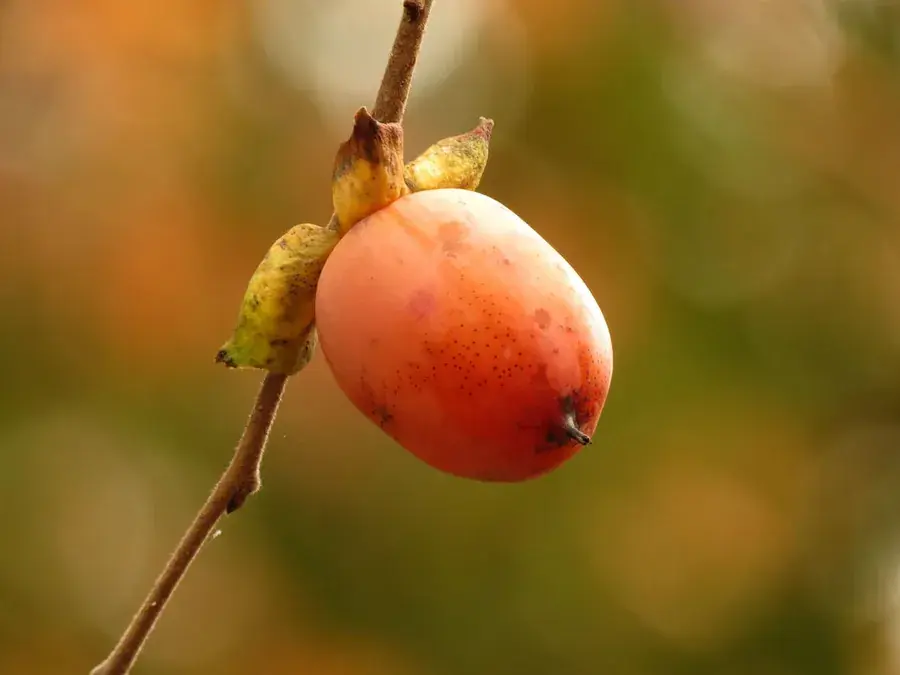 FruitOctober – November
American persimmon
Diospyros virginiana
Blocky alligator-hide bark; orange fruit the size of a plum, only ripe when it is wrinkled, squishy and usually on the ground.
How to know it & its look-alikes →Photo: Katja Schulz · CC BY 4.0
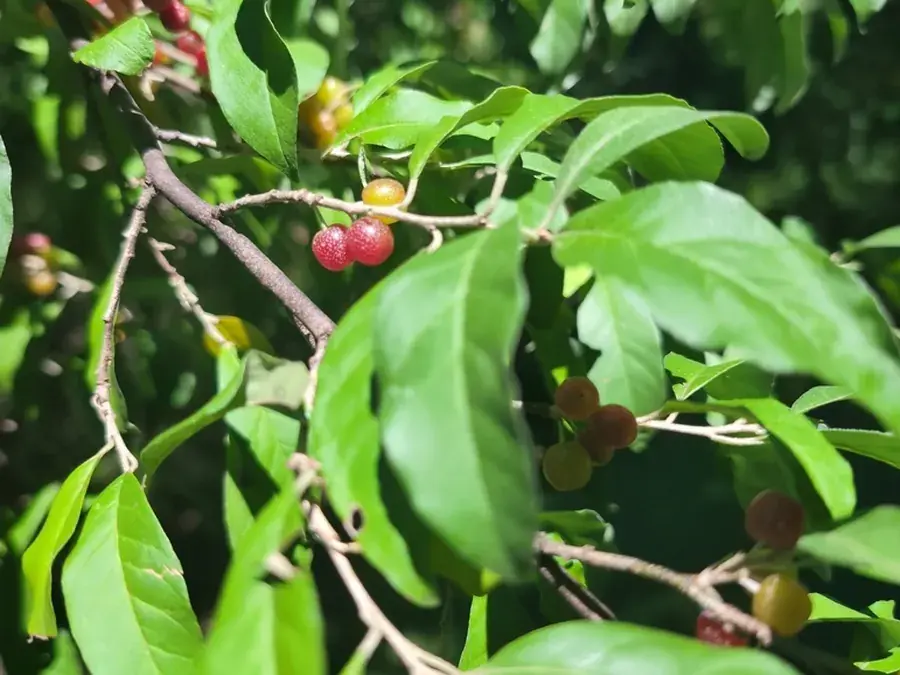 BerrySeptember – October
Autumn olive
Elaeagnus umbellata
A sprawling thorny shrub whose leaves flash silver underneath; in autumn it is weighed down with small red berries finely speckled with silver and brown scales, each with one soft seed.
How to know it & its look-alikes →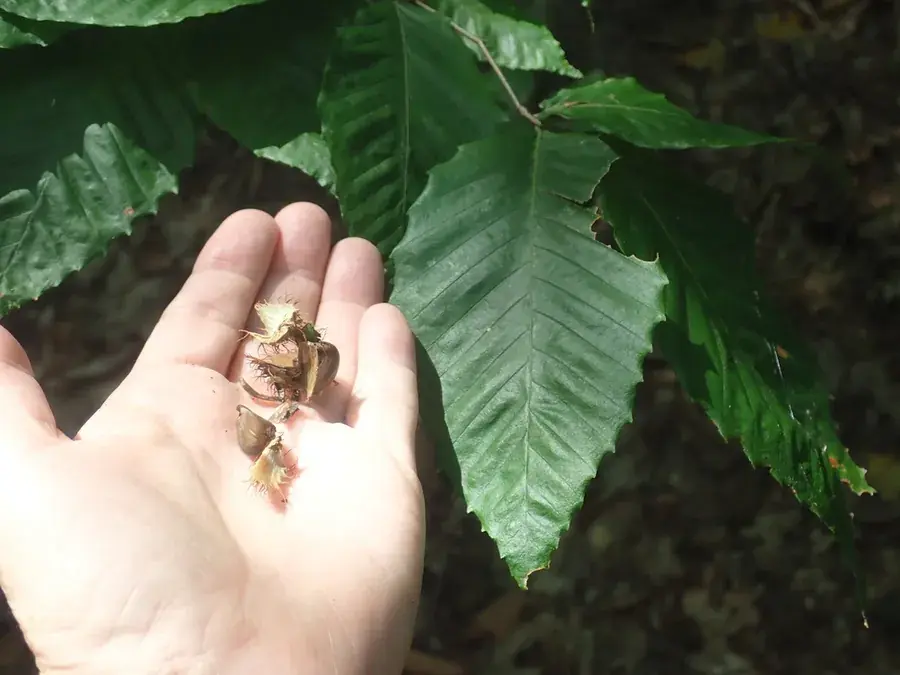 NutSeptember – October
Beechnuts
Fagus grandifolia
Smooth, pale grey bark on a tall tree; long, sharp, cigar-shaped buds; oval leaves with coarse teeth and straight parallel veins, many held, bleached, through winter. The nuts are small, three-sided and come two to a soft-bristled husk that splits into four.
How to know it & its look-alikes →
Checked against these sources ·
- Minnesota Wildflowers: Pineapple-weed
- Eat The Weeds: Pineapple weed for your tea and salad (uses and look-alikes)
- Wikipedia: Matricaria discoidea (origin and spread)
- VASCAN: Matricaria discoidea
Seasons are typical for the middle of the range and move by weeks north and south, and up and down hills.
Educational information only. Never eat a wild plant or mushroom identified from a single photograph or description — confirm with a regional field guide or an experienced forager, and know the poisonous species in your area first.