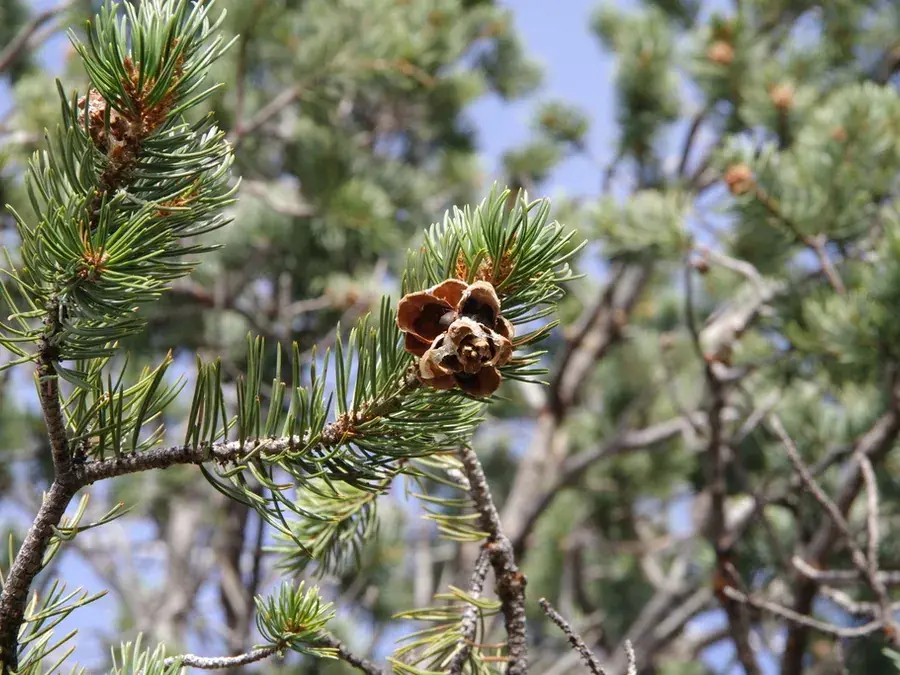
Photo by Eric Knight on iNaturalist · CC BY 4.0
NutIn season now (October)
Pinyon pine nuts (piñon)
Pinus edulis
- When
- Typically September – October — September, October. Earlier in the south, later in the north.
- Where it grows
- Dry rocky foothills and mesas at 1,400–2,300 m (4,500–7,500 ft), in open pinyon–juniper woodland between the sagebrush and the ponderosa belt.
- How to know it
- A short, rounded, often multi-trunked pine 3–9 m (10–30 ft) tall with stiff needles in twos (single-leaf pinyon has them singly); small round cones 4–5 cm (1½–2 in) with thick scales that open in September–October to drop large, thin-shelled brown seeds.
- Look-alikes
- Every other pine has edible seeds, so the confusion is harmless, but most are too small to bother with. The one evergreen to know is yew — flat needles in two rows, red fleshy cups instead of cones, every part but the red flesh deadly — though it does not grow in pinyon country. ‘Pine mouth’, a bitter metallic taste lasting days, comes from certain imported Asian pine nuts (Pinus armandii), not from pinyon.
- Harvest and use
- The seeds, gathered from opened cones or from a tarp spread under a shaken tree, then dried, roasted in the shell and cracked. Mast years come every three to seven years; a good crop is announced locally. Never cut limbs or knock green cones.
- Caution
- Personal-use limits apply on National Forest and BLM land (commonly 25 lb per household per season free, more only by permit) and Tribal lands are closed to outsiders; piñon picking is a family tradition for Diné (Navajo), Shoshone and Paiute communities whose harvest areas should be respected. Tree nut allergy applies.
Pinyon pine nuts (piñon) at a glance
- Also called
- Piñon, Colorado pinyon, two-needle pinyon, neeshch’íí’ (Diné/Navajo), tuba (Northern Paiute). Single-leaf pinyon (Pinus monophylla) of Nevada, Utah and eastern California, and Mexican pinyon (P. cembroides) of west Texas and the borderlands, give the same nut; the brief names here cover all three.
- Family
- Pinaceae, the pine family.
- Where it grows
- Native to the Colorado Plateau and southern Rockies — Utah, Colorado, Arizona and New Mexico, with fingers into Wyoming, Nevada, the Oklahoma and Texas panhandles and northern Mexico — at 1,400–2,300 m (4,500–7,500 ft). Single-leaf pinyon replaces it across the Great Basin ranges of Nevada, western Utah and eastern California. Pinyon–juniper woodland is the commonest forest type of the Southwest and the US has no native pinyon north of Wyoming.
- When to pick
- Mid-September through October, after the first frosts have opened the cones and before birds, squirrels and rain take the seeds — a window of two or three weeks on any one hillside. Cones take two summers to mature and good crops come only every three to seven years, so ask locally whether it is a ‘piñon year’. Green cones can be picked in late August and dried on a tarp until they open, but tearing them off damages the tree.
- Parts used
- The seeds, shelled and eaten raw or, better, roasted in the shell: 10–20 soft-shelled nuts per cone, with a resinous, buttery kernel. Traditional methods shake nuts onto a blanket or tarp and winnow out the needles; the nuts are then dried, roasted, and cracked. Needles and inner bark have been used in hard times and as tea, but the nut is the food. Pitch and cones are not eaten.
- Is any of it poisonous?
- Nothing poisonous about pinyon. Pine nuts are a tree nut for allergy purposes, and ‘pine mouth’ — a bitter or metallic taste that starts one or two days after eating and can last a week or more — is well documented from some imported Asian pine nuts (Pinus armandii among them) but not from pinyon; the FDA logged nearly 200 complaints in two years, all of which resolved without harm.
- More look-alikes to know
- Other pines of the same country — ponderosa, limber, bristlecone — have edible but small or hard-shelled seeds; nothing dangerous, only disappointing, and limber pine seeds are worth gathering. Junipers grow mixed through the same woodland with blue ‘berries’ that are a seasoning, not a snack. Yew, the only deadly conifer, has flat soft needles in two rows and red fleshy cups instead of cones, and grows in the Pacific Northwest and the East, not in pinyon country. Nothing with a cone and a hard-shelled seed is poisonous.
Questions people ask about pinyon pine nuts
When is piñon season?
Mid-September to the end of October, after frost opens the cones, across New Mexico, Arizona, Colorado, Utah and Nevada; the nuts fall fast once the cones open, so a given stand gives two or three good weeks. Heavy crops come only every three to seven years. Nevada’s BLM and Forest Service announce the season each September, and New Mexicans simply pass the word.
Do I need a permit to pick piñon nuts?
For personal use on most National Forest and BLM land in Nevada, New Mexico, Arizona, Colorado and Utah, no, up to a household limit that is commonly 25 lb (11 kg) a season; more than that, or any sale, needs a commercial permit from the district office. Rules differ by forest, so check the ranger district. National parks and monuments are closed to collecting, and Tribal lands are closed to non-members.
How do you harvest pinyon nuts without harming the tree?
Spread a tarp under a tree whose cones have opened, shake the branches or tap them with a stick, and gather what falls; or pick fallen nuts straight off the ground, which is what most families do. Never cut or break branches, and do not strip green cones from a tree — both are prohibited on public land and ruin next year’s growth. Expect pitch on your hands.
Who harvests piñon traditionally?
Piñon has fed people in the Southwest and Great Basin for thousands of years, with heavy harvesting in the archaeological record from about 1,400 years ago. For Diné (Navajo) families the autumn pick near places like Canyon de Chelly is a season of its own, for the Walker River Paiute and the Ely Shoshone it is marked with September festivals and prayers at pine-nut groves they regard as sacred ground, and Paiute harvests were organised across whole families, with roasted nuts ground into a winter staple. Tribal members have priority in some commercial permit areas; respect posted harvest areas.
Are pinyon nuts safe for children?
Yes, with the usual tree-nut caution for anyone with allergies and the choking caution for very small children. Piñon picking is a family outing in the Southwest, and gathering nuts off the ground under a tree is as safe as foraging gets. Teach children to leave the sticky green cones alone and to watch for the ants that get there first.
What is pine mouth, and do pinyon nuts cause it?
Pine mouth or pine nut syndrome is a bitter, metallic taste that appears one or two days after eating pine nuts and spoils everything you eat for a week or two, then goes away on its own. It has been traced to some imported Asian pine nuts, Pinus armandii in particular, and not to American pinyon. Nuts you gathered yourself from a pinyon tree are not the problem.
Found in these regions
Hardiness zones 4–8.
Is it ready near you?
Get this week's foraging guide for your area
Enter a town, postal code or ZIP and we'll tell you what's in season right there this week — from your local climate, this week's weather and your ecological region.
Also ready in October
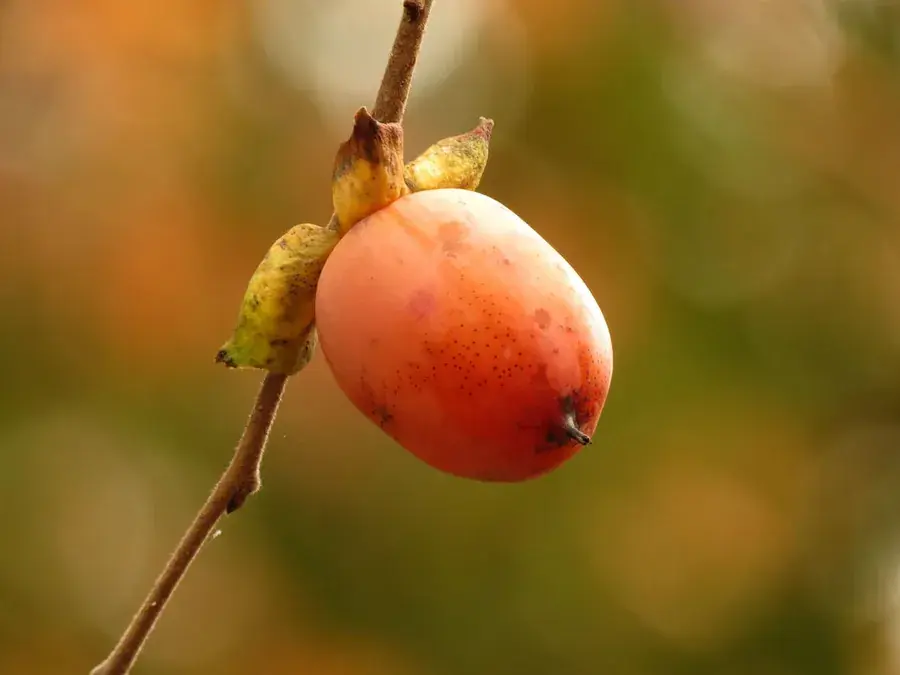 FruitOctober – November
American persimmon
Diospyros virginiana
Blocky alligator-hide bark; orange fruit the size of a plum, only ripe when it is wrinkled, squishy and usually on the ground.
How to know it & its look-alikes →Photo: Katja Schulz · CC BY 4.0
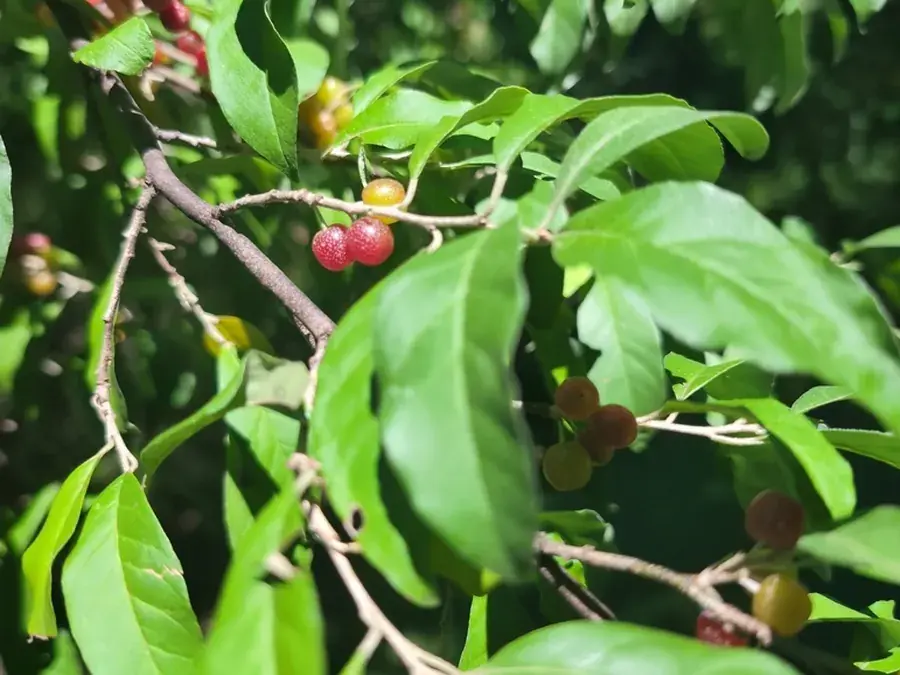 BerrySeptember – October
Autumn olive
Elaeagnus umbellata
A sprawling thorny shrub whose leaves flash silver underneath; in autumn it is weighed down with small red berries finely speckled with silver and brown scales, each with one soft seed.
How to know it & its look-alikes →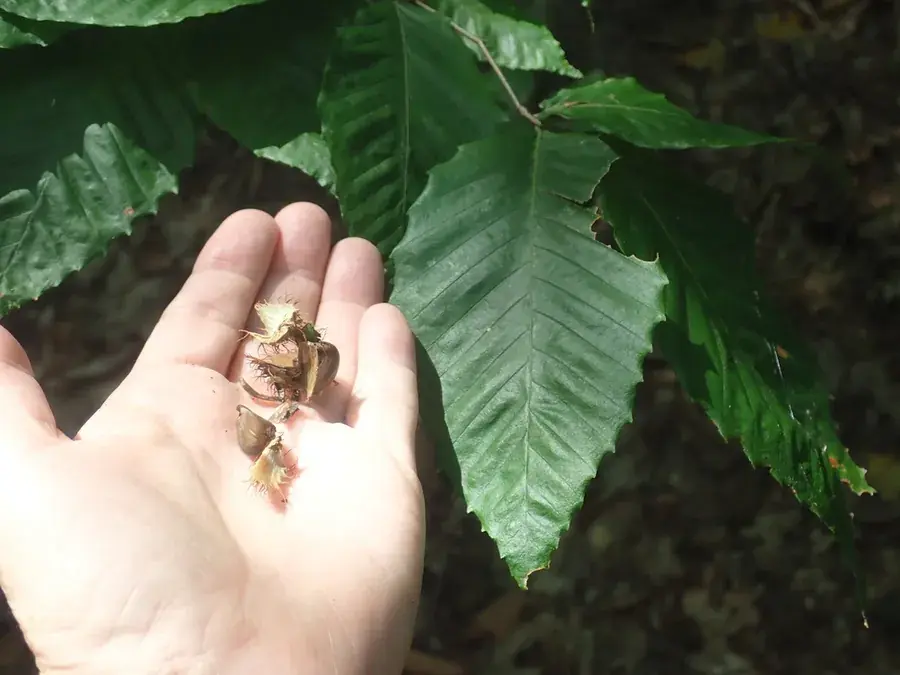 NutSeptember – October
Beechnuts
Fagus grandifolia
Smooth, pale grey bark on a tall tree; long, sharp, cigar-shaped buds; oval leaves with coarse teeth and straight parallel veins, many held, bleached, through winter. The nuts are small, three-sided and come two to a soft-bristled husk that splits into four.
How to know it & its look-alikes →
Checked against these sources ·
- Utah State University Extension, Range Plants of Utah — Pinyon pine
- USDA Forest Service Fire Effects Information System — Pinus edulis
- Bureau of Land Management Nevada — Pine nut harvest season on Nevada public lands (personal-use limits)
- Pine mouth syndrome — an emerging food hypersensitivity? (Clin Transl Allergy, 2011)
- Nevada Current — Pine nuts, the climate crisis, tribal culture
- Navajo Times — Going nuts: Diné piñon picking
Seasons are typical for the middle of the range and move by weeks north and south, and up and down hills.
Educational information only. Never eat a wild plant or mushroom identified from a single photograph or description — confirm with a regional field guide or an experienced forager, and know the poisonous species in your area first.