GreenSeason: May – September
Red clover
Trifolium pratense
- When
- Typically May – September — May, June, July, August, September. Earlier in the south, later in the north.
- Where it grows
- Fields, roadsides, lawns, old pastures and sunny waste ground, from sea level to mountain meadows.
- How to know it
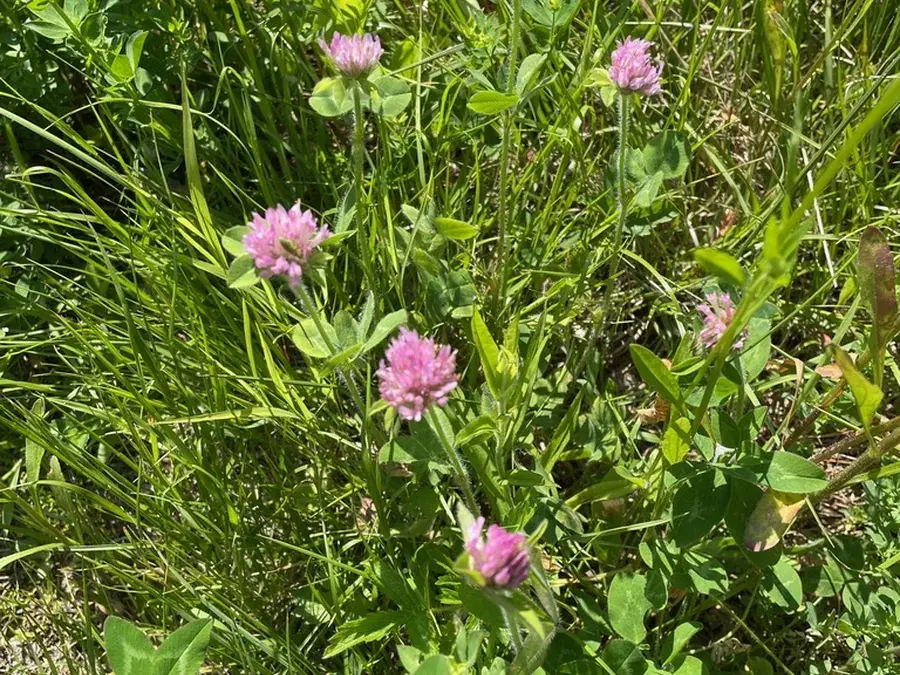
- Three oval leaflets each marked with a pale chevron, on hairy stems; round pink-purple flower heads 2–3 cm (about 1 in) across, each made of dozens of tiny pea flowers, sitting right above a pair of leaves.
- Look-alikes
- Crown vetch grows in the same road cuts with pink clover-like heads, but its leaves are ladders of 11 or more small paired leaflets, not three; it is not a food plant. White clover and alsike clover are eaten the same way. True vetches have tendrils and flowers in loose spikes.
- Harvest and use
- Fresh flower heads, pulled apart over salads, steeped for tea or dried; young leaves cooked briefly. Pick heads that are fully pink and springy, never brown ones, and leave plenty for the bumblebees.
- Caution
- Tradition and herbal references advise against red clover in pregnancy, while breastfeeding, and alongside blood-thinning medication because of its isoflavones. Flowers are filling and not easily digested in quantity — a garnish or a tea, not a plateful. Avoid sprayed lawns and busy roadsides.
Red clover at a glance
- Also called
- Purple clover, meadow clover, trèfle rouge (Quebec). White clover (Trifolium repens) and alsike clover (T. hybridum) are eaten the same way.
- Family
- Fabaceae, the pea and bean family (which also includes alfalfa, vetches, lupines and black locust).
- Where it grows
- Native to Europe and western Asia and sown across North America as hay and pasture since colonial times; now naturalised in every province and territory and essentially every state, from Yukon and interior Alaska roadsides to Georgia, and in the upland pastures of Hawaii. It thins out in the hot, wet Florida peninsula and the low deserts, where it only persists under irrigation. Vermont made it the state flower.
- When to pick
- Flowers from late May into September in the middle of its range, with the heaviest flush in June and July and a second one after hay fields are cut; a month earlier in the mid-Atlantic, into October on the Pacific coast, and July and August in the north. Pick heads that are fully coloured, firm and springy, in the morning after the dew has dried. Young leaves are best in spring before the plant flowers.
- Parts used
- Flower heads, fresh (pulled apart over salads and into fritters) or dried for tea and infused honey; young leaves and shoots, briefly cooked, as they are tough and hard to digest raw; the dried heads and seed pods have been ground into flour in lean times. Brown, dried-on-the-plant heads have no flavour and can carry mould. The stems are not eaten.
- Is any of it poisonous?
- Nothing acutely poisonous, but red clover is rich in isoflavones that act weakly like estrogen, which is why herbal references and the U.S. National Center for Complementary and Integrative Health caution against it in pregnancy and breastfeeding, and why people on blood thinners or with hormone-sensitive conditions are told to avoid concentrated preparations. A tea or a few flowers is a different thing from a daily supplement, but the cautions are the tradition. Eaten in quantity, the flowers are filling and poorly digested. Livestock problems — bloat on lush pasture, the drooling ‘slobbers’ caused by a black-patch fungus (Rhizoctonia leguminicola) on red clover hay in hot humid weather, and bleeding from mouldy sweet clover (Melilotus, a different plant) — are farm matters, not foraging ones; just do not pick mouldy or blackened plants.
- More look-alikes to know
- Alsike clover (Trifolium hybridum) has pink-and-white heads on a stalk above the leaves and leaflets without the chevron; it is edible. White clover (T. repens) creeps, with white heads on long leafless stalks; edible. Rabbit-foot clover has soft, fuzzy grey-pink heads; harmless. Bird’s-foot trefoil carries yellow pea flowers and five leaflets. Red clover’s tell is the pair of leaves tucked directly under each pink head, and the pale V on every leaflet.
Questions people ask about red clover
Is red clover edible?
Yes, once identified with certainty: the pink flower heads are the part most people use, fresh in salads and fritters or dried for tea, and the young leaves can be cooked. It is not a bulk vegetable — the flowers are filling and hard to digest in quantity, and tradition cautions against it in pregnancy and alongside blood thinners.
How do you identify red clover?
Three oval leaflets, each with a pale V-shaped chevron across its middle, on softly hairy stems 15–60 cm (6–24 in) tall; and round to egg-shaped pink-purple heads 2–3 cm (about 1 in) across, made of dozens of small pea-shaped flowers, each head sitting right on top of a pair of leaves. White clover creeps and holds its white heads on bare stalks; crown vetch has ladders of many small leaflets.
When do you pick red clover flowers?
From late May through September in southern Canada and the northern US, with the biggest flush in June and July and another after fields are mown. Pick heads that are fully pink, firm and fresh — never brown or papery ones, which have lost their flavour and may be mouldy — in the morning once the dew has dried.
What looks like red clover and is dangerous?
Crown vetch is the one to learn: it grows on the same road banks with pink clover-like flower heads, but its leaves are made of 11 or more small leaflets in pairs along a central stalk, never three, and it is not a food plant. True vetches have tendrils and flowers in loose spikes. The three-leaflet, chevron-marked leaf is red clover’s signature.
Is red clover safe during pregnancy?
The usual advice is no. Red clover contains isoflavones that act weakly like estrogen, and the National Center for Complementary and Integrative Health notes that red clover preparations may be unsafe in pregnancy and while breastfeeding. Herbal references also advise against it for anyone on blood-thinning medication or with a hormone-sensitive condition. A single flower in a salad is not a supplement, but if in doubt, leave it.
Can children eat clover from the lawn?
Clover flowers from an unsprayed lawn are a safe first forage for children — pull the little florets out and suck the nectar from the base, the way generations have. Teach them the three leaflets with the pale V, and to leave the brown heads and the ones the bees are working. Skip lawns that are treated, and anywhere dogs are walked.
What is the difference between red clover and white clover?
Red clover stands up on hairy stems with pink-purple heads sitting directly above a pair of leaves and leaflets marked with a pale chevron. White clover creeps along the ground on runners, with white (sometimes pink-tinged) heads on long bare stalks and leaflets that may or may not carry a chevron. Both are eaten the same way.
Found in these regions
- Boreal North & Taiga
- Boreal Forest & Shield
- Acadian Forest & Atlantic Coast
- Great Lakes & St. Lawrence Lowlands
- Northeast Atlantic Coast & Piedmont
- Appalachian Highlands
- Central Hardwoods & Interior Plateaus
- Southeastern Piedmont & Coastal Plain
- Gulf Coast & Mississippi Lowlands
- Prairies & Great Plains
- Western Mountains & Interior Plateaus
- Pacific Maritime
- Mediterranean California
Hardiness zones 2–9.
Is it ready near you?
Get this week's foraging guide for your area
Enter a town, postal code or ZIP and we'll tell you what's in season right there this week — from your local climate, this week's weather and your ecological region.
Also ready in October
 FruitOctober – November
American persimmon
Diospyros virginiana
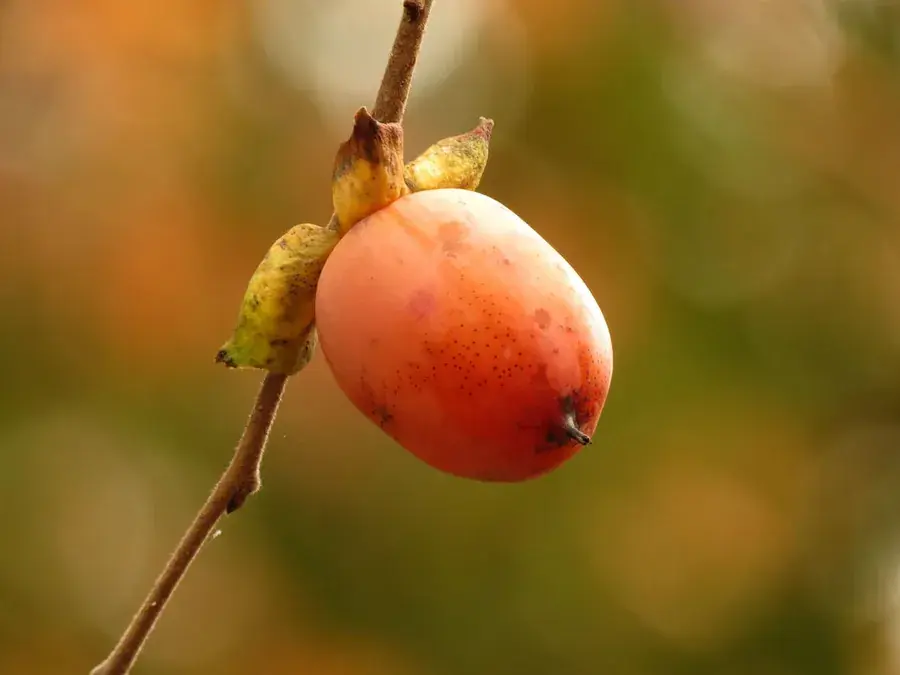
Blocky alligator-hide bark; orange fruit the size of a plum, only ripe when it is wrinkled, squishy and usually on the ground.
How to know it & its look-alikes →Photo: Katja Schulz · CC BY 4.0
 BerrySeptember – October
Autumn olive
Elaeagnus umbellata
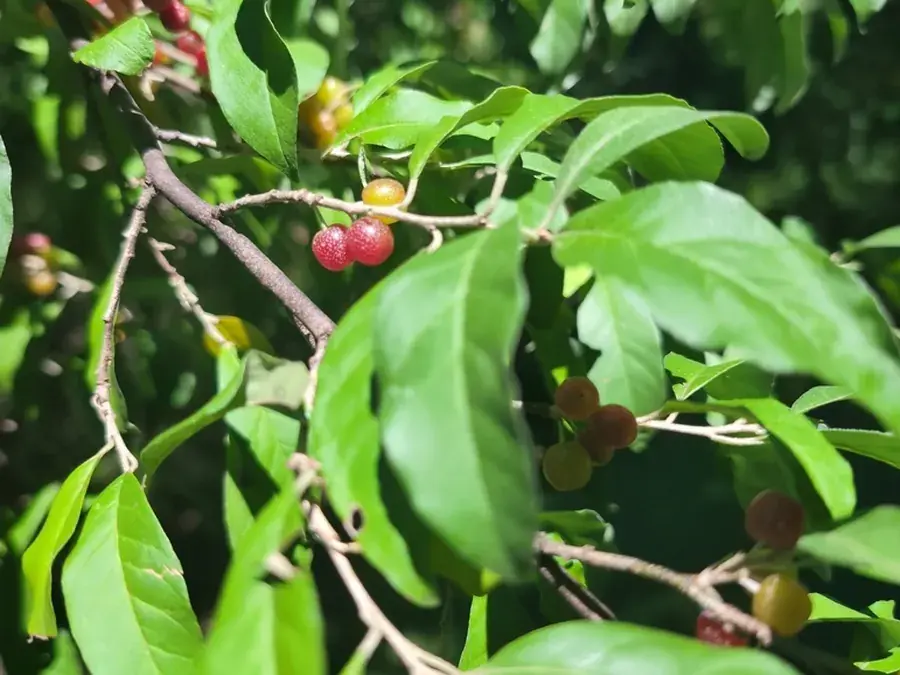
A sprawling thorny shrub whose leaves flash silver underneath; in autumn it is weighed down with small red berries finely speckled with silver and brown scales, each with one soft seed.
How to know it & its look-alikes →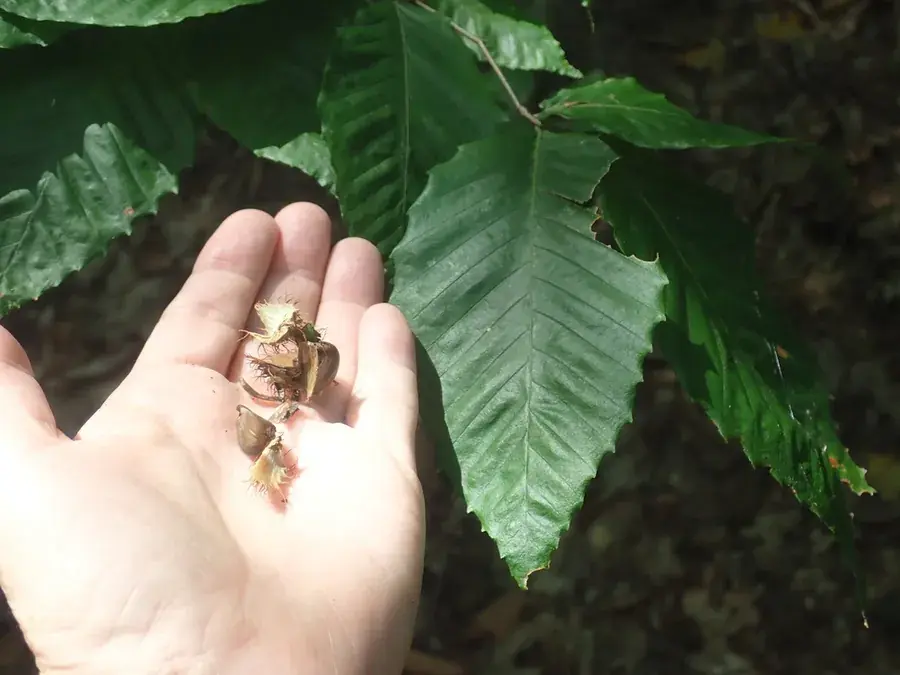 NutSeptember – October
Beechnuts
Fagus grandifolia
Smooth, pale grey bark on a tall tree; long, sharp, cigar-shaped buds; oval leaves with coarse teeth and straight parallel veins, many held, bleached, through winter. The nuts are small, three-sided and come two to a soft-bristled husk that splits into four.
How to know it & its look-alikes →
Checked against these sources ·
- Minnesota Wildflowers: Red clover
- NC State Extension: Trifolium pratense
- USDA NRCS Plant Guide: Red clover
- National Center for Complementary and Integrative Health: Red clover
- Ohio State University Extension: Blackpatch, forage legumes and slaframine intoxication
- Ohio State Weed Guide: Crownvetch (Securigera varia)
Seasons are typical for the middle of the range and move by weeks north and south, and up and down hills.
Educational information only. Never eat a wild plant or mushroom identified from a single photograph or description — confirm with a regional field guide or an experienced forager, and know the poisonous species in your area first.