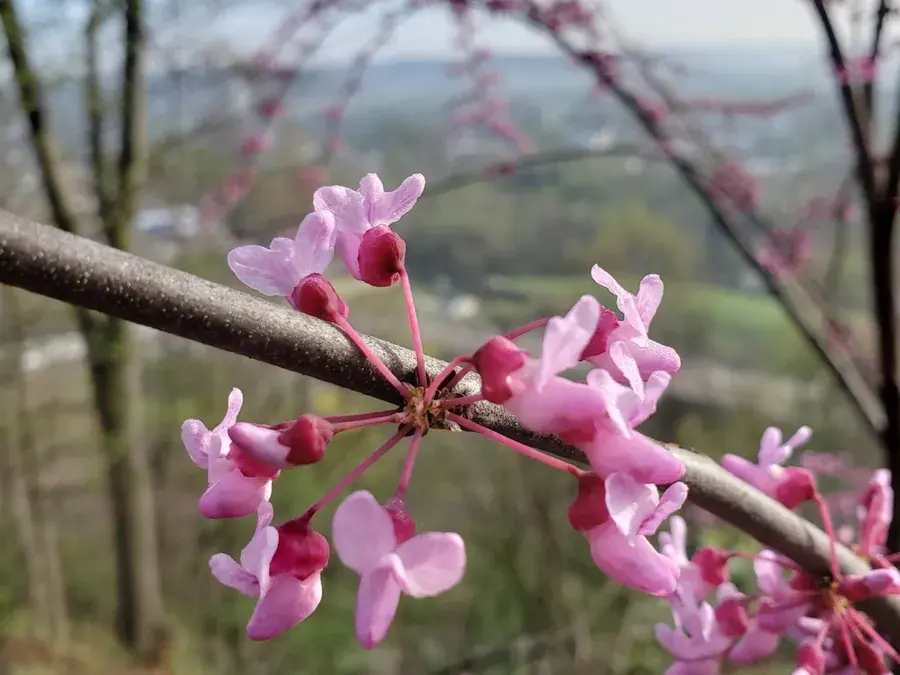
Photo by Public domain (iNaturalist) on iNaturalist · CC0 (public domain)
TreeSeason: April – May
Redbud flowers
Cercis canadensis
- When
- Typically April – May — April, May. Earlier in the south, later in the north.
- Where it grows
- Woodland edges, stream banks and limestone slopes as an understory tree in the east; in Canada truly wild only on Pelee Island, but planted in gardens and streets wherever it will survive the winter.
- How to know it
- Small magenta-pink pea flowers growing straight out of the bare twigs, branches and even the trunk in April or May, before the heart-shaped leaves open. Flat bean-like pods follow and hang on through winter.
- Look-alikes
- Flowering crab and ornamental cherries bloom pink at the same time, but their flowers sit on stalks at the twig tips and open with or after the leaves. Nothing else here puts pea flowers directly on old bark. Judas tree (Cercis siliquastrum) is the planted European relative and is used the same way.
- Harvest and use
- Buds and open flowers raw in salads, pickled like capers, or folded into pancakes; the very young, flat green pods can be cooked like snow peas. Pinch off a few clusters per branch — the flowers are the tree’s seed crop and its bees’ first meal.
- Caution
- Ontario’s wild redbuds are a tiny population — enjoy a planted one instead. Avoid trees in sprayed yards and parks.
Redbud flowers at a glance
- Also called
- Eastern redbud, Judas tree (a name shared with the European Cercis siliquastrum), gainier rouge (Quebec). Texas redbud is a thick-leaved subspecies; western redbud (Cercis occidentalis) is the California foothill species.
- Family
- Fabaceae, the pea and bean family (which also includes black locust and wisteria).
- Where it grows
- Native through the eastern US from New Jersey and Pennsylvania west to southern Michigan, Iowa and eastern Nebraska, and south to Florida, Texas and north-eastern Mexico; it is the state tree of Oklahoma and a common understory tree of limestone woods from the Ohio valley to the Hill Country. In Canada it is native only — and probably — on Pelee Island in Lake Erie, but it is planted in gardens and streets across southern Ontario, Quebec and the Maritimes wherever winters allow. Western redbud, a shrubbier species with the same flowers on bare wood, grows in the California foothills.
- When to pick
- Harvest is the flowering, and it is short: two to three weeks between late March and mid-May as you move north — early April in Missouri and the Carolinas, late April to mid-May in southern Ontario and New England. Buds are picked tight and pink for pickling; open flowers for salads and cooking. The flat green pods are a two-week harvest just after flowering, while they are still soft, thin and under 5 cm (2 in); once they toughen they are done.
- Parts used
- Flower buds, pickled in vinegar like capers. Open flowers, raw in salads, folded into pancake and muffin batter, lightly fried, or steeped for a pink syrup or jelly. The very young pods, cooked like snow peas. Leaves and bark are not eaten, and the mature brown pods and seeds are too tough and bitter to bother with.
- Is any of it poisonous?
- Nothing poisonous is recorded in redbud, and the flowers are eaten raw by the handful. The one real hazard is spraying: redbud is a common street and lawn tree, and lawn herbicides and insecticides end up on its flowers, so pick from trees you know are untreated.
- More look-alikes to know
- Crabapples, ornamental cherries and plums bloom pink in the same weeks, but their flowers have five separate rounded petals on stalks at the twig tips and open with the leaves; redbud’s are pea-shaped and grow in clusters straight out of old bark. Black locust and wisteria carry white or purple pea flowers in long hanging chains with compound leaves. Western redbud (Cercis occidentalis), of California, Arizona and Utah, is treated the same way by foragers, though its use is far less documented than the eastern tree’s; the Pomo and other Californian peoples prize its red winter twigs for basketry.
Questions people ask about redbud flowers
Are redbud flowers edible?
Yes — the magenta pea flowers and tight buds of eastern redbud are eaten raw, pickled, fried and baked into breads, with a mild, slightly tart, pea-like taste, once you have confirmed the tree by its flowers on bare bark and its heart-shaped leaves. Pick from trees you know have not been sprayed.
How do you identify a redbud tree?
In April or May, by small rosy-magenta pea flowers sprouting in clusters directly from the twigs, branches and even the trunk before any leaves show — no other tree in the east does this. After flowering, by broad heart-shaped leaves with smooth edges and a swollen joint where the stalk meets the blade, and by flat bean pods 5–10 cm (2–4 in) long that hang on through winter. It is a small tree, rarely over 10 m (30 ft).
When do redbuds bloom?
Late March to mid-April in the southern US, mid-April in the Ohio valley and mid-Atlantic, and late April to mid-May in southern Ontario, Michigan and New England, each tree for about two to three weeks. The flowers come before the leaves and are darkest while still in bud. Western redbud in California flowers from February to April.
Can you eat redbud pods?
The very young ones, yes — picked within a couple of weeks of flowering while they are flat, green, soft and shorter than your little finger, they can be stir-fried or steamed like snow peas. They toughen quickly; the papery brown pods that hang on the tree all winter are not worth eating.
Does redbud grow wild in Canada?
Only on Pelee Island in Lake Erie, and even there Natural Resources Canada says it is ‘probably’ native rather than certainly. Those few wild trees should be left alone. Everywhere else in southern Ontario, Quebec and the Maritimes, the redbuds you see are planted — and a planted tree in your own yard or a friend’s is the best source of flowers.
Are redbud flowers safe for children?
Yes, from a tree you know is unsprayed: redbud has no poisonous parts and the flowers are a good first wild taste for a child. The lesson to attach is the identification — flowers growing straight out of bark — so that a child does not transfer the habit to every pink tree, since cherry and plum pits, and the yews often planted beside them, are a different matter.
Found in these regions
- Great Lakes & St. Lawrence Lowlands
- Northeast Atlantic Coast & Piedmont
- Appalachian Highlands
- Central Hardwoods & Interior Plateaus
- Southeastern Piedmont & Coastal Plain
- Gulf Coast & Mississippi Lowlands
- Prairies & Great Plains
Hardiness zones 4–9.
Is it ready near you?
Get this week's foraging guide for your area
Enter a town, postal code or ZIP and we'll tell you what's in season right there this week — from your local climate, this week's weather and your ecological region.
Also ready in October
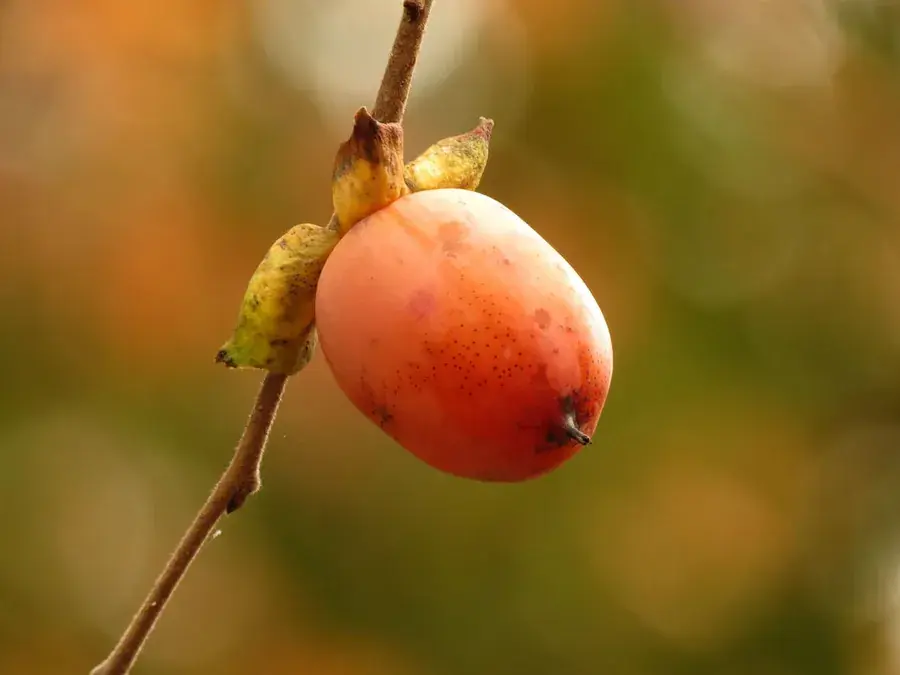 FruitOctober – November
American persimmon
Diospyros virginiana
Blocky alligator-hide bark; orange fruit the size of a plum, only ripe when it is wrinkled, squishy and usually on the ground.
How to know it & its look-alikes →Photo: Katja Schulz · CC BY 4.0
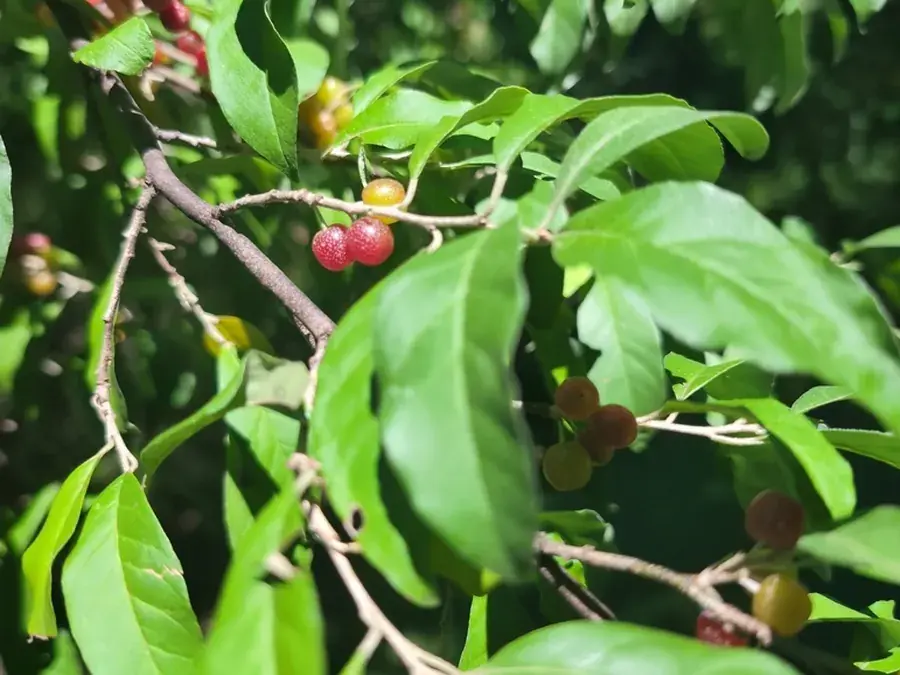 BerrySeptember – October
Autumn olive
Elaeagnus umbellata
A sprawling thorny shrub whose leaves flash silver underneath; in autumn it is weighed down with small red berries finely speckled with silver and brown scales, each with one soft seed.
How to know it & its look-alikes →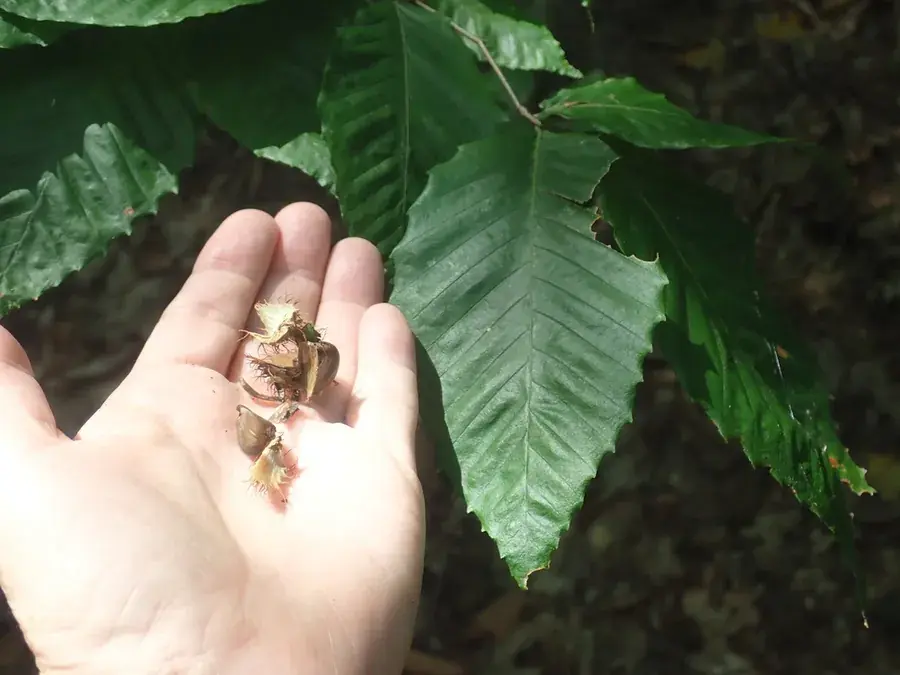 NutSeptember – October
Beechnuts
Fagus grandifolia
Smooth, pale grey bark on a tall tree; long, sharp, cigar-shaped buds; oval leaves with coarse teeth and straight parallel veins, many held, bleached, through winter. The nuts are small, three-sided and come two to a soft-bristled husk that splits into four.
How to know it & its look-alikes →
Checked against these sources ·
- Missouri Department of Conservation — Eastern redbud
- Natural Resources Canada, Trees of Canada — Redbud
- NC State Extension — Cercis canadensis
- Illinois Wildflowers — Redbud
- Lady Bird Johnson Wildflower Center — Cercis canadensis
- Wikipedia — Cercis occidentalis (western redbud)
Seasons are typical for the middle of the range and move by weeks north and south, and up and down hills.
Educational information only. Never eat a wild plant or mushroom identified from a single photograph or description — confirm with a regional field guide or an experienced forager, and know the poisonous species in your area first.