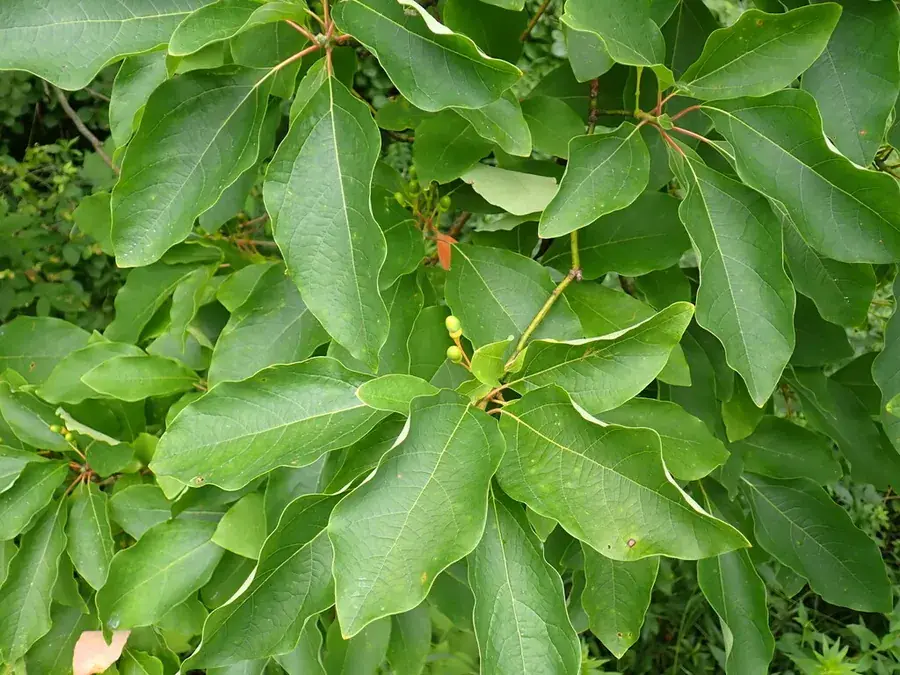
Photo by Larry Jensen on iNaturalist · CC BY 4.0
TreeSeason: May – July
Sassafras
Sassafras albidum
- When
- Typically May – July — May, June, July. Earlier in the south, later in the north.
- Where it grows
- Old fields, fencerows, sandy woods and roadsides, suckering into thickets; a small tree in the north and a real tree in the south.
- How to know it
- Three leaf shapes on one tree — plain oval, three-lobed, and a one-thumbed ‘mitten’ — on green twigs that smell of root beer when scratched. Female trees carry dark blue berries in red cups in autumn.
- Look-alikes
- Red mulberry can show mitten leaves too, but its leaves are toothed and its twigs bleed milky sap when broken, with no root-beer smell. Young tulip trees have four-pointed, squared-off leaves. Spicebush shares the spicy smell but has unlobed leaves and red berries.
- Harvest and use
- Young leaves dried and ground are filé, the Choctaw thickener for gumbo, and are the part to favour. Root-bark tea is the famous use, but the root contains safrole and is restricted as food in the US; if you make it at all, make it rarely and weak.
- Caution
- Safrole, concentrated in the root bark, caused liver cancer in laboratory animals and the US FDA bans it and sassafras bark as a food ingredient; the leaves contain little or none. Do not give root tea to children or drink it in pregnancy.
Sassafras at a glance
- Also called
- White sassafras, cinnamon wood, mitten tree, sassafras officinal (Quebec). The dried, ground young leaves are filé or gumbo filé.
- Family
- Lauraceae, the laurel family (which also includes spicebush, bay laurel, cinnamon and avocado).
- Where it grows
- Native from southern Maine and extreme south-western Ontario west to Michigan, Illinois and Iowa, and south through the whole eastern US to central Florida and east Texas; historic stands in southern Wisconsin are gone. In Canada it grows wild only in the Carolinian zone of Ontario, around Lake Erie and the Niagara peninsula, where it is uncommon. It is a tree of old fields, fencerows and sandy, acid soils — a thicket-forming shrub at the northern edge and a tree of 20 m (65 ft) or more in the southern Appalachians.
- When to pick
- Young leaves for filé from late May through July, picked while still tender and pale green, then dried out of the sun and ground fine. Root bark, where people still dig it, is traditionally taken in early spring or late autumn from the shallow lateral roots of a sucker in a thicket, so that the parent tree is undisturbed. Twigs can be chewed or steeped at any time of year, and the dark blue fruit of September is for birds, not people.
- Parts used
- The leaves, dried and powdered as filé, which thickens and scents gumbo and contains little or no safrole — this is the use to favour. Young leaves and twig tips chewed fresh for their lemon-spice taste. The root bark, steeped for the traditional red tea or an old-fashioned root beer, carries most of the tree’s safrole and is the part US food law restricts. Wood and bark of the trunk are not used.
- Is any of it poisonous?
- Sassafras root bark and its oil are rich in safrole, which caused liver cancer in rats and mice and is listed by the US National Toxicology Program as reasonably anticipated to be a human carcinogen; the FDA banned safrole and sassafras oil from food in 1960 and still deems any food containing sassafras bark, such as sassafras tea, adulterated (21 CFR 189.180). The leaves, by contrast, were found in a 1997 analysis to contain no detectable safrole, which is why filé stays on the shelf. The honest summary: the cancer evidence is from animals given large doses, no one has shown harm from an occasional cup, and no one has shown it safe either. Daily root tea, root tea for children, and root tea in pregnancy are the uses to drop.
- More look-alikes to know
- Red mulberry and white mulberry grow mitten and three-lobed leaves on the same tree too, but their leaves are toothed around the edge, sandpapery or glossy, and a broken leaf stalk oozes milky sap; their twigs do not smell of root beer, and their fruit is a blackberry-like cluster. Young tulip trees have big four-pointed leaves with a notched, squared-off tip. Spicebush, the sister shrub, has the spicy smell but only unlobed leaves and red berries. None of these is dangerous; the point is that only sassafras should be used as sassafras.
Questions people ask about sassafras
Is sassafras tea safe to drink?
Root-bark tea is the one traditional wild drink with a real, documented caution: the root bark is rich in safrole, which caused liver cancer in laboratory rodents, and the US FDA has barred safrole and sassafras bark from food since 1960. No one has shown harm from an occasional cup, and no one has shown it safe; the sensible line is rare and weak, never daily, never for children or in pregnancy. The leaves contain little or no safrole, so filé is the part to enjoy freely.
Why is sassafras banned?
Because of safrole, the main component of the root’s oil. In 1960 the FDA prohibited safrole and sassafras oil as food additives after they produced liver tumours in rats, and the regulation still in force (21 CFR 189.180) treats any food that contains sassafras bark, such as sassafras tea, as adulterated. Root beer has been flavoured with synthetic or safrole-free extracts ever since. Filé, made from the leaves, is not covered because the leaves carry little or no safrole.
How do you identify a sassafras tree?
By three leaf shapes on one tree: a plain oval, a two-lobed ‘mitten’ with a thumb, and a three-lobed leaf, all smooth-edged, often on one twig. The young twigs are bright green and smell of root beer or lemon when scratched or snapped; the bark on old trunks is deeply furrowed and reddish-brown. Female trees carry dark blue oval fruit on bright red stalks in September. It suckers into thickets along old fencerows.
What is filé powder and how do you make it?
Filé is the dried, finely ground young leaf of sassafras, first used by the Choctaw of the lower Mississippi and adopted into Louisiana gumbo, where a spoonful stirred in off the heat thickens the pot and gives it a faint root-beer scent. Pick tender leaves in late spring or early summer, dry them flat out of the sun until crisp, strip out the stalks and veins, grind fine and sift. Because the leaves contain little or no safrole, filé is sold and eaten freely.
What looks like sassafras?
Mulberry, which can carry mitten-shaped and three-lobed leaves on the same tree — but mulberry leaves are toothed, the leaf stalk bleeds milky sap when snapped, and the twigs have no root-beer smell. Young tulip trees have squared-off, four-pointed leaves. Spicebush has the spicy smell on a shrub with unlobed leaves and red berries. None of these is poisonous, but none is sassafras.
Is it safe for kids to chew sassafras twigs?
A twig chewed on a walk now and then is a small exposure and a long tradition, but given the safrole in the tree it is not something to make a habit of, and root-bark tea should not be given to children at all. If children want the taste, let them help make filé from the leaves, which carry little or no safrole. Teach them, too, that the dark blue berries are for birds.
Found in these regions
- Great Lakes & St. Lawrence Lowlands
- Northeast Atlantic Coast & Piedmont
- Appalachian Highlands
- Central Hardwoods & Interior Plateaus
- Southeastern Piedmont & Coastal Plain
- Gulf Coast & Mississippi Lowlands
Hardiness zones 4–9.
Is it ready near you?
Get this week's foraging guide for your area
Enter a town, postal code or ZIP and we'll tell you what's in season right there this week — from your local climate, this week's weather and your ecological region.
Also ready in October
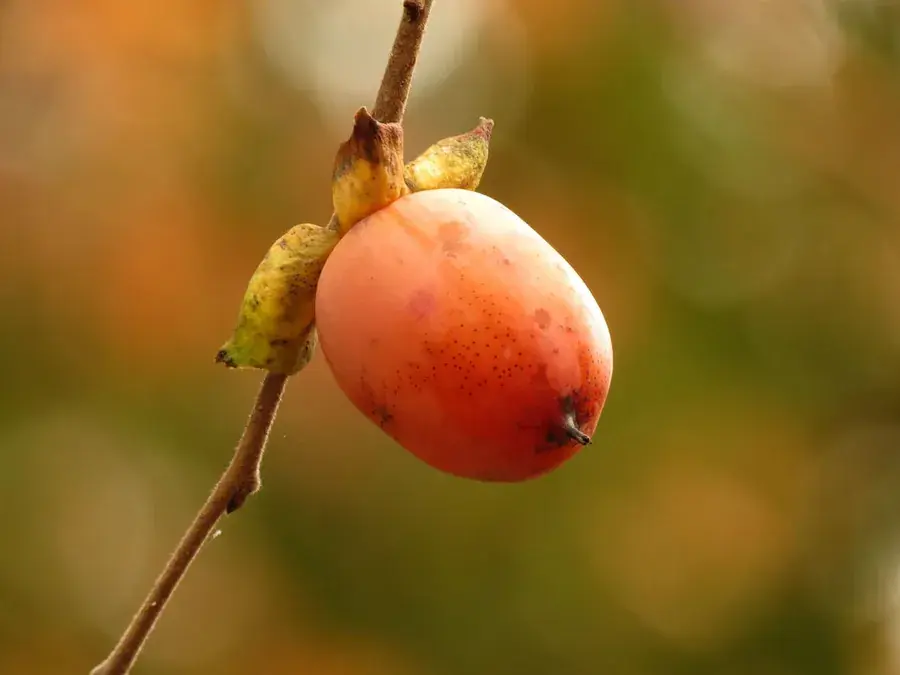 FruitOctober – November
American persimmon
Diospyros virginiana
Blocky alligator-hide bark; orange fruit the size of a plum, only ripe when it is wrinkled, squishy and usually on the ground.
How to know it & its look-alikes →Photo: Katja Schulz · CC BY 4.0
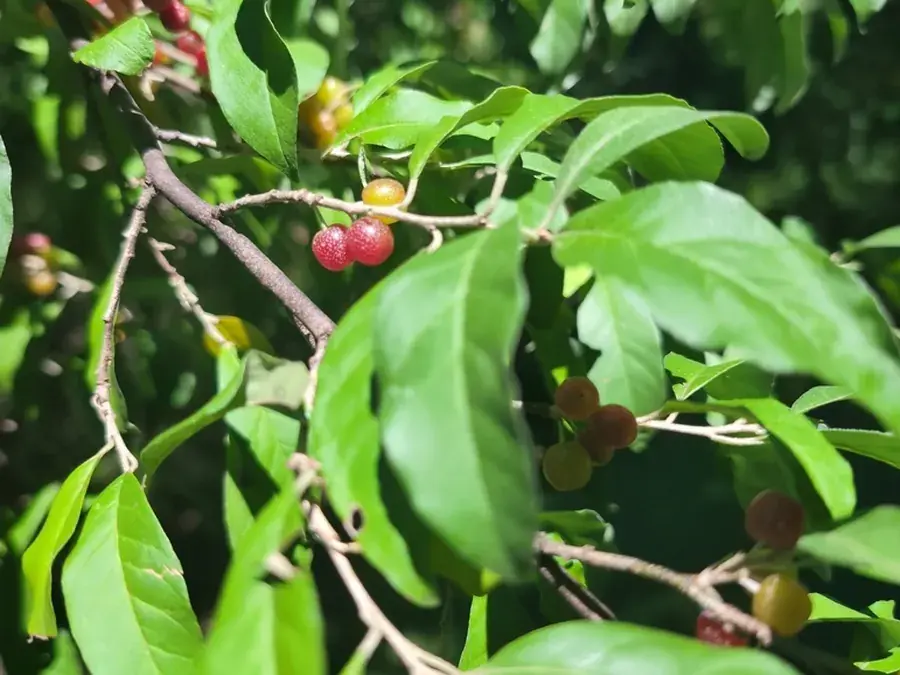 BerrySeptember – October
Autumn olive
Elaeagnus umbellata
A sprawling thorny shrub whose leaves flash silver underneath; in autumn it is weighed down with small red berries finely speckled with silver and brown scales, each with one soft seed.
How to know it & its look-alikes →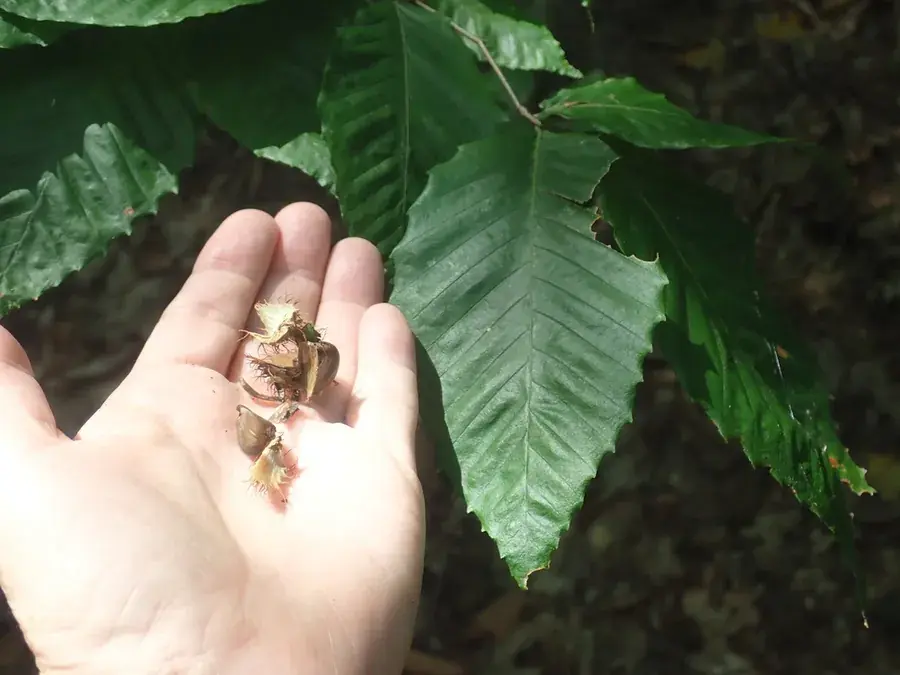 NutSeptember – October
Beechnuts
Fagus grandifolia
Smooth, pale grey bark on a tall tree; long, sharp, cigar-shaped buds; oval leaves with coarse teeth and straight parallel veins, many held, bleached, through winter. The nuts are small, three-sided and come two to a soft-bristled husk that splits into four.
How to know it & its look-alikes →
Checked against these sources ·
- NC State Extension — Sassafras albidum
- Illinois Wildflowers — Sassafras
- 21 CFR § 189.180 — Safrole (Cornell Legal Information Institute)
- Memorial Sloan Kettering Cancer Center — Sassafras
- Wikipedia — Filé powder (safrole in leaves; Choctaw origin)
- VASCAN (Database of Vascular Plants of Canada) — Sassafras albidum
Seasons are typical for the middle of the range and move by weeks north and south, and up and down hills.
Educational information only. Never eat a wild plant or mushroom identified from a single photograph or description — confirm with a regional field guide or an experienced forager, and know the poisonous species in your area first.