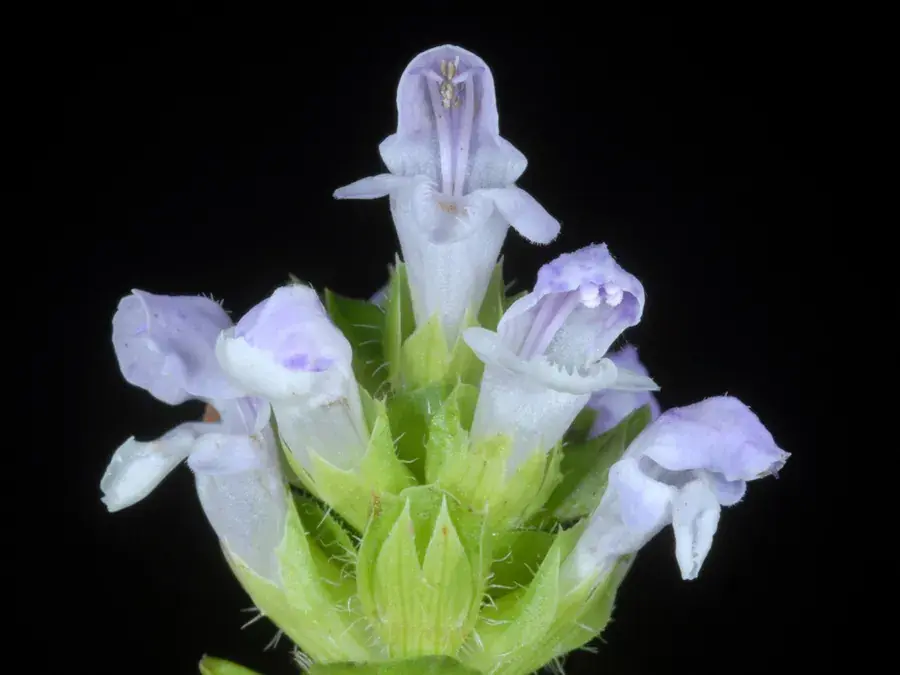
Photo by Douglas Goldman on iNaturalist · CC BY-SA 4.0
GreenSeason: June – September
Selfheal (heal-all)
Prunella vulgaris
- When
- Typically June – September — June, July, August, September. Earlier in the south, later in the north.
- Where it grows
- Lawns, trail edges, streamsides and open woods — low and sprawling where it is mown, upright to 30 cm (1 ft) where it is not.
- How to know it
- Square stem with opposite, oval to lance-shaped leaves that are barely toothed; and a stubby club-shaped flower head made of overlapping fringed bracts, with purple hooded flowers poking out a few at a time. The head stays on as a brown bristly knob long after flowering.
- Look-alikes
- Bugleweed (Ajuga), the garden ground cover, has glossy often bronze leaves and flowers in whorls up a leafy spike rather than one compact bracted head; it is not a food plant. Other small mints have the square stem but not the knobby head.
- Harvest and use
- Leaves and flowering tops, raw in salads when young, cooked as a mild pot-herb, or dried for a tea in the European and Chinese herbal traditions. Cut the tops and leave the roots; it recovers quickly.
- Caution
- No known toxicity, but it is a lawn plant: avoid treated turf, dog runs and road edges. Pick lightly in places where it is a native wildflower rather than a weed.
Selfheal (heal-all) at a glance
- Also called
- Heal-all, all-heal, carpenter’s herb, woundwort, brunelle commune (Quebec). Two forms: the native var. lanceolata with narrower leaves, and the Eurasian var. vulgaris with broader egg-shaped leaves.
- Family
- Lamiaceae, the mint family (which also includes ground ivy, wild mint and bugleweed).
- Where it grows
- Found across the whole temperate world. In North America the native lance-leaved form grows from Alaska and Yukon through every province south to Guatemala, and the European form has naturalised alongside it in lawns and trail edges everywhere people have settled — the Maritimes, the St. Lawrence and Great Lakes lowlands, the Northeast, the Appalachians, the Midwest, the Southeast and Gulf states, the Pacific coast and California, and the wetter uplands of Hawaii. It is scarce on the dry open Plains, in the deserts and in the Florida peninsula.
- When to pick
- June to September in southern Canada and the northern US, when the purple flower heads are showing; late May in the mid-Atlantic and Pacific Northwest, and into October where autumns are mild. Pick the flowering tops with a few leaves while the heads still carry open flowers — once a head has gone brown and bristly its season is done. Young leaves can be gathered from April on, before the plant bolts.
- Parts used
- Leaves and flowering tops, raw in salads when young, cooked as a mild pot-herb, or dried for the tea long used in European and Chinese herbal tradition (where the dried heads are xia ku cao). The flavour is mild and slightly bitter; a quick rinse or blanch takes the edge off. Roots are not used.
- Is any of it poisonous?
- No known toxicity, and no part of the plant is considered poisonous. The practical cautions are about where it grows — treated lawns, roadsides and dog runs — and about the usual mint-family sensitivities in a few people.
- More look-alikes to know
- Field milkwort (Polygala sanguinea) makes a similar stubby pink-purple head but has alternate, narrow leaves on a round stem. Wild basil (Clinopodium vulgare) has fuzzy pink flower whorls at the top of the stem and a faint oregano smell. Henbit and dead-nettles flower in spring in whorls up the stem. None is dangerous, and none has selfheal’s tight, barrel-shaped head of overlapping fringed bracts on a square stem.
Questions people ask about selfheal
Is selfheal edible?
Yes, once identified with certainty: the leaves and flowering tops are eaten raw when young, cooked as a mild green, or dried for tea. It has no known toxicity. Its flavour is bland and slightly bitter, so it is more of an addition to a salad or soup than a dish on its own.
How do you identify heal-all?
A square stem, low and sprawling in mown lawns or upright to 30 cm (1 ft) in meadows; opposite oval to lance-shaped leaves with almost no teeth; and a short, stubby, club-shaped flower head 2–5 cm (1–2 in) long made of overlapping, fringed, often purple-tinged bracts, with purple hooded flowers emerging a few at a time. After flowering the brown bristly head stays on all winter.
What looks like selfheal?
Bugleweed (Ajuga reptans), the garden ground cover, has glossy, often bronze leaves in a rosette and blue flowers in whorls up a leafy spike rather than in one tight bracted head; it is not a food plant. Field milkwort has a similar pink head but alternate leaves on a round stem. Other small mints share the square stem but not the barrel-shaped head.
When do you harvest selfheal?
While it is in flower — June to September across most of its range, with young leaves available from April. Cut the flowering tops with a few leaves on a dry day and use them fresh or dry them in the shade. Leave the roots: it regrows within weeks and spreads by runners.
Is selfheal native to North America?
Partly. The narrow-leaved form, var. lanceolata, is native from Alaska to Guatemala and is a genuine wildflower of open woods and streamsides. The broad-leaved var. vulgaris came from Europe and is the lawn weed. Botanists still argue over how to separate them, and they are used the same way.
Is selfheal safe for kids?
Yes — it is one of the safer lawn plants for a child to learn, with nothing poisonous in it and a distinctive knobby head that is hard to confuse with anything else once seen. Teach them the square stem and the barrel of fringed bracts, pick from unsprayed grass, and wash what comes home.
Found in these regions
- Boreal Forest & Shield
- Acadian Forest & Atlantic Coast
- Great Lakes & St. Lawrence Lowlands
- Northeast Atlantic Coast & Piedmont
- Appalachian Highlands
- Central Hardwoods & Interior Plateaus
- Southeastern Piedmont & Coastal Plain
- Gulf Coast & Mississippi Lowlands
- Prairies & Great Plains
- Western Mountains & Interior Plateaus
- Pacific Maritime
- Mediterranean California
- Hawaiʻi & the Tropics
Hardiness zones 3–10.
Is it ready near you?
Get this week's foraging guide for your area
Enter a town, postal code or ZIP and we'll tell you what's in season right there this week — from your local climate, this week's weather and your ecological region.
Also ready in October
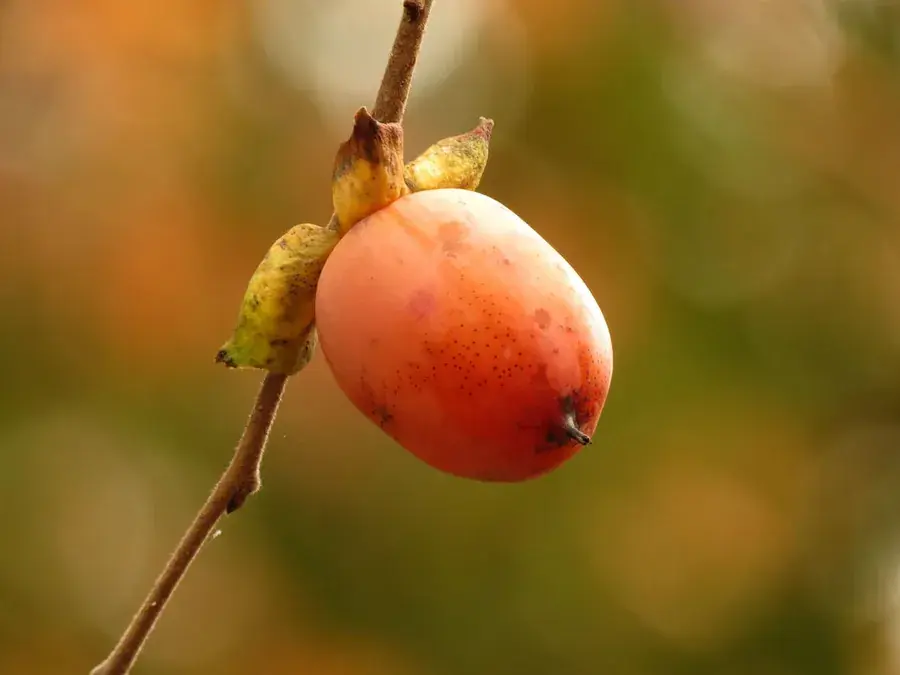 FruitOctober – November
American persimmon
Diospyros virginiana
Blocky alligator-hide bark; orange fruit the size of a plum, only ripe when it is wrinkled, squishy and usually on the ground.
How to know it & its look-alikes →Photo: Katja Schulz · CC BY 4.0
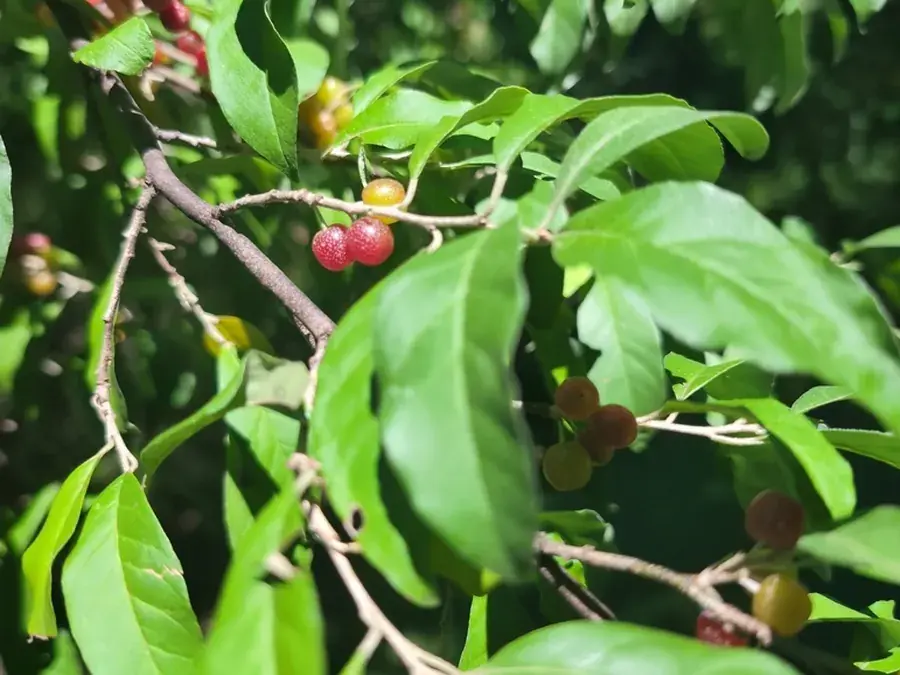 BerrySeptember – October
Autumn olive
Elaeagnus umbellata
A sprawling thorny shrub whose leaves flash silver underneath; in autumn it is weighed down with small red berries finely speckled with silver and brown scales, each with one soft seed.
How to know it & its look-alikes →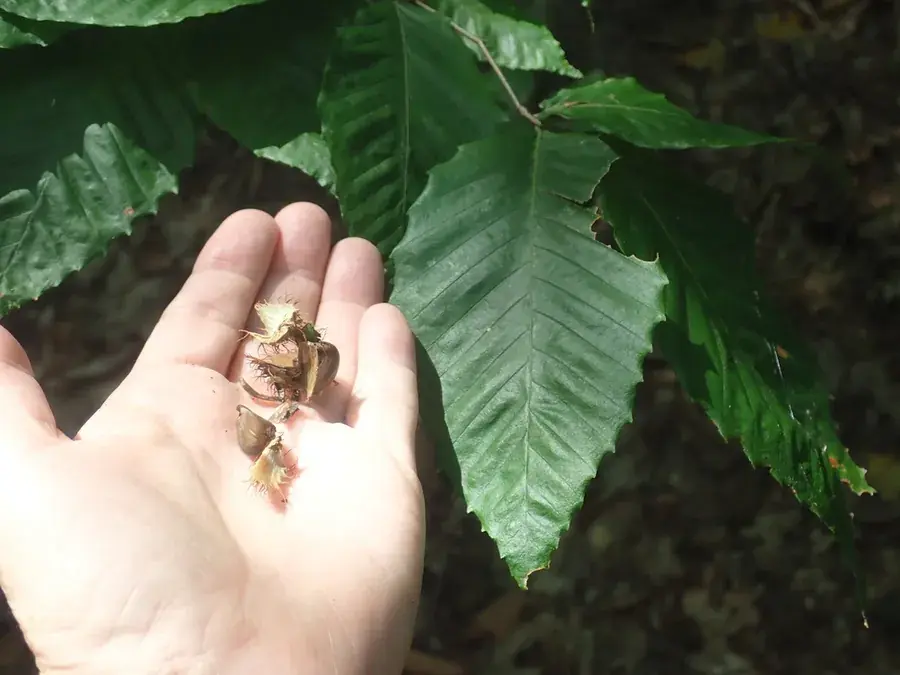 NutSeptember – October
Beechnuts
Fagus grandifolia
Smooth, pale grey bark on a tall tree; long, sharp, cigar-shaped buds; oval leaves with coarse teeth and straight parallel veins, many held, bleached, through winter. The nuts are small, three-sided and come two to a soft-bristled husk that splits into four.
How to know it & its look-alikes →
Checked against these sources ·
- Minnesota Wildflowers: Self-heal
- Missouri Department of Conservation: Self-heal (heal-all)
- NC State Extension: Prunella vulgaris subsp. lanceolata
- VASCAN: Prunella vulgaris
Seasons are typical for the middle of the range and move by weeks north and south, and up and down hills.
Educational information only. Never eat a wild plant or mushroom identified from a single photograph or description — confirm with a regional field guide or an experienced forager, and know the poisonous species in your area first.