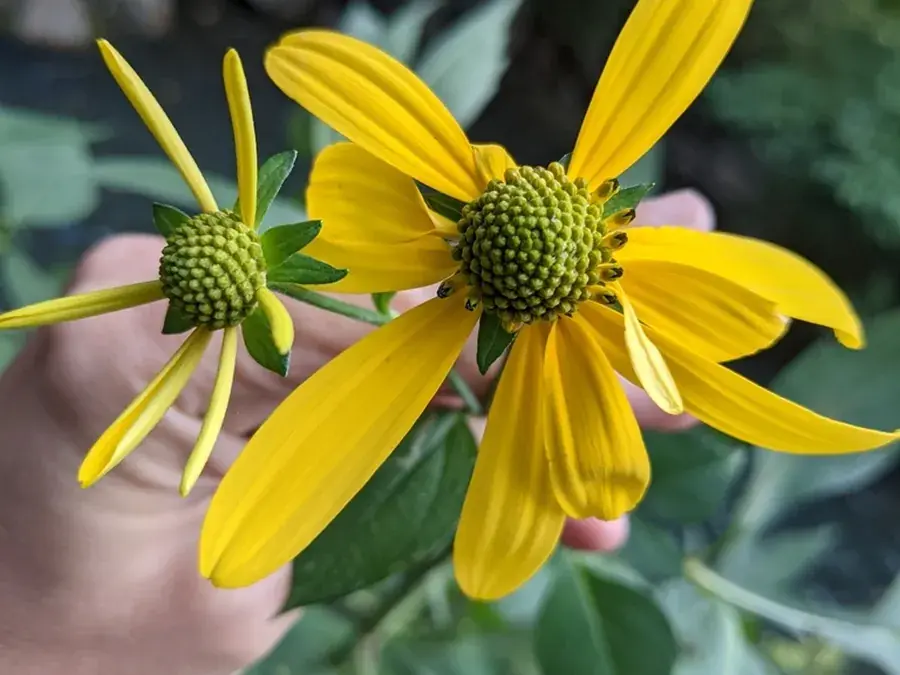
Photo by Eric Knight on iNaturalist · CC BY 4.0
GreenIn season now (October)
Sochan (cutleaf coneflower)
Rudbeckia laciniata
- When
- Typically April – May, September – October — April, May, September, October. Earlier in the south, later in the north.
- Where it grows
- Moist bottomland woods, streambanks, wet meadows and ditches, in sun or part shade, often in big stands.
- How to know it
- Basal leaves deeply cut into 3–7 lobes like a turkey’s foot, on a smooth, hairless stem with a waxy blue-green bloom, 1–3 m (3–10 ft) tall. July–September flowers have 6–12 drooping yellow rays around a green cone that yellows as it ages.
- Look-alikes
- Other coneflowers have hairy stems and dark brown or black cones — black-eyed Susan and gray-headed coneflower — and are not eaten. Buttercups in the same wet meadows have glossy, lobed leaves and are acrid and toxic raw. Learn sochan in flower before you pick the rosettes in spring.
- Harvest and use
- The spring leaves and tender shoots, and a second flush of basal leaves in fall, blanched and then fried or sautéed — a Cherokee traditional green with a celery-like taste. Pick leaves, never the root, and leave most of every clump.
- Caution
- Cook it; the foliage has poisoned pigs, sheep and horses that grazed it in quantity. In western mountain meadows, monkshood and larkspur grow in the same wet ground with deeply cut leaves and are deadly — never pick a cut-leaved rosette there you have not watched flower.
Sochan (cutleaf coneflower) at a glance
- Also called
- Cutleaf coneflower, green-headed coneflower, tall coneflower, wild golden glow, rudbeckie laciniée (Quebec). ‘Sochan’ is the Cherokee name. The double-flowered garden form ‘Golden Glow’ (‘Hortensia’) is the same species.
- Family
- Asteraceae, the daisy family (which also includes black-eyed Susan, sunflower and Jerusalem artichoke).
- Where it grows
- Native from southern Quebec and Ontario west to Manitoba and south through the whole eastern United States — New England, the Great Lakes, the Ohio Valley, the Appalachians, the Southeast and the eastern plains — with a western variety (var. ampla) in the Rockies from Wyoming through Colorado to New Mexico and Arizona. Commonest in the southern Appalachians, the Midwest and Minnesota, and recorded as far east as the Maritimes, where it is scarce.
- When to pick
- Spring, when the basal leaves and shoots are tender — March to May in the Smokies and the mid-south, April to June in the Great Lakes, Quebec and the mountains — and again in September and October, when the plants put out a second flush of basal leaves after flowering. Stop picking once the flower stalks shoot up in early summer; the leaves turn tough and strong. The Cherokee gathering season in Great Smoky Mountains National Park runs from March into early summer (March 1 to May 31 under the 2019 agreement; the park now describes it as March to June).
- Parts used
- Young basal leaves and the tender tips and stems of spring shoots, and the fall rosette leaves, always cooked: blanched in boiling water, then fried in a little fat the Cherokee way, or steamed, sautéed or folded into soups and eggs. It tastes of celery and mild greens. Flowers, seeds and roots are not eaten. Pick leaves from many plants rather than stripping one, and never dig the crown.
- Is any of it poisonous?
- Reported poisonous to livestock: Canadian records list poisonings and deaths of pigs, sheep and horses that grazed cutleaf coneflower in quantity, and Illinois Wildflowers calls the foliage somewhat poisonous to some herbivores. People have eaten it cooked for a very long time without recorded harm, which is why this guide says cooked and not raw. Mature summer leaves are strong and not eaten.
- More look-alikes to know
- Giant ragweed (Ambrosia trifida): three-lobed leaves on a tall plant in the same bottomlands, but the leaves are opposite, rough-hairy and without the broad terminal lobe, and the stem is hairy; not toxic, not food. Gray-headed coneflower (Ratibida pinnata): lobed leaves but hairy stems, narrower lobes and a grey-brown cone. Wild golden glow: the double ‘Golden Glow’ cultivar of sochan itself, run wild around old farmsteads — the same leaves and edible the same way. In western mountain meadows and streambanks, monkshood (Aconitum columbianum) and larkspur (Delphinium) grow with sochan and have deeply cut leaves; theirs are palmate, cut from a single point into many narrow fingers, on stems without a waxy bloom, and every part is deadly. That confusion is a precaution, not a documented poisoning — but learn western sochan in flower before you pick its rosettes.
Questions people ask about sochan
How do you identify sochan?
In spring, a clump of long-stalked basal leaves deeply cut into 3–7 lobes — the Cherokee comparison is a turkey’s foot — with a broad end lobe, on smooth stalks, often with a reddish cast at the base, in moist ground. In summer it is unmistakable: a smooth, hairless, waxy blue-green stem 1–3 m (3–10 ft) tall with drooping yellow rays around a green cone. Other coneflowers have hairy stems and dark cones.
What is the Cherokee sochan agreement with Great Smoky Mountains National Park?
In March 2019 the Eastern Band of Cherokee Indians and the park signed an agreement under the National Park Service’s plant-gathering rule (36 CFR 2.6) allowing enrolled members to gather sochan in the park, which sits on Cherokee ancestral land and had been closed to the harvest since its creation. Permits — 36 in the first year, now up to 50 a season — let families gather set amounts through the spring, with monitoring that has so far found no harm to the plants. It is a permit program for tribal members, not a general opening; everyone else may not pick in the park.
When do you pick sochan?
Spring, while the leaves are young — March to May in the southern Appalachians, April to June farther north and in the mountains — and again in September and October when a second crop of basal leaves appears. Once the stalk bolts, wait for fall.
How do you cook sochan?
Blanch the leaves and tender stems in boiling water, drain, then fry in a little fat — the traditional Cherokee preparation, often with pork — or steam and sauté them as you would chard. Young spring shoots cook quickly; older leaves want chopping and a few more minutes. Always cooked.
Is sochan poisonous?
Not to people who cook it, as far as a long record shows; but the foliage has poisoned pigs, sheep and horses that grazed it, so it is not a raw salad green and mature leaves are left alone. Cook it and eat it as a vegetable, not by the bucket.
What looks like sochan?
Black-eyed Susan and gray-headed coneflower have hairy stems and dark cones and are not eaten. Buttercups share the wet meadows with glossy lobed leaves and are acrid and toxic raw. Giant ragweed has opposite, hairy, three-lobed leaves. In the Rockies, monkshood and larkspur — deadly — have deeply cut, hand-shaped leaves on similar wet ground; do not pick cut-leaved rosettes there that you have not seen flower.
Is sochan safe for children?
Cooked sochan is a mild green that children eat readily, and picking leaves from a big streamside stand is good work for small hands once an adult has named the plant. The rules: an adult chooses the clump, nothing raw, and in western mountains no cut-leaved rosette is picked at all unless the family watched it bloom last summer.
Found in these regions
- Great Lakes & St. Lawrence Lowlands
- Northeast Atlantic Coast & Piedmont
- Appalachian Highlands
- Central Hardwoods & Interior Plateaus
- Southeastern Piedmont & Coastal Plain
- Prairies & Great Plains
- Western Mountains & Interior Plateaus
Hardiness zones 3–9.
Is it ready near you?
Get this week's foraging guide for your area
Enter a town, postal code or ZIP and we'll tell you what's in season right there this week — from your local climate, this week's weather and your ecological region.
Also ready in October
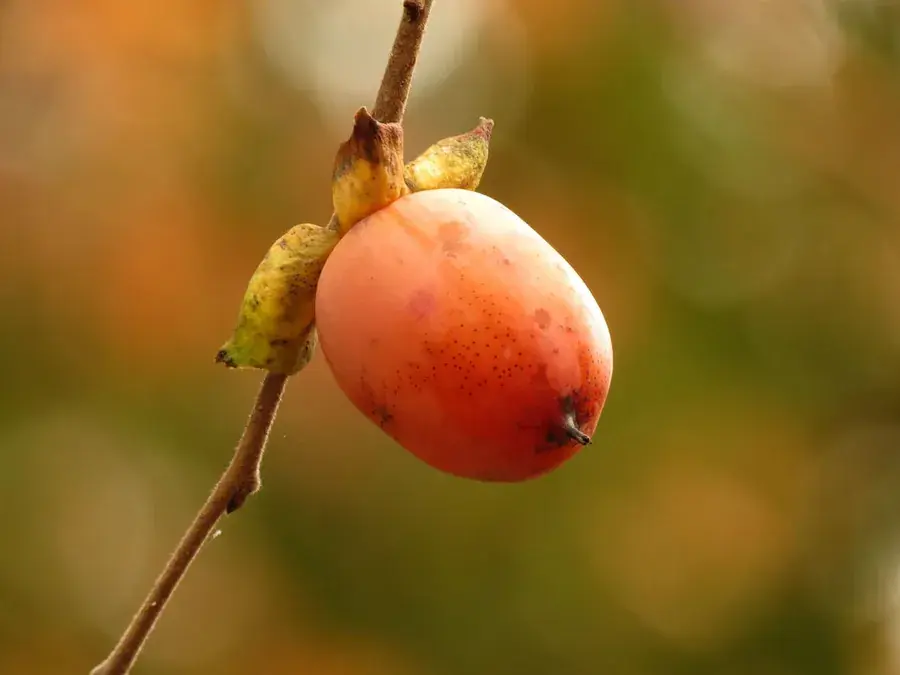 FruitOctober – November
American persimmon
Diospyros virginiana
Blocky alligator-hide bark; orange fruit the size of a plum, only ripe when it is wrinkled, squishy and usually on the ground.
How to know it & its look-alikes →Photo: Katja Schulz · CC BY 4.0
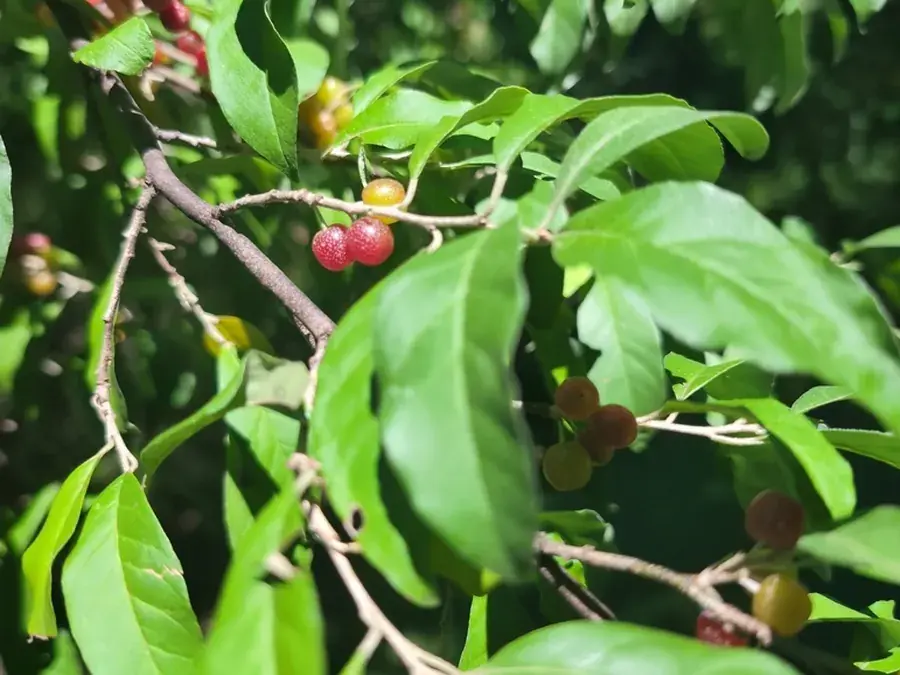 BerrySeptember – October
Autumn olive
Elaeagnus umbellata
A sprawling thorny shrub whose leaves flash silver underneath; in autumn it is weighed down with small red berries finely speckled with silver and brown scales, each with one soft seed.
How to know it & its look-alikes →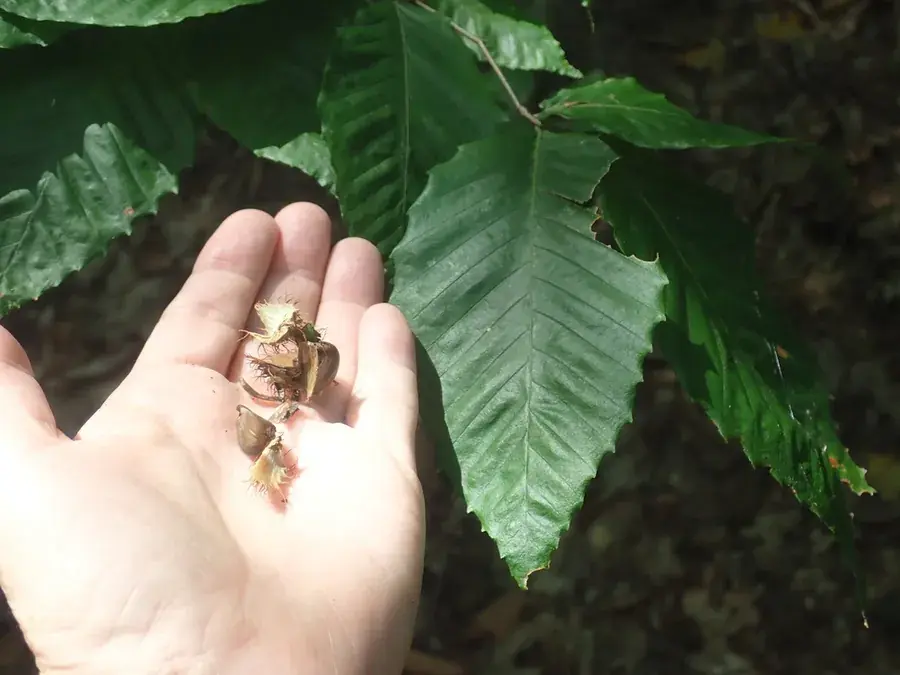 NutSeptember – October
Beechnuts
Fagus grandifolia
Smooth, pale grey bark on a tall tree; long, sharp, cigar-shaped buds; oval leaves with coarse teeth and straight parallel veins, many held, bleached, through winter. The nuts are small, three-sided and come two to a soft-bristled husk that splits into four.
How to know it & its look-alikes →
Checked against these sources ·
- Minnesota Wildflowers: Cut-leaf coneflower
- Illinois Wildflowers: Cutleaf coneflower
- US National Park Service, Great Smoky Mountains: Sochan gathering, a Cherokee tradition
- Cherokee One Feather: Park, Tribe sign sochan agreement (2019)
- Weeds Canada: Plants of Canada and the northern US poisonous to livestock
- VASCAN (Database of Vascular Plants of Canada): Rudbeckia laciniata
Seasons are typical for the middle of the range and move by weeks north and south, and up and down hills.
Educational information only. Never eat a wild plant or mushroom identified from a single photograph or description — confirm with a regional field guide or an experienced forager, and know the poisonous species in your area first.