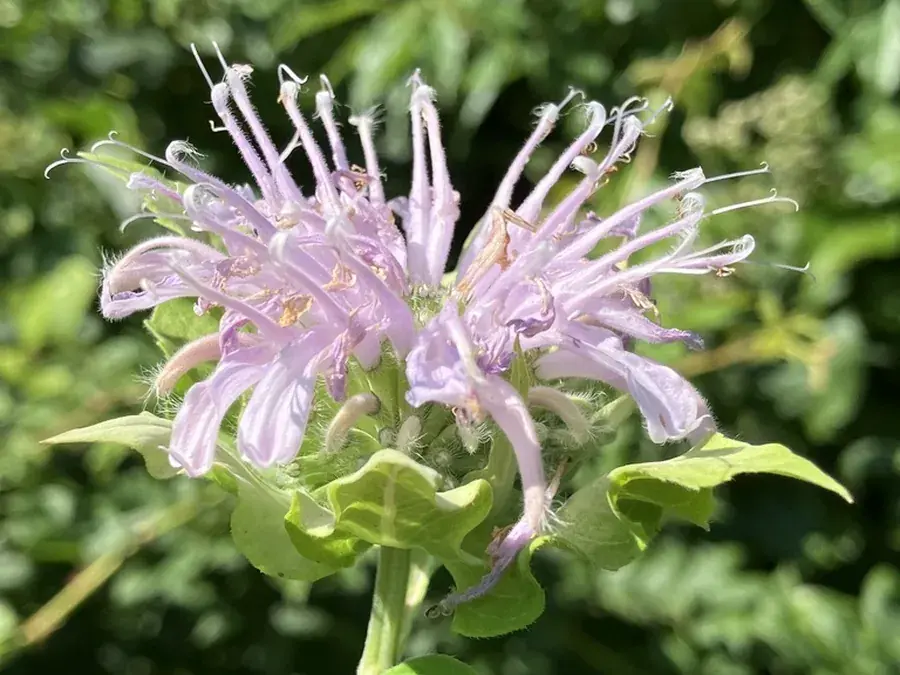
Photo by Bryan Connolly on iNaturalist · CC BY 4.0
GreenSeason: June – September
Wild bergamot (bee balm)
Monarda fistulosa
- When
- Typically June – September — June, July, August, September. Earlier in the south, later in the north.
- Where it grows
- Dry sunny prairie, old fields, limestone road cuts, open oak woods and the edges of trails, often in big lavender drifts in July.
- How to know it
- Square hairy stem 60–120 cm (2–4 ft) with opposite, toothed, lance-shaped leaves that smell strongly of oregano and thyme when rubbed, topped by a single shaggy round head of lavender-pink tubular flowers above a ring of pale bracts.
- Look-alikes
- Other mints share the square stem and opposite leaves, and none of the common ones is dangerous. Scarlet bee balm (Monarda didyma) is the garden and streamside cousin with red flowers and red-tinged bracts; it is used the same way. Spotted bee balm has yellow spotted flowers stacked in tiers above pink bracts.
- Harvest and use
- Leaves and flowers, fresh or dried, as tea or as an oregano-like seasoning in anything savoury; the flowers pulled apart over salads. Take a few leaves from many plants, never the flower heads from a small patch — bumblebees and hummingbird moths depend on them.
- Caution
- Strongly aromatic — it carries the same oils that flavour oregano and thyme, so it is a seasoning or a tea, not a bulk green. A medicine plant to many Plains and Great Lakes nations; pick lightly and never from a reserve, park or restoration planting.
Wild bergamot (bee balm) at a glance
- Also called
- Bee balm, horsemint, purple bergamot, monarde fistuleuse (Quebec). The western form with smaller leaves is var. menthifolia. Scarlet bee balm (Monarda didyma, Oswego tea) is the red garden cousin.
- Family
- Lamiaceae, the mint family (which also includes oregano, thyme, basil and ground ivy).
- Where it grows
- Native across most of the continent: from Quebec and New Brunswick west through southern Ontario, the Prairie provinces and the Peace country of BC and the Northwest Territories, and south through New England, the Great Lakes, the Appalachians and the whole Great Plains to Georgia, Texas, Arizona and Idaho. It is a prairie and dry-meadow plant at heart and is absent from the Pacific coast, California, Florida and Hawaii except as a garden escape. In the Maritimes and Maine it is uncommon in the wild and most often met as a garden plant gone over the fence.
- When to pick
- Leaves from June until the plant flowers, when they are most aromatic and least coarse; flowers in July and August in the Great Lakes and Prairie country (late June in the Ohio valley, August in the north and at altitude). Pick on a dry morning once the dew has lifted, and dry the leaves and flower heads in the shade, where they keep their scent for a year. The leaves turn mildewy and tough by late August in most years.
- Parts used
- Leaves, fresh or dried, as tea and as an oregano or thyme substitute in savoury cooking; flower heads, fresh, pulled into individual florets over salads, or dried whole for tea; flowering tops hung in bunches to dry. Stems and roots are not used. The flavour is strong — a pinch, not a handful.
- Is any of it poisonous?
- Nothing poisonous, but it is a potent herb: its oil carries the same compounds that give oregano and thyme their bite, and a strong brew is harsh. People with a mint-family or oregano sensitivity can react. Tradition keeps it as a seasoning and a tea, and there is no reason to eat it as a bulk green.
- More look-alikes to know
- Spotted bee balm (Monarda punctata) has yellow, purple-spotted flowers stacked in tiers above showy pink bracts and grows in sand; it is used as a tea too. Lemon bee balm (M. citriodora) of the southern Plains is an annual with lavender tiers and a lemon smell. Wild basil (Clinopodium vulgare) is smaller with pinker, bristly-bracted whorls and a milder smell; harmless. Nothing dangerous shares the combination of square stem, opposite oregano-scented leaves and a single shaggy lavender head.
Questions people ask about wild bergamot
Is wild bergamot edible?
Yes, once identified with certainty: the leaves and flowers are a traditional tea and a strong oregano-like seasoning, fresh or dried. It is a herb rather than a vegetable — a pinch in a dish or a few leaves in a pot of tea. Its one firm identifier is the smell: rub a leaf and it should smell like oregano and thyme.
How do you identify wild bergamot?
A square, usually hairy stem 60–120 cm (2–4 ft) tall; opposite, toothed, lance-shaped leaves that smell strongly of oregano when rubbed; and, in July and August, a single shaggy, rounded head of lavender-pink tubular flowers 3–5 cm (1–2 in) across, each flower two-lipped with the stamens poking out, above a collar of pale, often pink-tinged bracts. It grows in dry sunny ground, often in drifts.
What is the difference between wild bergamot and bee balm?
Both are bee balms. Wild bergamot (Monarda fistulosa) is the lavender-flowered native of dry prairies and road cuts across the continent; scarlet bee balm (M. didyma), the one in most gardens, has bright red flowers and red-tinged bracts and grows wild only in moist eastern woods and streamsides. Both are used the same way; the red one tastes more of Earl Grey and the lavender one more of oregano.
When do you harvest wild bergamot?
Leaves from June until bloom, when they are richest in oil and still tender; flowers at the height of bloom in July and August in southern Canada and the northern US, earlier to the south. Pick on a dry morning, and dry bunches in the shade — they keep their scent and colour for a year.
How did Indigenous peoples use wild bergamot?
It is a well-documented medicine plant across the Plains and Great Lakes. Blackfoot people made poultices of the leaves for skin and a tea for sore throats; the Lakota brewed the flower heads as a tea for colds; the Ojibwe, Menominee and Ho-Chunk used it medicinally; and the Oneida honour it as the sixth medicine given by the Creator. Those are traditions, not prescriptions — and a reason to pick lightly and never from a reserve or a restoration planting.
Is wild bergamot safe for children?
Yes as a plant to touch and smell — crushing a leaf and guessing ‘oregano!’ is a good game — and as a mild tea. It is strongly flavoured, so children will not eat much of it. Keep them from pulling up whole plants: the flower heads feed bumblebees and hummingbird moths, and a patch takes years to build.
Found in these regions
- Boreal Forest & Shield
- Acadian Forest & Atlantic Coast
- Great Lakes & St. Lawrence Lowlands
- Northeast Atlantic Coast & Piedmont
- Appalachian Highlands
- Central Hardwoods & Interior Plateaus
- Southeastern Piedmont & Coastal Plain
- Prairies & Great Plains
- Western Mountains & Interior Plateaus
Hardiness zones 3–9.
Is it ready near you?
Get this week's foraging guide for your area
Enter a town, postal code or ZIP and we'll tell you what's in season right there this week — from your local climate, this week's weather and your ecological region.
Also ready in October
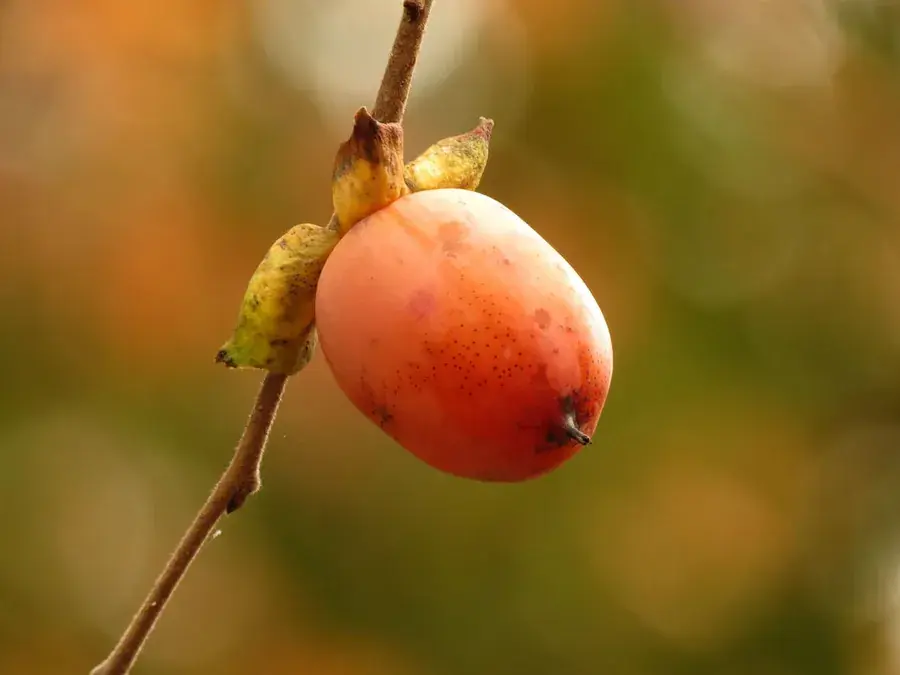 FruitOctober – November
American persimmon
Diospyros virginiana
Blocky alligator-hide bark; orange fruit the size of a plum, only ripe when it is wrinkled, squishy and usually on the ground.
How to know it & its look-alikes →Photo: Katja Schulz · CC BY 4.0
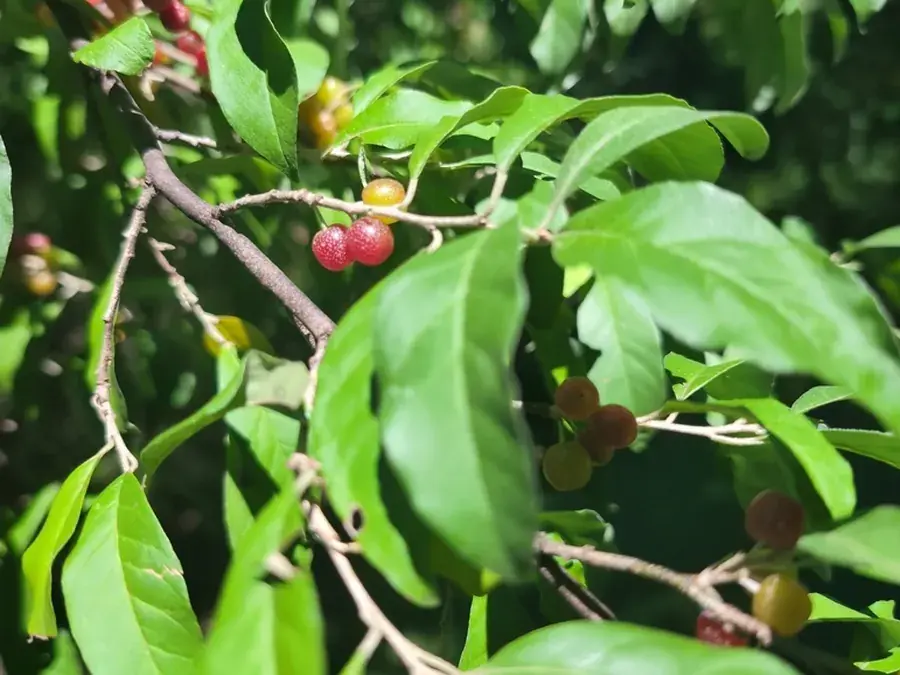 BerrySeptember – October
Autumn olive
Elaeagnus umbellata
A sprawling thorny shrub whose leaves flash silver underneath; in autumn it is weighed down with small red berries finely speckled with silver and brown scales, each with one soft seed.
How to know it & its look-alikes →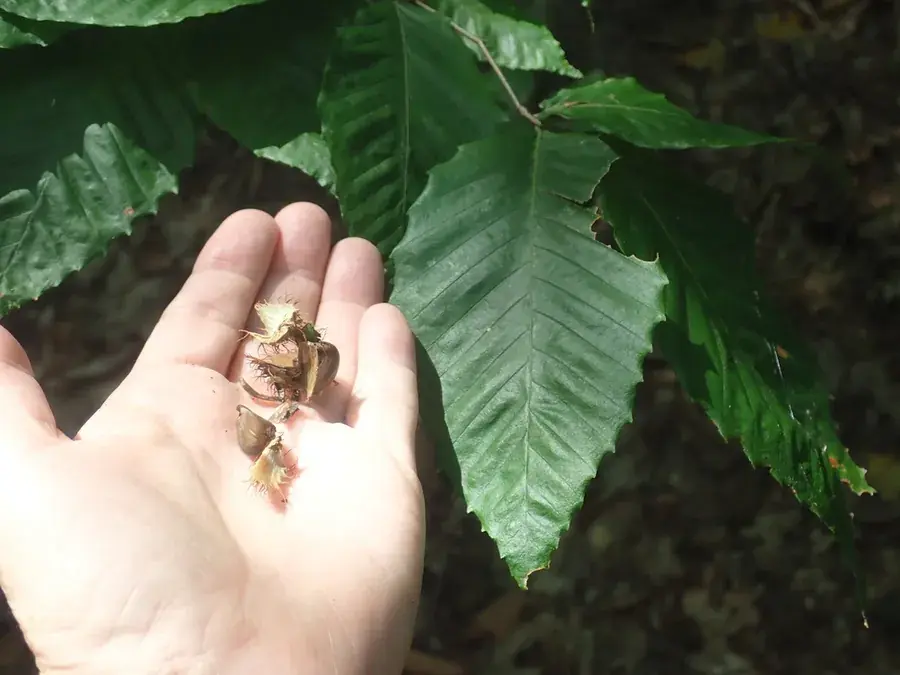 NutSeptember – October
Beechnuts
Fagus grandifolia
Smooth, pale grey bark on a tall tree; long, sharp, cigar-shaped buds; oval leaves with coarse teeth and straight parallel veins, many held, bleached, through winter. The nuts are small, three-sided and come two to a soft-bristled husk that splits into four.
How to know it & its look-alikes →
Checked against these sources ·
- Minnesota Wildflowers: Wild bergamot
- Iowa State University Extension: Growing bee balm in the home garden
- The Herb Society of America blog: Cooking with Monarda
- Wikipedia: Monarda fistulosa (range and documented Indigenous uses)
- VASCAN: Monarda fistulosa
Seasons are typical for the middle of the range and move by weeks north and south, and up and down hills.
Educational information only. Never eat a wild plant or mushroom identified from a single photograph or description — confirm with a regional field guide or an experienced forager, and know the poisonous species in your area first.