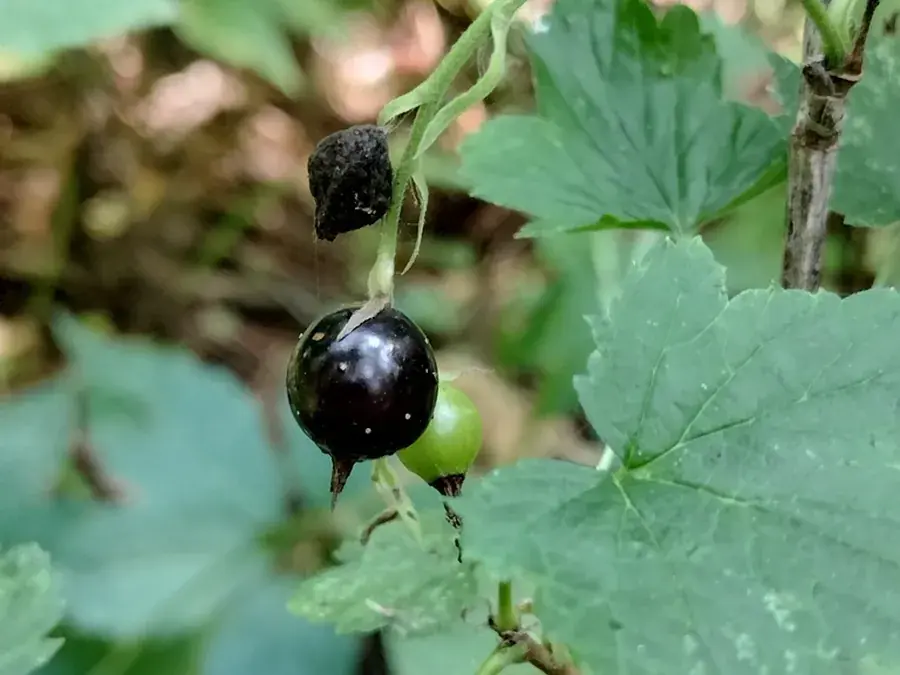
Photo by Public domain (iNaturalist) on iNaturalist · CC0 (public domain)
BerrySeason: July – August
Wild currants and gooseberries
Ribes spp.
- When
- Typically July – August — July, August. Earlier in the south, later in the north.
- Where it grows
- Moist woods, streambanks, swamp edges, coulees and fence lines in the east; canyons, river bottoms and mountain slopes in the west.
- How to know it
- A shrub 1–2 m (3–6 ft) tall with maple-like lobed leaves, and berries that each keep a dried flower ‘tail’ at the tip. Currants are thornless with six or more berries in a dangling chain; gooseberries carry spines at the leaf nodes and hold one to four berries, often bristly.
- Look-alikes
- The confusables are red berries without the tail: red baneberry (poisonous), a soft-stemmed herb with compound leaves and a stalked cluster of glossy berries, each with a black dot; and bush honeysuckle (Lonicera), with untoothed opposite leaves and berries in pairs that cause vomiting. A lobed leaf and a tailed berry on a woody stem is a Ribes.
- Harvest and use
- Black currants for jam and cordial, red and golden currants for jelly, gooseberries stewed or in pie. Pick ripe berries in July–August — soft, fully coloured and coming away easily — and leave the bush standing.
- Caution
- Skunk currant (R. glandulosum) is edible but smells of skunk when handled. Ribes hosts white pine blister rust; Maine, New Hampshire, Massachusetts and Rhode Island still restrict planting them, which does not stop you picking wild ones. Expect bristly fruit on prickly gooseberry.
Wild currants and gooseberries at a glance
- Also called
- Covers the native currants and gooseberries: wild black currant (Ribes americanum), swamp red currant (R. triste), golden or clove currant (R. aureum), skunk currant (R. glandulosum), northern black currant (R. hudsonianum), wax currant (R. cereum), and the gooseberries — smooth or hairy-stem gooseberry (R. hirtellum), prickly gooseberry (R. cynosbati), and the western species. Gadelle and groseille in Quebec.
- Family
- Grossulariaceae, the gooseberry family, of which Ribes is the only genus.
- Where it grows
- Native species of Ribes grow in nearly every part of Canada and the US outside the southeastern coastal plain, Florida and Hawaii. Black and red currants and the gooseberries fill the boreal forest, Maritimes, Great Lakes, Northeast, Appalachians and Midwest; golden currant runs through the Plains and the West; wax and sticky currants cover the western mountains and Great Basin ranges; coastal BC, Washington and Oregon have red-flowering, stink and trailing currants. European garden currants and gooseberries have also escaped around old farms.
- When to pick
- July and August, with the first red currants in late June in warm areas and black currants and gooseberries running into early September in the north and mountains. A ripe currant is fully coloured, slightly soft and pulls from the chain with no tug; a ripe gooseberry gives to the thumb and has turned from hard green to translucent green, wine or purple depending on species. Both are sour until truly ripe.
- Parts used
- The berries. Black currants (strong, musky) for jam, cordial and syrup; red, golden and skunk currants for jelly and juice; gooseberries topped and tailed for pie, fool and chutney, or eaten ripe from the bush. Each berry keeps a dry flower remnant at its tip, which is harmless and strained out in jelly. Leaves are not eaten; young black-currant leaves are sometimes used to scent a jar of pickles.
- Is any of it poisonous?
- Nothing poisonous in any native Ribes. Prickly gooseberry fruit is covered in stiff bristles and some currants have sticky glandular hairs, unpleasant but not harmful. Skunk currant smells of skunk when handled; the flavour of the berry is fine.
- More look-alikes to know
- Highbush cranberry and squashberry (Viburnum) have translucent red berries in flat clusters above opposite, maple-like leaves — opposite, where Ribes leaves are alternate — and no tail on the berry; edible, tart. Bristly black currant (R. lacustre) is a Ribes with spiny stems and black bristly fruit, edible. Mountain ash and hawthorn berries are on trees. And on any lobed-leaf shrub with a berry chain, feel for the dried flower at the tip of the berry: nothing poisonous in these woods carries one.
Questions people ask about wild currants and gooseberries
Are wild currants edible?
Yes — every native currant and gooseberry (Ribes) in Canada and the US has edible fruit once identified, by a lobed, maple-like leaf on a woody shrub and a dry flower ‘tail’ at the tip of every berry. Some are delicious and some are bland, bristly or skunky, but none is poisonous. Red berries without the tail are the ones to leave.
How do you tell a currant from a gooseberry?
Thorns and numbers. Currants have smooth stems and six or more flowers and berries in a hanging chain; gooseberries carry one to three spines at each leaf node and hold one to four berries on short stalks, often bristly. Both have the same lobed leaves and the same tail on the fruit, and both are edible.
What poisonous berries look like wild currants?
Red baneberry, whose glossy red berries each have a black dot and sit in a stalked cluster above big divided leaves on a soft herb, not a woody shrub; a few can be dangerous to a child. Bush honeysuckle (Lonicera), an invasive shrub with untoothed, paired leaves and red or orange berries in pairs; they cause vomiting. Neither has a lobed leaf or a tail on the berry.
Why were currants banned in the United States?
Because Ribes is the alternate host of white pine blister rust, a fungus that kills white pines and needs both plants to complete its life cycle; the federal government banned growing currants and gooseberries in the early 1900s to protect the timber industry. The federal ban was lifted in 1966, but Maine, New Hampshire, Massachusetts and Rhode Island still regulate planting them. Picking wild Ribes was never the issue.
When do wild currants ripen?
July and August across most of the continent — red currants first, from late June in the south, black currants and gooseberries through August and into early September in the north and at altitude. Pick when the berry is fully coloured and comes away from the chain with no tug; gooseberries are ready when they soften and turn translucent.
Are wild currants safe for kids to pick?
Yes, with two rules: lobed leaf on a woody bush, and a little dry tail on the end of the berry. Teach children to find the tail before anything goes in a mouth, because that is what separates a currant from baneberry and honeysuckle. Expect scratched fingers from gooseberry thorns.
Found in these regions
- Boreal North & Taiga
- Boreal Forest & Shield
- Acadian Forest & Atlantic Coast
- Great Lakes & St. Lawrence Lowlands
- Northeast Atlantic Coast & Piedmont
- Appalachian Highlands
- Central Hardwoods & Interior Plateaus
- Prairies & Great Plains
- Western Mountains & Interior Plateaus
- Pacific Maritime
- Deserts & Dry Basins
Hardiness zones 1–8.
Is it ready near you?
Get this week's foraging guide for your area
Enter a town, postal code or ZIP and we'll tell you what's in season right there this week — from your local climate, this week's weather and your ecological region.
Also ready in October
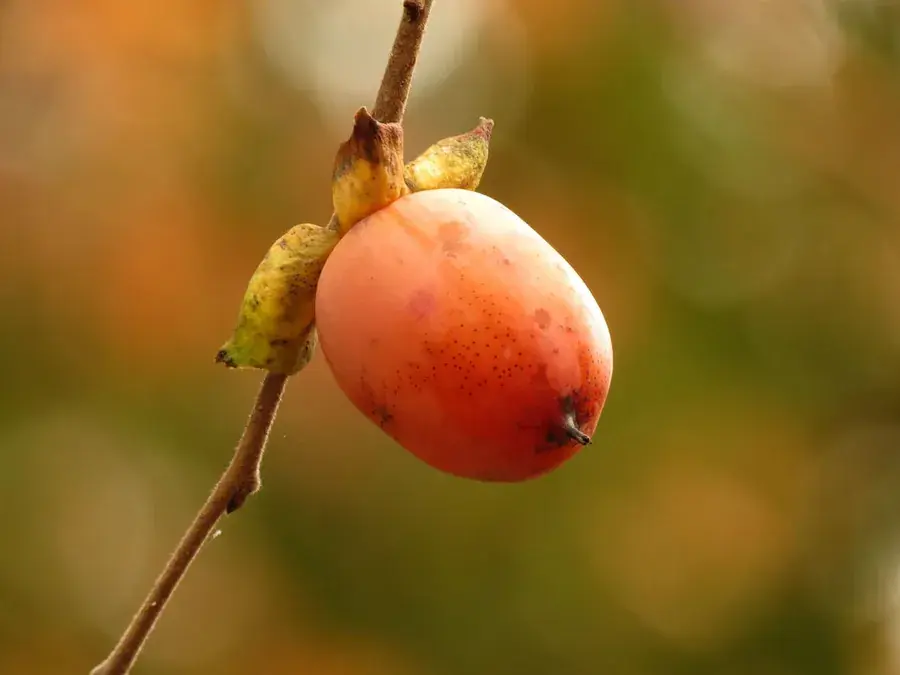 FruitOctober – November
American persimmon
Diospyros virginiana
Blocky alligator-hide bark; orange fruit the size of a plum, only ripe when it is wrinkled, squishy and usually on the ground.
How to know it & its look-alikes →Photo: Katja Schulz · CC BY 4.0
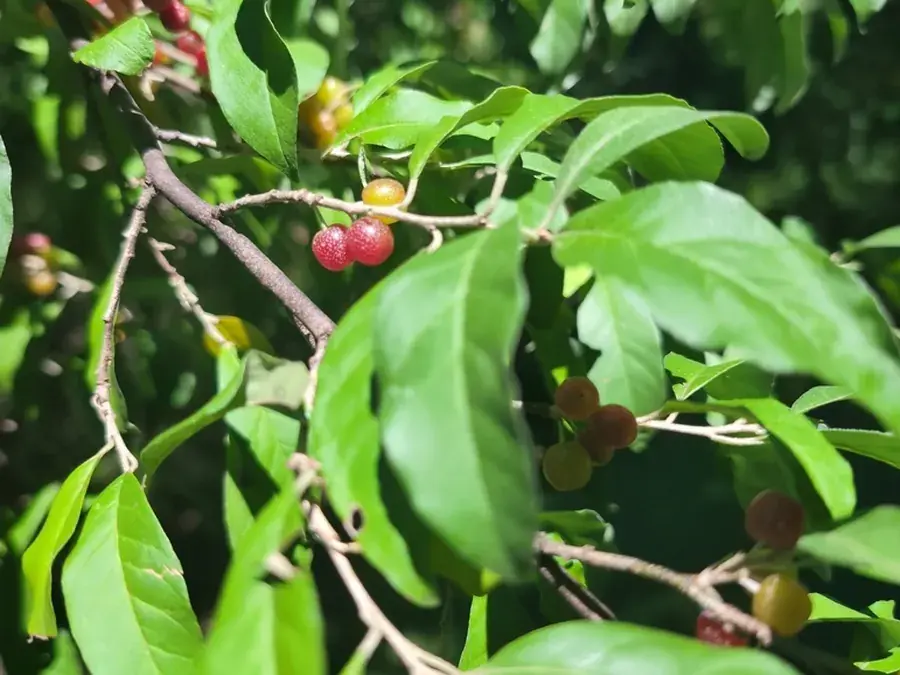 BerrySeptember – October
Autumn olive
Elaeagnus umbellata
A sprawling thorny shrub whose leaves flash silver underneath; in autumn it is weighed down with small red berries finely speckled with silver and brown scales, each with one soft seed.
How to know it & its look-alikes →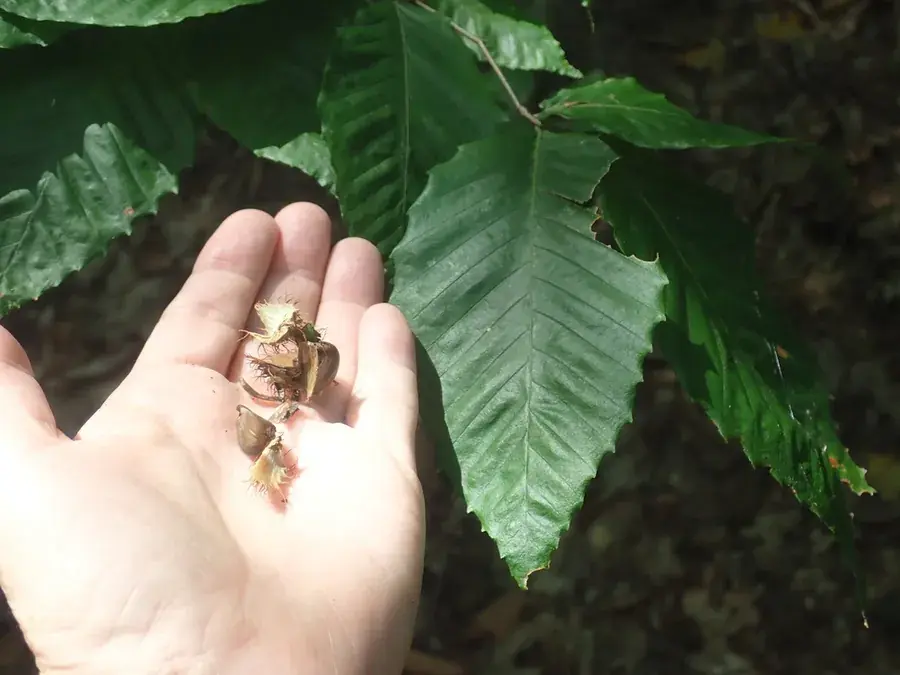 NutSeptember – October
Beechnuts
Fagus grandifolia
Smooth, pale grey bark on a tall tree; long, sharp, cigar-shaped buds; oval leaves with coarse teeth and straight parallel veins, many held, bleached, through winter. The nuts are small, three-sided and come two to a soft-bristled husk that splits into four.
How to know it & its look-alikes →
Checked against these sources ·
- Minnesota Wildflowers — Wild black currant (Ribes americanum)
- Minnesota Wildflowers — Swamp red currant (Ribes triste)
- Minnesota Wildflowers — Skunk currant (Ribes glandulosum)
- UMass Extension, New England Small Fruit Management Guide — Currants and gooseberries (white pine blister rust rules)
- NC State Extension — Lonicera tatarica (Tatarian honeysuckle)
- University of Wisconsin Horticulture Extension — Baneberry (Actaea spp.)
Seasons are typical for the middle of the range and move by weeks north and south, and up and down hills.
Educational information only. Never eat a wild plant or mushroom identified from a single photograph or description — confirm with a regional field guide or an experienced forager, and know the poisonous species in your area first.