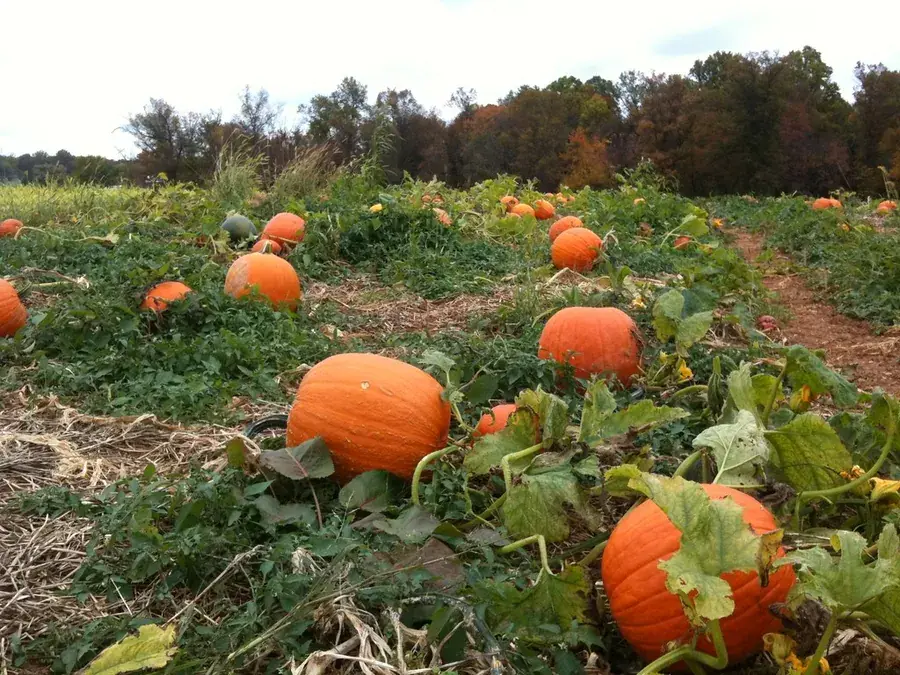
Pumpkins
Cucurbita pepo / C. maxima
One kind is for the porch and one is for the pie — and the seeds from both are for the oven.
- Ready when
- Deep, even colour for the variety — orange for most — with a rind a thumbnail cannot dent, a hollow sound when you knock on it, and a stem that is going hard and corky. Pie or sugar pumpkins are the small ones, 1–3 kg, with dense, sweet, smooth flesh; carving pumpkins are big, thin-walled and stringy. Both are ready on the same signs.
- How to pick
- Cut with secateurs or a knife and leave a handle of 8–10 cm (3–4 in) of stem — a pumpkin that loses its stem rots from that spot. Never carry one by the stem; it snaps and takes the top of the fruit with it. Avoid scratching the skin with fingernails or on the wheelbarrow edge, and eat any damaged ones first.
- Curing
- Cure 10–14 days somewhere warm and airy, ideally 27–29 °C (80–85 °F), to harden the rind and heal small cuts: a sunny step, a porch, or a warm room with a fan. In a dry, sunny autumn they cure in the field for a week or two; in a wet one bring them under cover. Cured pumpkins keep roughly twice as long as uncured.
- On a frost night
- Pumpkin vines die at 0 °C; the fruit shrugs off a light frost but a hard freeze damages the flesh and a frozen pumpkin will not keep — it goes soft within weeks. If the vines are still alive and only a light frost is coming, leave them. If a hard freeze is forecast, or the vines are already dead and the fruit is lying exposed, cut them all and bring them in, or cover the patch with blankets. A pumpkin that is fully orange is ready to come in regardless.
Where it keeps
Storing pumpkins
| Where | Temperature | Humidity | Keeps | How |
|---|---|---|---|---|
| Cool, dry room: cold room, insulated garage, basement shelf | 10–15 °C50–59 °F | dry | 2–3 months; a sound pie pumpkin up to 6 | Single layer on boards or cardboard, not touching, not on concrete, relative humidity 50–70%, air moving. Not next to apples or pears. Never below 10 °C. |
| Front step or unheated porch (October only) | 5–15 °C41–59 °F | moderate | Until the first hard freeze | Fine for decoration through October, but once a pumpkin has sat through a freeze it is for the compost or the chickens, not the pie. Bring eating pumpkins indoors before the nights go below 0 °C. |
Putting it up
What to do with too many pumpkins
The best thing to do with a pie pumpkin is leave it whole on a cool shelf until you want it, then roast it and freeze the purée in 500 ml tubs with 1 cm of headspace — one tub is one pie. The seeds are the second crop: rinse the strings off, dry them for a few hours, toss with oil and salt, and roast at 150 °C (300 °F) for 10–15 minutes, stirring. What does not work is canning purée, pumpkin butter or pumpkin pie filling: no tested home process exists for any of them, because a dense purée does not heat through to the centre of the jar in any predictable time, and this is a botulism question, not a texture one. The only jar form is 2.5 cm (1 in) cubes, boiled two minutes and pressure-canned 55 minutes for 500 ml jars or 90 minutes for litre jars at 10 psi (weighted gauge) near sea level, to be mashed after opening. There is no water-bath method. A carving pumpkin can be cooked, but the flesh is watery and stringy; use it for soup or feed it to the compost and grow a pie pumpkin for the kitchen.
Two weeks of warmth and air that turn a fresh crop into a keeper.
The oldest method: the right cold, the right damp, and darkness.
The fastest route and the one that keeps flavour best.
Jars heated above boiling under pressure — the only safe way to can plain vegetables.
A dehydrator or a low oven; light, keeps for a year.
- Pressure canning
Pumpkin and winter squash cubes, pressure canned
The only safe way to put squash in a jar: firm cubes in water, which you drain and mash the day you bake the pie.
About 9 × 500 ml (pint) jars from 4.5 kg (10 lb) of squash, or 7 × 1 L (quart) jars from 7.3 kg (16 lb) · 1¼ hours active
The recipe → - Freezing
Roasted squash and pumpkin purée, frozen
The safe way to put up smooth pumpkin for pie, soup and muffins — in the freezer, in the amounts your recipes call for.
A 2 kg butternut or pie pumpkin gives about 1 L of purée, four 250 ml portions · 30 minutes active
The recipe →
Saving seed
Crosses with its neighbours — needs isolation
Most pie and jack-o’-lantern pumpkins are Cucurbita pepo — the same species as zucchini, acorn, delicata, spaghetti squash and ornamental gourds — and they cross with all of those through bees; giant and some French pumpkins are C. maxima and cross with buttercup, kabocha and hubbard instead. Species do not cross with each other. The fruit this year is unaffected; it is next year’s plants from saved seed that come up as something odd, and a cross with a gourd can be bitter. To save seed grow one pepo variety, or isolate by 250–800 m (800 ft to ½ mile), or hand-pollinate a female flower and tape it shut. Let the pumpkin cure and sit three weeks or more, then scoop, rinse, pick the plump seeds and dry them on a plate for two to three weeks. Most pumpkin varieties are open-pollinated; the packet will say if it is an F1.
Keeps: About 6 years.
The seed-saving guide →Next year
Planning pumpkins for next season
Cucurbit rotation — two or three years off beds that grew squash, pumpkins, cucumbers or melons. Full sun, a shovel of compost or manure under each hill, and space: vining pumpkins want 1.5–1.8 m (5–6 ft) between hills and 3 m (10 ft) between rows; bush types half that. Direct sow 1–2 weeks after the last frost when the soil at 5 cm is 18 °C (65 °F), late May to early June in most of southern Canada. Pumpkins for Halloween need 90–110 days, so in zones 3–4 start seed indoors in large pots three weeks before planting out, transplant carefully, pick a 90–100-day pie or small carving variety, and use row cover for the first month. One plant per child is plenty.
Pumpkins at a glance
- Botanical name
- Cucurbita pepo / C. maxima
- Group
- Squash and pumpkins
- Picked
- September, October
- Frost
- Tender: finished by the first frost.
- Best put up as
- curing, cold storage, freezing, pressure canning, drying
- Seed
- Crosses with its neighbours — needs isolation
Questions people ask about pumpkins
When do you harvest pumpkins?
When the colour is deep and even, the rind resists a thumbnail, and the stem has gone hard — mid-September into October in most of southern Canada. Cut with 8–10 cm of stem and never carry by it. Bring them in before a hard freeze; a light frost that kills the vines does not hurt a mature pumpkin.
How do you store pumpkins so they last?
Cure them 10–14 days somewhere warm and airy, then keep them at 10–15 °C in a dry room — single layer, off the concrete, away from apples. A cured pie pumpkin keeps two to three months and often longer; a carving pumpkin a month or two. Below 10 °C they chill and rot from inside, and anything that has frozen on the porch is done.
Can you can pumpkin purée or pie filling?
No. There is no safe home method for canning puréed pumpkin, pumpkin butter or pie filling — the purée is too dense for heat to reach the centre of the jar reliably, and that is a botulism risk, not a quality issue. The only canned form is 2.5 cm cubes, pressure-canned 55 minutes for 500 ml jars at 10 psi near sea level, mashed when you open them. Freeze your purée instead.
How do you freeze pumpkin?
Cook it first: halve, seed, roast or steam until soft, scoop the flesh, mash or blend, cool quickly in a bowl set in cold water, and pack in 500 ml tubs or bags with 1 cm headspace. It keeps about a year; thaw in the fridge and pour off any water before baking. One 500 ml tub is a standard pie.
Can you eat a carving pumpkin?
You can, but the flesh is thin, watery and stringy compared with a pie pumpkin; it makes a passable soup and a poor pie. The seeds are just as good roasted. A jack-o’-lantern that has been cut open and sat on the step for days is not food — scoop and roast the seeds the day you carve, and compost the rest.
How do you roast pumpkin seeds?
Pull the seeds out of the strings in a bowl of water — they float free — rinse, and pat or air-dry them for a few hours. Toss with a little oil and salt and roast at 150 °C (300 °F) for 10–15 minutes, stirring once or twice, until they are golden and crack when you bite one. Cool completely and keep in a jar for a week or two, or the freezer for longer.
What should kids know about pumpkins?
Carrying, thumbnail-testing and seed-sorting are theirs; the knife is not. Teach them to lift a pumpkin from underneath, never by the stem. Counting seeds from one pumpkin into tens is a real maths lesson (expect 300–500), and roasting them is the payoff. A child who grows one pie pumpkin and eats the pie from it in November learns more about where food comes from than from any book.
Your own frost dates
When does this come in where you are?
Enter a town, postal code or ZIP and the garden year, the frost watch and this week’s guide are built from your own weather.
Also in squash and pumpkins
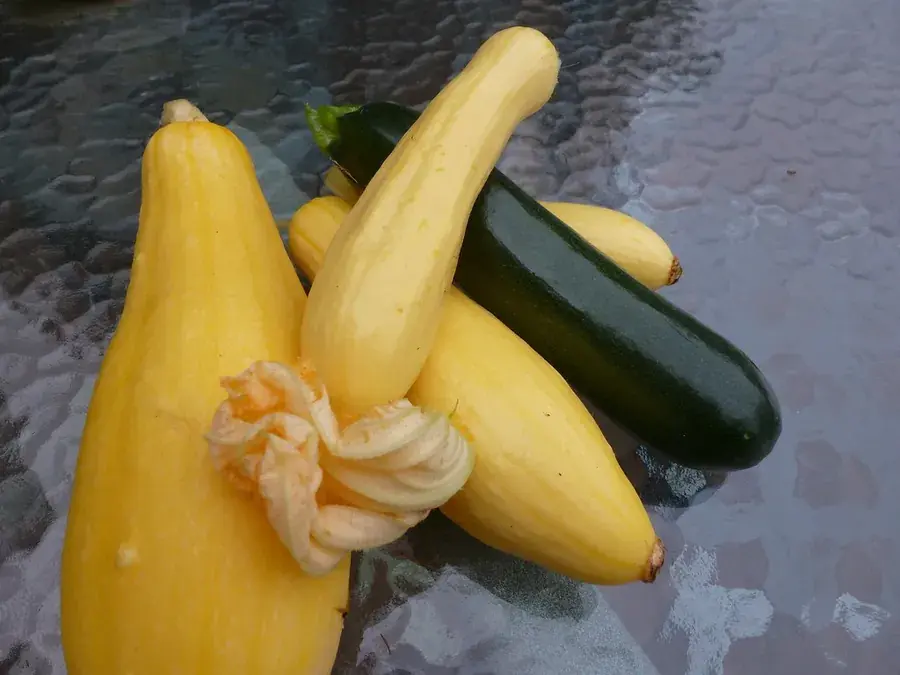 TenderSquash and pumpkinsPicked Jul–Sep
Zucchini
Picked small every other day it is a delicacy; left a week it is a baseball bat, and the freezer is the only answer.
Freezing · PicklingPick, store, put up →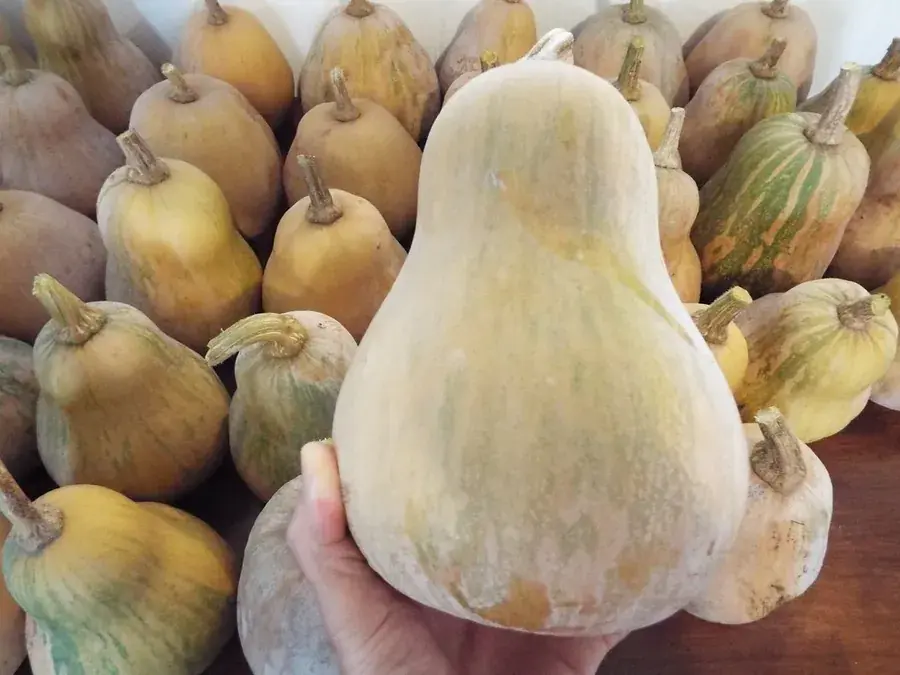 TenderSquash and pumpkinsPicked Sep–Oct
Winter squash
Cured for ten days and kept on a cool shelf, the September harvest feeds you until March.
Curing · Cold storage · FreezingPick, store, put up →
Checked against these sources ·
- University of Illinois Extension: Growing pumpkins
- University of Illinois Extension: Preserving pumpkin
- University of Minnesota Extension: Preserving winter squash and pumpkins
- NCHFP: Canning pumpkins and winter squash, cubed
- University of Illinois Extension: Pumpkin recipes — pie vs carving pumpkins
Harvest months are typical for zones 4–6 and move by weeks north and south. Storage figures are for the ideal; a house without a cold room will get the shorter end of each range.