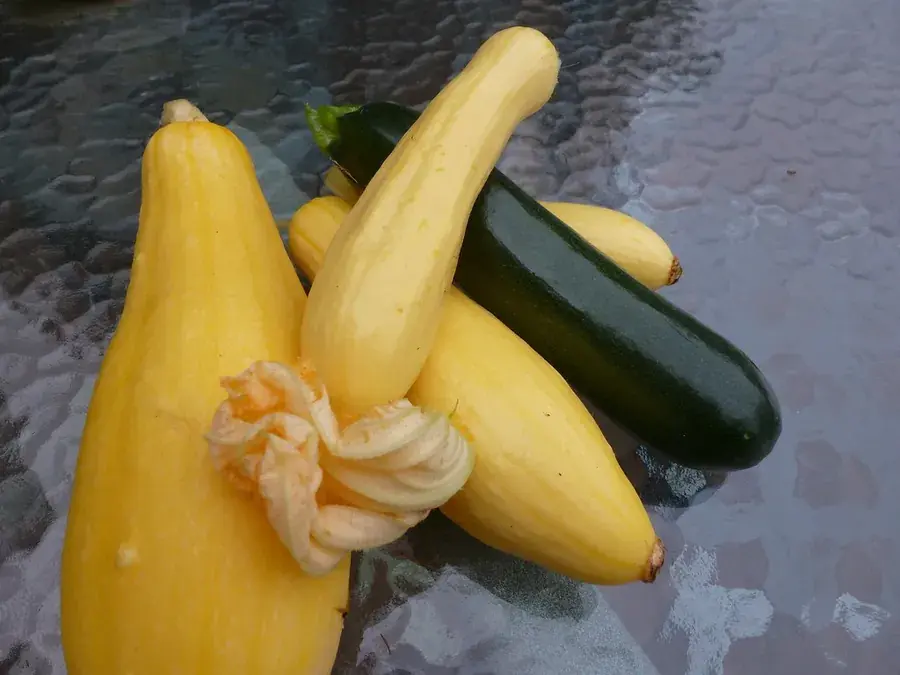
Zucchini
Cucurbita pepo
Picked small every other day it is a delicacy; left a week it is a baseball bat, and the freezer is the only answer.
- Ready when
- 15–20 cm (6–8 in) long and 4–5 cm thick for the best texture, glossy, with the flower end still soft; 10 cm (4 in) if you want them sweetest. Marrows the size of your forearm are watery, seedy and hard-skinned — they still grate for the freezer but that is all. Check under the leaves: a fruit doubles in size in two hot days.
- How to pick
- Cut the stem with a knife, leaving 2–3 cm on the fruit — twisting tears the hollow stem and lets rot into the plant. Pick every second day in August, and pick the male flowers (the ones on long thin stems with no baby fruit behind them) for stuffing without costing you anything. Do not work in the plants when they are wet.
- On a frost night
- Zucchini plants blacken and collapse at 0 °C, and any fruit touched by frost goes soft within a day or two. The evening before a frost, pick every fruit down to finger size and the open blossoms too. A sheet or two over the plant will carry it through one light frost — worth it in early September, not worth it in October when mildew has had the leaves anyway.
Where it keeps
Storing zucchini
| Where | Temperature | Humidity | Keeps | How |
|---|---|---|---|---|
| Fridge crisper | 4–7 °C39–45 °F | high | Up to 4 days | Unwashed, in a perforated bag. Longer than a week and the skin pits and the flesh goes water-soaked — cold damage. |
| Cool room or basement | 10–13 °C50–55 °F | moderate | About a week | Loose in a single layer. Big marrows with hardened skins last a few weeks on a cool floor; small ones do not. |
Putting it up
What to do with too many zucchini
Grate it and freeze it: young zucchini grated, steam-blanched 1–2 minutes until translucent, packed in measured 250 ml or 500 ml amounts and frozen, is the glut solved — each bag is a loaf of bread or a batch of fritters in winter, once you pour off the water that comes out on thawing. Slices blanched 3 minutes freeze too, but they come back soft and are for soup. Relish and pickles are the other answer: summer squash relish and bread-and-butter zucchini pickles are tested water-bath recipes with 5% vinegar. What does not work — and this surprises people every year — is canning plain zucchini or summer squash, in cubes or slices, in water or broth. The canning authorities withdrew those instructions decades ago because the squash packs down and heats unpredictably, and ‘canning summer squash without pickling is not recommended’ is the current rule. The only ways zucchini goes in a jar are a tested pickle or relish, or as a minor ingredient in a tested pressure-canned mixed-vegetable or tomato recipe.
The fastest route and the one that keeps flavour best.
Vinegar does the preserving; the canner just seals the jar.
- Pickling
Zucchini relish
Bernardin’s hot-dog relish for the zucchini that got away — a touch of horseradish and one hot pepper give it its bite.
About 6 × 500 ml (pint) jars · 1½ hours over two days active
The recipe → - Pickling
Bread-and-butter pickles
Sweet, turmeric-yellow cucumber and onion slices — the pickle most children will actually eat, and the one that uses up the big cucumbers.
About 8 × 500 ml (pint) jars · 1¼ hours active
The recipe →
Saving seed
Crosses with its neighbours — needs isolation
Zucchini is Cucurbita pepo, the same species as acorn, delicata, spaghetti and patty-pan squash, most pie and jack-o’-lantern pumpkins, and ornamental gourds — and it crosses freely with all of them through bees. The fruit you eat this year is unaffected; the seed inside it is the problem. To save seed, grow one pepo variety, or isolate by 250–800 m (800 ft to ½ mile), or hand-pollinate a female flower with a male from the same variety the morning they open and tape it shut. Then let that fruit grow into a full marrow and sit until the rind is too hard to dent with a thumbnail and the stem is dry, pick it, and leave it indoors another three weeks. Scoop, rinse, and dry the seeds on a plate for two or three weeks. A crossed seedling can give bitter fruit — if a zucchini tastes strongly bitter, spit it out and compost the plant.
Keeps: About 6 years.
The seed-saving guide →Next year
Planning zucchini for next season
Cucurbit rotation — not where squash, pumpkins, cucumbers or melons grew in the last two or three years. Full sun and the richest soil you have; a shovel of compost under each hill. One plant per square metre feeds a family; two feeds the street. Direct sow 1–2 weeks after the last frost once the soil at 5 cm is 21 °C (70 °F) — cold soil rots the seed and a transplant set out cold just sits. Squash resents transplanting, so if you must start indoors in a short season, use large pots, no more than three weeks ahead, and move them without touching the roots. Water at the base, not over the leaves, and in zones 3–4 cover the first month with a row cover to keep heat in and cucumber beetles off.
Zucchini at a glance
- Botanical name
- Cucurbita pepo
- Group
- Squash and pumpkins
- Picked
- July, August, September
- Frost
- Tender: finished by the first frost.
- Best put up as
- freezing, pickling
- Seed
- Crosses with its neighbours — needs isolation
Questions people ask about zucchini
Can you freeze zucchini?
Yes — grated is the way. Grate young zucchini, steam-blanch 1–2 minutes until it looks translucent, pack in measured amounts (a 500 ml bag is a loaf of zucchini bread) and freeze. Drain the water off when it thaws. Slices can be blanched 3 minutes and frozen too, but they come back soft, so use them in soup and sauce.
Can you can zucchini?
Not plain. Canning summer squash on its own, in any liquid, is not recommended — the tested times were withdrawn because the squash does not heat reliably in the jar. Zucchini can only be canned as a tested pickle or relish (summer squash relish, bread-and-butter zucchini pickles) or as a small part of a tested pressure-canned mixed recipe. For plain zucchini, freeze it.
How big should zucchini be when you pick them?
Around 15–20 cm (6–8 in) and still glossy, with a soft flower end; 10 cm if you like them sweetest. Check under the leaves every other day in August because they double in two warm days. A big marrow is not wasted — grate it for the freezer — but it is watery and seedy, and leaving it on the plant slows the next fruit.
Why is my zucchini bitter?
Occasionally a plant carries high levels of cucurbitacin, the bitter compound in the squash family, either from stress or because the seed was a stray cross with an ornamental gourd. A faintly bitter one is a sign to water better; a strongly bitter one you should spit out, because a few grams can give a sharp stomach upset. Pull that plant and do not save its seed.
How do I save zucchini seeds?
Grow only one Cucurbita pepo variety (no acorn, delicata, spaghetti, patty-pan or pumpkin nearby) or hand-pollinate and tape a flower. Let the fruit grow to a full marrow with a rind you cannot dent, store it three weeks, then scoop, rinse and dry the seeds for two or three weeks. Good for about six years.
What can kids do with zucchini?
Send them on the marrow hunt: the giant one hiding under the leaves is the best find in the August garden and makes a good scale for weighing other things against. They can pick the big male flowers for stuffing without harming the crop, and grating for the freezer is a safe kitchen job with a box grater and supervision. The leaves and flowers are safe; the one warning is a fruit that tastes strongly bitter — spit it out and don’t eat any more from that plant. The stems and leaves are prickly enough that long sleeves help.
Your own frost dates
When does this come in where you are?
Enter a town, postal code or ZIP and the garden year, the frost watch and this week’s guide are built from your own weather.
Also in squash and pumpkins
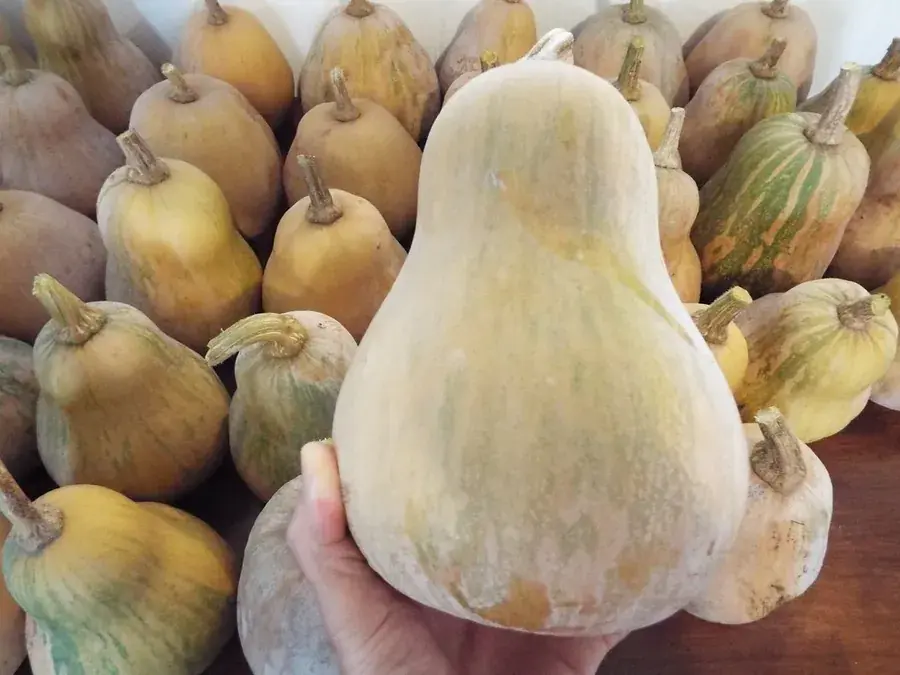 TenderSquash and pumpkinsPicked Sep–Oct
Winter squash
Cured for ten days and kept on a cool shelf, the September harvest feeds you until March.
Curing · Cold storage · FreezingPick, store, put up →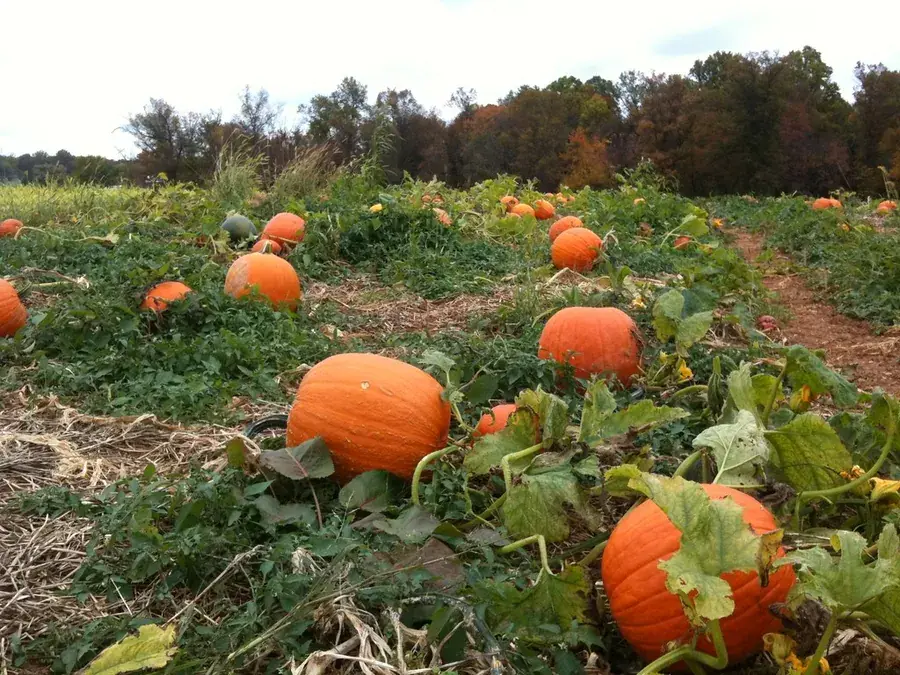 TenderSquash and pumpkinsPicked Sep–Oct
Pumpkins
One kind is for the porch and one is for the pie — and the seeds from both are for the oven.
Curing · Cold storage · FreezingPick, store, put up →
Checked against these sources ·
- NCHFP: So long summer squash — canning summer squash not recommended
- NCHFP: Freezing summer squash
- University of Minnesota Extension: Growing summer squash and zucchini in home gardens
- Nebraska Extension: Weird squash — pollination gone wrong?
- Oregon State University Extension: Are volunteer squash toxic?
Harvest months are typical for zones 4–6 and move by weeks north and south. Storage figures are for the ideal; a house without a cold room will get the shorter end of each range.