Carrots, pressure canned
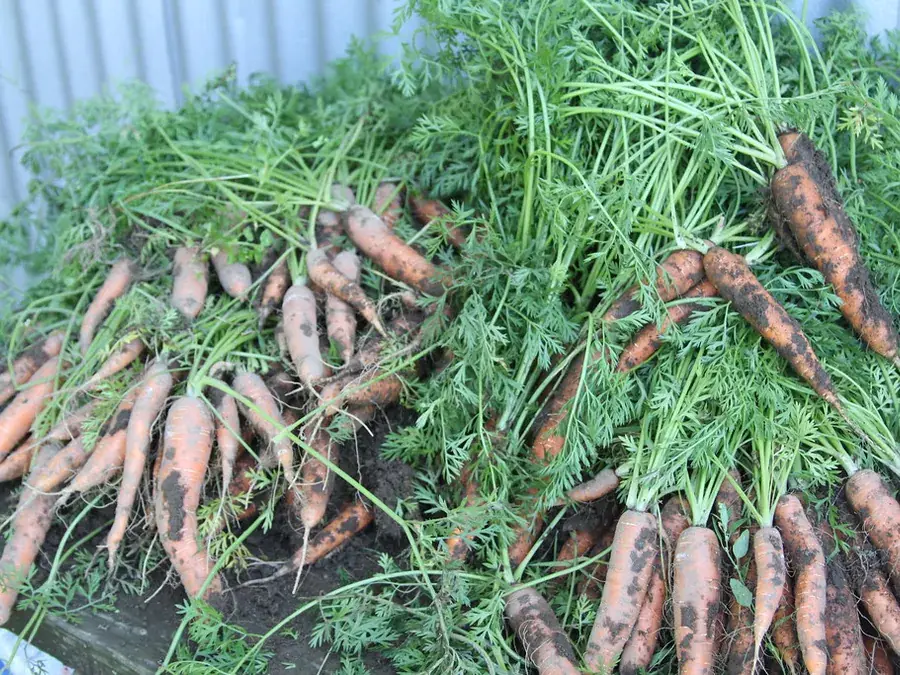
For the carrots that will not fit in the cold room: sweet, soft, and ready for soup, stew or a toddler’s plate in a minute.
Makes
About 9 × 500 ml (pint) jars from 5 kg (11 lb) of topped carrots, or 7 × 1 L (quart) jars from 8 kg (17½ lb)
Active time
1 hour
Total
2½ hours including venting, processing and cooling the canner
Before you start
What keeps this jar safe
- Carrots are low-acid: pressure canner only. The same times cover hot and raw pack, and they do not shorten for small dice.
- Do not pack in a sugar glaze, butter or stock — plain water or the cooking water only.
- Big woody carrots make a fibrous jar; it is a quality problem, not a safety one, but it is why the recipe asks for small ones.
- Never leave the weight off to speed things up, and never cool the canner under the tap — a sudden pressure drop siphons liquid out of the jars and can break them.
This follows NCHFP: Carrots — sliced or diced. Quantities, acid and times are theirs; do not scale the vegetables without scaling everything, and do not change the vinegar, lemon juice or processing time.
Ingredients
- 8 kg (17½ lb) carrots without tops for 7 L jars — 5 kg (11 lb) for 9 × 500 ml jars; small young carrots give the best jar
- Canning or pickling salt, optional: 1 teaspoon (5 ml) per 1 L jar, ½ teaspoon per 500 ml jar
- Boiling water to cover
Processing
- Jars
- 500 ml (pint) · 1 L (quart) in brackets
- Headspace
- 2.5 cm (1 inch)
- Time at 0–300 m (0–1,000 ft)
- 25 min at 10 psi (weighted gauge)
- Higher up
- 1 L jars: 30 min. Weighted gauge: 10 psi at 0–300 m (0–1,000 ft), 15 psi above 300 m. Dial gauge: 11 psi at 0–600 m (0–2,000 ft), 12 psi at 600–1,200 m, 13 psi at 1,200–1,800 m, 14 psi at 1,800–2,400 m. Processing time does not change with altitude for pressure canning — only the pressure does.
Method
- 1
Put 5–7.5 cm (2–3 inches) of water in the pressure canner and start heating it. Wash the jars and keep them hot; wash the lids and set them aside.
- 2
Scrub, peel and rinse the carrots again, then slice into coins or dice. A child with a crinkle cutter can do the slicing once the carrots are peeled.
- 3
Hot pack: put the carrots in a pot, cover with boiling water, bring to the boil and simmer 5 minutes. Raw pack: fill the jars tightly with raw slices instead.
- 4
Fill the hot jars leaving 2.5 cm (1 inch) headspace. Add salt if using. Cover with the hot cooking liquid or boiling water, keeping the 2.5 cm headspace.
- 5
Free the air bubbles with a chopstick, adjust the liquid, wipe the rims, fit the lids and bands fingertip-tight, and set the jars on the rack.
- 6
Lock the lid and let steam vent hard for 10 minutes before adding the weight. Bring to 10 psi (weighted) or 11 psi (dial) at 0–300 m.
- 7
Time from the moment the weight rocks or the dial reads pressure: 500 ml jars 25 minutes, 1 L jars 30 minutes. If the pressure drops, bring it back and restart the clock.
- 8
Let the canner cool naturally to zero, remove the weight, wait 10 minutes, open the lid away from you and lift the jars onto a towel. Leave 12–24 hours, then check the seals and remove the bands.
Keeps: Best within 12 months in a cool dark cupboard. Refrigerate after opening and use within 3–4 days.
Variations: Mixing carrots with other vegetables changes the recipe; follow NCHFP’s mixed-vegetables page (longer times) rather than this one.
Tested source: NCHFP: Carrots — sliced or diced. Checked October 2026. If a jar did not seal, refrigerate it and use it within a few days. Never taste anything from a jar that is bulging, leaking, spurting or smells wrong — when in doubt, throw it out without tasting.
The crop
Carrots: when to pick, how to store, what else to make →
Carrots are best not put up at all: a cold room or a mulched row keeps them crisp into spring with no work. For jars, carrots are a low-acid vegetable and must be pressure-canned — 25 minutes for 500 ml jars and 30 for litres at 10 lb on a weighted gauge at sea level — never water-bathed, because boiling water does not reach the temperature that kills botulism spores. Pickled carrots are a different thing: the tested NCHFP and Bernardin recipes carry enough 5% vinegar to go in a boiling-water canner, so follow one exactly and don’t water the brine down. Freezing is good for cooking carrots if you blanch first (2 minutes for slices and sticks, 5 for small whole roots); unblanched carrots turn rubbery and lose flavour within weeks. Dried carrot shreds are fine for soup.
More for carrots
- Pickling
Pickled carrots
Sweet-sour carrot coins with mustard and celery seed — a bright lunchbox pickle from the roots that will not all fit in the cold room.
About 4 × 500 ml (pint) jars · 45 minutes active
The recipe → - Pickling
Home-style pickled jalapeños
Taqueria-style jalapeño strips with carrot and onion in a plain vinegar brine — the tested, lime-free way to put up a hot-pepper glut.
About 6 × 500 ml (pint) jars · 1 hour active
The recipe →