Dry beans, soaked and pressure canned
Your own shelled beans — or a 10 kg sack from the store — turned into ready-to-eat jars without the overnight planning every single time.
Makes
About 9 × 500 ml (pint) jars from 1.5 kg (3¼ lb) of dry beans, or 7 × 1 L (quart) jars from 2.3 kg (5 lb)
Active time
1 hour, plus soaking
Total
Overnight soak, then about 3½ hours including the 30-minute boil, processing and cooling
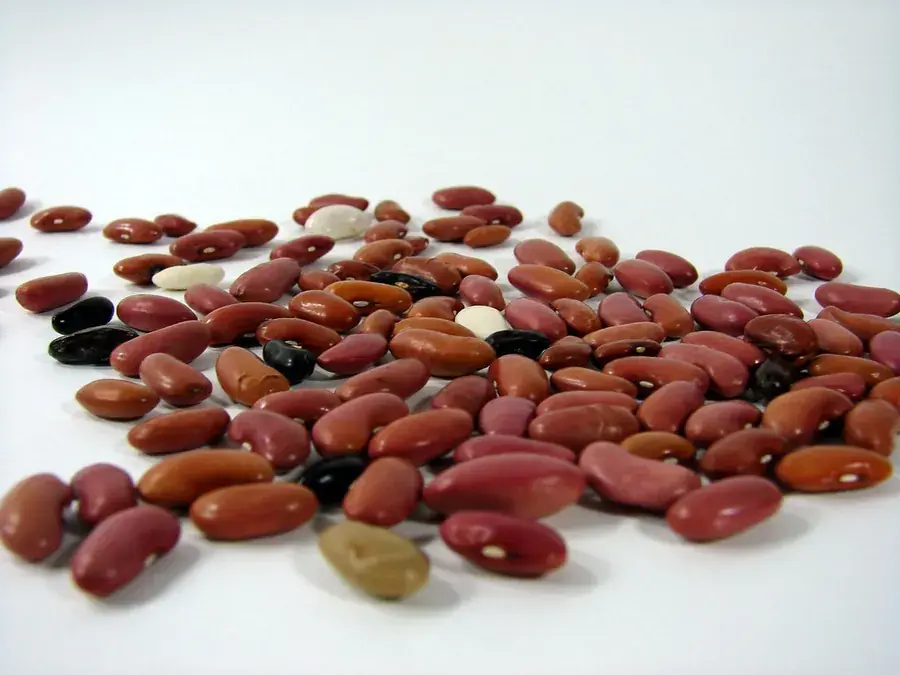
Photo dominik18s on Flickr · CC BY 2.0
Before you start
What keeps this jar safe
- Beans must be soaked and boiled 30 minutes before they go in the jar. Dry beans packed raw with water — the so-called dry-canning shortcut — do not heat through and have no tested time.
- Leave the full 2.5 cm (1 inch) headspace; beans swell and a jar packed to the brim will siphon and may not seal.
- Pressure canner only, 75/90 minutes. These are among the longest home-canning times for a reason: a jar of beans is dense.
- Plain beans in water only. Tomato sauce, molasses, pork and seasonings belong to NCHFP’s separate baked-bean recipes with their own times.
This follows NCHFP: Beans or peas — shelled, dried, all varieties. Quantities, acid and times are theirs; do not scale the vegetables without scaling everything, and do not change the vinegar, lemon juice or processing time.
Ingredients
- 2.3 kg (5 lb) dry beans or peas of one kind — kidney, pinto, black, navy, cranberry, chickpea — for 7 L jars; 1.5 kg (3¼ lb) for 9 × 500 ml jars
- Water for soaking and boiling
- Canning or pickling salt, optional: 1 teaspoon (5 ml) per 1 L jar, ½ teaspoon per 500 ml jar
Processing
- Jars
- 500 ml (pint) · 1 L (quart) in brackets
- Headspace
- 2.5 cm (1 inch)
- Time at 0–300 m (0–1,000 ft)
- 75 min at 10 psi (weighted gauge)
- Higher up
- 1 L jars: 90 min. Weighted gauge: 10 psi at 0–300 m (0–1,000 ft), 15 psi above 300 m. Dial gauge: 11 psi at 0–600 m (0–2,000 ft), 12 psi at 600–1,200 m, 13 psi at 1,200–1,800 m, 14 psi at 1,800–2,400 m. Processing time does not change with altitude for pressure canning — only the pressure does.
Method
- 1
Sort through the beans and throw out stones and shrivelled ones — a job a child can do on a tray. Rinse.
- 2
Soak one of two ways. Long soak: cover with plenty of cold water and leave 12–18 hours somewhere cool, then drain. Quick soak: cover with boiling water, boil 2 minutes, take off the heat, leave 1 hour, drain.
- 3
Set the pressure canner heating with 5–7.5 cm (2–3 inches) of water, and keep the washed jars hot.
- 4
Cover the drained beans with fresh water, bring to the boil and boil 30 minutes. They will still be firm; the canner finishes the cooking.
- 5
Add salt to the hot jars if using. Fill with beans and their cooking liquid, leaving 2.5 cm (1 inch) headspace — the beans keep swelling, so do not pack them tight.
- 6
Free the bubbles, wipe the rims, fit the lids fingertip-tight and load the canner. Lock the lid, vent steam for 10 minutes, then bring to 10 psi weighted or 11 psi dial at 0–300 m.
- 7
Time once at pressure: 500 ml jars 75 minutes, 1 L jars 90 minutes. Hold the pressure; if it drops, bring it back and restart the clock.
- 8
Cool the canner naturally to zero, remove the weight, wait 10 minutes, open away from your face, lift the jars onto a towel, and leave 12–24 hours before checking the seals.
Keeps: Best within 12 months. Drain and rinse for salads; use the liquid in soups. Refrigerate after opening and use within 3–4 days.
Variations: Any whole dry bean or whole dry pea (kidney, pinto, black, navy, cranberry, chickpea, black-eyed pea) uses the same method and times. Do not use it for split peas or red or split lentils, which cook down to a purée no tested time covers. Jars of black beans and chickpeas are the ones that disappear fastest.
Tested source: NCHFP: Beans or peas — shelled, dried, all varieties. Checked October 2026. If a jar did not seal, refrigerate it and use it within a few days. Never taste anything from a jar that is bulging, leaking, spurting or smells wrong — when in doubt, throw it out without tasting.
The crop
Dry beans: when to pick, how to store, what else to make →
Dry beans are already preserved the day they come off the plant; the only jobs are getting them fully dry, killing the weevils — four days in a deep freeze at −18 °C (0 °F) in a sealed bag, or 30 minutes in a 54 °C (130 °F) oven — and keeping them in a tight jar. A jar of your own beans takes an overnight soak and an hour’s simmer, which is where pressure canning earns its place: soak, boil 30 minutes, fill jars with beans and cooking water, and process 75 minutes for 500 ml jars or 90 for litres at 10 lb (weighted gauge, 0–300 m) by the NCHFP recipe, for shelf-stable beans ready for a weeknight. Cooked beans also freeze well in their liquid. What does not work is water-bath canning beans in any form, or ‘dry canning’ raw beans in a sealed jar in the oven, which does nothing against botulism and can crack the jars.