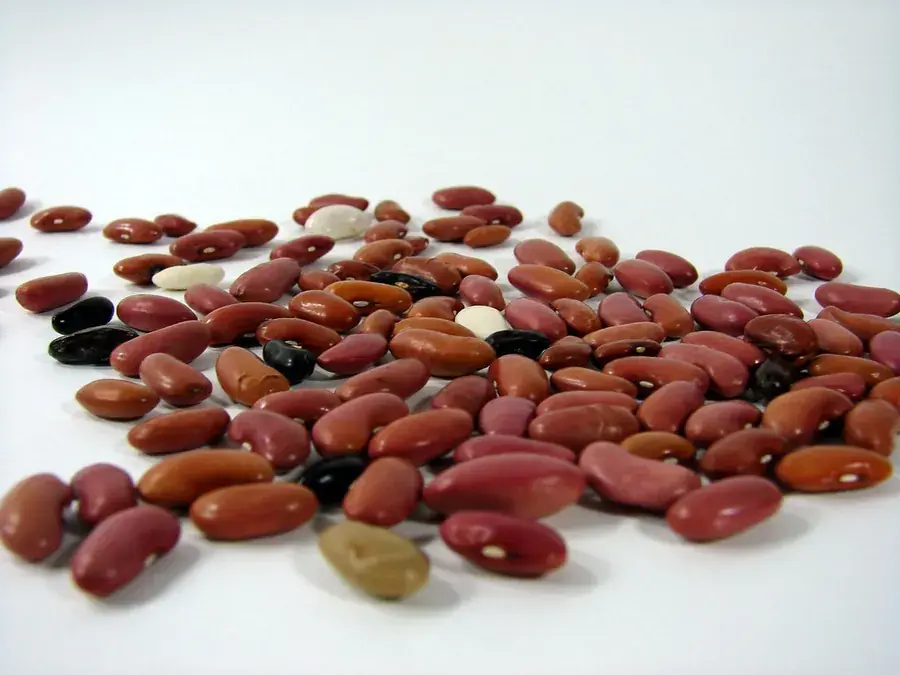
Photo dominik18s on Flickr · CC BY 2.0
Dry beans
Phaseolus vulgaris
The crop that stores itself: leave the pods to rattle, shell them on the step, and eat them in February.
- Ready when
- Pods dry, tan or yellow, papery, and the beans rattle when you shake them; a bitten bean dents but does not squash. Most varieties reach this 85–100 days from sowing, in September in zones 5–6. Pods on one plant ripen over two or three weeks, so pick the dry ones as they come, or wait until most of the plant has yellowed and pull it whole.
- How to pick
- Pick dry pods on a dry afternoon, or pull whole plants once nine in ten pods are dry and hang them in bunches under cover. Shell small amounts by hand; for a big crop, put the pods in a pillowcase or feed sack and tread on it, or beat it against the floor, then pour the lot slowly from one bucket to another in a breeze so the chaff blows away. Spread the beans on trays indoors for two more weeks until one shatters under a hammer rather than denting.
- On a frost night
- The plant is tender but the crop is not. Frost at 0 °C kills the leaves, and that does no harm to pods that are already yellow or tan and leathery — it just stops them getting any riper. If most pods are still green and plump when a hard frost is forecast, pull the whole plants roots and all that evening and hang them upside down in a dry garage or porch; the seed goes on maturing from the plant for two or three weeks. Do the same when a wet week is forecast in late September — pods that have dried and then been soaked rot or sprout in the pod.
Where it keeps
Storing dry beans
| Where | Temperature | Humidity | Keeps | How |
|---|---|---|---|---|
| Kitchen cupboard or pantry, in jars | 10–21 °C50–70 °F | dry | 2–3 years at full quality; several more edible but slower to cook | Fully dry beans in glass jars or tins with tight lids, labelled with the variety and year, out of the light. Freeze the jar four days first to kill bean weevil eggs. |
| Cold room | 0–10 °C32–50 °F | dry | 3+ years | In sealed jars; dry is what matters, not cold. Damp beans mould. |
Putting it up
What to do with too many dry beans
Dry beans are already preserved the day they come off the plant; the only jobs are getting them fully dry, killing the weevils — four days in a deep freeze at −18 °C (0 °F) in a sealed bag, or 30 minutes in a 54 °C (130 °F) oven — and keeping them in a tight jar. A jar of your own beans takes an overnight soak and an hour’s simmer, which is where pressure canning earns its place: soak, boil 30 minutes, fill jars with beans and cooking water, and process 75 minutes for 500 ml jars or 90 for litres at 10 lb (weighted gauge, 0–300 m) by the NCHFP recipe, for shelf-stable beans ready for a weeknight. Cooked beans also freeze well in their liquid. What does not work is water-bath canning beans in any form, or ‘dry canning’ raw beans in a sealed jar in the oven, which does nothing against botulism and can crack the jars.
A dehydrator or a low oven; light, keeps for a year.
Jars heated above boiling under pressure — the only safe way to can plain vegetables.
The fastest route and the one that keeps flavour best.
- Pressure canning
Dry beans, soaked and pressure canned
Your own shelled beans — or a 10 kg sack from the store — turned into ready-to-eat jars without the overnight planning every single time.
About 9 × 500 ml (pint) jars from 1.5 kg (3¼ lb) of dry beans, or 7 × 1 L (quart) jars from 2.3 kg (5 lb) · 1 hour, plus soaking active
The recipe →
Saving seed
Easy to save — comes true
Every dry bean you harvest is a seed, which makes this the easiest seed-saving there is and the one to start children on. Beans self-pollinate, so an open-pollinated variety comes true with 3–6 m (10–20 ft) from other varieties — and nearly all dry beans are open-pollinated heirlooms with names and stories (‘Jacob’s Cattle’, ‘Soldier’, ‘Vermont Cranberry’). Set aside the biggest, best-coloured beans from the healthiest plants, never from plants that showed yellow mottled leaves, since bean mosaic and blight travel on the seed. Dry them hard, freeze four days against weevils, and keep them in a labelled jar. Children can sort the saved seed by colour and size and cull the wrinkled ones; it is the kind of counting that sticks.
Keeps: 3–4 years.
The seed-saving guide →Next year
Planning dry beans for next season
Rotate as for green beans: after corn or brassicas, before leafy crops, and not where beans or peas grew last year. Full sun, average well-drained soil, no added nitrogen, and a dry September — which is why dry beans do better on light soil and in open, airy spots than in a damp corner. Direct sow a week after the last frost when the soil is 16 °C (60 °F), 2–3 cm deep and 10 cm (4 in) apart in rows 60–75 cm apart, and be done sowing by early June so the pods dry before the fall rains. Pole types yield more per square metre but need a trellis; bush types can be pulled whole and hung. In zones 3–4 choose a variety of 85 days or less and sow in the first week of June; a row cover for the first fortnight helps.
Dry beans at a glance
- Botanical name
- Phaseolus vulgaris
- Group
- Peas and beans
- Picked
- September, October
- Frost
- Tender: finished by the first frost.
- Best put up as
- drying, pressure canning, freezing
- Seed
- Easy to save — comes true
Questions people ask about dry beans
When do I harvest dry beans?
When the pods are tan, papery and rattle, usually in September — 85–100 days from sowing. Pick dry pods as they come on dry afternoons, or wait until most of the plant has yellowed and pull it whole. If frost or a wet week is forecast first, pull the plants and hang them under cover; the beans finish ripening from the hanging plant.
How do I shell and store dry beans?
Shell small lots by hand; for more, put the pods in a sack and tread on it, then pour the beans between two buckets in a breeze to blow the chaff away. Dry them on trays indoors for two more weeks until one shatters under a hammer, freeze the jarred beans four days to kill weevils, and keep them sealed in a cupboard. They cook best within 2–3 years but keep edible much longer.
Why are there little holes in my stored beans?
Bean weevils. The eggs are laid on the pods in the garden and the larvae develop inside the dry bean, eating their way out in the jar. Four days in a deep freeze at −18 °C in a sealed bag, once the beans are fully dry, kills every stage; so does 30 minutes at 54 °C (130 °F) in the oven. Do it before the beans go into the cupboard, not after you find the holes.
Can I can my dried beans?
Yes, in a pressure canner, by the NCHFP recipe: soak 12–18 hours (or boil 2 minutes and stand an hour), drain, boil 30 minutes in fresh water, fill jars with beans and liquid leaving 2.5 cm headspace, and process 75 minutes for 500 ml jars or 90 for litres at 10 lb (weighted gauge, 0–300 m). Beans are low-acid: there is no water-bath method, and ‘dry canning’ raw beans in oven-sealed jars is unsafe.
Do frosted bean plants ruin the beans?
Not if the pods were already drying. Frost kills the leaves at 0 °C but does nothing to tan, leathery pods beyond stopping further ripening. Pods still green and plump will not finish on a dead plant, so if most are green when frost is forecast, pull the plants that evening and hang them upside down somewhere dry for two or three weeks.
Can kids save bean seed?
This is the seed for them. Shelling dry pods on the porch, picking out the biggest and brightest beans for next year, sorting by colour into egg cartons and counting them into labelled jars — a four-year-old can do all of it, and a six-year-old can plant them next June and see the same colours come back. Keep the seed from plants that were healthy, and keep it dry.
Your own frost dates
When does this come in where you are?
Enter a town, postal code or ZIP and the garden year, the frost watch and this week’s guide are built from your own weather.
Also in peas and beans
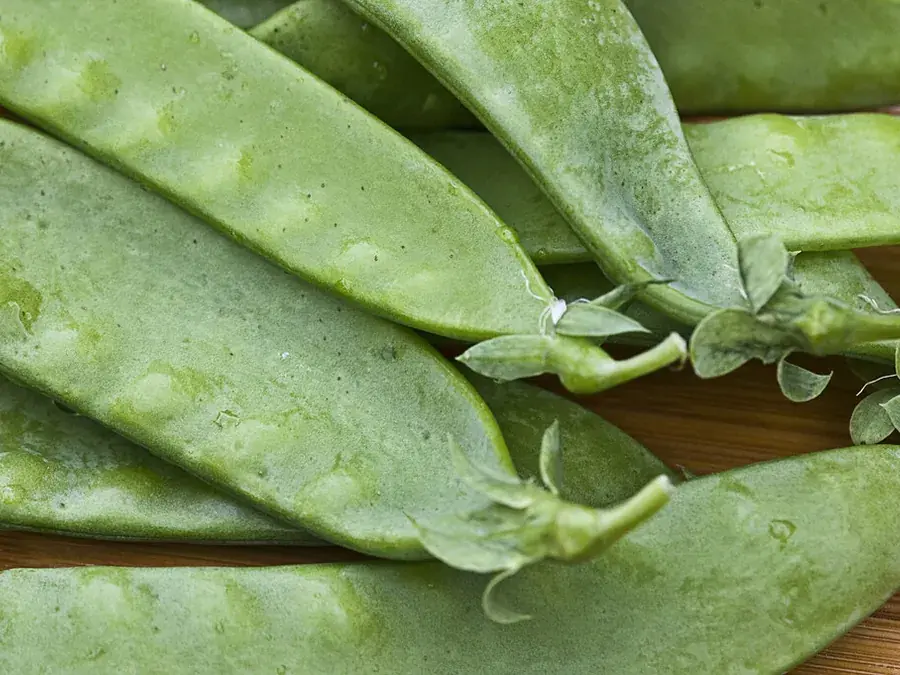 Half-hardyPeas and beansPicked Jun–Oct
Peas
The first sowing of the year and the first thing in the freezer — pick them every day or they turn to starch.
Freezing · Drying · PressurePick, store, put up →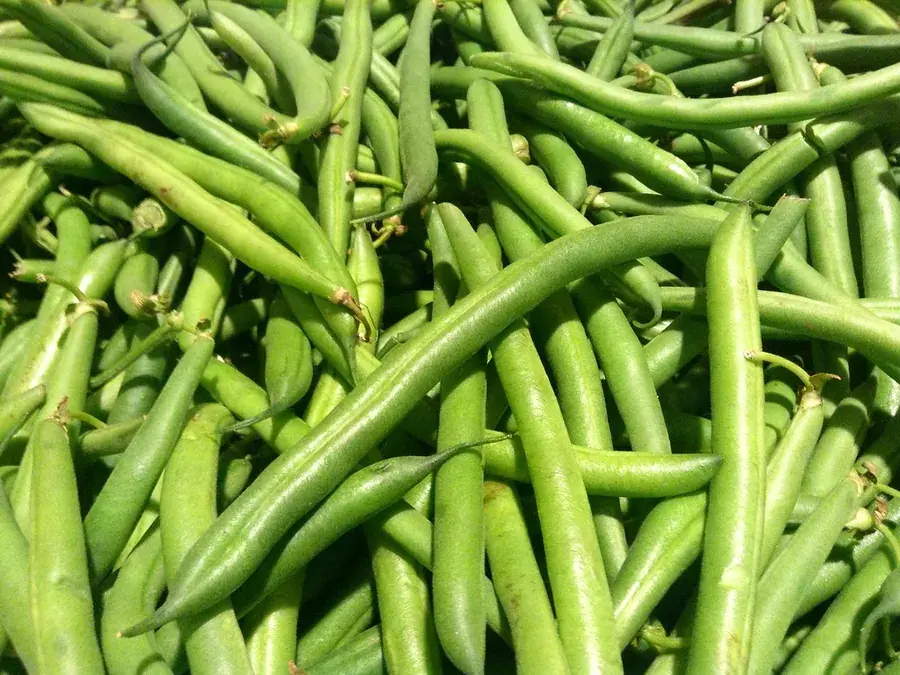 TenderPeas and beansPicked Jul–Sep
Green beans
Pick them young and pick them often — and never, ever water-bath a jar of plain beans.
Freezing · Pressure · PicklingPick, store, put up →
Checked against these sources ·
- NCHFP: Canning beans or peas, shelled, dried
- Washington State University Extension: Growing dried beans in the home garden
- Purdue Extension: Stored product pests (E-37)
- Seed Savers Exchange: Bean growing and seed saving
- University of Minnesota Extension: Growing beans
Harvest months are typical for zones 4–6 and move by weeks north and south. Storage figures are for the ideal; a house without a cold room will get the shorter end of each range.