Potatoes, cubed and pressure canned
Hot-packed cubes that go straight from jar to frying pan: the fastest home-fries you will ever make, from the potatoes that would not keep.
Makes
About 9 × 500 ml (pint) jars from 6 kg (13 lb) of potatoes, or 7 × 1 L (quart) jars from 9 kg (20 lb)
Active time
1¼ hours
Total
3 hours including venting, processing and cooling the canner
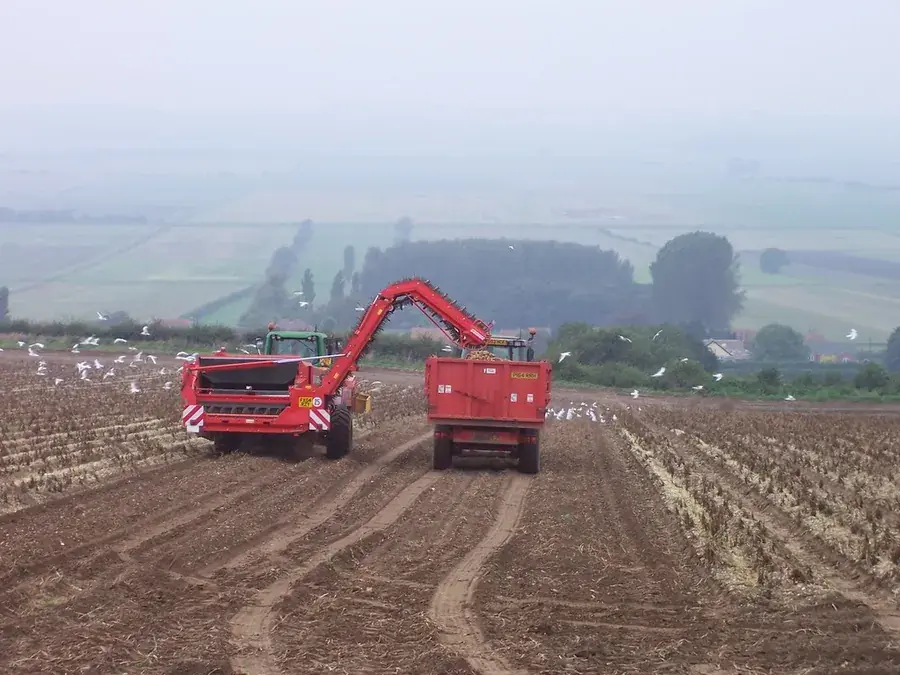
Photo D H Wright on Flickr · CC BY 2.0
Before you start
What keeps this jar safe
- Potatoes are low-acid and dense: pressure canner only, hot pack only. There is no tested raw-pack time, so do not pack them raw.
- Cubes must be 1.25 cm (½ inch) or whole potatoes under 5 cm (2 inches) across — bigger pieces heat too slowly for the tested time.
- Cover with fresh boiling water. The cooking water is thick with starch and slows heat penetration.
- No butter, milk, cream or mashing — mashed potatoes cannot be safely canned at home.
This follows NCHFP: Potatoes, white — cubed or whole. Quantities, acid and times are theirs; do not scale the vegetables without scaling everything, and do not change the vinegar, lemon juice or processing time.
Ingredients
- 9 kg (20 lb) small to medium mature potatoes for 7 L jars — 6 kg (13 lb) for 9 × 500 ml jars
- Anti-browning soak: 1 teaspoon (3 g) ascorbic acid stirred into 4 L (1 gallon) cold water
- Canning or pickling salt, optional: 1 teaspoon (5 ml) per 1 L jar, ½ teaspoon per 500 ml jar
- Fresh boiling water to cover — not the cooking water
Processing
- Jars
- 500 ml (pint) · 1 L (quart) in brackets
- Headspace
- 2.5 cm (1 inch)
- Time at 0–300 m (0–1,000 ft)
- 35 min at 10 psi (weighted gauge)
- Higher up
- 1 L jars: 40 min. Weighted gauge: 10 psi at 0–300 m (0–1,000 ft), 15 psi above 300 m. Dial gauge: 11 psi at 0–600 m (0–2,000 ft), 12 psi at 600–1,200 m, 13 psi at 1,200–1,800 m, 14 psi at 1,800–2,400 m. Processing time does not change with altitude for pressure canning — only the pressure does.
Method
- 1
Set the pressure canner heating with 5–7.5 cm (2–3 inches) of water. Wash the jars and keep them hot; wash the lids and set aside.
- 2
Wash and peel the potatoes, cutting away any eyes, green patches or bruises. Cut into 1.25 cm (½ inch) cubes and drop them straight into the ascorbic-acid water so they do not brown. A child can do the dropping — and count the cubes.
- 3
Drain the cubes, cover with fresh water in a big pot, bring to the boil and boil 2 minutes (whole small potatoes 2.5–5 cm across get 10 minutes). Drain.
- 4
Fill the hot jars with the hot cubes, leaving 2.5 cm (1 inch) headspace. Add salt if using.
- 5
Cover with fresh boiling water, not the starchy cooking water, keeping 2.5 cm headspace. Free the bubbles, wipe the rims, fit the lids fingertip-tight and load the canner.
- 6
Lock the lid, vent steam for 10 minutes, then weight the vent and bring to 10 psi weighted or 11 psi dial at 0–300 m.
- 7
Time once at pressure: 500 ml jars 35 minutes, 1 L jars 40 minutes. Hold the pressure steady; if it drops, bring it back and start over.
- 8
Cool the canner naturally to zero, remove the weight, wait 10 minutes, open away from your face, and lift the jars onto a towel for 12–24 hours. Check the seals and label.
Keeps: Best within 12 months. Drain and rinse before frying or roasting. Refrigerate after opening and use within 3–4 days.
Variations: Whole new potatoes no bigger than 5 cm across use the same times with a 10-minute pre-boil. Potatoes that have been stored cold may darken in the jar — harmless, but a reason to can from fresh-dug stock.
Tested source: NCHFP: Potatoes, white — cubed or whole. Checked October 2026. If a jar did not seal, refrigerate it and use it within a few days. Never taste anything from a jar that is bulging, leaking, spurting or smells wrong — when in doubt, throw it out without tasting.
The crop
Potatoes: when to pick, how to store, what else to make →
A potato is its own preserve: cured, then kept cold and dark, it lasts most of the winter. If you do can, potatoes are low-acid and must be pressure-canned — peeled, cubed, boiled 2 minutes, covered with fresh boiling water (the cooking water carries too much starch) and processed 35 minutes for 500 ml and 40 for litres at 10 lb weighted gauge; never water-bath. Raw potatoes do not freeze — they go black and spongy — but blanched new potatoes (3–5 minutes), mashed potato, and par-cooked chips and hash browns freeze well. Dried potato slices need blanching first.