Sauerkraut, crock or jar fermented
Cabbage, salt and three weeks of patience. The oldest recipe in this library, and the one a six-year-old can make almost entirely alone.
Makes
About 2 L from a 2.3 kg (5 lb) batch in a 4 L jar; 9 L from 11 kg (25 lb) in a 20 L crock
Active time
45 minutes
Total
3–6 weeks of fermenting
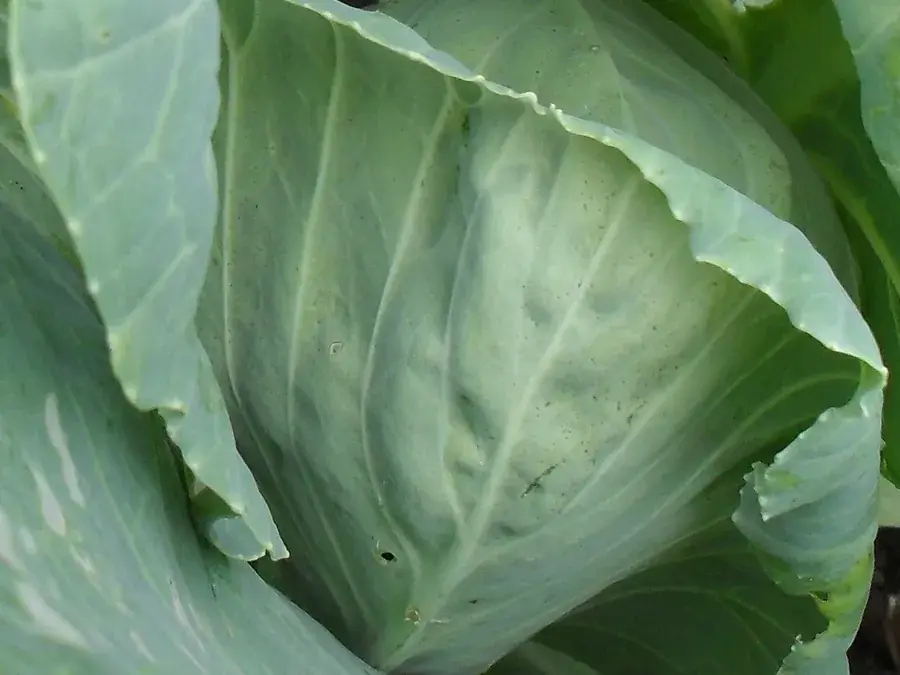
Photo Ula Gillion on Flickr · CC BY 2.0
Before you start
What keeps this jar safe
- The salt is the recipe: 3 tablespoons per 2.3 kg (about 2.25% by weight). It is what lets the lactic-acid bacteria win and keeps the texture crisp. Do not cut it, and do not use iodized table salt, which clouds the brine.
- Everything must stay under the brine. Cabbage in the air is where mould starts.
- Surface scum is yeast and comes off with a spoon; coloured fuzzy mould, slime or an off smell means discard the batch.
- Fermented kraut is a high-acid food, which is why it can be water-bath canned — but only with the tested times, and canning stops the live culture. Refrigerated kraut keeps its crunch and its bacteria.
- Kraut that never got sour (too cold, too little salt) is not safe to can or keep. If it does not taste properly tangy after six weeks, compost it.
This follows NCHFP: Sauerkraut. Quantities, acid and times are theirs; do not scale the vegetables without scaling everything, and do not change the vinegar, lemon juice or processing time.
Ingredients
- 2.3 kg (5 lb) firm, fresh cabbage per 4 L (1 gallon) of container — scale up by the same ratio
- 3 tablespoons (45 ml, about 50 g) canning or pickling salt per 2.3 kg cabbage — about 2.25% by weight; if you have a scale, 22 g per kilogram of shredded cabbage
- Top-up brine only if needed: 1½ tablespoons (22 ml) canning salt per 950 ml (1 quart) water, boiled and cooled
Processing
- Jars
- 500 ml (pint) hot pack · 1 L (quart) in brackets
- Headspace
- 1.25 cm (½ inch)
- Time at 0–300 m (0–1,000 ft)
- 10 min
- Higher up
- Hot pack 1 L jars: 15 min. Raw pack: 500 ml 20 min, 1 L 25 min. At 305–915 m (1,001–3,000 ft) hot pack is 15/20 min and raw pack 25/30 min; at 915–1,830 m (3,001–6,000 ft) hot pack 15/20 min and raw pack 30/35 min; above 1,830 m hot pack 20/25 min and raw pack 35/40 min.
Method
- 1
Pull off the loose outer leaves, rinse the heads, quarter them and cut out the cores. Shred to about the thickness of a quarter (about 2 mm) with a knife, mandoline or food processor.
- 2
Weigh the shredded cabbage into a big bowl, add the salt, and mix and squeeze with clean hands for several minutes until the cabbage goes limp and glossy and juice gathers in the bottom. Children love this step; the bowl can go on the floor.
- 3
Pack the cabbage into a clean 4 L jar or crock a handful at a time, pressing down hard with a fist or a wooden spoon so the juice rises above it. Leave at least 10–12 cm (4–5 inches) of space at the top.
- 4
If after an hour the juice does not cover the cabbage, top up with the cooled brine. Lay a plate or lid that fits inside the container on top, and weight it with a sealed jar of water or a brine-filled bag so everything stays 2.5–5 cm (1–2 inches) under the liquid. Cover with a clean tea towel.
- 5
Leave it somewhere 21–24 °C (70–75 °F) and it will finish in 3–4 weeks; at 15–18 °C (60–65 °F) allow 5–6 weeks. Below 15 °C it may not ferment at all; above 24 °C the kraut goes soft.
- 6
Look in two or three times a week. A white film or bubbly scum on the surface is wild yeast and is normal — skim it off, rinse the plate and weight, and put them back. Fuzzy, coloured mould, a slimy texture or a bad smell means the batch is finished, in the bin.
- 7
It is done when the bubbling stops and it tastes clean and sour all the way through. Put the whole container, covered, in the fridge, or pack into jars and refrigerate.
- 8
To can instead (optional): for a hot pack, bring the kraut and its juice to a boil, stirring, and fill hot jars firmly with 1.25 cm (½ inch) headspace; for a raw pack, fill cold jars firmly and cover with juice to the same headspace. Process in a boiling-water canner: hot pack 500 ml jars 10 minutes and 1 L jars 15 minutes; raw pack 500 ml 20 minutes and 1 L 25 minutes, at 0–300 m. Cool 12–24 hours and check the seals.
Keeps: Tightly covered in the fridge, several months — it slowly gets more sour. Canned, best within a year in a cool dark cupboard; refrigerate after opening.
Variations: A tablespoon of caraway or juniper per 2.3 kg goes in with the salt. A quarter of the cabbage swapped for shredded carrot or apple, with the salt kept at the same percentage of the total weight, makes a good fridge kraut — but mixed krauts are not the tested recipe, so keep them in the fridge and do not can them. Red cabbage makes a magenta kraut that stains everything cheerfully.
Tested source: NCHFP: Sauerkraut. Checked October 2026. If a jar did not seal, refrigerate it and use it within a few days. Never taste anything from a jar that is bulging, leaking, spurting or smells wrong — when in doubt, throw it out without tasting.
The crop
Cabbage: when to pick, how to store, what else to make →
Cabbage is the one crop in this group that mostly does not need preserving: a storage variety in a cold room at 0–2 °C is good into March. What will not keep as a head becomes sauerkraut — shredded and salted at 2–2.5 % by weight, which is the tested ratio of 3 tablespoons of canning salt per 2.3 kg (5 lb) of cabbage, pressed under its own brine for 3–4 weeks at 20–24 °C (5–6 weeks if the room is 15–18 °C). Finished kraut keeps several months in the fridge or can be water-bath canned, hot-packed, 10 minutes for 500 ml jars and 15 for litres at 0–300 m. Cabbage freezes only blanched — 1½ minutes for shreds or thin wedges — and comes out fit for soup and cabbage rolls, not slaw. There is no tested recipe for canning plain cabbage, and the National Center for Home Food Preservation does not recommend it.