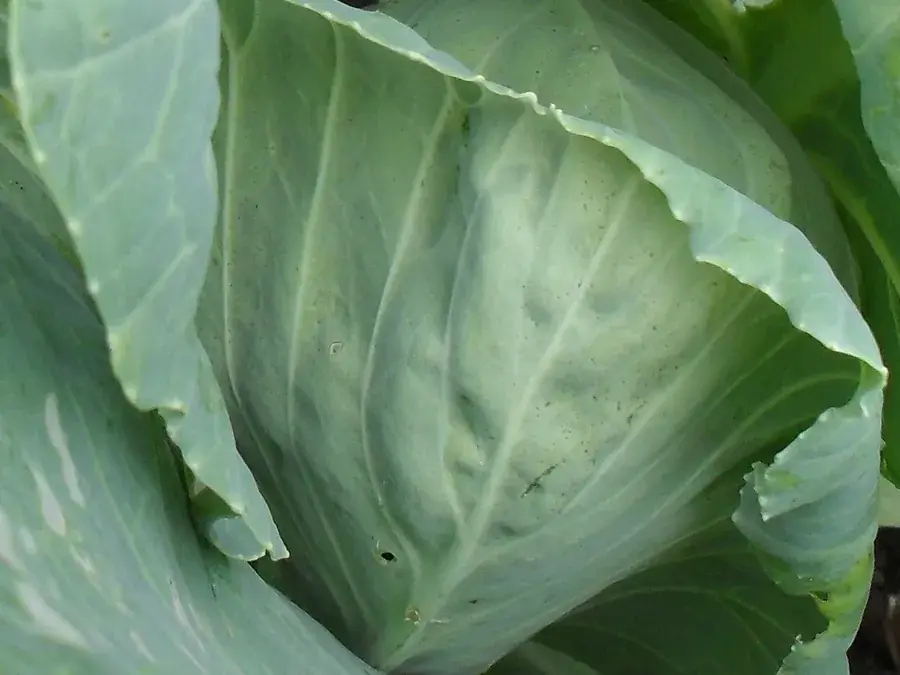
Photo Ula Gillion on Flickr · CC BY 2.0
Cabbage
Brassica oleracea
The head that keeps all winter in a cold room — and turns into sauerkraut when it will not.
- Ready when
- The head is firm when you press it with the heel of your hand — no give at all. Early cabbages are ready in July and August at the size of a softball; storage types in October at anything from 1 to 4 kg. A head that has stopped getting bigger but is still loose is not ready; a head that has split has gone past ready.
- How to pick
- Cut the stem just under the head with a stout knife, and for storage leave three or four wrapper leaves on, or pull the whole plant roots and all. If a head is firm but you are not ready for it, give the plant a quarter twist to break some roots — it stops the head taking up water and splitting after rain. Cut early heads promptly; the stump will often throw a few small heads later.
- On a frost night
- Leave it. A firm head shrugs off −4 to −6 °C with nothing worse than a few blistered wrapper leaves, and storage cabbage is sweeter for a frost or two. Short dips to −10 °C are survivable, but after a night like that cut the heads within a day or two and peel off anything glassy or dark. Do not let a mature head sit through a run of hard freezes — the damage works inward.
Where it keeps
Storing cabbage
| Where | Temperature | Humidity | Keeps | How |
|---|---|---|---|---|
| Cold room or root cellar | 0–2 °C32–36 °F | high | 3–5 months for storage varieties | Heads with wrapper leaves on, roots on or wrapped loosely in newspaper, on slatted shelves or hung by the root, not touching. Peel the outer leaves at use. Cabbage smells in storage — keep it away from the apples and the living room. |
| Fridge crisper | 0–4 °C32–39 °F | high | 3–8 weeks | Whole, unwashed, in a loose perforated bag. A cut head wrapped tightly lasts about a week. |
| Unheated garage or shed, before hard freeze | 0–8 °C32–46 °F | moderate | 4–8 weeks | In a box lined with newspaper, lid loose. Move it to the fridge once nights fall below −5 °C out there. |
Putting it up
What to do with too many cabbage
Cabbage is the one crop in this group that mostly does not need preserving: a storage variety in a cold room at 0–2 °C is good into March. What will not keep as a head becomes sauerkraut — shredded and salted at 2–2.5 % by weight, which is the tested ratio of 3 tablespoons of canning salt per 2.3 kg (5 lb) of cabbage, pressed under its own brine for 3–4 weeks at 20–24 °C (5–6 weeks if the room is 15–18 °C). Finished kraut keeps several months in the fridge or can be water-bath canned, hot-packed, 10 minutes for 500 ml jars and 15 for litres at 0–300 m. Cabbage freezes only blanched — 1½ minutes for shreds or thin wedges — and comes out fit for soup and cabbage rolls, not slaw. There is no tested recipe for canning plain cabbage, and the National Center for Home Food Preservation does not recommend it.
The oldest method: the right cold, the right damp, and darkness.
Salt and time; the bacteria make the acid for you.
The fastest route and the one that keeps flavour best.
- Fermenting
Sauerkraut, crock or jar fermented
Cabbage, salt and three weeks of patience. The oldest recipe in this library, and the one a six-year-old can make almost entirely alone.
About 2 L from a 2.3 kg (5 lb) batch in a 4 L jar; 9 L from 11 kg (25 lb) in a 20 L crock · 45 minutes active
The recipe →
Saving seed
A biennial — flowers in its second year
Cabbage flowers in its second year, and it crosses with everything else in Brassica oleracea — kale, broccoli, Brussels sprouts, cauliflower, kohlrabi, collards — so only one of the family may flower within 250 m (800 ft) that spring, and seed savers who want purity use 800 m. Choose at least five of your best heads (twenty is better), dig them before a hard freeze with roots on, trim the loose leaves, pack the roots in damp sand in a crate and keep them at 1–4 °C and high humidity all winter. Replant in April; cut an X in the top of the head so the flower stalk can push through. Yellow flowers in June, pods in July; cut whole branches when most pods are tan and dry them on a sheet, then rub the pods between your hands and winnow. A season spent on seed is a season with no cabbage from those plants, which is why most families buy cabbage seed and save bean seed.
Keeps: 4–5 years.
The seed-saving guide →Next year
Planning cabbage for next season
Rotate: nothing from the cabbage family in that bed for three or four years, to keep clubroot and cabbage root maggot down. Rich, moist soil, full sun, pH 6.5 or above, and steady water right to harvest — uneven water is what splits heads. Space 45 cm (18 in) apart. Start spring cabbage indoors 6 weeks before the last frost and transplant around the frost date under a row cover, which also stops the moth. For storage cabbage, sow in early June and transplant by early July so it heads up in cool October weather. In zones 3–4 pick storage varieties under 100 days.
Cabbage at a glance
- Botanical name
- Brassica oleracea
- Group
- Cabbages and kin
- Picked
- July, August, September, October, November
- Frost
- Hardy: takes −4 to −6 °c and often sweetens.
- Best put up as
- cold storage, fermenting, freezing
- Seed
- A biennial — flowers in its second year
Questions people ask about cabbage
When should I harvest cabbage?
When the head is firm all the way through under hand pressure — size matters less than firmness. Early types come in July and August; storage types are cut in October and early November after a frost or two, which sweetens them. If the head is firm and you are not ready, twist the plant a quarter turn to slow it and stop splitting.
How do I store cabbage for the winter?
Cut storage varieties with a few wrapper leaves on, or pull them with the root, and keep them at 0–2 °C and high humidity: a cold room, an insulated bin in an unheated porch, or the fridge crisper for one or two heads. Hang them by the root or set them on slatted shelves not touching. Peel the outer leaves at use. Three to five months is normal; a split or soft head will not store, so eat those first.
Can you freeze cabbage?
Yes, but only blanched and only for cooking. Shred or cut thin wedges, water-blanch 1½ minutes, cool in ice water, drain, bag and freeze. It comes out soft — right for soups, stews, colcannon and cabbage rolls, wrong for coleslaw. Sauerkraut is the better use of a glut.
How much salt goes in sauerkraut?
Two to two and a half percent of the cabbage by weight. The tested recipe is 3 tablespoons of canning or pickling salt for every 2.3 kg (5 lb) of shredded cabbage; weigh the cabbage and use a scale for the salt if you have one. Pack it hard, keep it under the brine with a weight, and let it ferment 3–4 weeks at 20–24 °C. Use canning salt, not iodised table salt, which clouds the brine.
Is cabbage frost hardy?
Yes. A mature head takes −4 to −6 °C without harm and tastes better for it; cabbage, kale and collards will even stand short spells near −10 °C. The limit is repeated hard freezes, which damage the head from the outside in — so after a night near −10 °C, cut what is left and get it into the cold room.
Can I save cabbage seed?
Only with patience. Cabbage is a biennial, so the plant must be kept alive through winter — dug and stored in damp sand at 1–4 °C in most of Canada — and replanted in spring to flower. It also crosses with kale, broccoli, Brussels sprouts, cauliflower and kohlrabi, so nothing else in the family can flower within 250 m. Seed keeps 4–5 years once you have it.
What can kids do with the cabbage harvest?
Pounding shredded cabbage for sauerkraut is the best job in the preserving kitchen — wash hands, salt the shreds, and let them squeeze and punch until the brine runs; they can watch the bubbles in the crock every day for a month. Cabbage heads are heavy and the knife work is for an adult, but a six-year-old can peel wrapper leaves and sort heads into ‘eat now’ and ‘store’.
Your own frost dates
When does this come in where you are?
Enter a town, postal code or ZIP and the garden year, the frost watch and this week’s guide are built from your own weather.
Also in cabbages and kin
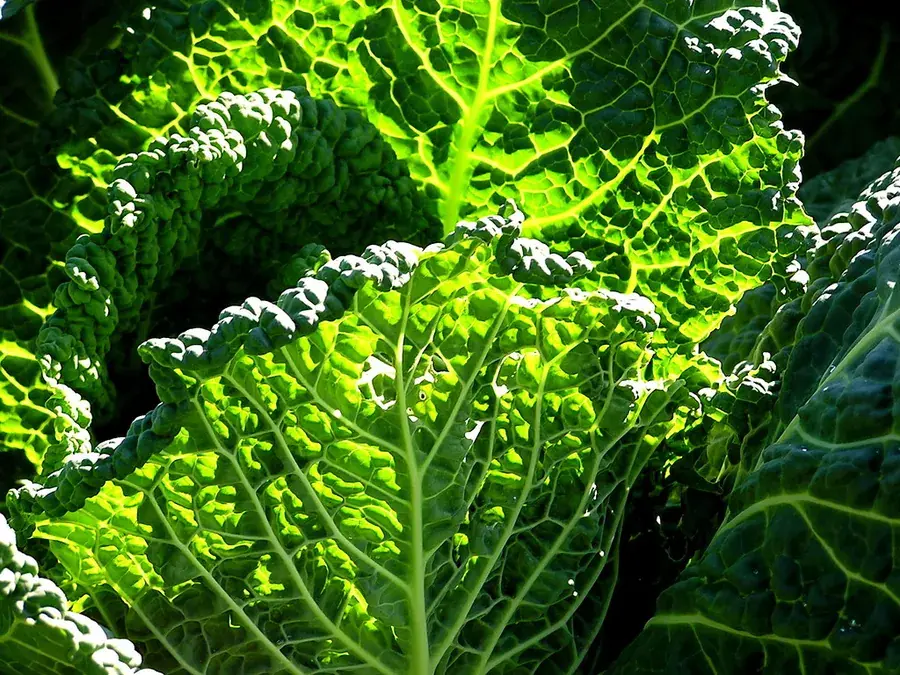 Very hardyCabbages and kinPicked Jun–Dec
Kale
The last green standing — sweeter after frost and still pickable from under the snow.
Freezing · Drying · Cold storagePick, store, put up →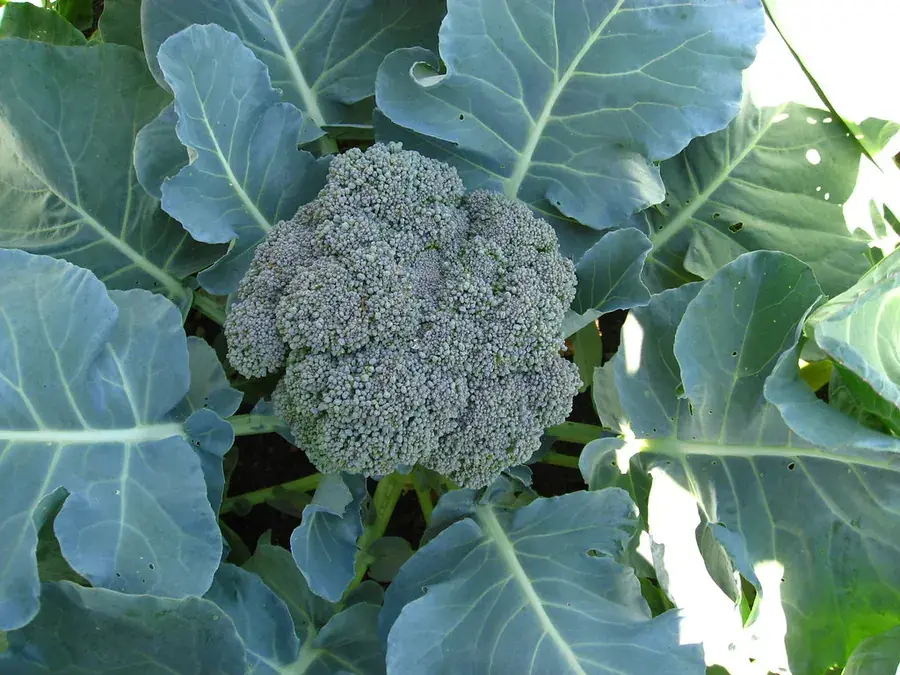 HardyCabbages and kinPicked Jul–Oct
Broccoli
One big head, then weeks of side shoots — if you cut it before the buds turn yellow.
FreezingPick, store, put up →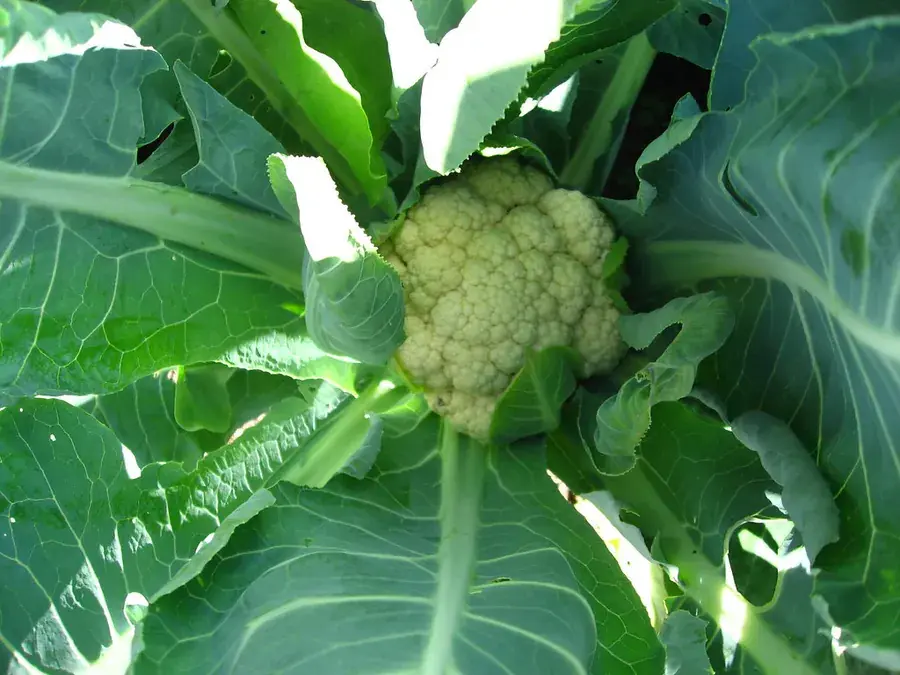 Half-hardyCabbages and kinPicked Jul–Oct
Cauliflower
The fussiest brassica: tie the leaves over the head, cut it while it is tight, and freeze what you cannot eat.
Freezing · PicklingPick, store, put up →
Checked against these sources ·
- NCHFP: Sauerkraut
- NCHFP: Freezing cabbage
- University of Minnesota Extension: Growing cabbage
- UMass Extension: Optimal storage conditions for fall storage crops
- Seed Savers Exchange: Cabbage growing and seed saving
Harvest months are typical for zones 4–6 and move by weeks north and south. Storage figures are for the ideal; a house without a cold room will get the shorter end of each range.