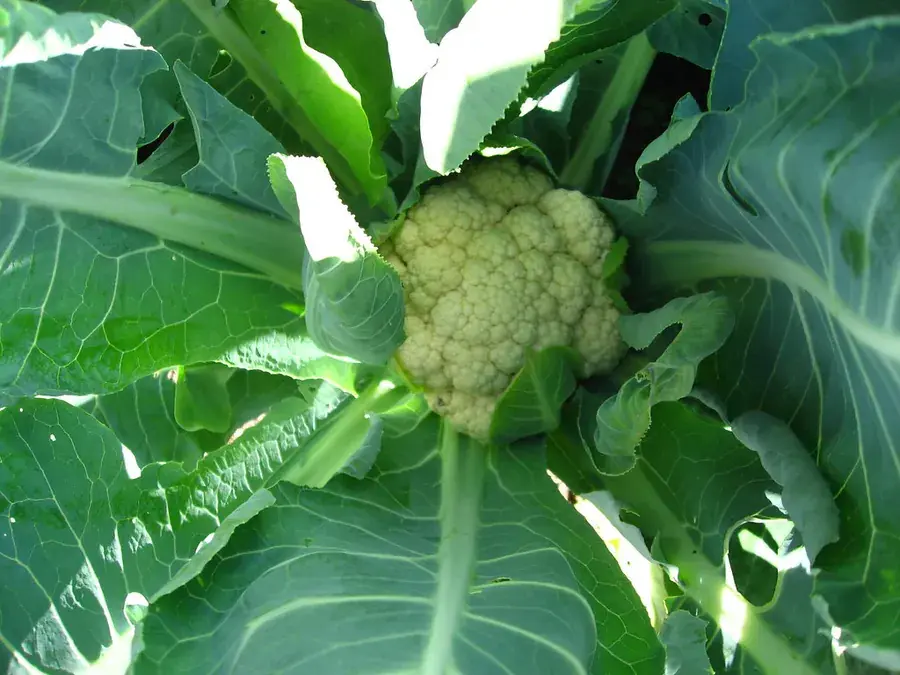
Cauliflower
Brassica oleracea
The fussiest brassica: tie the leaves over the head, cut it while it is tight, and freeze what you cannot eat.
- Ready when
- A compact, firm, white (or purple or orange, by variety) head 15–20 cm across, with the curd sections still pressed tightly together. Check every day or two once the head is visible: in warm weather it goes from ready to ‘ricey’ — grainy, loosening, separating into florets — in under a week, and in spring crops faster. Smaller and tight beats bigger and loose every time.
- How to pick
- Cut the stem below the head with a knife, keeping a ring of leaves around it to protect the curd on the way to the kitchen. There are no side shoots worth waiting for — pull the plant and compost it. For a white head on a non-self-blanching variety, bring three or four big outer leaves up over the curd when it is about 5 cm (2 in) across and hold them with a rubber band or clothes peg; harvest comes 4–8 days later in summer, up to two weeks in cool fall weather.
- On a frost night
- The plant is tougher than the head. Leaves shrug off −2 °C, but a developing white curd is marked by frost at about −2 to −3 °C — brown spots that spread to rot — and ruined at −5 °C. If frost is forecast and a head is showing, tie the outer leaves over it (which you should have done anyway) or throw a row cover or a bucket over the plant; if the head is near full size, cut it that evening. Plants with no head yet can be left.
Where it keeps
Storing cauliflower
| Where | Temperature | Humidity | Keeps | How |
|---|---|---|---|---|
| Fridge crisper | 0–4 °C32–39 °F | high | About 1 week, 2 at most | Unwashed, stem down, in a perforated bag or loose wrap; moisture on the curd causes brown spots. |
| Cold room | 0–1 °C32–34 °F | high | 2–3 weeks, no longer | Head wrapped in its own leaves, on a shelf, not touching anything. Even in ideal conditions cauliflower does not keep more than three weeks. |
Putting it up
What to do with too many cauliflower
Freezing is the main method: break into florets about 2.5 cm (1 in) across, soak 30 minutes in salted water if worms are about, blanch 3 minutes in water with 4 teaspoons of salt per 4 litres, chill, drain, and tray-freeze before bagging. It cooks up well in soups, curries and gratins; raw-frozen cauliflower turns to grey mush. The other good home is a jar: the NCHFP ‘Pickled cauliflower or Brussels sprouts’ recipe (5 % vinegar, sugar, onions, mustard and celery seed, blanch 3 minutes, process 10 minutes in a boiling-water bath) and the tested mixed-vegetable pickles that include cauliflower. Follow those ratios exactly — cauliflower is a low-acid vegetable and only the vinegar makes a water-bath jar safe. There is no tested recipe for canning plain cauliflower.
Saving seed
Most garden varieties are hybrids
Nearly every cauliflower variety sold is an F1 hybrid and will not come true, and the open-pollinated ones are the hardest of the whole cabbage family to grow for seed: the plant must be healthy enough to carry a full head and then push a flower stalk through it, which in most of Canada means overwintering it at 1–4 °C in a cold room and replanting in spring. It crosses with cabbage, kale, broccoli, Brussels sprouts and kohlrabi, so none of them may flower within 250 m (800 ft). Seed savers who do it keep at least five plants, let the curd open into yellow flowers, and dry the pods on the plant before rubbing them out. For most families this is the crop to buy seed for every year and save the effort for beans.
Keeps: 4–5 years.
The seed-saving guide →Next year
Planning cauliflower for next season
Rotate with the cabbage family: nothing from it in that bed for three or four years. Cauliflower wants what cabbage wants, only more reliably — rich, moist, limed soil, full sun, no check in growth at any point, because a stressed plant ‘buttons’ into a head the size of a coin. Space 45 cm (18 in) apart. Start indoors 7–8 weeks before the last frost and transplant 2 weeks before it under a row cover, but in most Canadian gardens the fall crop is the one that works: sow in late June or early July, transplant in late July, and let it head up in cool September and October weather. In zones 3–4 pick a 55–65 day variety and grow it as the fall crop only.
Cauliflower at a glance
- Botanical name
- Brassica oleracea
- Group
- Cabbages and kin
- Picked
- July, August, September, October
- Frost
- Half-hardy: scorched by a light frost, killed at −3 °c.
- Best put up as
- freezing, pickling
- Seed
- Most garden varieties are hybrids
Questions people ask about cauliflower
When is cauliflower ready to pick?
When the head is firm, compact and 15–20 cm across with the curd sections still pressed tightly together. Look every day or two once a head shows; in warm weather it separates into a loose, grainy ‘ricey’ head within a week, and it is better cut small and tight than large and loose. Cut below the head with a few leaves left on.
Why do I have to tie the leaves over cauliflower?
To keep the curd white. Sunlight turns a developing white head yellow-brown and gives it a stronger flavour. When the head is about 5 cm across, pull three or four big outer leaves up over it and fasten them with a rubber band or peg; cut the head 4–8 days later (up to two weeks in cool fall weather). Self-blanching varieties curl their own leaves over, and coloured varieties need no tying.
Can you freeze cauliflower?
Yes, blanched. Break into 2.5 cm florets, salt-soak if there are worms, blanch 3 minutes in salted water, chill in ice water, drain well, and freeze on a tray before bagging. It is good for soups, curries, cauliflower cheese and roasting from frozen. Never freeze it raw — it goes watery and grey.
Is cauliflower frost hardy?
Less than its relatives. The leaves take −2 °C, but a developing head is spotted by frost at about −2 to −3 °C and spoiled at −5 °C, so cover plants with heads, or cut heads that are close, when a frost is forecast. Plants without heads yet can stand a light frost without harm.
Can I pickle cauliflower?
Yes, with a tested recipe. The NCHFP ‘Pickled cauliflower or Brussels sprouts’ recipe uses 12 cups of florets, 4 cups of 5 % vinegar and 2 cups of sugar with onion and spices, blanched 3 minutes and processed 10 minutes in a boiling-water bath. Cauliflower is also in most tested mixed-pickle and giardiniera recipes. Do not cut the vinegar or add extra vegetables — the acid is what makes the jar safe.
How do kids help with cauliflower?
Checking the heads is their job: once a head shows, send them out every morning to see if it has grown, and let them put the rubber band on the leaves. Breaking a head into florets for the freezer is safe knife-free work. Growing a purple or orange variety next to a white one gets the most reluctant eater to try it.
Your own frost dates
When does this come in where you are?
Enter a town, postal code or ZIP and the garden year, the frost watch and this week’s guide are built from your own weather.
Also in cabbages and kin
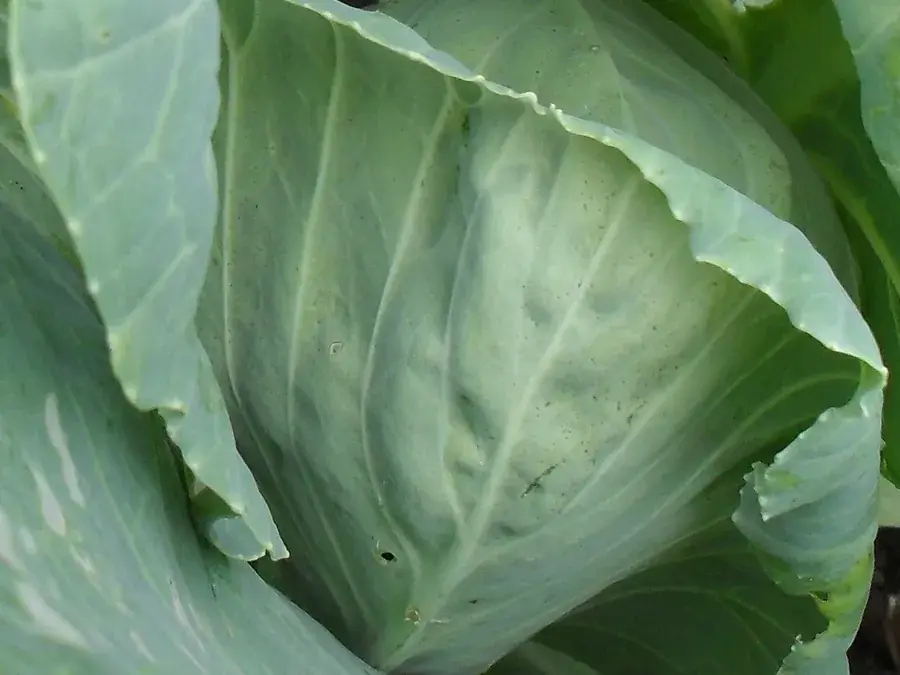 HardyCabbages and kinPicked Jul–Nov
Cabbage
The head that keeps all winter in a cold room — and turns into sauerkraut when it will not.
Cold storage · Fermenting · FreezingPick, store, put up →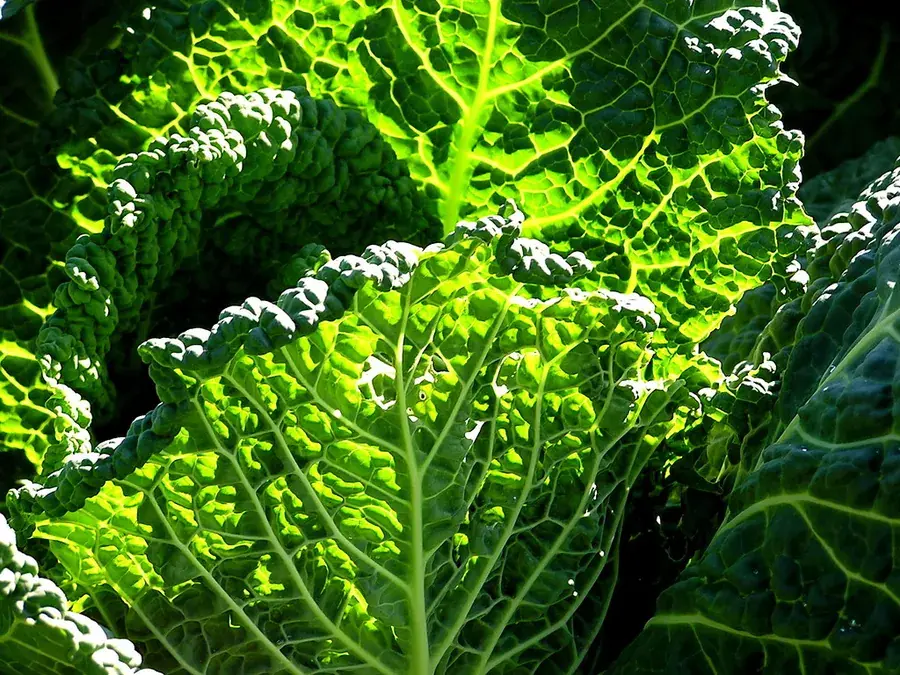 Very hardyCabbages and kinPicked Jun–Dec
Kale
The last green standing — sweeter after frost and still pickable from under the snow.
Freezing · Drying · Cold storagePick, store, put up →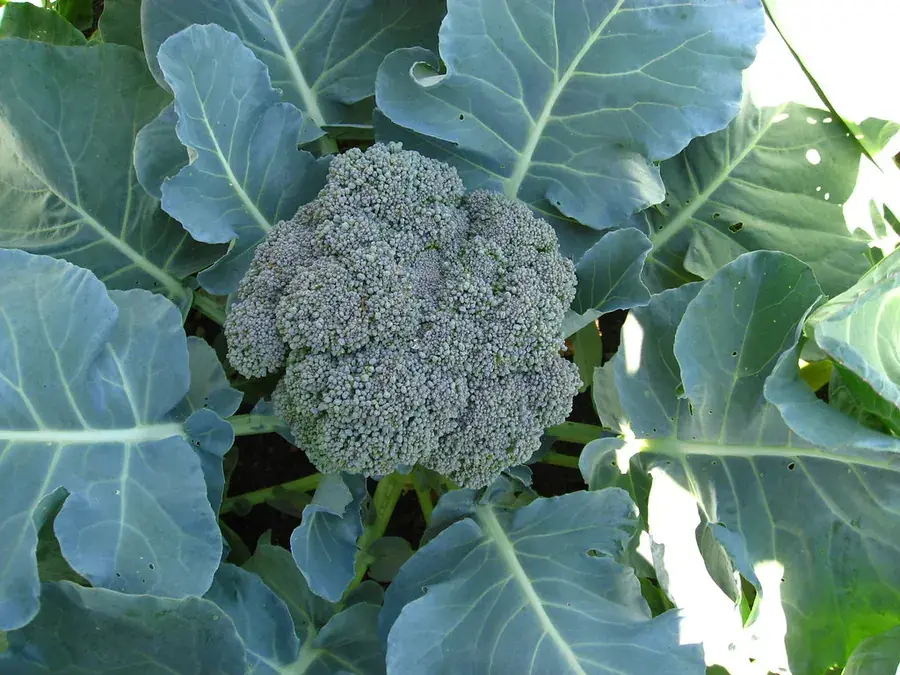 HardyCabbages and kinPicked Jul–Oct
Broccoli
One big head, then weeks of side shoots — if you cut it before the buds turn yellow.
FreezingPick, store, put up →
Checked against these sources ·
- NCHFP: Freezing cauliflower
- NCHFP: Pickled cauliflower or Brussels sprouts
- Penn State Extension: Preserving broccoli and cauliflower
- University of Minnesota Extension: Growing cauliflower
- University of Maryland Extension: Growing cauliflower in a home garden
Harvest months are typical for zones 4–6 and move by weeks north and south. Storage figures are for the ideal; a house without a cold room will get the shorter end of each range.