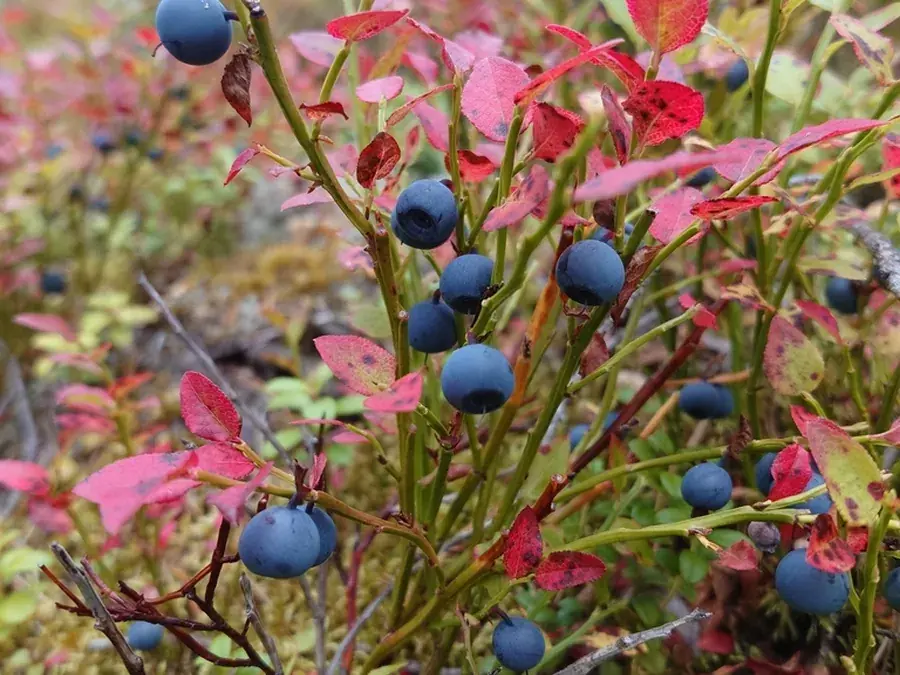
Photo by Linda Lötjönen on iNaturalist · CC BY 4.0
BerrySeason: July – September
Bilberry
Vaccinium myrtillus
- When
- Typically July – September — July, August, September. Earlier in warm, low country; later in the hills.
- Where it grows
- Acid soil under pine, spruce, birch and oak, and on heath and moorland, often carpeting the forest floor from the lowlands to the treeline.
- How to know it
- A knee-high shrub with bright green, angled stems and small, finely toothed oval leaves. Blue-black berries with a dusty bloom hang one per stalk, each with a little crown at the tip — and the flesh is purple-red right through, staining fingers and tongue.
- Look-alikes
- Deadly nightshade has shiny black berries of a similar size, but singly on a branching herb up to 1.5 m (5 ft) tall, each sitting in a green five-pointed star. Bog bilberry (edible) has blue-green untoothed leaves and pale flesh; herb Paris holds a single poisonous blue-black berry above a ring of four leaves. Pick only from the low, green-stemmed shrub.
- Harvest and use
- By the handful, or in pies, tarts, jam, soup and juice. Spread them on a tray to freeze the day you pick.
Bilberry at a glance
- Also called
- Blaeberry (Scotland), whortleberry, whinberry, wimberry, fraughan (Ireland), European blueberry; myrtille (France), Heidelbeere (Germany), mustikka (Finland)
- Family
- Ericaceae (heather family)
- Where it grows
- Native to almost every country in Europe — absent only from Sardinia, Sicily, Crete, Cyprus, the Aegean islands, European Turkey, Crimea and southern European Russia. Enormous crops in the forests of Scandinavia and Finland; in Britain mainly the uplands of the north and west; in the south a mountain plant, up to about 2,350 m (7,700 ft). It also grows in western North America.
- When to pick
- Flowers in April and May; the berries ripen from July to September — earliest in the lowlands of central Europe, later in the north and the mountains. Ripe berries are blue-black all over and come away at a touch.
- Parts used
- The berries, raw or cooked. The leaves have been used in folk medicine but are not food.
- Is any of it poisonous?
- The leaves may be unsafe to eat; only the berries are food.
- More look-alikes to know
- Herb Paris (Paris quadrifolia) of damp woods carries one blue-black berry on a stalk above a ring of four broad leaves. It is poisonous, though the berry tastes so bad that poisonings are rare.
Questions people ask about bilberry
What is the difference between a bilberry and a blueberry?
The inside. A bilberry is purple-red all the way through and stains everything; a cultivated blueberry has pale flesh. Bilberries also grow one per stalk on a knee-high wild shrub, where blueberries hang in clusters on tall bushes.
When are bilberries ripe?
July to September. They start in July in the lowlands and southern Britain and run into August and September in Scandinavia and the mountains.
Where do bilberries grow?
On acid, nutrient-poor soil: pine, spruce, birch and oak woods, heath and moorland, often carpeting the ground in dappled shade.
What should children know before picking bilberries?
To pick only from the low shrub with green, angled stems, and to bring you any other black berry first. Deadly nightshade has shiny black berries of a similar size, but they grow singly on a branching herb up to 1.5 m (5 ft) tall and sit in a green five-pointed star; a few can kill a child. Herb Paris holds a single blue-black berry above four leaves.
Found in these regions
Hardiness zones 3–7.
Is it ready near you?
Get this week's foraging guide for your area
Enter a town, postal code or ZIP and we'll tell you what's in season right there this week — from your local climate, this week's weather and your ecological region.
Also ready in October
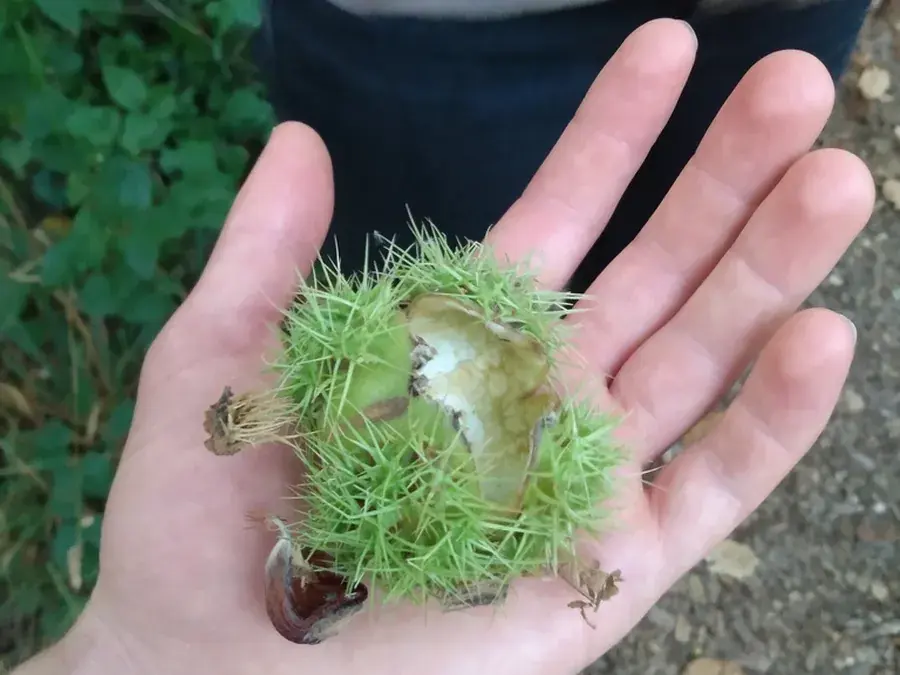 NutOctober – November
Sweet chestnut
Castanea sativa
A big tree with long, glossy leaves edged with sharp, regular teeth, and bark that twists in spiralling ridges on old trunks. The nuts come in twos and threes inside a husk covered in dense, needle-sharp spines; each is glossy brown, flat on one side, with a pointed tuft at the tip.
How to know it & its look-alikes →Photo: John Powers · CC BY 4.0
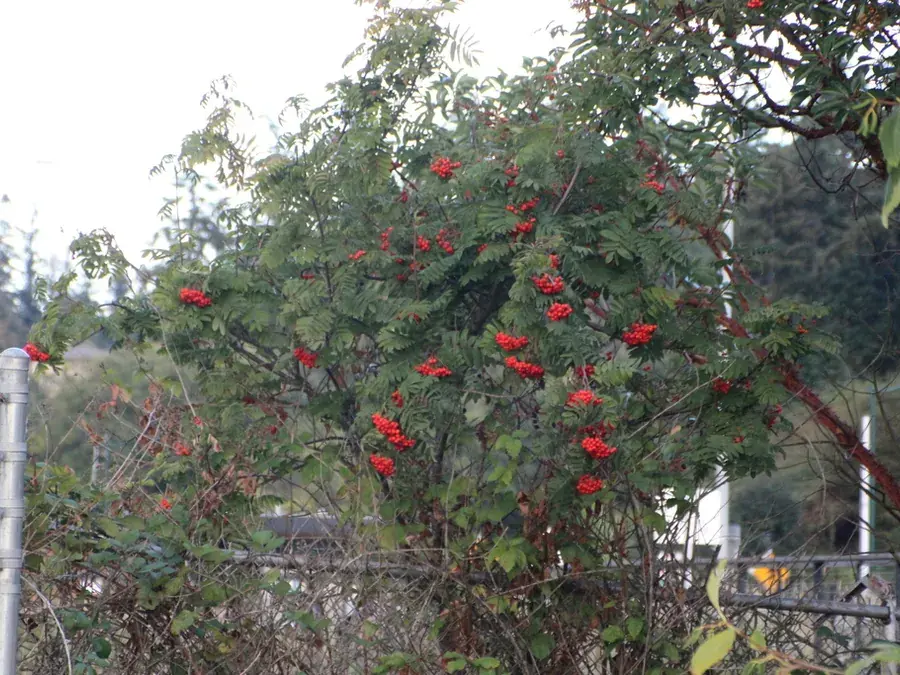 BerryAugust – October
Rowan berries
Sorbus aucuparia
A slim tree with smooth silvery-grey bark and feathery leaves of many toothed leaflets in pairs; big flat clusters of scarlet-orange berries, each about 1 cm (⅜ in) across with a tiny black five-pointed star at the tip.
How to know it & its look-alikes →Photo: Therese Phillips · CC BY 4.0
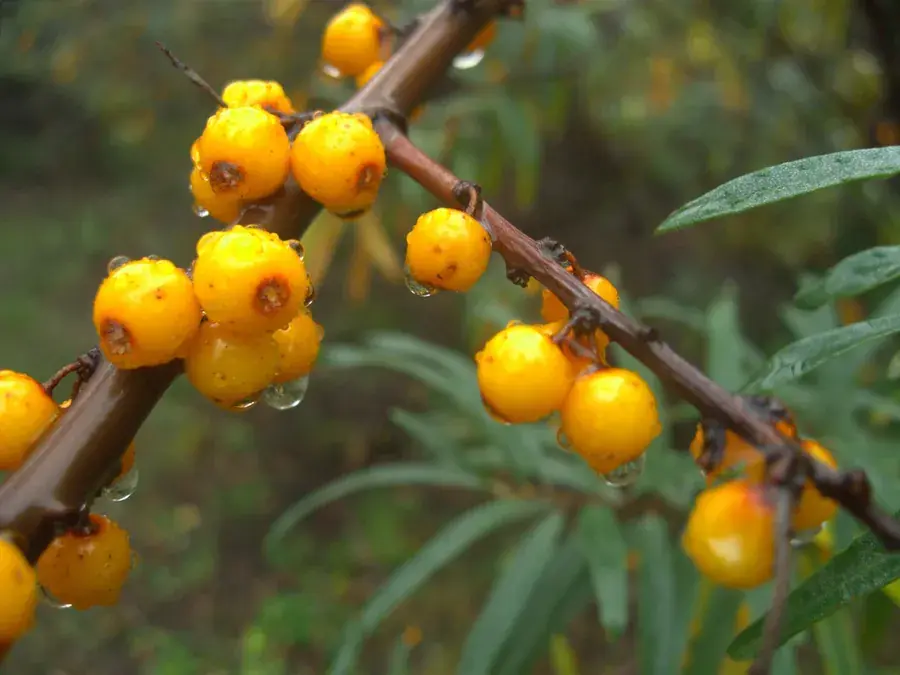 BerryAugust – October
Sea buckthorn
Hippophae rhamnoides
A thorny shrub with narrow, silvery-grey, willow-like leaves and branches packed with bright orange berries 6–8 mm (¼ in) across, from late summer into winter. Only female bushes fruit.
How to know it & its look-alikes →
Checked against these sources ·
- Wikipedia — Vaccinium myrtillus
- Woodland Trust — Bilberry
- Wikipedia — Atropa bella-donna (deadly nightshade)
- Wikipedia — Paris quadrifolia (herb Paris)
Seasons are typical for the middle of the range and move by weeks north and south, and up and down hills.
Educational information only. Never eat a wild plant or mushroom identified from a single photograph or description — confirm with a regional field guide or an experienced forager, and know the poisonous species in your area first.