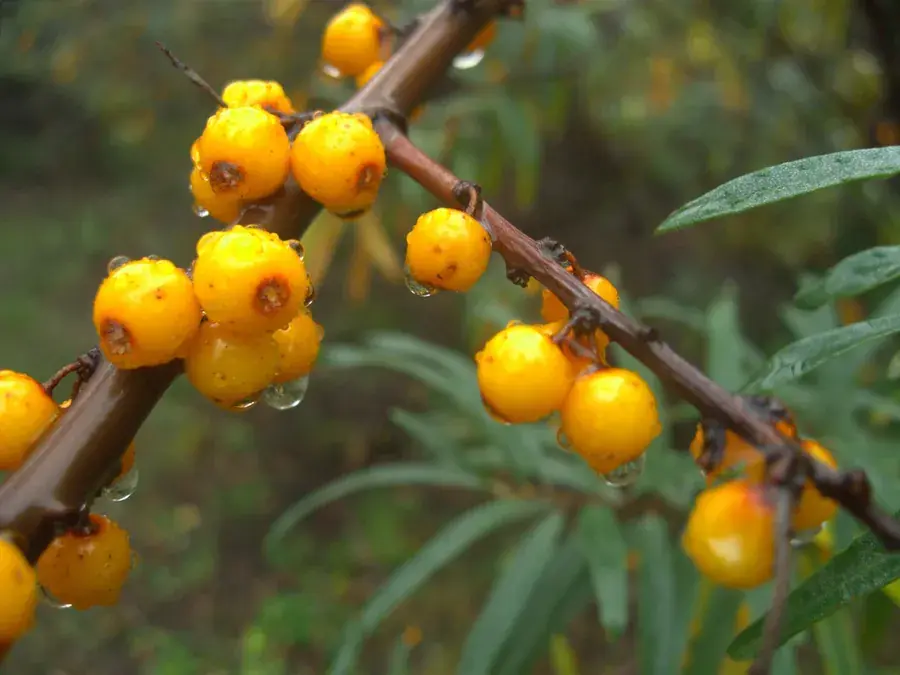
Photo by Public domain (iNaturalist) on iNaturalist · CC0 (public domain)
BerryIn season now (October)
Sea buckthorn
Hippophae rhamnoides
- When
- Typically August – October — August, September, October. Earlier in warm, low country; later in the hills.
- Where it grows
- Coastal dunes and cliffs of the North Sea and Baltic, river gravels in the Alps, and dry slopes in the Carpathians, often in dense thickets.
- How to know it
- A thorny shrub with narrow, silvery-grey, willow-like leaves and branches packed with bright orange berries 6–8 mm (¼ in) across, from late summer into winter. Only female bushes fruit.
- Look-alikes
- Few shrubs carry orange berries packed along thorny, silver-leaved twigs. Firethorn, a garden shrub, has orange-red berries in clusters among glossy green leaves and is not one to pick for food.
- Harvest and use
- Fiercely sour and rich in vitamin C: juice, jelly and syrup, or mixed with sweeter fruit. The berries burst when pulled, so many pickers snip a few laden twigs, freeze them, and knock the frozen berries off.
- Caution
- Thick gloves — the thorns are long and sharp. Snip twigs sparingly.
Sea buckthorn at a glance
- Also called
- Sandthorn, sallowthorn, seaberry; tyrni (Finland), Sanddorn (Germany), cătină (Romania)
- Family
- Elaeagnaceae (oleaster family)
- Where it grows
- Cold-temperate Europe and Asia. In Europe it is native on the North Sea coasts of eastern England, the Netherlands and Denmark, the Baltic coasts of Germany, Poland, Latvia and Finland, the Gulf of Bothnia and the Norwegian coast; in the Carpathians and in south-eastern Europe. Widely planted to hold dunes, and invasive on many coasts outside its native range.
- When to pick
- The berries turn orange in August and ripen through September and October. They hang on into winter, feeding migrant thrushes.
- Parts used
- The berries, usually juiced or cooked with sugar. The oily seeds and pulp are pressed for cosmetic oil.
Questions people ask about sea buckthorn
What does sea buckthorn taste like?
Intensely sour and a little astringent. The sourness is mostly malic acid and the astringency quinic acid, so most people sweeten it or mix it with other fruit.
How do you pick sea buckthorn berries?
Carefully, with thick gloves. The berries cling tight and burst when pulled, so pickers often snip a few laden twigs, freeze them, and knock the frozen berries off into a bowl.
Why does my sea buckthorn have no berries?
Male and female flowers grow on separate shrubs, and only the females fruit — with a male close enough to pollinate them.
Where does sea buckthorn grow wild?
On coastal dunes and cliffs around the North Sea and Baltic, on river gravels in the mountains, and on dry slopes from the Carpathians east. In Britain it is native on the east coast of England and planted elsewhere.
Found in these regions
- Atlantic Europe
- Nordic & Baltic Boreal
- Continental Europe
- Alps, Pyrenees & Carpathians
- Pannonian Basin & Eastern Plains
Hardiness zones 3–7.
Is it ready near you?
Get this week's foraging guide for your area
Enter a town, postal code or ZIP and we'll tell you what's in season right there this week — from your local climate, this week's weather and your ecological region.
Also ready in October
 NutOctober – November
Sweet chestnut
Castanea sativa
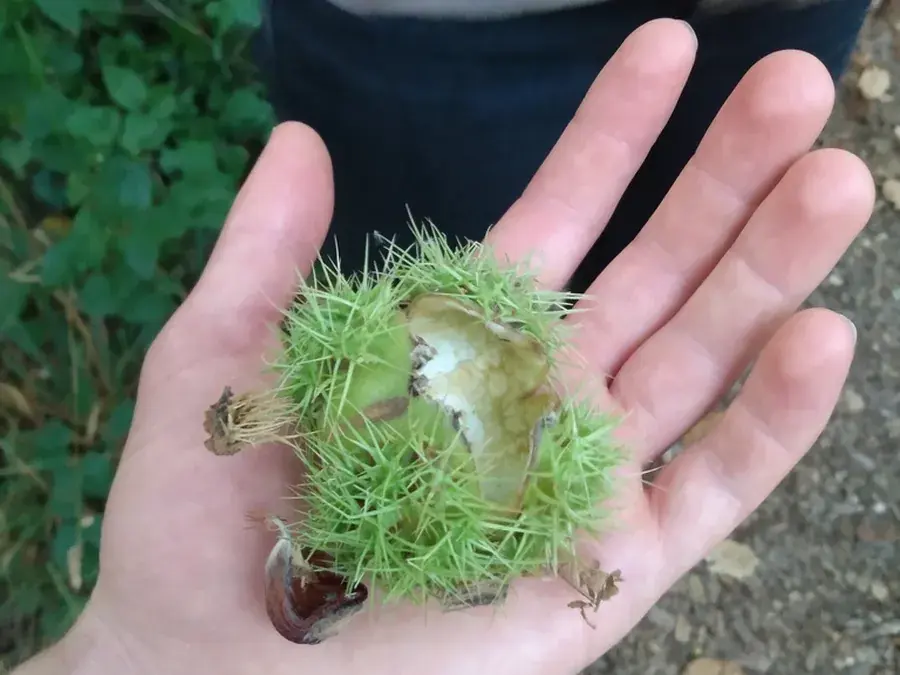
A big tree with long, glossy leaves edged with sharp, regular teeth, and bark that twists in spiralling ridges on old trunks. The nuts come in twos and threes inside a husk covered in dense, needle-sharp spines; each is glossy brown, flat on one side, with a pointed tuft at the tip.
How to know it & its look-alikes →Photo: John Powers · CC BY 4.0
 BerryAugust – October
Rowan berries
Sorbus aucuparia
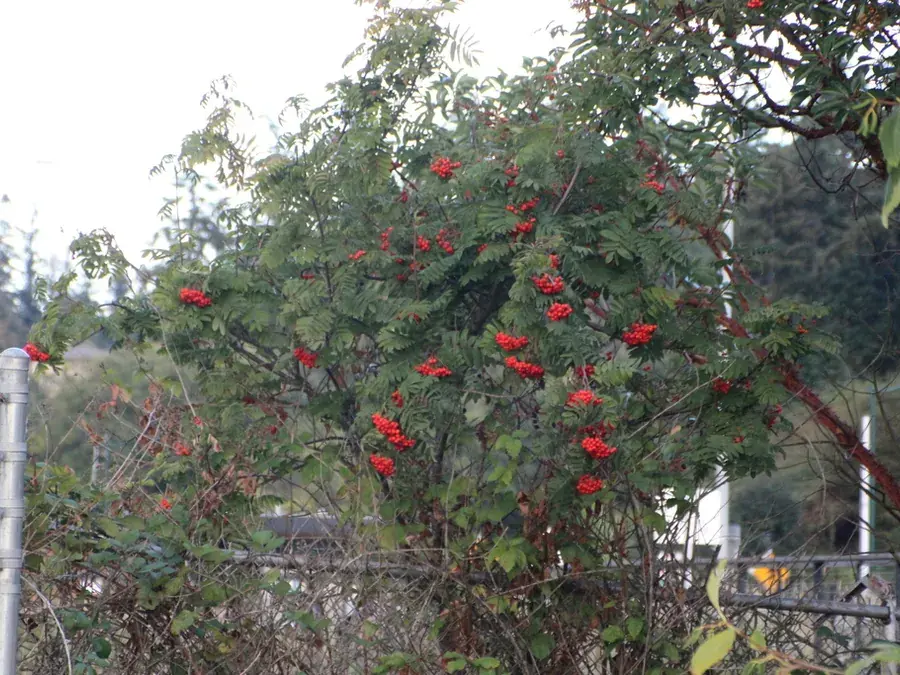
A slim tree with smooth silvery-grey bark and feathery leaves of many toothed leaflets in pairs; big flat clusters of scarlet-orange berries, each about 1 cm (⅜ in) across with a tiny black five-pointed star at the tip.
How to know it & its look-alikes →Photo: Therese Phillips · CC BY 4.0
 FruitSeptember – November
Sloes (blackthorn)
Prunus spinosa
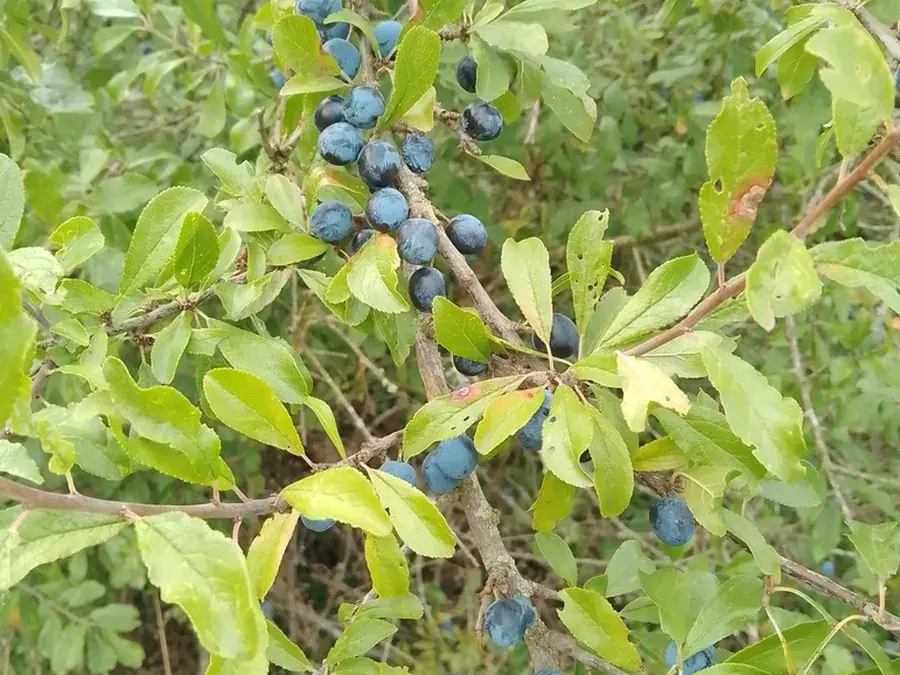
A dense, very thorny shrub with dark bark and white blossom on bare black twigs in early spring, before the leaves. In autumn, round blue-black fruits about 1 cm (⅜ in) across with a waxy blue bloom, each holding one stone.
How to know it & its look-alikes →
Checked against these sources ·
Seasons are typical for the middle of the range and move by weeks north and south, and up and down hills.
Educational information only. Never eat a wild plant or mushroom identified from a single photograph or description — confirm with a regional field guide or an experienced forager, and know the poisonous species in your area first.