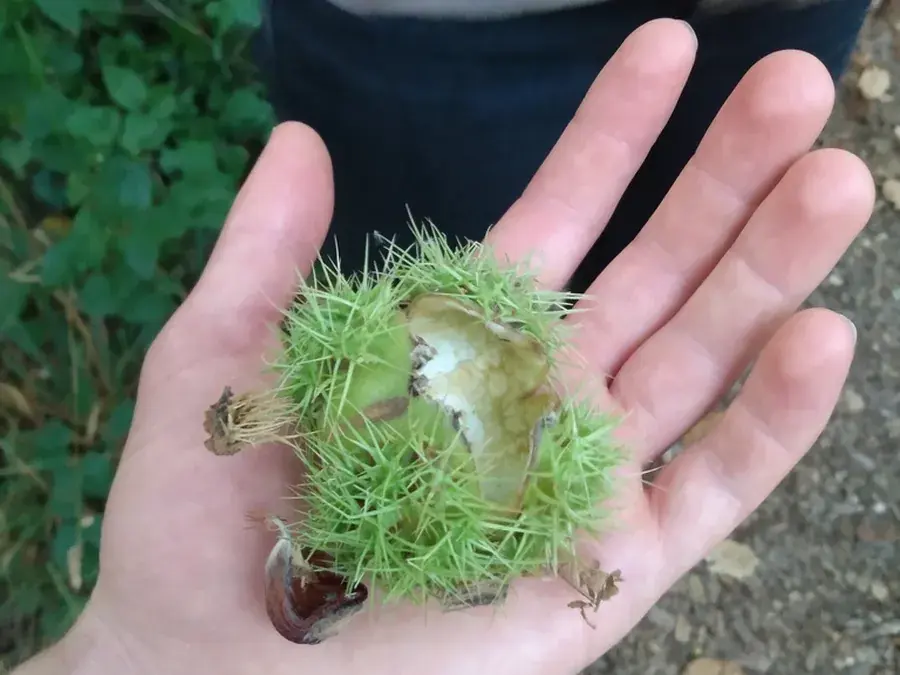
Photo by John Powers on iNaturalist · CC BY 4.0
NutIn season now (October)
Sweet chestnut
Castanea sativa
- When
- Typically October – November — October, November. Earlier in warm, low country; later in the hills.
- Where it grows
- Coppice and old woods on acid, well-drained soil, chestnut groves on the hills of southern Europe, and parkland trees.
- How to know it
- A big tree with long, glossy leaves edged with sharp, regular teeth, and bark that twists in spiralling ridges on old trunks. The nuts come in twos and threes inside a husk covered in dense, needle-sharp spines; each is glossy brown, flat on one side, with a pointed tuft at the tip.
- Look-alikes
- Horse chestnut is the one to know: its husk has a few short, stubby spikes, it usually holds one big round conker with a pale scar and no pointed tip, and its leaves are big hands of five to seven leaflets. Conkers are poisonous.
- Harvest and use
- Slit the shell and roast, boil, or dry and mill into flour. Choose plump, heavy nuts and leave the flat, empty ones.
- Caution
- Learn the conker before your first harvest — horse chestnuts stand in the same parks and avenues.
Sweet chestnut at a glance
- Also called
- Spanish chestnut, European chestnut; châtaigne or marron (France), castagna (Italy), castaña (Spain), Esskastanie (Germany)
- Family
- Fagaceae (beech and oak family)
- Where it grows
- Native to southern Europe and Anatolia (the Woodland Trust adds North Africa), and spread by people across western and central Europe. The great chestnut country is the hills of Portugal, Spain, southern France, Italy, southern Switzerland and the Balkans; in Britain it is an old introduction, common as coppice in the south-east.
- When to pick
- The nuts fall in October, with stragglers into November, when the spiny husks split on the tree or on the ground. The trees flower in late June and July in long, heavy-scented catkins.
- Parts used
- The nuts — roasted, boiled, dried or milled into flour. Husks and leaves are not eaten.
Questions people ask about sweet chestnut
How do you tell sweet chestnuts from conkers?
By the husk and the nut. Sweet chestnut husks bristle with dense, needle-sharp spines and hold two or three nuts that are flat on one side with a pointed tuft. Horse chestnut husks have a few short, stubby spikes and usually hold one big, round, glossy conker with a pale scar and no point. The leaves differ too: one long toothed blade for sweet chestnut, a hand of five to seven leaflets for horse chestnut.
Are conkers poisonous?
Yes. Raw horse chestnut seeds contain aesculin and saponins and cause sickness if eaten. Only sweet chestnuts are food.
When do sweet chestnuts fall?
In October, sometimes into November. Collect them from the ground as the husks split, and choose plump, heavy nuts.
What should children know about conkers?
That conkers are for games, not for eating — raw horse chestnuts make people sick. A sweet chestnut comes from a husk bristling with fine, needle-sharp spines and has a pointed tip; a round, glossy nut from a husk with a few stubby spikes is a conker.
Found in these regions
Hardiness zones 6–9.
Is it ready near you?
Get this week's foraging guide for your area
Enter a town, postal code or ZIP and we'll tell you what's in season right there this week — from your local climate, this week's weather and your ecological region.
Also ready in October
 BerryAugust – October
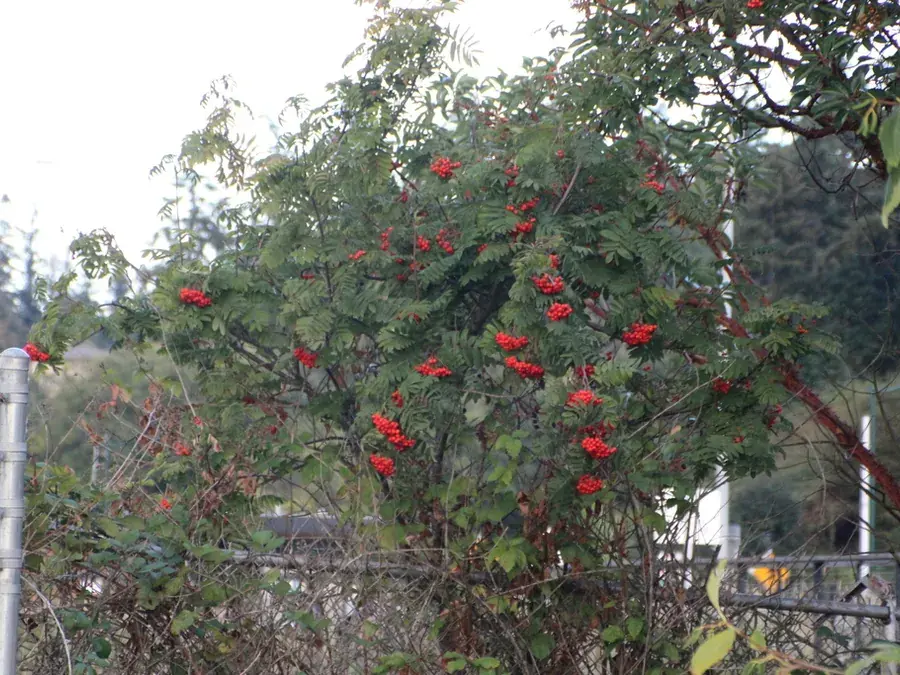
Rowan berries
Sorbus aucuparia
A slim tree with smooth silvery-grey bark and feathery leaves of many toothed leaflets in pairs; big flat clusters of scarlet-orange berries, each about 1 cm (⅜ in) across with a tiny black five-pointed star at the tip.
How to know it & its look-alikes →Photo: Therese Phillips · CC BY 4.0
 BerryAugust – October
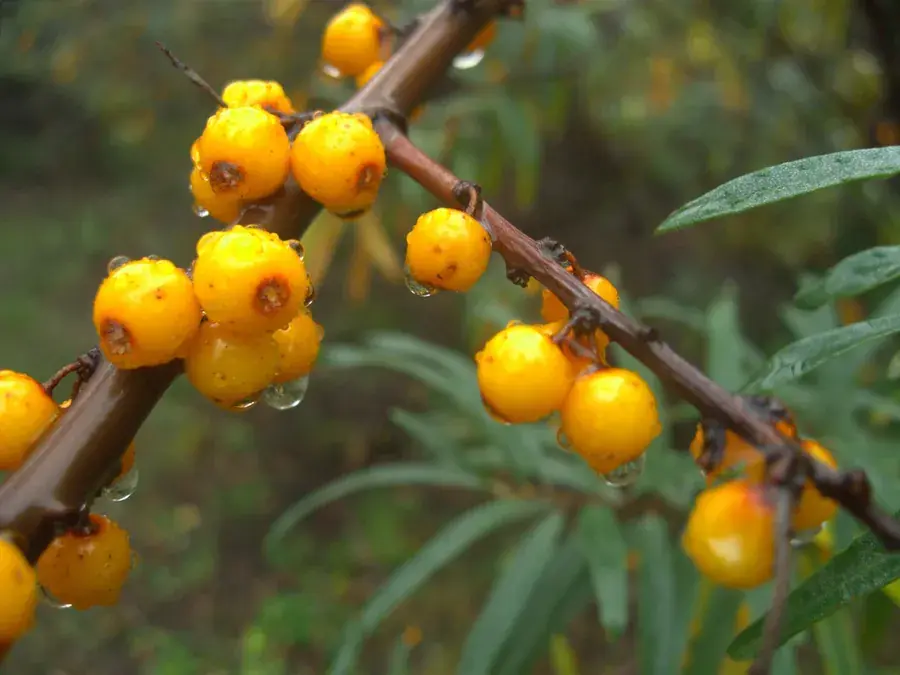
Sea buckthorn
Hippophae rhamnoides
A thorny shrub with narrow, silvery-grey, willow-like leaves and branches packed with bright orange berries 6–8 mm (¼ in) across, from late summer into winter. Only female bushes fruit.
How to know it & its look-alikes →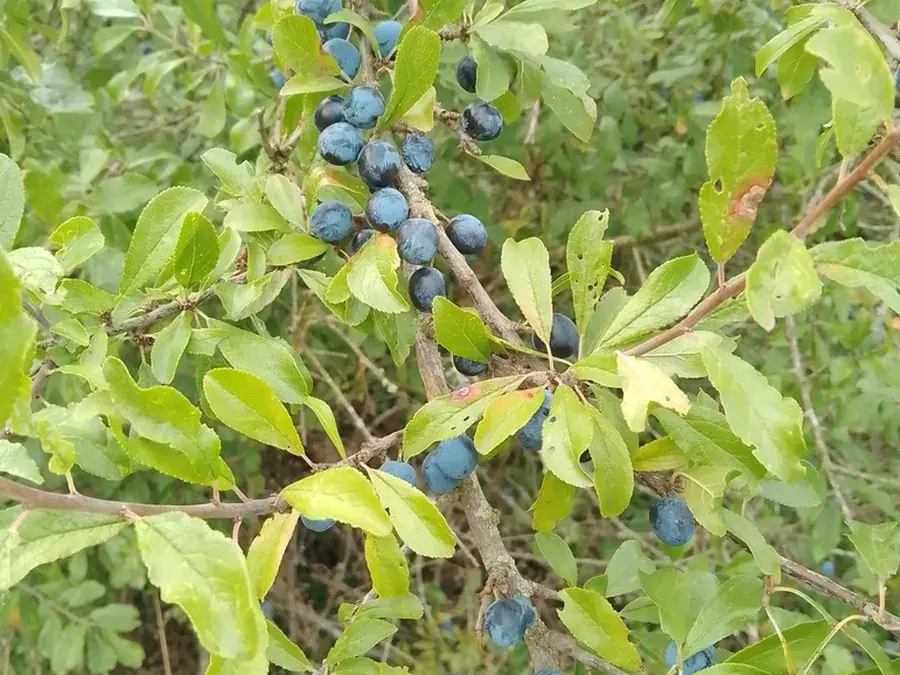 FruitSeptember – November
Sloes (blackthorn)
Prunus spinosa
A dense, very thorny shrub with dark bark and white blossom on bare black twigs in early spring, before the leaves. In autumn, round blue-black fruits about 1 cm (⅜ in) across with a waxy blue bloom, each holding one stone.
How to know it & its look-alikes →
Checked against these sources ·
- Wikipedia — Sweet chestnut (Castanea sativa)
- Woodland Trust — Sweet chestnut
- Woodland Trust — Horse chestnut
- Wikipedia — Aesculus hippocastanum (horse chestnut toxicity)
Seasons are typical for the middle of the range and move by weeks north and south, and up and down hills.
Educational information only. Never eat a wild plant or mushroom identified from a single photograph or description — confirm with a regional field guide or an experienced forager, and know the poisonous species in your area first.