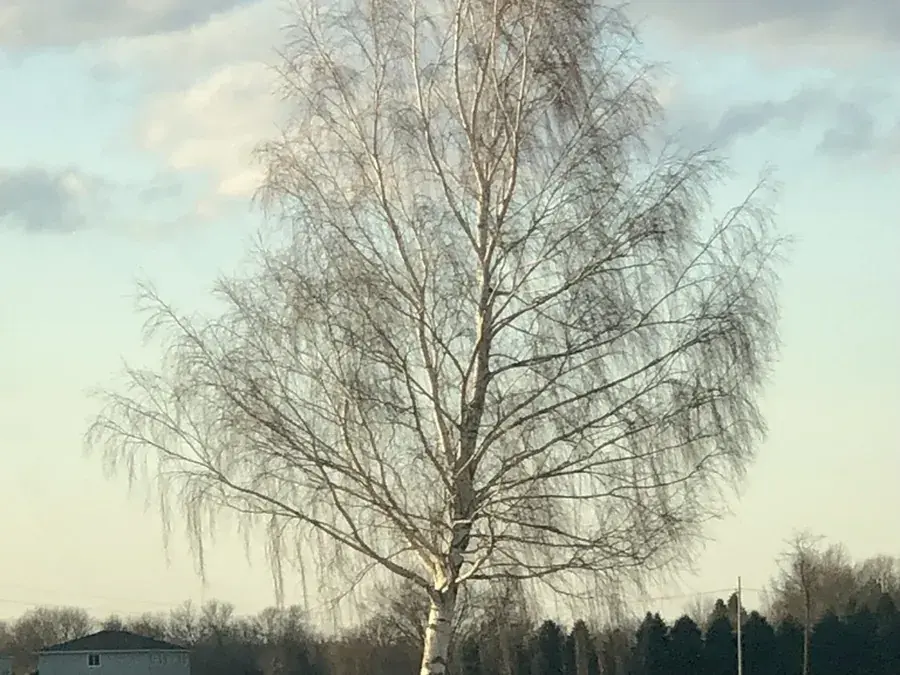
Photo by Andrew Sebastian on iNaturalist · CC BY 4.0
TreeSeason: March – April
Birch sap
Betula pendula
- When
- Typically March – April — March, April. Earlier in warm, low country; later in the hills.
- Where it grows
- Birch woods, heaths and parks — silver and downy birch, on any big, healthy tree.
- How to know it
- Silver birch has white, papery bark that cracks into black diamonds at the base and drooping twig tips; downy birch has duller bark and upright, downy twigs. Both are tapped. The sap runs for a few weeks in early spring, before the leaves open.
- Look-alikes
- Tap only trees you can name by their bark in bare-branched spring. Birch sap is the drink; most other trees’ sap is not.
- Harvest and use
- Drunk fresh — clear, faintly sweet and silky. It sours within two or three days, so drink it, freeze it, or let it ferment.
- Caution
- Tapping wounds the tree and lets in decay. One small hole in a big, healthy birch, plugged afterwards — and only with the landowner’s permission: everyman’s right covers berries and mushrooms, not tapping trees.
Birch sap at a glance
- Also called
- Birch water, birch juice; mahla (Finland), kasemahl (Estonia), bērzu sula (Latvia), sok z brzozy (Poland), berezovyi sik (Ukraine), björksav (Sweden)
- Family
- Betulaceae (birch family)
- Where it grows
- A traditional spring drink across the boreal and hemiboreal north and east of Europe — Finland, Sweden, Norway, the Baltic states, Poland, Belarus and Ukraine — and tapped in France, Scotland and elsewhere too. Silver birch itself grows across Europe as far south as Spain.
- When to pick
- Only at the turn of winter and spring, while the sap is rising hard and before any green leaves appear — about a month in all. Once the leaves open, the sap turns bitter.
- Parts used
- The sap, fresh or naturally fermented. Boiled down, it makes birch syrup, a rare and expensive product.
Questions people ask about birch sap
When can you tap birch trees?
In early spring, before the leaves break — roughly March in the south and April in the Nordic countries. The run lasts about a month, and sap taken after the leaves open is bitter.
How long does birch sap keep?
Barely: two to five days in the fridge. After two or three days it starts to ferment and turn sour. Freeze it if you want to keep it.
Does tapping hurt a birch tree?
It wounds it. Tapping holes consistently stain the wood, and one study found decay spreading from more than half of old tap holes; birches tolerate tapping less well than maples. Drill one small hole in a big, healthy tree, and plug it when you finish.
What does birch sap taste like?
Like very soft water with a faint sweetness and a silky feel. As it ferments it turns tart.
Found in these regions
- Nordic & Baltic Boreal
- Continental Europe
- Pannonian Basin & Eastern Plains
- Atlantic Europe
- Alps, Pyrenees & Carpathians
Hardiness zones 2–7.
Is it ready near you?
Get this week's foraging guide for your area
Enter a town, postal code or ZIP and we'll tell you what's in season right there this week — from your local climate, this week's weather and your ecological region.
Also ready in October
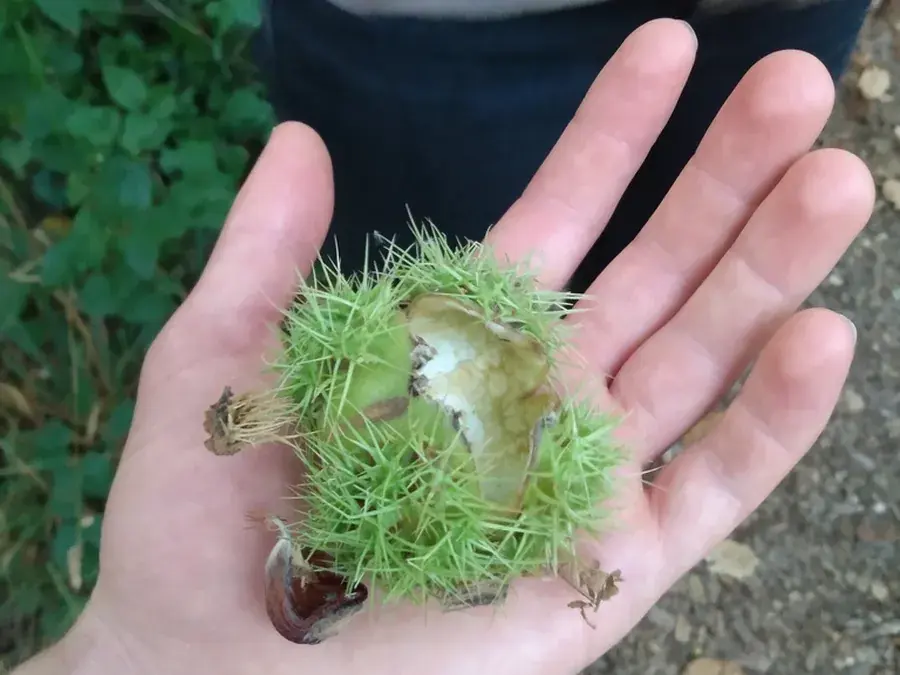 NutOctober – November
Sweet chestnut
Castanea sativa
A big tree with long, glossy leaves edged with sharp, regular teeth, and bark that twists in spiralling ridges on old trunks. The nuts come in twos and threes inside a husk covered in dense, needle-sharp spines; each is glossy brown, flat on one side, with a pointed tuft at the tip.
How to know it & its look-alikes →Photo: John Powers · CC BY 4.0
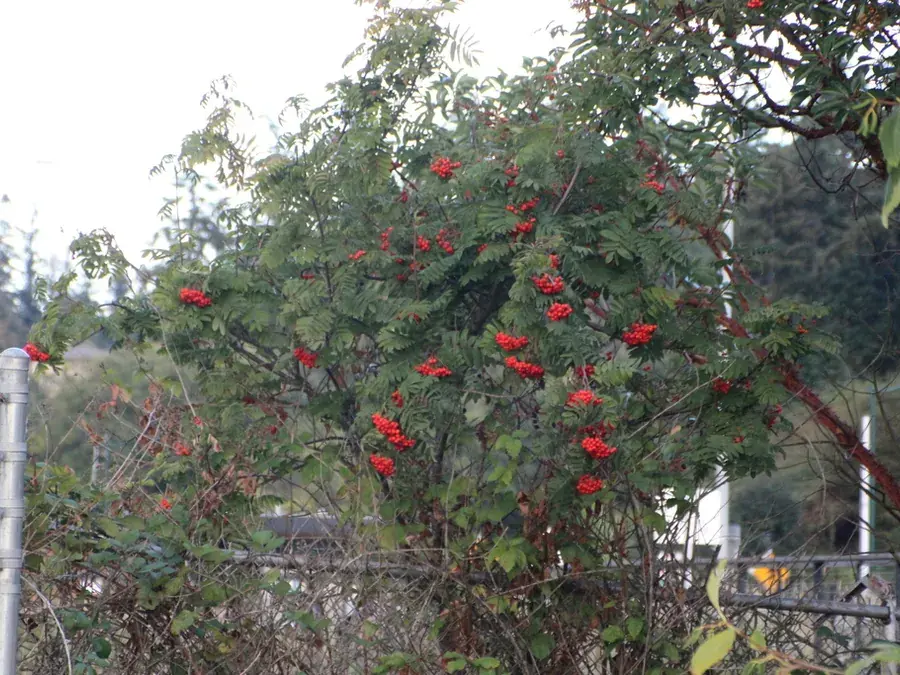 BerryAugust – October
Rowan berries
Sorbus aucuparia
A slim tree with smooth silvery-grey bark and feathery leaves of many toothed leaflets in pairs; big flat clusters of scarlet-orange berries, each about 1 cm (⅜ in) across with a tiny black five-pointed star at the tip.
How to know it & its look-alikes →Photo: Therese Phillips · CC BY 4.0
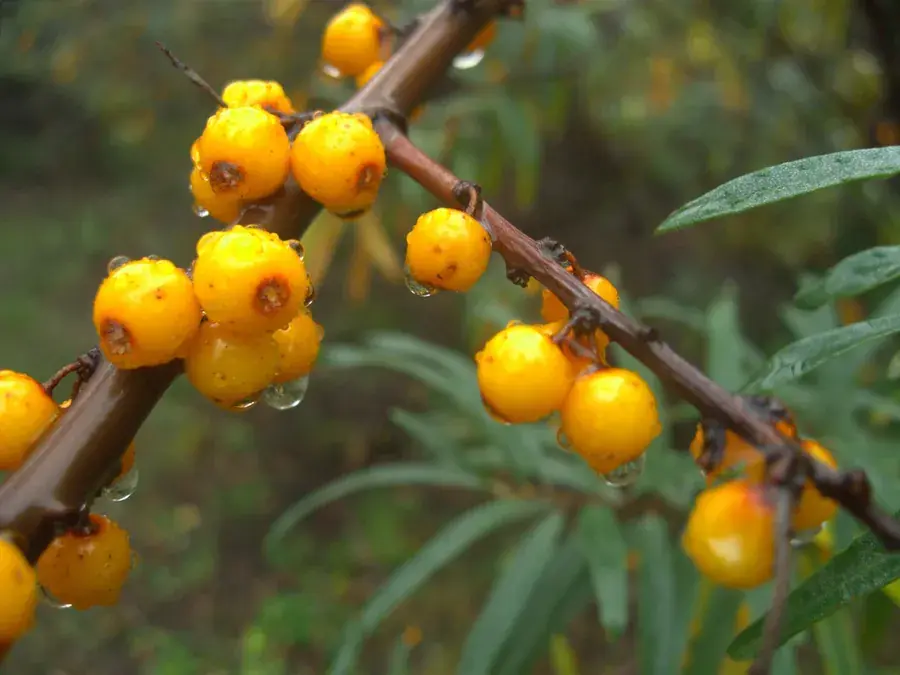 BerryAugust – October
Sea buckthorn
Hippophae rhamnoides
A thorny shrub with narrow, silvery-grey, willow-like leaves and branches packed with bright orange berries 6–8 mm (¼ in) across, from late summer into winter. Only female bushes fruit.
How to know it & its look-alikes →
Checked against these sources ·
Seasons are typical for the middle of the range and move by weeks north and south, and up and down hills.
Educational information only. Never eat a wild plant or mushroom identified from a single photograph or description — confirm with a regional field guide or an experienced forager, and know the poisonous species in your area first.