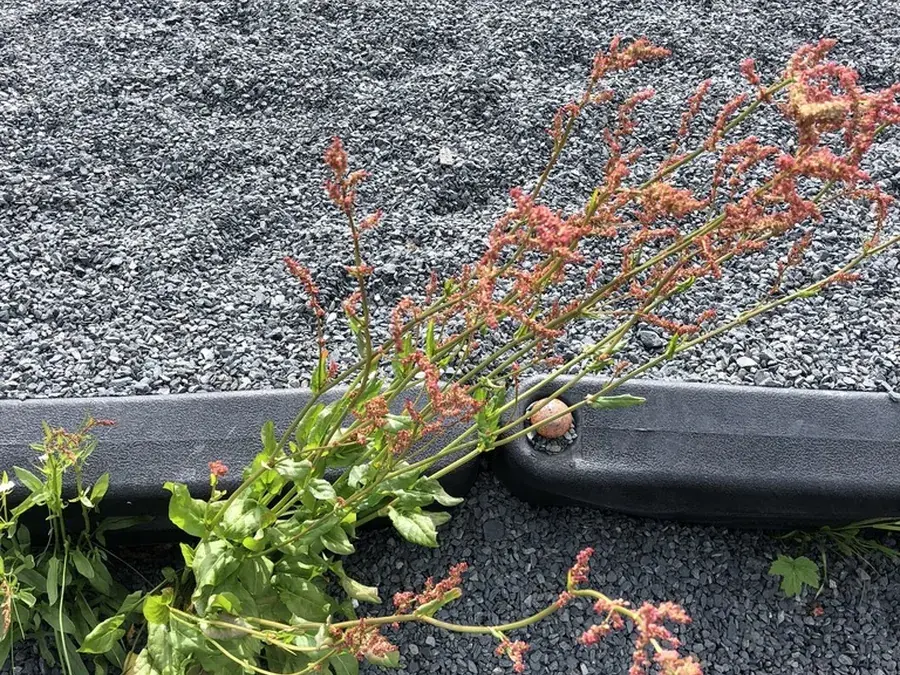
Photo by Jason Grant on iNaturalist · CC BY 4.0
GreenSeason: March – June
Common sorrel
Rumex acetosa
- When
- Typically March – June — March, April, May, June. Earlier in warm, low country; later in the hills.
- Where it grows
- Meadows, pastures, road verges, woodland edges and upland grassland — common almost everywhere in Europe.
- How to know it
- Arrow-shaped leaves whose two base lobes point straight back, a thin papery sheath where each leaf meets the stem, and a sharp lemon-sour taste. In early summer, slender spikes of tiny reddish flowers up to 60 cm (2 ft) tall.
- Look-alikes
- Young lords-and-ladies leaves are arrow-shaped too and come up in the same hedge banks. They are glossier, with wavy edges, a net of veins and often dark spots, and they burn the mouth at once. Sheep sorrel is a smaller, edible cousin.
- Harvest and use
- Young leaves in salad, sorrel soup, and the classic sharp sauce for salmon and other fish. Cook only briefly — it turns khaki and melts.
- Caution
- High in oxalic acid: a herb and a sauce, not a daily salad bowl, and best avoided by anyone prone to kidney stones.
Common sorrel at a glance
- Also called
- Sorrel, sour dock, meadow sorrel, sour ducks; oseille (France), Sauerampfer (Germany), szczaw (Poland)
- Family
- Polygonaceae (dock family)
- Where it grows
- Grassland throughout Europe, from the northern Mediterranean coast to the north of Scandinavia, and on into Central Asia — meadows, verges, woodland edges, heath and moorland; commonest in the cool, damp north and west and scarce in the hot Mediterranean lowlands. Introduced in North America, Australia and New Zealand.
- When to pick
- Leaves come up early in spring and are best young, before the reddish flower spikes rise in May and June; they toughen with age. Plants cut back by mowing or haymaking send up fresh leaves again.
- Parts used
- Young leaves and shoots, raw or briefly cooked. Older leaves are tough and even more sour.
- Is any of it poisonous?
- Like all sorrels it is high in oxalic acid. A normal helping in a soup or sauce is fine; large, frequent amounts are not, especially for anyone prone to kidney stones.
Questions people ask about common sorrel
What does sorrel taste like?
Sharply lemony and sour — the old country names are ‘sour ducks’ and ‘vinegar plant’. The tartness comes from oxalic acid.
How do you tell sorrel from lords-and-ladies?
Both have arrow-shaped leaves. Sorrel’s are matt, with two base lobes pointing straight back and a papery sheath where the leaf meets the stem. Lords-and-ladies leaves are glossy, wavy-edged, net-veined and often dark-spotted, and they burn the mouth at once. Learn the leaf by eye; don’t taste-test.
Is sorrel the same as wood sorrel?
No. Wood sorrel (Oxalis) is an unrelated, clover-like little plant; it shares the sour taste because it shares the oxalic acid.
Why is sorrel served with fish?
Its sharpness cuts rich fish, and French cooks have long paired the two — salmon with sorrel sauce, created by the Troisgros brothers in 1962, became an emblem of nouvelle cuisine.
Found in these regions
- Atlantic Europe
- Continental Europe
- Nordic & Baltic Boreal
- Alps, Pyrenees & Carpathians
- Pannonian Basin & Eastern Plains
Hardiness zones 3–9.
Is it ready near you?
Get this week's foraging guide for your area
Enter a town, postal code or ZIP and we'll tell you what's in season right there this week — from your local climate, this week's weather and your ecological region.
Also ready in October
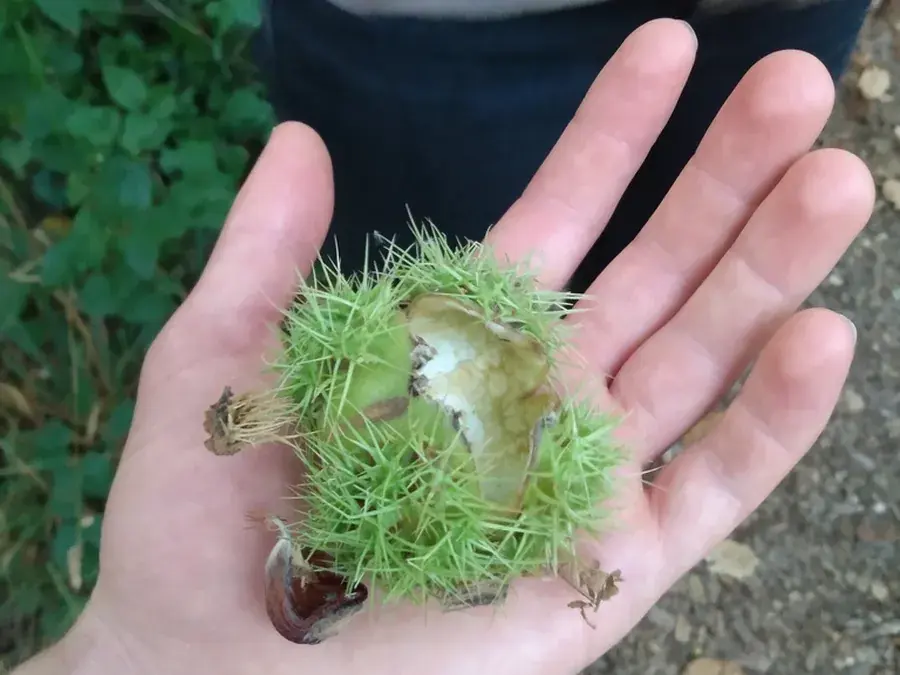 NutOctober – November
Sweet chestnut
Castanea sativa
A big tree with long, glossy leaves edged with sharp, regular teeth, and bark that twists in spiralling ridges on old trunks. The nuts come in twos and threes inside a husk covered in dense, needle-sharp spines; each is glossy brown, flat on one side, with a pointed tuft at the tip.
How to know it & its look-alikes →Photo: John Powers · CC BY 4.0
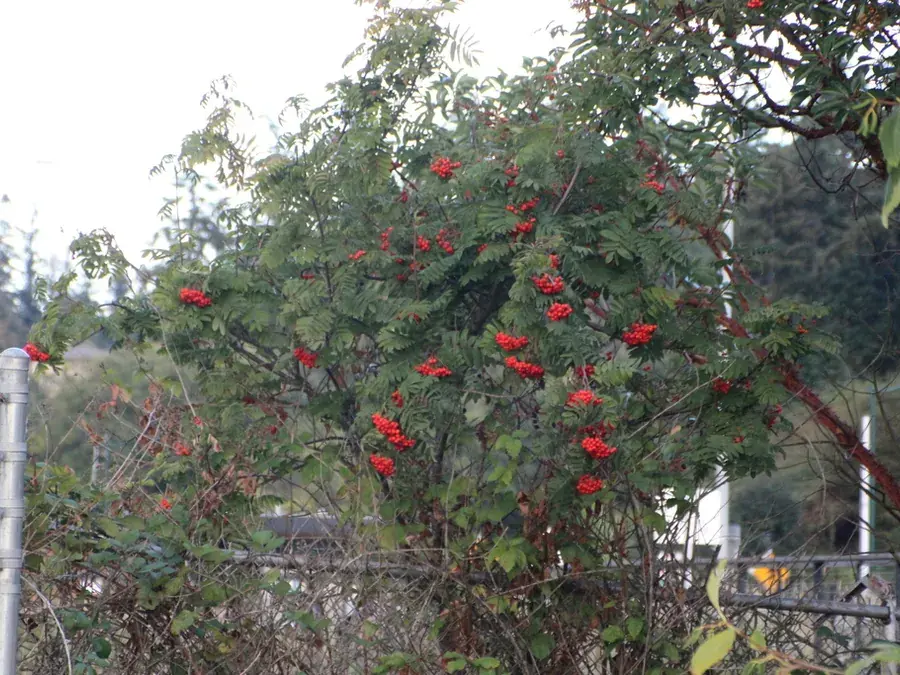 BerryAugust – October
Rowan berries
Sorbus aucuparia
A slim tree with smooth silvery-grey bark and feathery leaves of many toothed leaflets in pairs; big flat clusters of scarlet-orange berries, each about 1 cm (⅜ in) across with a tiny black five-pointed star at the tip.
How to know it & its look-alikes →Photo: Therese Phillips · CC BY 4.0
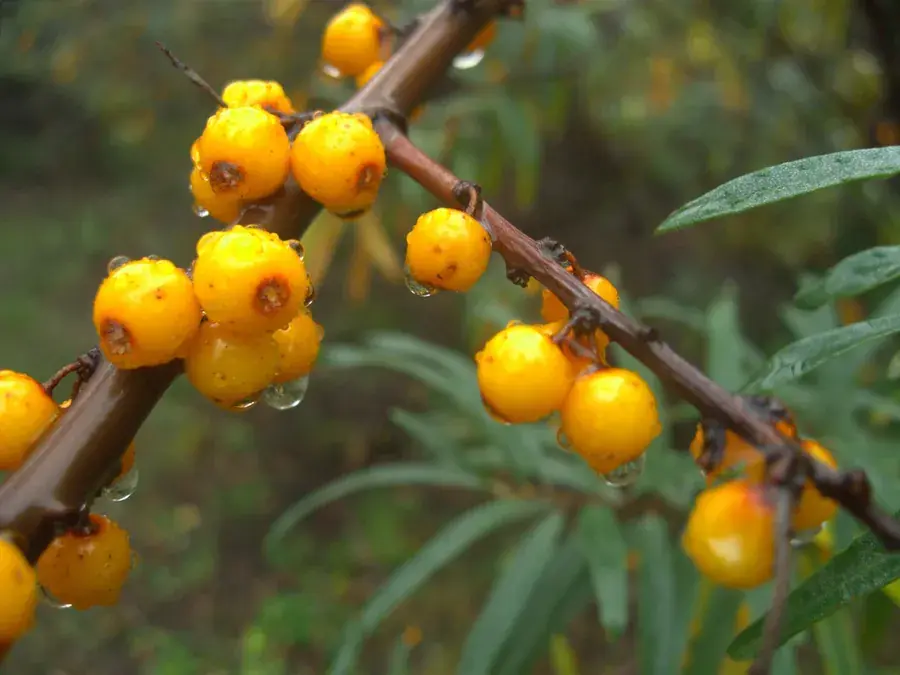 BerryAugust – October
Sea buckthorn
Hippophae rhamnoides
A thorny shrub with narrow, silvery-grey, willow-like leaves and branches packed with bright orange berries 6–8 mm (¼ in) across, from late summer into winter. Only female bushes fruit.
How to know it & its look-alikes →
Checked against these sources ·
- Wikipedia — Sorrel (Rumex acetosa)
- The Wildlife Trusts — Common sorrel
- Wikipedia — Arum maculatum (leaves mistaken for sorrel)
Seasons are typical for the middle of the range and move by weeks north and south, and up and down hills.
Educational information only. Never eat a wild plant or mushroom identified from a single photograph or description — confirm with a regional field guide or an experienced forager, and know the poisonous species in your area first.