Photo by Public domain (iNaturalist) on iNaturalist · CC0 (public domain)
CoastalSeason: June – August
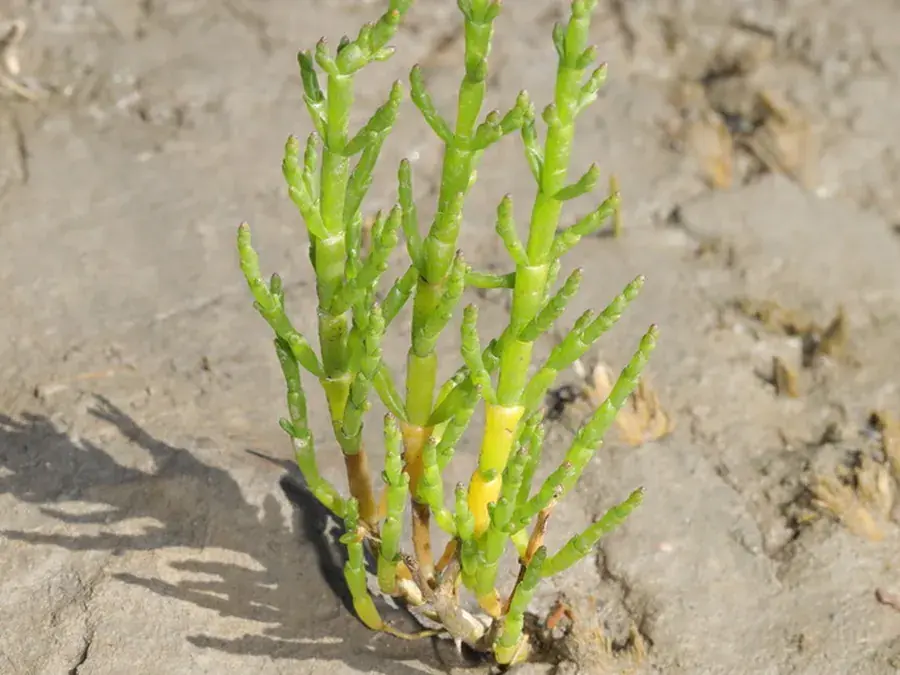
Marsh samphire
Salicornia europaea
- When
- Typically June – August — June, July, August. Earlier in warm, low country; later in the hills.
- Where it grows
- Open mud and sand of salt marshes and estuaries, washed by the tide, often in wide green swards on the lower marsh.
- How to know it
- A low, leafless, jointed succulent 10–30 cm (4–12 in) tall, like a tiny branching cactus: bright glassy green, very salty, and it snaps cleanly. It turns red or purple in autumn.
- Look-alikes
- Annual sea-blite grows in the same mud and is eaten too, but it has small, fleshy, pointed leaves where samphire has smooth, leafless, snap-apart joints. Whatever you pick, the real risk is the water it grew in — stay away from outfalls.
- Harvest and use
- Snip the tender green tips, rinse out the mud, then boil or steam a few minutes in unsalted water and toss in butter. Good raw or pickled too.
- Caution
- Cut, don’t pull: in Britain it is an offence to uproot any wild plant without the landowner’s permission, and many salt marshes are protected. Pick away from outfalls and harbours, and watch the tide.
Marsh samphire at a glance
- Also called
- Glasswort, common glasswort, pickleweed, sea asparagus; salicorne (France), Queller (Germany)
- Family
- Amaranthaceae (formerly Chenopodiaceae)
- Where it grows
- Most coastlines of Europe: the salt marshes of the North Sea and the English Channel — East Anglia is the classic British picking ground — the Atlantic coasts of France and Iberia, the Baltic and the Mediterranean.
- When to pick
- June to August, while the shoots are green and tender; after that they turn woody, and the plant flowers in August and September. Treat a bed as cut-and-come-again, with about a month between cuts.
- Parts used
- The fleshy green tips. On older plants, pull the flesh off the stringy central thread with your teeth.
Questions people ask about marsh samphire
When is samphire in season?
From June to August in Europe. After that the shoots go woody and the plant turns red or purple in autumn.
How do you cook samphire?
Rinse well, then boil or steam for a few minutes in plenty of water with no salt added — it is salty enough — and finish with butter or olive oil. It goes with fish.
Can you eat samphire raw?
Yes, young tips are crisp and salty raw, and samphire is also pickled.
Is it legal to pick samphire?
Cutting a few tips is how it is gathered, but in Britain it is an offence to uproot any wild plant without the landowner’s permission, and many salt marshes are nature reserves or protected sites with their own rules. Cut, don’t pull, and take only what you need.
Found in these regions
Is it ready near you?
Get this week's foraging guide for your area
Enter a town, postal code or ZIP and we'll tell you what's in season right there this week — from your local climate, this week's weather and your ecological region.
Also ready in October
 NutOctober – November
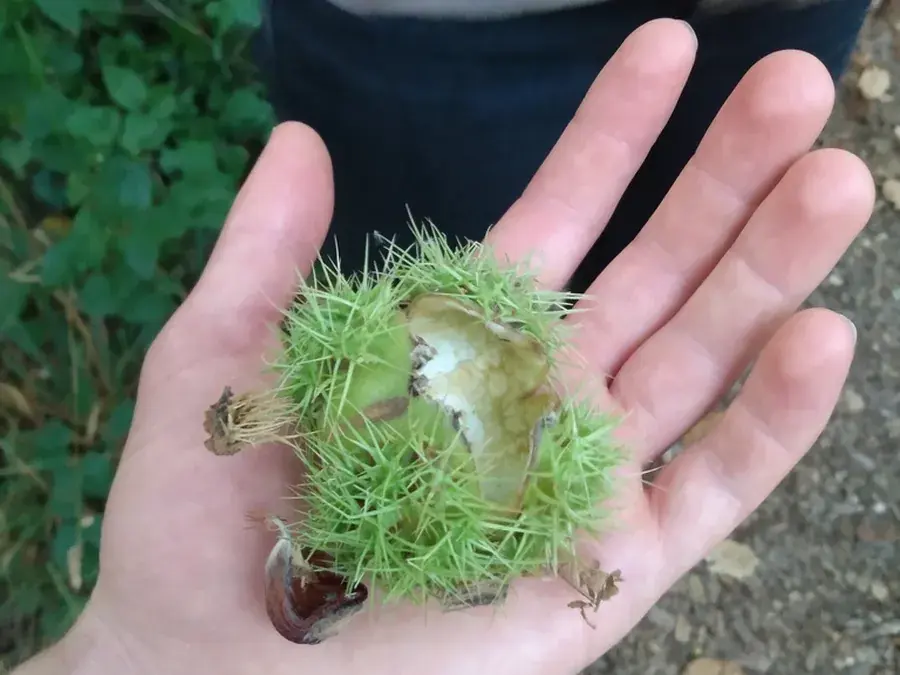
Sweet chestnut
Castanea sativa
A big tree with long, glossy leaves edged with sharp, regular teeth, and bark that twists in spiralling ridges on old trunks. The nuts come in twos and threes inside a husk covered in dense, needle-sharp spines; each is glossy brown, flat on one side, with a pointed tuft at the tip.
How to know it & its look-alikes →Photo: John Powers · CC BY 4.0
 BerryAugust – October
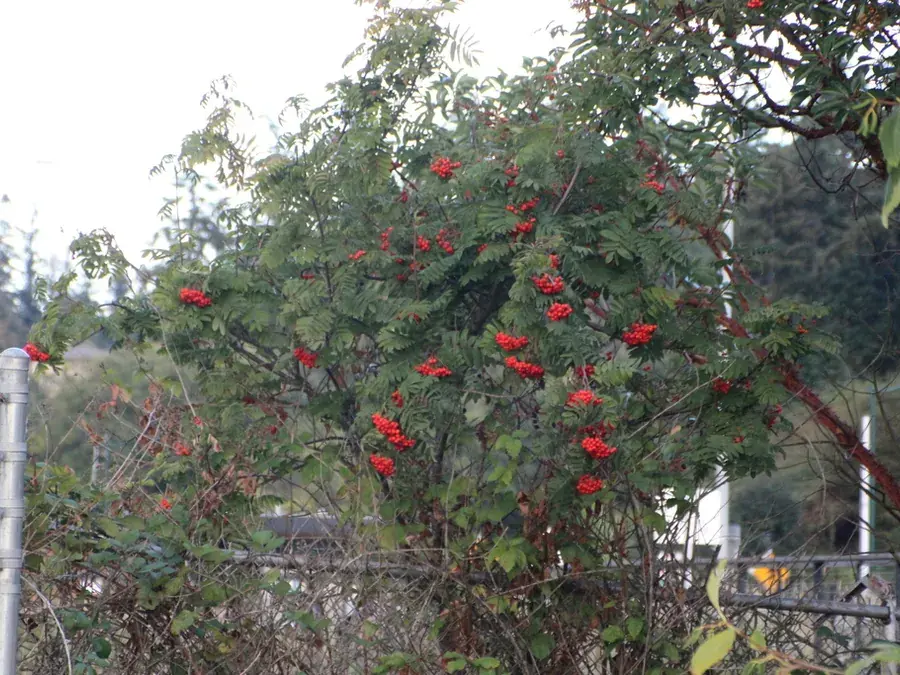
Rowan berries
Sorbus aucuparia
A slim tree with smooth silvery-grey bark and feathery leaves of many toothed leaflets in pairs; big flat clusters of scarlet-orange berries, each about 1 cm (⅜ in) across with a tiny black five-pointed star at the tip.
How to know it & its look-alikes →Photo: Therese Phillips · CC BY 4.0
 BerryAugust – October
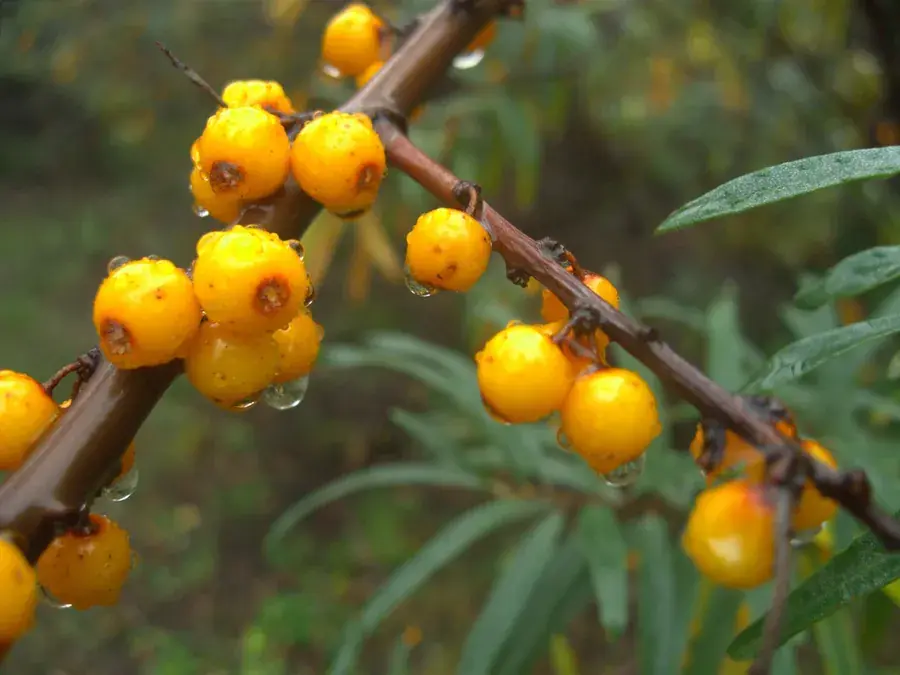
Sea buckthorn
Hippophae rhamnoides
A thorny shrub with narrow, silvery-grey, willow-like leaves and branches packed with bright orange berries 6–8 mm (¼ in) across, from late summer into winter. Only female bushes fruit.
How to know it & its look-alikes →
Checked against these sources ·
- Wikipedia — Salicornia europaea
- The Wildlife Trusts — Common glasswort
- legislation.gov.uk — Wildlife and Countryside Act 1981, section 13 (protection of wild plants)
Seasons are typical for the middle of the range and move by weeks north and south, and up and down hills.
Educational information only. Never eat a wild plant or mushroom identified from a single photograph or description — confirm with a regional field guide or an experienced forager, and know the poisonous species in your area first.