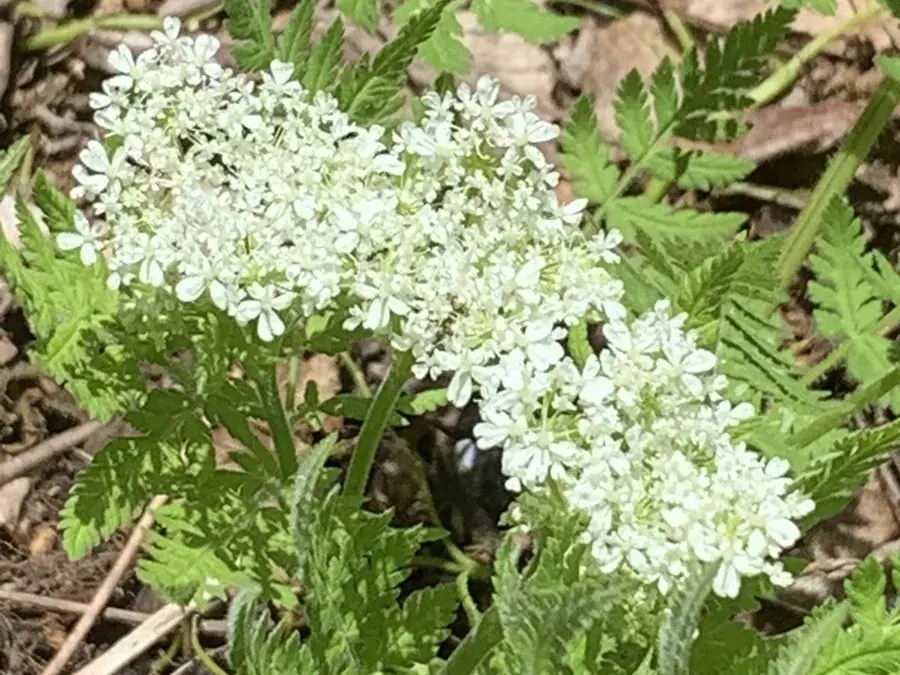
Photo by Healthy Yards on iNaturalist · CC BY 4.0
GreenSeason: April – July
Sweet cicely
Myrrhis odorata
This one has a dangerous look-alike
It belongs to the carrot family, which holds Europe’s deadliest plants. Hemlock (hairless, purple-blotched stem, mousy smell) and hemlock water-dropwort (hairless, in wet ground, smelling deceptively of parsley or celery) grow near it, and cow parsley and fool’s parsley are close in leaf. Only the full set — downy leaves, a strong aniseed smell and those long seeds — says sweet cicely.
- When
- Typically April – July — April, May, June, July. Earlier in warm, low country; later in the hills.
- Where it grows
- Mountain meadows and woodland margins in the Alps and other southern ranges; in Britain, verges, stream banks and woodland edges, most often in northern England and Scotland.
- How to know it
- A soft, downy, fern-like plant to 1–2 m (3–6 ft) with finely divided pale green leaves, often flecked white, and a strong sweet smell of aniseed when crushed. White flower heads in April–June, then long, slender, ridged seeds 15–25 mm (⅝–1 in), green at first and glossy dark brown when ripe.
- Harvest and use
- Leaves chopped into salads or cooked with sour fruit such as rhubarb to soften it; the green seeds chewed as an aniseed sweet; the root cooked like parsnip.
- Caution
- Not a beginner’s plant. Learn it in seed, with someone who knows it, before you eat a leaf — and don’t trust your nose after handling it, because the aniseed stays on your fingers.
Sweet cicely at a glance
- Also called
- Cicely, garden myrrh, sweet chervil; cerfeuil musqué (France), Süßdolde (Germany)
- Family
- Apiaceae (carrot family)
- Where it grows
- Native to the mountains of southern and central Europe, from the Pyrenees through the Alps to the Caucasus. Long naturalized elsewhere, including Scandinavia: in Britain and Ireland it is most common in northern England and eastern Scotland, on verges, stream banks and woodland edges.
- When to pick
- Leaves from early spring; flowers from April to the end of June (into July in deep shade); the long seeds are green and tender in early summer and ripen dark brown by late summer.
- Parts used
- Leaves, raw or cooked; the green seeds; and the root, cooked like parsnip, which tastes of liquorice.
- More look-alikes to know
- Hemlock water-dropwort is the deadliest: a hairless plant of wet ground whose leaves smell of parsley or celery and whose roots carry pale, finger-like tubers. Of 13 human poisonings recorded in Britain between 1900 and 1978, nine were fatal.
Questions people ask about sweet cicely
What does sweet cicely taste like?
Sweet and strongly of aniseed. The leaves are used to sweeten tart fruit, the green seeds taste like aniseed sweets, and the root has a liquorice flavour.
How do you tell sweet cicely from hemlock?
By the whole plant, never one feature. Sweet cicely is soft and downy, smells strongly of aniseed, often has white-flecked leaves, and sets long seeds 15–25 mm (⅝–1 in). Hemlock has a smooth, hairless stem blotched with purple and smells musty; hemlock water-dropwort is hairless, grows in wet ground and smells of parsley or celery. If you are not certain, walk away — these mistakes kill.
Where does sweet cicely grow?
Wild in the mountains of southern and central Europe; in Britain on roadside verges, stream banks and woodland edges, especially in northern England and Scotland, where it thrives at higher altitudes than cow parsley.
Found in these regions
Hardiness zones 4–7.
Is it ready near you?
Get this week's foraging guide for your area
Enter a town, postal code or ZIP and we'll tell you what's in season right there this week — from your local climate, this week's weather and your ecological region.
Also ready in October
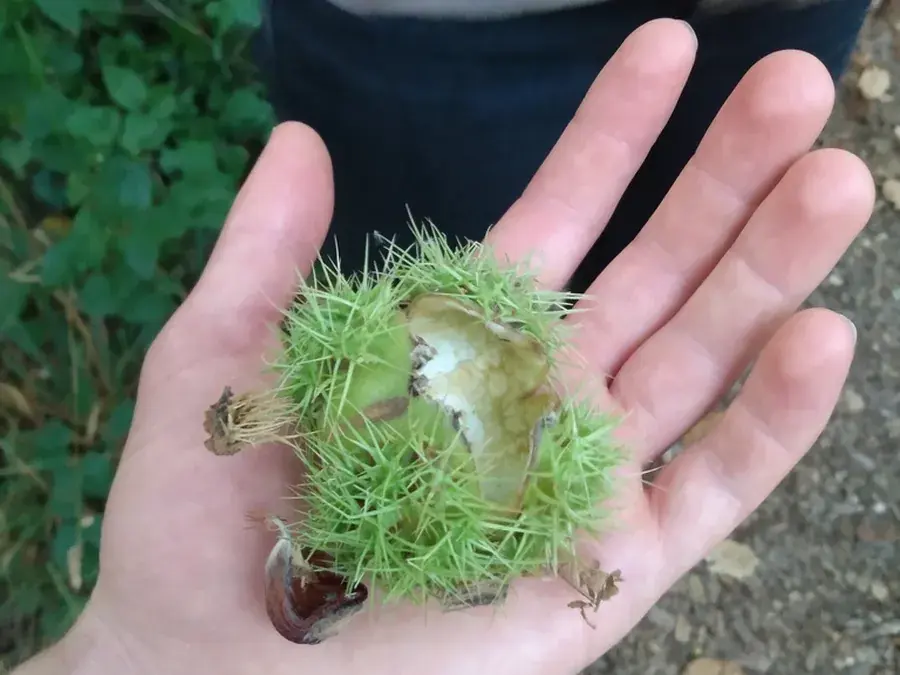 NutOctober – November
Sweet chestnut
Castanea sativa
A big tree with long, glossy leaves edged with sharp, regular teeth, and bark that twists in spiralling ridges on old trunks. The nuts come in twos and threes inside a husk covered in dense, needle-sharp spines; each is glossy brown, flat on one side, with a pointed tuft at the tip.
How to know it & its look-alikes →Photo: John Powers · CC BY 4.0
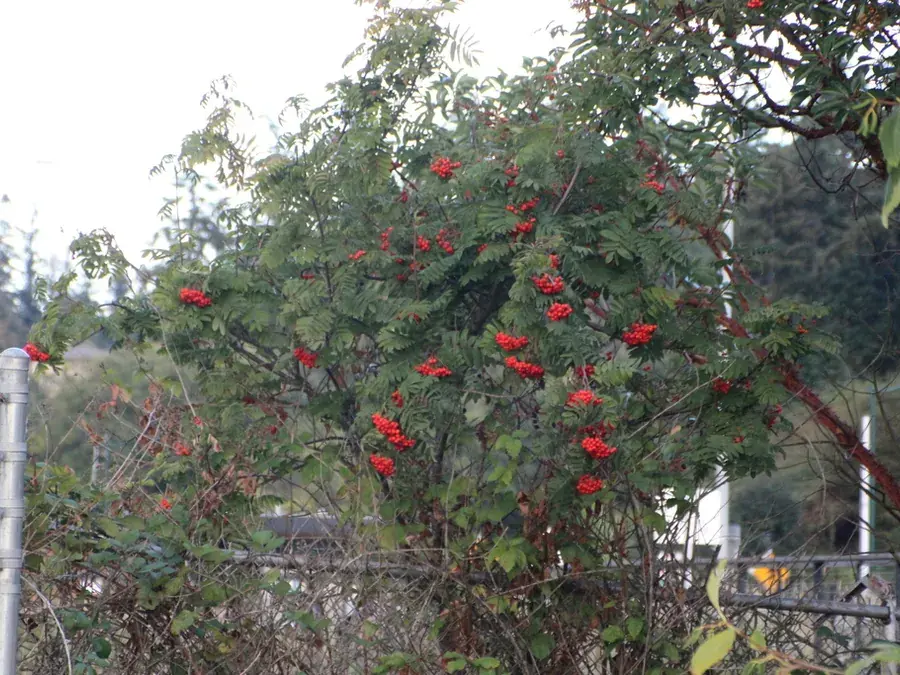 BerryAugust – October
Rowan berries
Sorbus aucuparia
A slim tree with smooth silvery-grey bark and feathery leaves of many toothed leaflets in pairs; big flat clusters of scarlet-orange berries, each about 1 cm (⅜ in) across with a tiny black five-pointed star at the tip.
How to know it & its look-alikes →Photo: Therese Phillips · CC BY 4.0
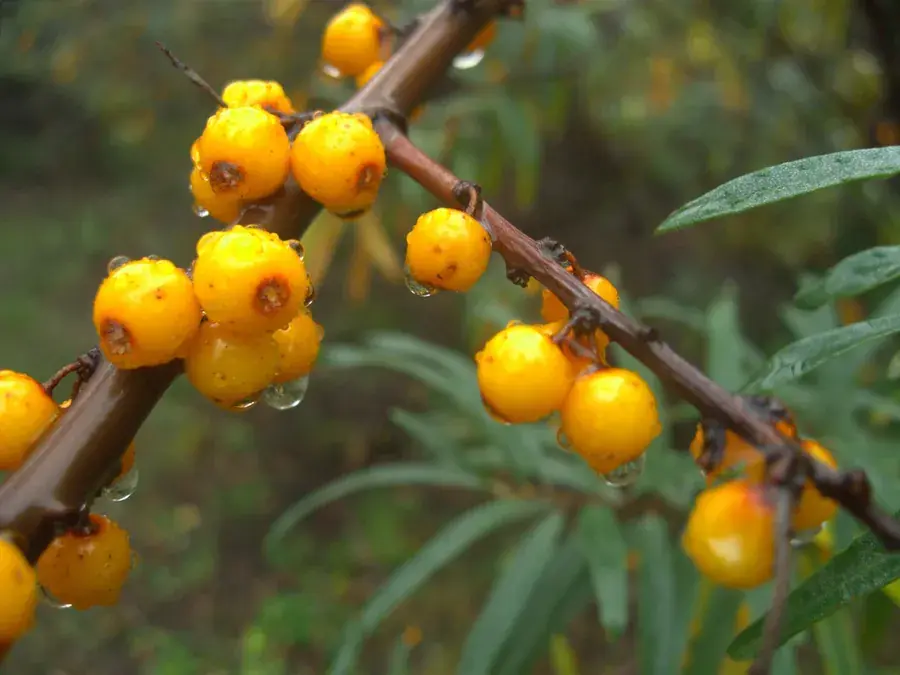 BerryAugust – October
Sea buckthorn
Hippophae rhamnoides
A thorny shrub with narrow, silvery-grey, willow-like leaves and branches packed with bright orange berries 6–8 mm (¼ in) across, from late summer into winter. Only female bushes fruit.
How to know it & its look-alikes →
Checked against these sources ·
- Wikipedia — Cicely (Myrrhis odorata)
- First Nature — Myrrhis odorata, Sweet Cicely
- Wikipedia — Oenanthe crocata (hemlock water-dropwort)
Seasons are typical for the middle of the range and move by weeks north and south, and up and down hills.
Educational information only. Never eat a wild plant or mushroom identified from a single photograph or description — confirm with a regional field guide or an experienced forager, and know the poisonous species in your area first.