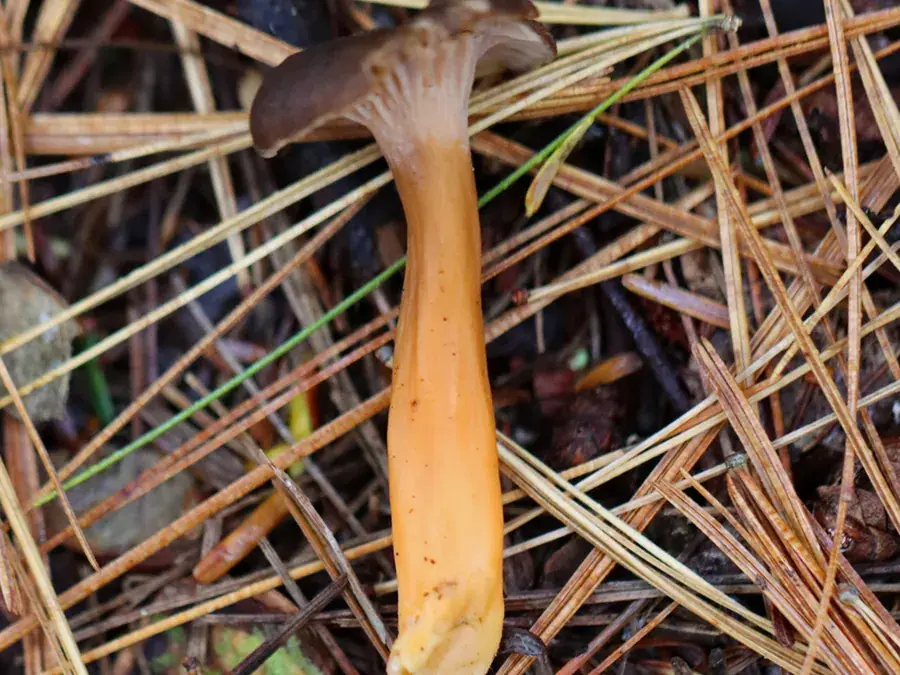
Photo by Christine Young on iNaturalist · CC BY 4.0
MushroomIn season now (October)
Yellowfoot (winter chanterelle)
Craterellus tubaeformis
This one has a dangerous look-alike
Deadly webcap grows in the same mossy conifer woods, and people in Sweden who picked it for yellowfoot lost their kidneys. A webcap has true, rusty-brown gills, a solid stem and a rusty spore print. Check that every stem is hollow and every underside ridged, not gilled.
- When
- Typically September – November — September, October, November. Earlier in warm, low country; later in the hills.
- Where it grows
- Damp, mossy conifer forest on acid soil, especially spruce, often among rotting wood, in troops of hundreds or thousands.
- How to know it
- A small brown funnel-shaped cap 1–4 cm (½–1½ in) across, often with a hole down the middle, on a hollow, yellow to orange stem; underneath, pale greyish-yellow forked ridges, not gills, running down the stem.
- Harvest and use
- Fried, in soups and sauces, or dried. A late-autumn basket-filler.
- Caution
- Never scoop them up by the handful. Pick one at a time and look underneath each.
Yellowfoot (winter chanterelle) at a glance
- Also called
- Winter chanterelle, trumpet chanterelle, funnel chanterelle, yellowlegs; trattkantarell (Sweden), suppilovahvero (Finland), chanterelle en tube (France)
- Family
- Cantharellaceae
- Where it grows
- Temperate and cold Europe: very common and widespread in Scandinavia and Finland, patchy in Britain and Ireland (most abundant in west Wales, north-west England and Scotland), and in the hills and mountains further south. Also in North America and Asia.
- When to pick
- Late in the season: September to November in Britain and Ireland, often after the golden chanterelles are over, until the hard frosts.
- Parts used
- The whole mushroom, cooked or dried.
- More look-alikes to know
- Deadly webcap (Cortinarius rubellus) is the one that matters. Between 1979 and 1993, 22 people in Sweden were poisoned by it, nine of whom needed kidney transplants; the edibles they thought they had picked included yellowfoot and chanterelles.
Questions people ask about yellowfoot
What is a yellowfoot mushroom?
A small chanterelle relative, Craterellus tubaeformis, with a brown funnel cap, a hollow yellow stem and forked ridges instead of gills. It comes late in autumn in mossy conifer forest, often in huge numbers.
What can be mistaken for yellowfoot?
Deadly webcap, which grows in the same mossy conifer woods and has destroyed foragers’ kidneys. It has true rusty-brown gills, a solid stem and a rusty spore print. Yellowfoot’s stem is hollow and its underside has blunt, forked ridges.
When do winter chanterelles grow?
From September to the first hard frosts — in Britain and Ireland mostly September to November.
Found in these regions
Is it ready near you?
Get this week's foraging guide for your area
Enter a town, postal code or ZIP and we'll tell you what's in season right there this week — from your local climate, this week's weather and your ecological region.
Also ready in October
 NutOctober – November
Sweet chestnut
Castanea sativa
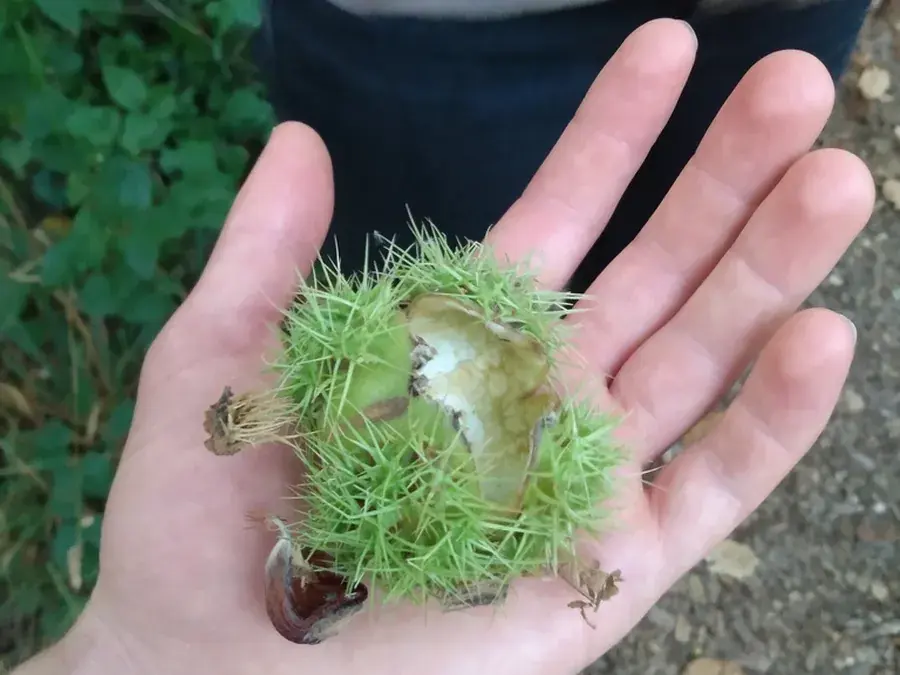
A big tree with long, glossy leaves edged with sharp, regular teeth, and bark that twists in spiralling ridges on old trunks. The nuts come in twos and threes inside a husk covered in dense, needle-sharp spines; each is glossy brown, flat on one side, with a pointed tuft at the tip.
How to know it & its look-alikes →Photo: John Powers · CC BY 4.0
 BerryAugust – October
Rowan berries
Sorbus aucuparia
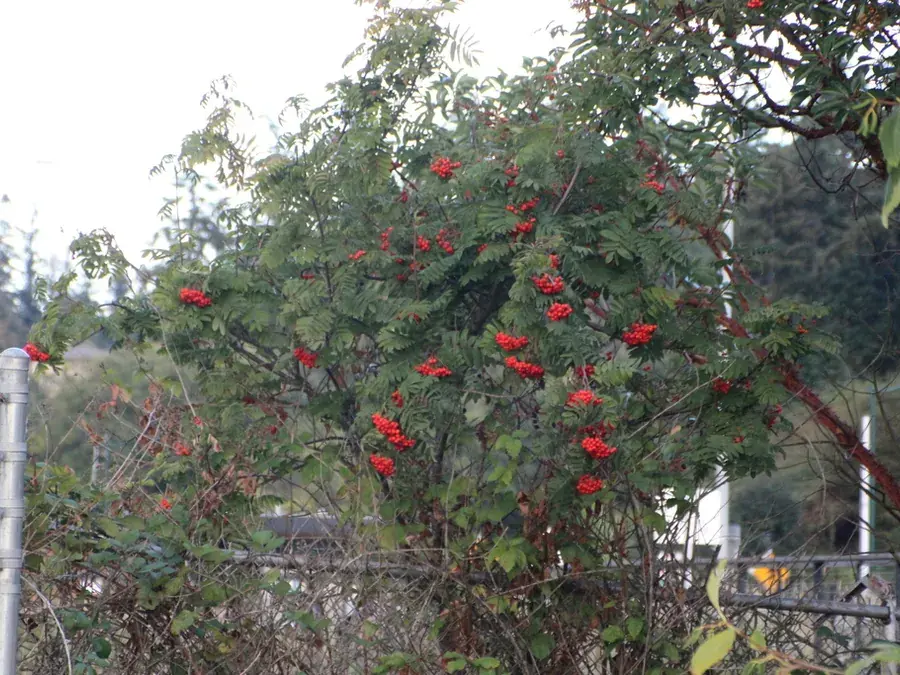
A slim tree with smooth silvery-grey bark and feathery leaves of many toothed leaflets in pairs; big flat clusters of scarlet-orange berries, each about 1 cm (⅜ in) across with a tiny black five-pointed star at the tip.
How to know it & its look-alikes →Photo: Therese Phillips · CC BY 4.0
 BerryAugust – October
Sea buckthorn
Hippophae rhamnoides
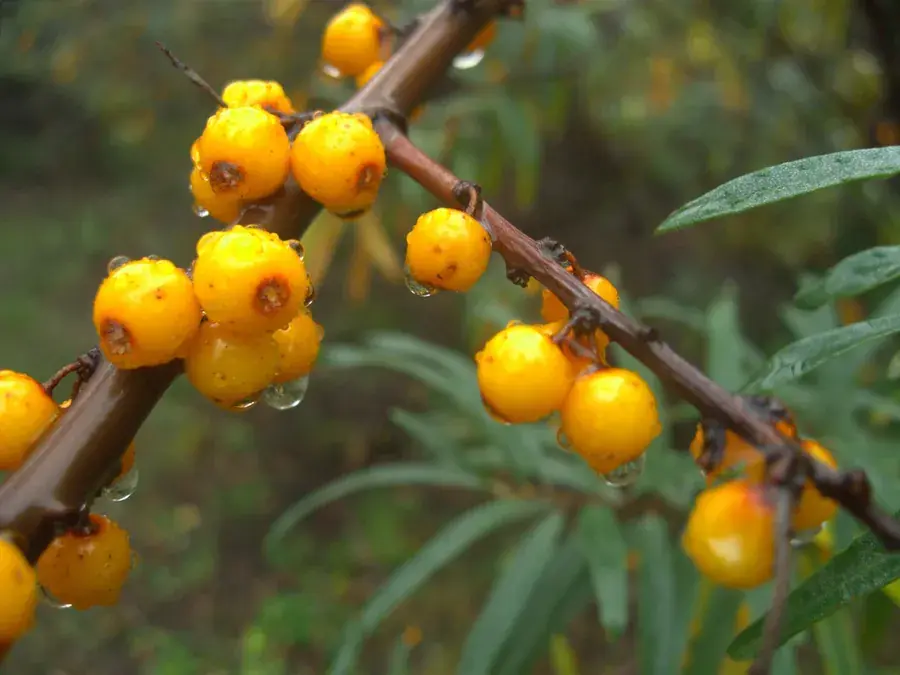
A thorny shrub with narrow, silvery-grey, willow-like leaves and branches packed with bright orange berries 6–8 mm (¼ in) across, from late summer into winter. Only female bushes fruit.
How to know it & its look-alikes →
Checked against these sources ·
- Wikipedia — Craterellus tubaeformis
- First Nature — Cantharellus tubaeformis, Trumpet Chanterelle
- Wikipedia — Cortinarius rubellus (deadly webcap)
Seasons are typical for the middle of the range and move by weeks north and south, and up and down hills.
Educational information only. Never eat a wild plant or mushroom identified from a single photograph or description — confirm with a regional field guide or an experienced forager, and know the poisonous species in your area first.