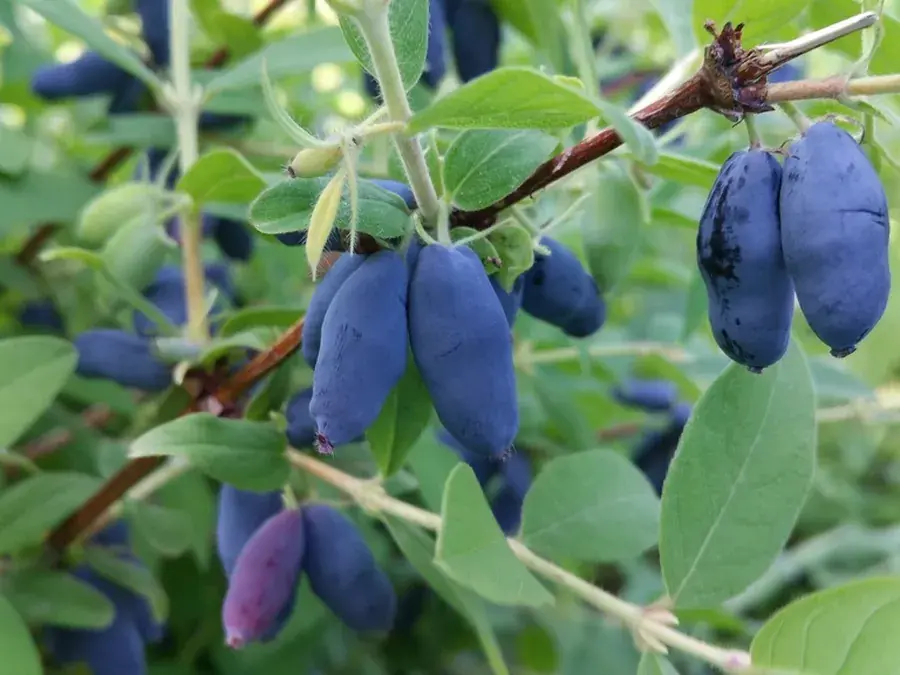
Photo Unknown photographer via Openverse · CC0 (public domain)
Haskap (honeyberry)
Lonicera caerulea
The Canadian berry: hardy to zone 2, ripe before the strawberries, and the first jam of the year.
- Ready when
- The skin turns deep blue 5–10 days before the fruit is ripe, and that is the trap. Bite one in half: if the inside is green, or greenish and tastes grassy, wait a week; when it is purple-red right to the centre and sweet-tart, pick. Ripe berries drop into your hand at a touch, and the earliest ones start to fall on their own. The first fruit colours around the first week of June in Saskatoon and mid-June in southern Ontario and Quebec, with the main picking in the second half of June and into July for later varieties.
- How to pick
- Hand-pick into a shallow container — the fruit is soft and the skin is thin — or lay a tarp under the bush and shake the branches, which drops the ripe ones and leaves the green. Net the bushes the day the fruit turns blue: cedar waxwings and robins strip an unnetted haskap in a morning, and the mesh must be no bigger than 1.25 cm (½ in) or birds get their heads stuck in it. Pick every few days over two or three weeks; a mature bush gives 3–4.5 kg (6–10 lb).
- On a frost night
- Frost is not haskap’s problem in either direction. The dormant bush has come through −45 °C in Saskatoon without damage, and the open flowers in early May survive −6 to −7 °C, which is why it fruits reliably where strawberry blossoms are lost. There is nothing to do on an autumn frost night; the crop was in by July. The one thing to leave alone is the leaves, which often look tired and brown-edged by late August — that is normal for the species, not a problem to fix.
Where it keeps
Storing haskap (honeyberry)
| Where | Temperature | Humidity | Keeps | How |
|---|---|---|---|---|
| Fridge, unwashed | 0–4 °C32–39 °F | high | 3–5 days | Shallow covered container, unwashed. They are softer than blueberries and bruise if piled. |
| Freezer, in bags | -18–-18 °C0–0 °F | dry | A year | Tray-freeze, bag. This is where most of the crop should go. |
Putting it up
What to do with too many haskap (honeyberry)
Haskap is the easiest berry to freeze and the one that comes out best: rinse, dry, tray-freeze, bag. The skin dissolves and the seeds go unnoticed when the thawed fruit is cooked, so frozen haskap makes sauce, pie, muffins and smoothies all winter with nothing lost. It is tart and high in acid, and it makes a deep purple jam, jelly and syrup that water-bath by a tested berry-jam recipe with pectin; juice and wine are the commercial uses. The University of Saskatchewan lists freezing, drying, fermenting and canning as its routes, but there is no tested recipe specific to whole haskap in syrup — so jam, syrup and the freezer are the home options, and whole canned haskap is not. Dried haskap works in a dehydrator like a blueberry, slowly.
The fastest route and the one that keeps flavour best.
Jars boiled in a big pot — for high-acid food only.
A dehydrator or a low oven; light, keeps for a year.
- Freezing
Haskap freezer jam (no cooking, no canning)
Nobody has published a tested canning recipe for haskap, so this one follows Bernardin’s tested freezer-jam method for blueberries instead: raw fruit, freezer pectin, ten minutes, and it tastes exactly like the berry.
About 5 × 250 ml jars · 15 minutes active
The recipe → - Freezing
Tray-frozen berries: raspberries, strawberries, haskap
No sugar, no syrup, nothing to measure — a single layer on a tray, then a bag you can pour from. The way to save a picking before it moulds overnight.
A standard baking sheet holds about 1 kg of berries per freezing round · 15 minutes active
The recipe → - Drying
Fruit leather, apple or berry
Purée poured thin and dried into a roll-up: the snack children ask for by name, made from the fruit that was too soft for anything else.
500 ml (2 cups) of purée makes one 33 × 38 cm (13 × 15 inch) sheet, about 8 roll-ups · 20 minutes active
The recipe →
Saving seed
Grown from tubers, cloves, crowns or runners, not seed
Haskap varieties are clones and will not come from seed: a seedling is a new, unpredictable plant that takes years to show you what it is, and the Canadian cultivars are protected varieties that only licensed nurseries may propagate for sale. Buy plants, and buy at least two different, compatible varieties, because haskap cannot pollinate itself. For your own garden, softwood cuttings taken in June root under a plastic bag and are the way to fill out a hedge. Named pairs that work: Aurora with Borealis, Tundra or the Indigo series (Indigo Gem, Indigo Treat, Indigo Yum); the older Russian types pollinate most University of Saskatchewan varieties. Plant them close together in the same row — bees work along a row, not across the garden — with roughly one pollinator for every eight bushes if you are planting many.
Keeps: Not from seed. A rooted cutting takes about three years to fruit; a nursery plant gives its first real crop in year three.
The seed-saving guide →Next year
Planning haskap (honeyberry) for next season
Full sun is best, though it tolerates part shade; any reasonable soil from pH 5.5 to 8, well drained. Space bushes 1 m apart for a hedge or 1.3 m to keep them separate, mulch them, and keep two or more compatible varieties within a few metres of each other. No pruning for the first three or four years; after that, in late fall or winter when the shape is easy to see, take out the oldest and the crossing branches, and an overgrown bush can be cut to 15 cm (6 in) above the ground and will regrow. The breeding programme at the University of Saskatchewan bred these for zone 2, so in zones 3–5 the only planning is bird netting and a spring reminder that the flowers do not need covering. Plant in spring in the coldest zones so the roots settle before winter.
Haskap (honeyberry) at a glance
- Botanical name
- Lonicera caerulea
- Group
- Berries
- Picked
- June, July
- Frost
- Very hardy: takes −8 °c and below; overwinters.
- Best put up as
- freezing, water-bath canning, drying
- Seed
- Grown from tubers, cloves, crowns or runners, not seed
Questions people ask about haskap (honeyberry)
How do you know when haskap is ripe?
Not by the outside. The skin turns blue a week or more before the berry is ripe, so cut or bite one open: green or pale inside means wait 5–7 days; purple-red all the way through and sweet-tart means pick. Ripe berries fall into your hand at a touch. In southern Ontario and Quebec that is the second half of June — before the strawberries — and the second and third weeks of June on the prairies.
Do you need two haskap plants?
Yes, two different varieties that bloom at the same time; a haskap cannot set fruit with its own pollen, and two plants of the same variety are the same clone. Both bushes fruit — there is no sterile ‘male’. Aurora was bred as the partner for Borealis and also pollinates Tundra and the Indigo series, which makes it the easy second plant. Put them in the same row, a metre or two apart.
Can you freeze haskap?
Yes, and it is the best thing to do with them: rinse, dry, freeze on a tray, bag, and they keep a year. Thawed haskap is soft, but the skins dissolve and the seeds are unnoticeable in cooking, so frozen fruit goes straight into muffins, sauce, pie and smoothies. Most growers freeze the bulk of the crop the day it is picked.
Which haskap varieties grow in Canada?
The University of Saskatchewan varieties were bred for it: Borealis and Tundra (2007), the Indigo series (Gem, Treat, Yum), Honey Bee, Aurora (the large, sweet mid-season one), and the later Boreal Beauty, Boreal Blizzard and Boreal Beast. All are hardy to zone 2. Pick two that are listed as compatible — Aurora with almost any of the others is the simplest pair.
Is haskap frost hardy?
About as hardy as a fruit gets. The dormant bush takes −45 °C, and the open flowers survive −6 to −7 °C in May, so a late spring frost that kills strawberry blossom leaves a haskap crop untouched. There is nothing to cover and nothing to bring in.
Is haskap a good berry for kids to pick?
One of the best: a bush at child height, no thorns, soft fruit that falls off when it is ready, and it is the first fruit of the year, before anything else. Two rules — only berries that are purple all the way through (open one together to show the difference), and leave the bird netting pinned down behind you. A tarp under the bush and a good shake is a job a five-year-old will ask to do again.
Your own frost dates
When does this come in where you are?
Enter a town, postal code or ZIP and the garden year, the frost watch and this week’s guide are built from your own weather.
Also in berries
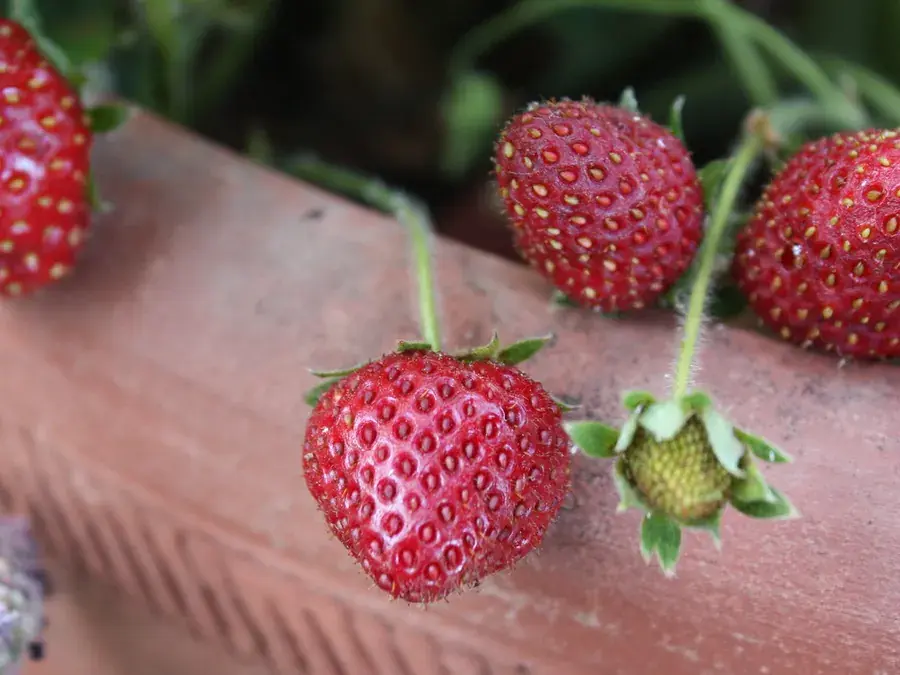 Half-hardyBerriesPicked Jun–Sep
Strawberries
Three weeks of June glory from a June-bearer, or a trickle until frost from a day-neutral — either way, the freezer is the answer.
Freezing · Water-bath · DryingPick, store, put up →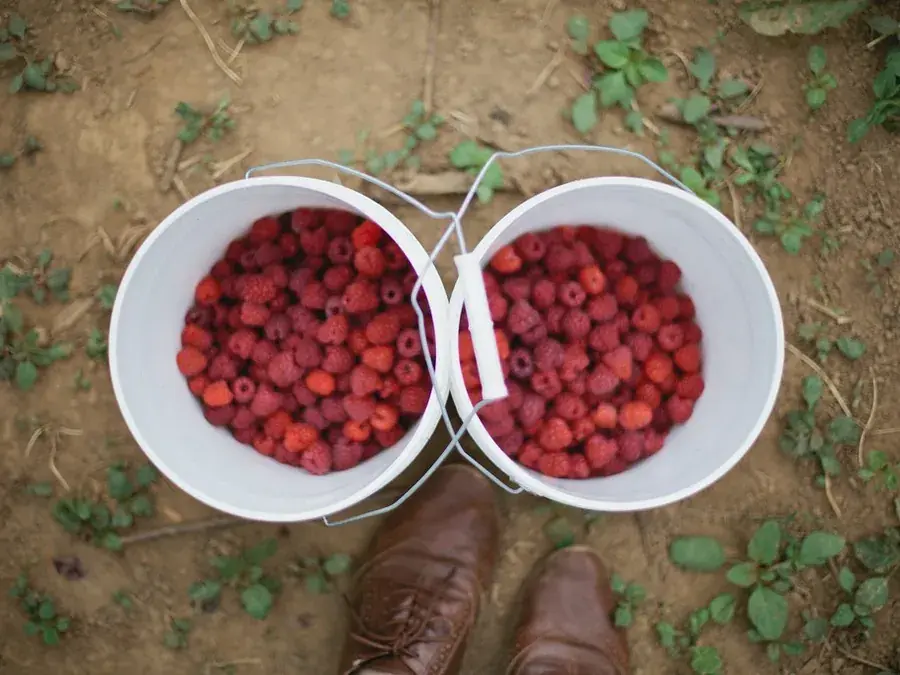 Half-hardyBerriesPicked Jul–Oct
Raspberries
Pick every second day or lose them — and tray-freeze the surplus the same afternoon.
Freezing · Water-bath · DryingPick, store, put up →
Checked against these sources ·
- University of Saskatchewan Gardenline: Haskap
- University of Saskatchewan Fruit Program: Aurora and Borealis haskap
- OMAFRA CropOp: Haskap
- Bob Bors (U of S): Growing haskap in Canada
Harvest months are typical for zones 4–6 and move by weeks north and south. Storage figures are for the ideal; a house without a cold room will get the shorter end of each range.