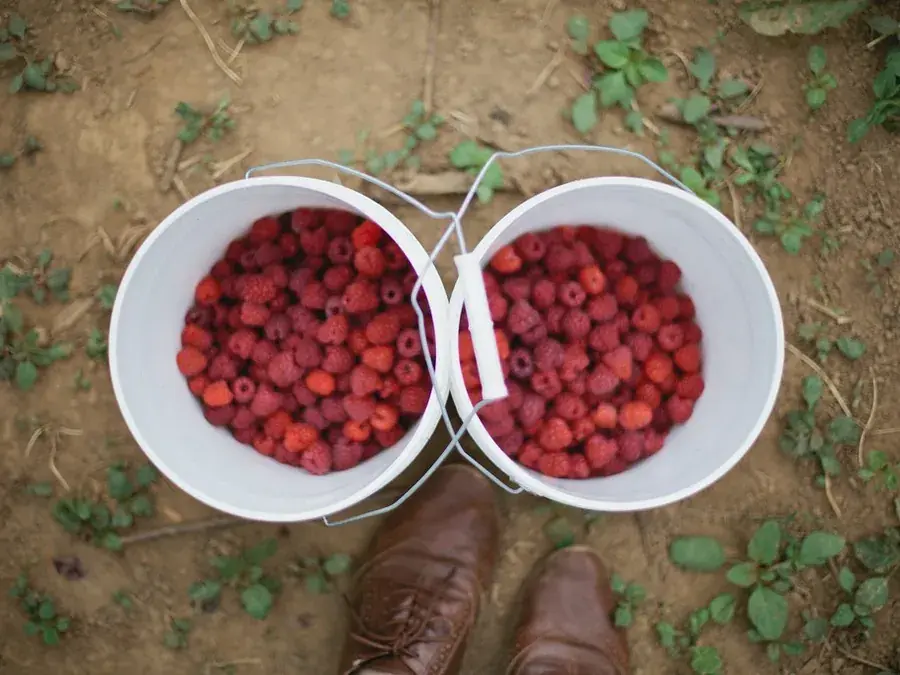
Photo Vanilla and lace on Flickr · CC BY 2.0
Raspberries
Rubus idaeus
Pick every second day or lose them — and tray-freeze the surplus the same afternoon.
- Ready when
- Full colour for the variety, plump, slightly soft, and — the real test — it slides off its core with the gentlest pull, leaving the white plug on the plant. If you have to tug, it needs another day. Summer-bearing (floricane) types crop for three to four weeks from early July; fall-bearing (primocane) types from mid-August until frost. Berries ripen a few at a time along a cane, so there is no single picking day.
- How to pick
- Every two days, daily in a heat wave, in the morning once the dew has dried. Lift each berry with two fingers; a ripe one needs no force. Shallow containers, no more than two deep, into the shade as you fill them and into the fridge within the hour. Do not wash them before storing or freezing — wet raspberries mould within a day. Pick off and bin any mouldy fruit so it does not spread along the row.
- On a frost night
- The canes are among the hardiest things in the garden — Boyne, Nova and Latham overwinter in zone 3 — so autumn frost asks nothing of the plants. It does end the fall crop: on primocane (fall-bearing) varieties the open flowers are damaged by any frost at all and the ripe fruit turns to mush after a hard one around −2 °C, so the evening before a hard frost pick every berry with colour on it. Ripe fruit comes through a light frost of −1 °C fine. Do not prune anything until the canes are fully dormant and bare.
Where it keeps
Storing raspberries
| Where | Temperature | Humidity | Keeps | How |
|---|---|---|---|---|
| Fridge, unwashed | 0–4 °C32–39 °F | high | 2–3 days | Spread in a shallow covered container, unwashed, straight from the garden. If you cannot eat them in two days, freeze them today. |
| Kitchen counter | 15–22 °C59–72 °F | moderate | Hours | For the bowl on the table. Raspberries at room temperature are a same-day fruit. |
Putting it up
What to do with too many raspberries
Rinse them gently in cold water, drain and dry on a towel, then spread them on a tray, freeze and bag. They hold their shape and flavour better than any other berry. For jam, raspberries have enough natural pectin to set with sugar alone by a tested long-boil recipe, or quickly with added pectin; for seedless jam press half or all of the fruit through a food mill or sieve before measuring, then follow the recipe’s weights. Whole raspberries are on the tested list for canning (raw pack in syrup, 15 minutes for 500 ml jars at 0–300 m) but come out soft and pale — jam, syrup and the freezer suit them better. Raspberry vinegar is a safe and good use for a surplus. What does not work: washing before storage (mould in a day), and drying — a dried raspberry is a hard seedy pebble; make leather from the purée instead.
The fastest route and the one that keeps flavour best.
Jars boiled in a big pot — for high-acid food only.
A dehydrator or a low oven; light, keeps for a year.
- Freezing
Tray-frozen berries: raspberries, strawberries, haskap
No sugar, no syrup, nothing to measure — a single layer on a tray, then a bag you can pour from. The way to save a picking before it moulds overnight.
A standard baking sheet holds about 1 kg of berries per freezing round · 15 minutes active
The recipe → - Water-bath canning
Raspberry jam with liquid pectin
The brightest jar on the shelf, from the canes that fruit again in September. Liquid pectin keeps the cooking short and the flavour fresh.
About 6 × 250 ml jars · 30 minutes active
The recipe → - Drying
Fruit leather, apple or berry
Purée poured thin and dried into a roll-up: the snack children ask for by name, made from the fruit that was too soft for anything else.
500 ml (2 cups) of purée makes one 33 × 38 cm (13 × 15 inch) sheet, about 8 roll-ups · 20 minutes active
The recipe →
Saving seed
Grown from tubers, cloves, crowns or runners, not seed
Red raspberries spread by suckers from the roots, and that is how you make more of them. In early spring before the buds break (or in late fall after the leaves drop), dig a sucker that came up a hand’s width or more from the row with a good piece of root attached, cut the top back to 15–20 cm, and replant it 60–90 cm apart in the new row. Take suckers only from a healthy, productive patch: viruses build up in raspberries over the years and travel with the plant, so when an old patch starts to decline, buy certified stock and start again somewhere else rather than moving its suckers. Seeds do not come true and take years.
Keeps: Not from seed. A sucker moved in early spring fruits the next summer (summer types) or that same autumn (fall types).
The seed-saving guide →Next year
Planning raspberries for next season
Pruning is the whole art. Summer-bearing: as soon as the harvest ends, cut every cane that fruited (brown, woody, peeling) right to the ground, and in early spring thin the new canes to four or five strong ones per 30 cm of row and tip them back to about 1.2–1.5 m. Fall-bearing, the simple way: mow every cane to the ground in late fall once the leaves have dropped or in early spring before growth, and take one big crop from August to frost on the new canes. Full sun, well-drained soil, a wire on posts at 1 m to lean on, and 60–90 cm between plants in rows 2 m apart with the paths kept mown so suckers cannot wander. Never plant where tomatoes, potatoes, peppers or strawberries grew in the last few years — they share verticillium wilt. In zones 3–4 stick with hardy summer-bearers (Boyne, Nova, Latham); a fall-bearer that ripens in September may lose most of its crop to frost there.
Raspberries at a glance
- Botanical name
- Rubus idaeus
- Group
- Berries
- Picked
- July, August, September, October
- Frost
- Half-hardy: scorched by a light frost, killed at −3 °c.
- Best put up as
- freezing, water-bath canning, drying
- Seed
- Grown from tubers, cloves, crowns or runners, not seed
Questions people ask about raspberries
When are raspberries ready to pick?
When the berry is fully coloured, slightly soft, and slips off its white core with a gentle pull — if it resists, come back tomorrow. Summer varieties crop for three or four weeks from early July in southern Ontario and Quebec; fall varieties from mid-August until the first hard frost. Pick every second day, every day in hot weather.
Can you freeze raspberries without washing them?
Yes — that is the right way. Spread the berries straight from the patch on a tray, freeze them, and bag them; rinse them as you use them if you want to. Washed raspberries hold water and mould in the fridge or clump and ice up in the freezer. Frozen on a tray they stay loose and whole for a year.
How long do raspberries keep in the fridge?
Two or three days at most, unwashed, in a shallow covered container at 0–4 °C. They are the shortest-lived fruit in the garden, which is why anything you cannot eat in two days should be frozen the day it is picked.
How do you prune raspberries in the fall?
It depends which kind you have. Summer-bearing canes that fruited in July are dead wood: cut them to the ground any time after harvest, and leave the green new canes to fruit next year. Fall-bearing varieties are simplest of all: once the leaves drop (or in early spring before growth) mow every cane to the ground, and the new canes carry the whole crop next August. Cutting a summer-bearer to the ground in fall means no raspberries next year, so know which you have.
How do you make seedless raspberry jam?
Press the raw crushed fruit through a food mill or a fine sieve to take out the seeds — all of it for truly seedless, half of it for a jam with some texture — and then measure the purée exactly as the tested recipe measures crushed fruit. The proportions of fruit, sugar and pectin are what make the jam set and keep, so sieve first and measure second.
Are raspberries frost hardy?
The plants, very: standard varieties overwinter to zone 3 (Boyne, Nova and Latham) or zone 4 (Killarney, Prelude) with no protection. The fall crop is not — open flowers are damaged by any frost and ripe fruit goes mushy after a hard one around −2 °C, though a light −1 °C frost leaves ripe berries fine. Pick everything coloured the evening before a hard frost, and leave the pruning until the canes are dormant.
What should kids know about picking raspberries?
Two fingers, a gentle pull, and if it does not come, leave it. The white core stays on the plant; if the core came too, the berry was not ripe. Pick into a shallow box held under the branch, not a deep bucket, and watch the thorns — long sleeves on the first few trips. Eating as you go is part of the job.
Your own frost dates
When does this come in where you are?
Enter a town, postal code or ZIP and the garden year, the frost watch and this week’s guide are built from your own weather.
Also in berries
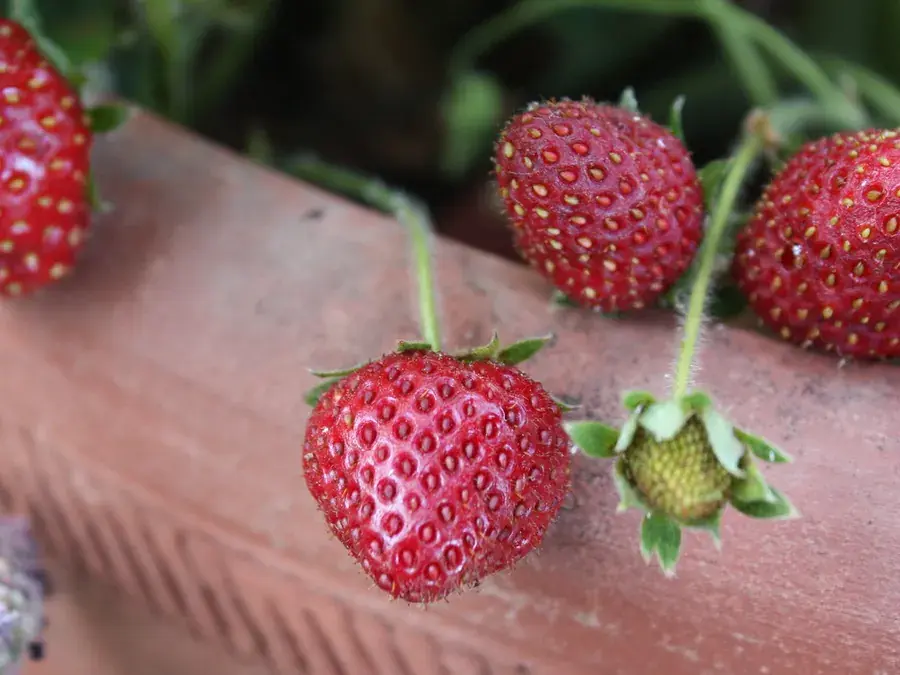 Half-hardyBerriesPicked Jun–Sep
Strawberries
Three weeks of June glory from a June-bearer, or a trickle until frost from a day-neutral — either way, the freezer is the answer.
Freezing · Water-bath · DryingPick, store, put up →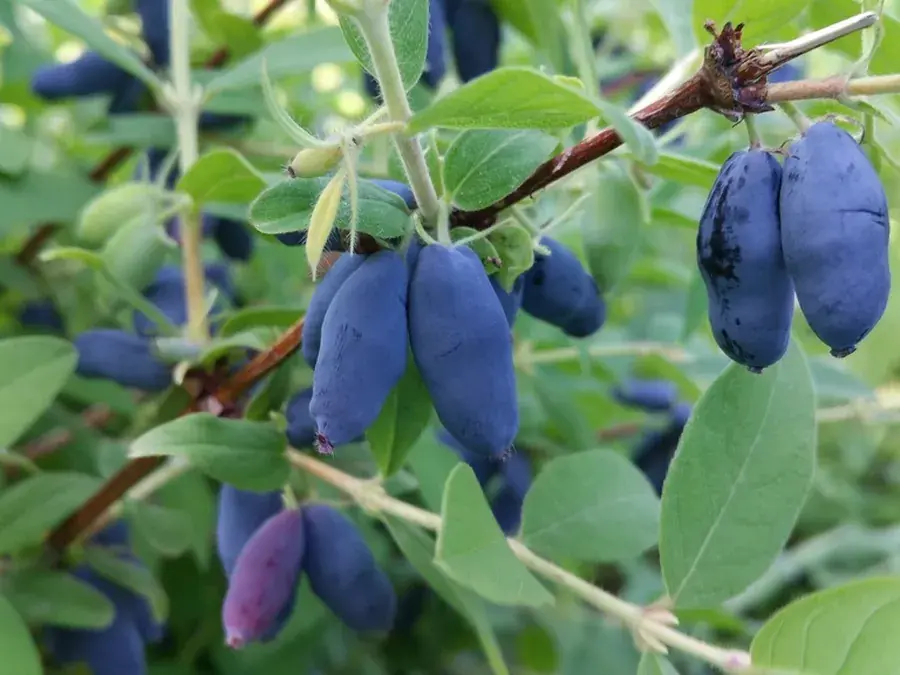 Very hardyBerriesPicked Jun–Jul
Haskap (honeyberry)
The Canadian berry: hardy to zone 2, ripe before the strawberries, and the first jam of the year.
Freezing · Water-bath · DryingPick, store, put up →
Checked against these sources ·
- University of Minnesota Extension: Growing raspberries in the home garden
- NDSU Extension: Raspberries (H2122)
- NCHFP: Freezing raspberries
- NCHFP: Canning berries, whole
- Penn State Extension: Frost and freeze damage on berry crops
Harvest months are typical for zones 4–6 and move by weeks north and south. Storage figures are for the ideal; a house without a cold room will get the shorter end of each range.