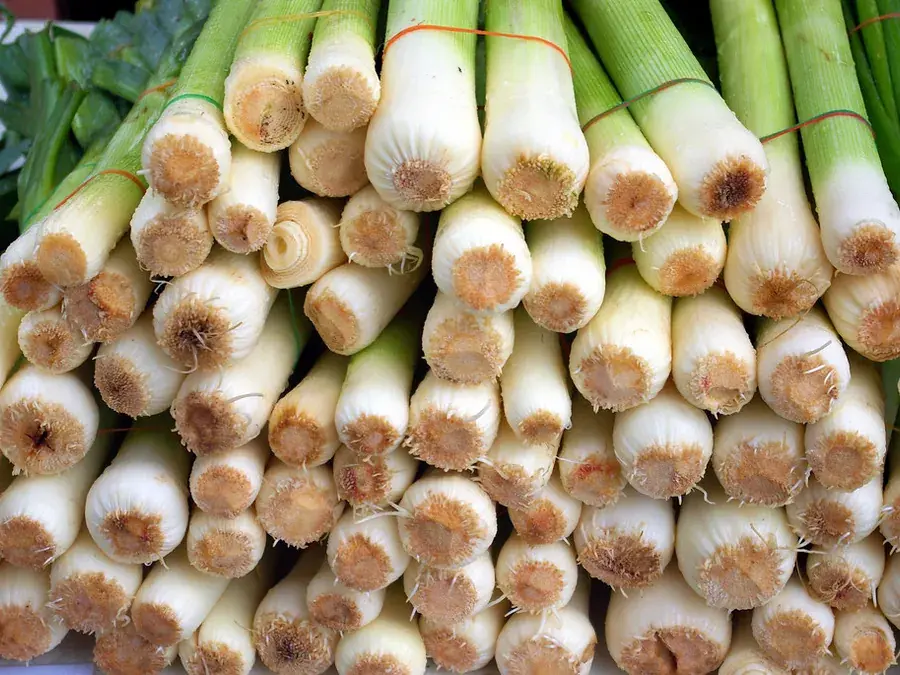
Photo exit78 on Flickr · CC0 (public domain)
Leeks
Allium ampeloprasum
The allium that stands in the garden through December, waiting to be dug for soup.
- Ready when
- Any time from pencil-thick in August for baby leeks; full size is a shaft 2.5–5 cm (1–2 in) thick, usually from mid-September on. The white part is what you are growing, and it is only as long as the stem was buried or hilled — it does not get longer in store, so if the white is short, hill more next year. Leeks do not go over; they just get bigger, and by their second spring they send up a flower stalk and a hard core.
- How to pick
- Dig, don’t pull — the roots hold hard and the shaft tears. Push a fork in alongside, lever, and lift. Trim the roots to 1 cm (½ in) and the leaves to a fan 10 cm (4 in) above the white, and shake out the soil. Slit lengthways and rinse under the tap in the kitchen: grit works its way between the layers while you hill.
- On a frost night
- Leave them standing. Leeks take −7 °C without protection and the hardy blue-green winter varieties (‘Bandit’, ‘Bleu de Solaise’, ‘Siegfried’) go to −15 °C and below under snow; a frost sweetens them. The job before the ground freezes is to bank 30 cm (12 in) of straw or leaves around the stems so you can still get a fork in through December and into January. Summer leeks (‘King Richard’ types) are much less hardy — dig those before −5 °C.
Where it keeps
Storing leeks
| Where | Temperature | Humidity | Keeps | How |
|---|---|---|---|---|
| In the ground under mulch | -10–4 °C14–39 °F | high | Into January, or until the ground freezes solid | 30 cm (12 in) of straw or leaves banked around the stems and over the row, marked with a stake; dig in thaws. The method for anywhere the snow comes early and stays. |
| Cold room or root cellar, heeled in | 0–2 °C32–36 °F | high | 2–3 months | Dig the leeks with their roots on before a hard freeze, stand them upright in a bucket or deep box of damp sand with the white buried, and keep the sand damp. They behave as if still planted. |
| Fridge crisper | 0–4 °C32–39 °F | high | 1–2 weeks | Unwashed, trimmed, loosely wrapped in a bag; longer than that and they yellow and go slimy at the cut. |
Putting it up
What to do with too many leeks
Leeks are kept, not preserved — in the ground or heeled into sand — and that is the better product by far. For the freezer, slice the white and pale green into rings, wash well, blanch 1–2 minutes, cool, drain and freeze flat in bags: they lose their crispness and are only for soup, stock, pies and braises, but potato-leek soup in February is reason enough. There is no tested home-canning process for leeks on their own, and leeks in oil carry the same botulism risk as garlic in oil — fridge for four days or the freezer. Dried leek flakes are fine for stock.
The oldest method: the right cold, the right damp, and darkness.
The fastest route and the one that keeps flavour best.
Saving seed
A biennial — flowers in its second year
Leeks flower in their second year: the plants you leave in the ground over winter send up 1.5 m (5 ft) stalks with a drumstick head of mauve flowers in July, and black seed follows in September — the easiest biennial seed in the north, because the parent plant is hardy enough to stay put. Where winters are too hard for that, dig a few leeks in late fall, heel them into sand in the cold room and replant in April. They are insect-pollinated and cross with other leek varieties (and with elephant garlic, which is the same species) within 250–800 m (800 ft to ½ mile), so flower one variety at a time and save from at least five plants. Cut the heads as they dry, finish them in a paper bag, and rub out the seed.
Keeps: 2 years — leek seed, like onion, fades fast.
The seed-saving guide →Next year
Planning leeks for next season
Allium rotation: not after onions, garlic or leeks within three years. Rich, moisture-holding soil with compost, full sun. Leeks need the longest start of any garden vegetable: sow indoors 8–10 weeks before the last frost, 5 mm (¼ in) deep and thick in a tray, and keep the grass-like seedlings trimmed to 10 cm (4 in). Transplant 1–2 weeks before the last frost once the seedlings are pencil-thick, dropping each into a 15 cm (6 in) dibber hole 15 cm apart and watering it in without filling the hole — the soil washes in over the season and blanches the shaft; hill more soil up in August. In zones 3–4 sow the hardy winter types in February and set out under a row cover in late April; a summer leek sown in March still makes a crop by October.
Leeks at a glance
- Botanical name
- Allium ampeloprasum
- Group
- Onions and garlic
- Picked
- August, September, October, November, December
- Frost
- Very hardy: takes −8 °c and below; overwinters.
- Best put up as
- cold storage, freezing
- Seed
- A biennial — flowers in its second year
Questions people ask about leeks
When should I harvest leeks?
Whenever they are thick enough — pencil-thin baby leeks from August, full-sized 2.5–5 cm (1–2 in) shafts from mid-September through December and beyond. They do not spoil by staying in the ground; they get bigger and sweeter with frost, and only turn woody when they bolt the following spring.
Can leeks stay in the ground over winter?
Yes — that is where they keep best. Leeks take −7 °C unprotected and the blue-green winter varieties survive −15 °C and lower under snow. Bank 30 cm (12 in) of straw or leaves around the stems before the ground freezes and dig during thaws into January; in zone 6 and milder they can be dug all winter.
How do I store leeks?
Lifted leeks last only one to two weeks in the fridge, unwashed and loosely bagged. For longer, dig them roots-on before a hard freeze and heel them upright into a box of damp sand in a cold room at 0–2 °C, where they keep two to three months as if still planted. Easiest of all: leave them in the ground under mulch.
Can you freeze leeks?
Yes. Slice the white and pale green into rings, wash out the grit, blanch 1–2 minutes, cool, drain and freeze flat in bags. They go soft when thawed, so they are for soup, stock, pies and braises — which is most of what a leek is for in winter anyway.
How do I save leek seeds?
Leave a few leeks in the ground over winter; they flower in July of the second year and the black seed is ready in September. Dry the heads in a paper bag and rub the seed out. They cross with other leek varieties within 800 m, so flower one at a time, and the seed only lasts about two years.
Are leeks frost hardy?
Among the hardiest vegetables there are: −7 °C does nothing, and winter varieties stand −15 °C and below with snow or mulch over them. Frost sweetens them. The limit is the ground freezing solid so you cannot dig, which is what the mulch is for. Summer leeks are the exception and should come in before −5 °C.
What should kids know about leeks?
Digging leeks out of a snowy bed in December is a small adventure, and the whole plant — white, green, flower — is safe to handle and eat. Leeks are the mild member of the onion family, which is why children who refuse onions will eat leek-and-potato soup. The grit between the layers is a good lesson in why you wash vegetables.
Your own frost dates
When does this come in where you are?
Enter a town, postal code or ZIP and the garden year, the frost watch and this week’s guide are built from your own weather.
Also in onions and garlic
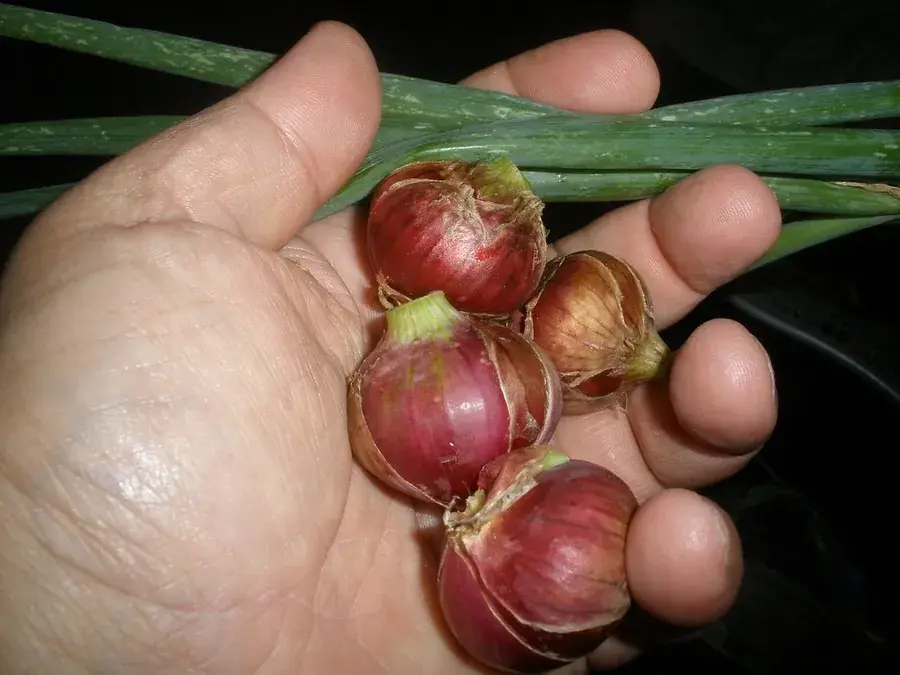 Half-hardyOnions and garlicPicked Aug–Sep
Onions
The crop whose storage life is decided in the three weeks after you pull it.
Curing · Cold storage · FreezingPick, store, put up →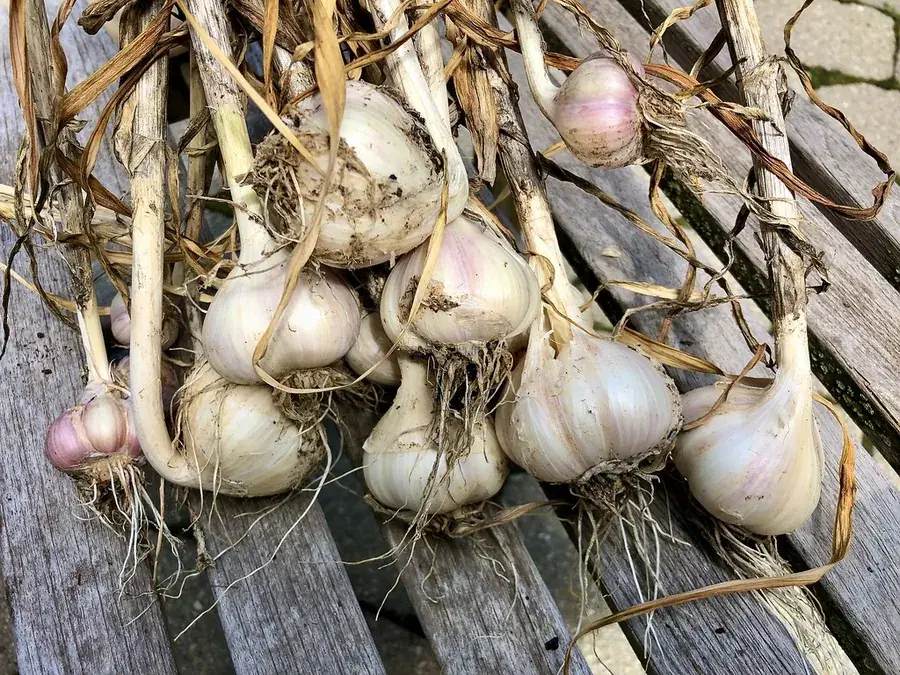 Very hardyOnions and garlicPicked Jun–Aug
Garlic
The one crop you plant in October — and the textbook case of what not to put in a jar of oil.
Curing · Cold storage · FreezingPick, store, put up →
Checked against these sources ·
- University of Minnesota Extension: Growing leeks in home gardens
- University of Wisconsin Extension: Growing onions, garlic, leeks and other alliums (A3785)
- Penn State Extension: Season extenders and growing fall vegetables
- Seed Savers Exchange: Leek growing and seed saving guide
- Iowa State University Extension: Late season harvest in the vegetable garden
Harvest months are typical for zones 4–6 and move by weeks north and south. Storage figures are for the ideal; a house without a cold room will get the shorter end of each range.