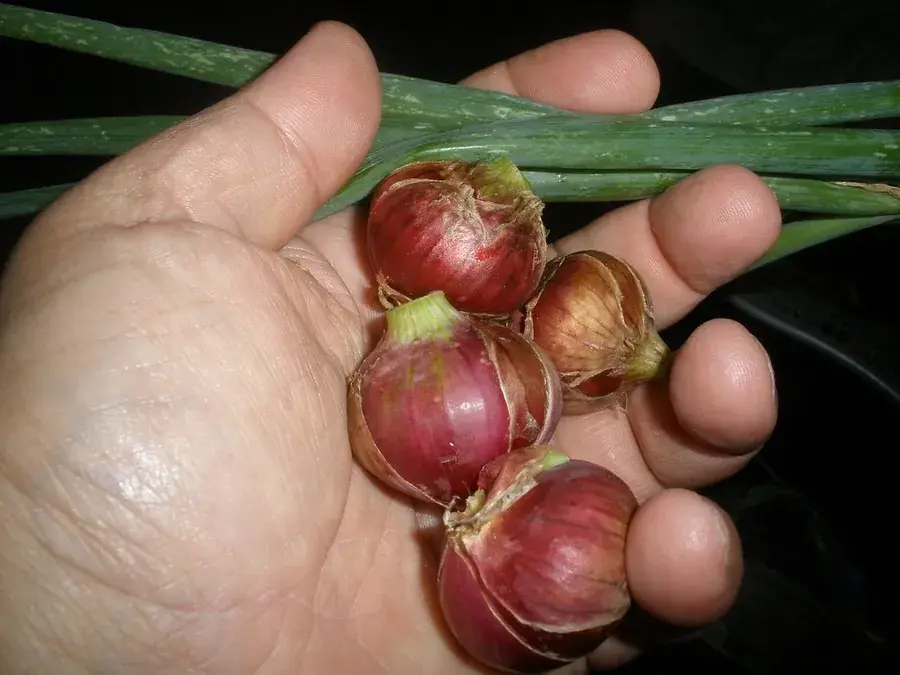
Onions
Allium cepa
The crop whose storage life is decided in the three weeks after you pull it.
- Ready when
- When the tops yellow and fall over on their own — wait until about half the row has flopped, then bend the rest. The bulb has stopped growing at that point and the neck is softening. Don’t leave them to die back completely in a wet August; that is when neck rot gets in. Bulb size is set by day length, not by how long you leave them.
- How to pick
- Lift on a dry day with a fork, a week or so after the tops fall, once the outer skins have started to colour. Leave the tops on. Lay them out one layer deep in the sun for a day or two if the weather is dry, then move them under cover. Handle gently — a bruised onion is the first to rot — and don’t knock the soil off against anything hard.
- Curing
- Cure 2–3 weeks somewhere warm (20–30 °C), dry and airy — a covered porch, a garage with the door open, a shed with a fan — spread one layer deep on racks or screens, or hung in small bunches by the tops. They are done when the necks are tight and papery, the outer skins rustle and the roots are dry and wiry. Then cut the tops to 2–3 cm (1 in), or braid them while the leaves are still pliable, trim the roots and sort: any thick-necked or soft bulb goes to the kitchen first, because it will not keep.
- On a frost night
- Onion plants are hardy — spring seedlings take −4 °C — but by frost time the crop should be out of the ground and curing, and a cured bulb must not freeze: a frozen onion goes glassy and rots. The evening a frost is forecast, bring in any onions still drying outside on racks or on the soil, and lift any bulbs left in the bed. Green onions can stay out.
Where it keeps
Storing onions
| Where | Temperature | Humidity | Keeps | How |
|---|---|---|---|---|
| Cold room, unheated basement or enclosed porch | 0–4 °C32–39 °F | dry | 4–6 months for storage types; longer for the hardest yellow keepers | Mesh bags, slatted crates or old tights hung up — never sealed plastic — with air all round. Dry is the point: onions want 60–70% humidity, the opposite of carrots and potatoes, so not in the root cellar with the damp sand and not next to the potatoes. Above about 5 °C they start to sprout. |
| Cool dark cupboard, pantry or under the stairs | 10–18 °C50–64 °F | dry | 1–3 months | Mesh bag or basket. Use the sweet and red onions first — they keep weeks, not months. Not the fridge: the humidity softens them and they sprout. |
| Fridge — cut or peeled onions only | 0–4 °C32–39 °F | moderate | 7–10 days | In a closed container. Whole onions do not belong in the fridge. |
Putting it up
What to do with too many onions
A cured yellow storage onion in a cold, dry spot is the preserve; everything else is for the sweet onions and the ones that will not keep. Chopped onions freeze with no blanching — spread on a tray, then bag — and are good for cooking for a few months, though soft when thawed. Sliced onions dry well in a dehydrator and keep for a year as flakes or powder. What you cannot do is can onions plain: the only tested plain-onion process is for whole onions 2.5 cm (1 in) across or smaller — pressure canner, 40 minutes for 500 ml or litre jars at 10 lb (weighted gauge, 0–300 m) — and larger or chopped plain onions have no tested process, so they go into jars only inside tested pickle, relish, salsa and sauce recipes, measured as written. Pickled pearl onions by the Bernardin recipe are water-bathed. And onions in oil are the same botulism risk as garlic in oil: refrigerate and use within four days, or freeze.
Two weeks of warmth and air that turn a fresh crop into a keeper.
The oldest method: the right cold, the right damp, and darkness.
The fastest route and the one that keeps flavour best.
A dehydrator or a low oven; light, keeps for a year.
Vinegar does the preserving; the canner just seals the jar.
- Pickling
Bread-and-butter pickles
Sweet, turmeric-yellow cucumber and onion slices — the pickle most children will actually eat, and the one that uses up the big cucumbers.
About 8 × 500 ml (pint) jars · 1¼ hours active
The recipe → - Pickling
Pickled beets
Sweet-sour beet slices with cinnamon and clove — the pickle that makes a winter plate look like something.
About 8 × 500 ml (pint) jars · 1¼ hours active
The recipe → - Pickling
Zucchini relish
Bernardin’s hot-dog relish for the zucchini that got away — a touch of horseradish and one hot pepper give it its bite.
About 6 × 500 ml (pint) jars · 1½ hours over two days active
The recipe → - Pickling
Home-style pickled jalapeños
Taqueria-style jalapeño strips with carrot and onion in a plain vinegar brine — the tested, lime-free way to put up a hot-pepper glut.
About 6 × 500 ml (pint) jars · 1 hour active
The recipe → - Water-bath canning
Green tomato salsa verde
The frost-night answer for a counter full of green tomatoes: a sharp, cumin-scented salsa verde in small jars.
About 6 × 250 ml (half-pint) jars · 1 hour active
The recipe → - Water-bath canning
Choice salsa, water-bath canned
The tested salsa that lets you choose the peppers and onions — mild or fierce — as long as the measured cups and the lemon juice stay exactly as written.
About 6 × 500 ml (pint) jars · 1¼ hours active
The recipe →
Saving seed
A biennial — flowers in its second year
Onions flower in their second year, so you choose the best cured bulbs in autumn, keep them at 0–4 °C over winter, plant them in April 15 cm (6 in) apart, and let the 1 m (3 ft) globe heads set black seed by August; cut the heads as they dry, finish them in a paper bag and rub the seed out. They are insect-pollinated and cross with any other Allium cepa in flower — other onion varieties, shallots, multiplier onions — within 250–800 m (800 ft to ½ mile), so flower one variety at a time. Save from at least five bulbs, more if you can. Only open-pollinated varieties come true (‘Ailsa Craig’, ‘Stuttgarter’, ‘Red Wethersfield’); many storage onions sold as transplants are F1 hybrids.
Keeps: 1–2 years — onion seed is the quickest to die. Buy or save fresh each year and test old packets on a damp paper towel in February.
The seed-saving guide →Next year
Planning onions for next season
Allium family: not where onions, garlic, leeks or shallots grew in the last three years, because onion maggot and white rot persist in soil. Full sun, rich, well-drained soil, and no weed competition — onions have no canopy to shade weeds out. Northern gardens need long-day storage varieties (14 or more hours of daylight to bulb); the short-day sweet onions sold in spring never size up here. Start seed indoors 8–10 weeks before the last frost and set out 2–4 weeks before it, or plant sets as soon as the soil can be worked; transplants from seed store longer than sets. 10–15 cm (4–6 in) apart, 2 cm deep, rows 30 cm (12 in) apart. In zones 3–4 transplants or sets only — direct sowing does not have time.
Onions at a glance
- Botanical name
- Allium cepa
- Group
- Onions and garlic
- Picked
- August, September
- Frost
- Half-hardy: scorched by a light frost, killed at −3 °c.
- Best put up as
- curing, cold storage, freezing, drying, pickling
- Seed
- A biennial — flowers in its second year
Questions people ask about onions
When should I harvest onions?
When about half the tops have yellowed and fallen over on their own — usually August in southern Canada — bend the rest, wait a week, and lift on a dry day with the tops still on. The bulbs do not grow once the tops go down, and leaving them in wet soil invites neck rot.
How do I cure onions?
Spread them one layer deep on racks or screens, or hang them in bunches, somewhere warm (20–30 °C), dry and airy, out of rain, for two to three weeks. They are cured when the necks are tight and papery, the skins rustle and the roots are dry. Then trim tops to 2–3 cm, sort out any thick-necked or soft bulbs for eating now, and store the rest.
How do I store onions for the winter?
Cold and dry — the opposite of root vegetables: 0–4 °C with 60–70% humidity, in mesh bags or slatted crates with air around them, which keeps a yellow storage onion four to six months. An unheated basement or enclosed porch works; the root cellar with the damp sand and the fridge do not. Sweet and red onions keep weeks, so eat those first.
Can you freeze onions?
Yes, chopped, with no blanching: spread on a tray, freeze, then bag. They are soft when thawed and for cooking only, and best used within a few months. Whole onions do not freeze well. Drying sliced onions in a dehydrator is the other good option for a surplus.
Can I can onions?
Not plain — there is no tested process for jars of plain onions at home. Onions go into jars only inside tested recipes: pickled pearl onions, relishes, salsas and sauces, with the quantities as written. Onions in oil are a botulism risk like garlic in oil: fridge for four days or the freezer.
How do I save onion seeds?
Overwinter the best cured bulbs at 0–4 °C, replant them in April, and harvest the seed heads when they dry in August. Only one variety of Allium cepa can flower within 800 m, and only open-pollinated varieties come true. Onion seed lasts just one to two years, so save or buy fresh every season.
What should kids know about onions?
Pulling onions and laying them out in rows to cure is a safe, satisfying job, and braiding the cured tops is good for older children. Cutting an onion makes eyes sting because the cells release a gas that reacts with the water in your eyes — chilling the onion first and using a sharp knife helps. Onion tops and bulbs are food; the flower heads in a seed bed are left alone until the seed is ripe.
Your own frost dates
When does this come in where you are?
Enter a town, postal code or ZIP and the garden year, the frost watch and this week’s guide are built from your own weather.
Also in onions and garlic
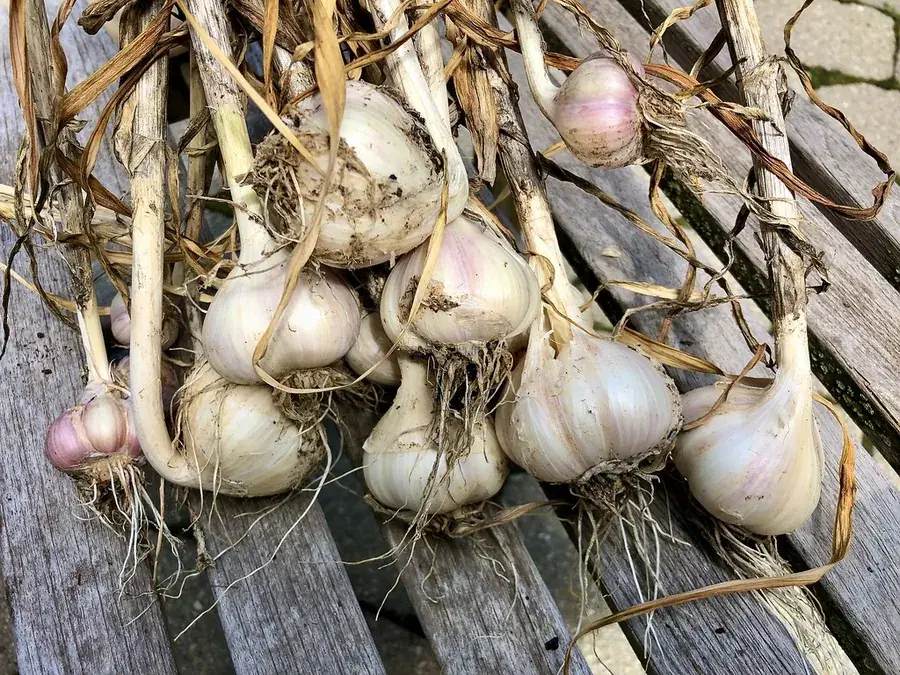 Very hardyOnions and garlicPicked Jun–Aug
Garlic
The one crop you plant in October — and the textbook case of what not to put in a jar of oil.
Curing · Cold storage · FreezingPick, store, put up →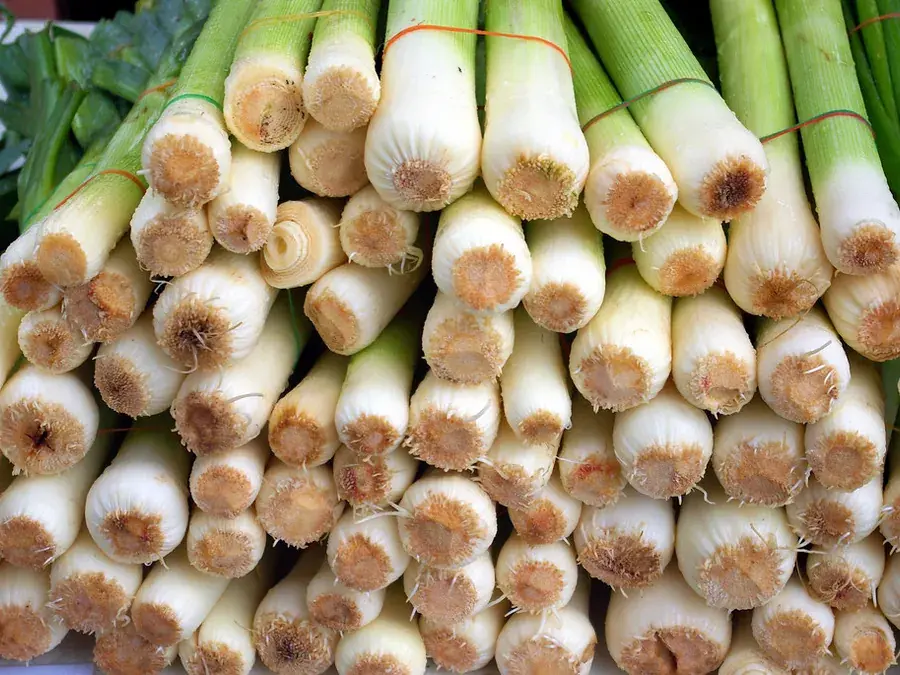 Very hardyOnions and garlicPicked Aug–Dec
Leeks
The allium that stands in the garden through December, waiting to be dug for soup.
Cold storage · FreezingPick, store, put up →
Checked against these sources ·
- University of Minnesota Extension: Growing onions in home gardens
- University of Wisconsin Extension: Growing onions, garlic, leeks and other alliums (A3785)
- NCHFP: Freezing onions
- Clemson HGIC: Preserving onions and garlic
- Seed Savers Exchange: Onion growing and seed saving guide
Harvest months are typical for zones 4–6 and move by weeks north and south. Storage figures are for the ideal; a house without a cold room will get the shorter end of each range.