Choice salsa, water-bath canned
The tested salsa that lets you choose the peppers and onions — mild or fierce — as long as the measured cups and the lemon juice stay exactly as written.
Makes
About 6 × 500 ml (pint) jars
Active time
1¼ hours
Total
2 hours, plus 12–24 hours cooling
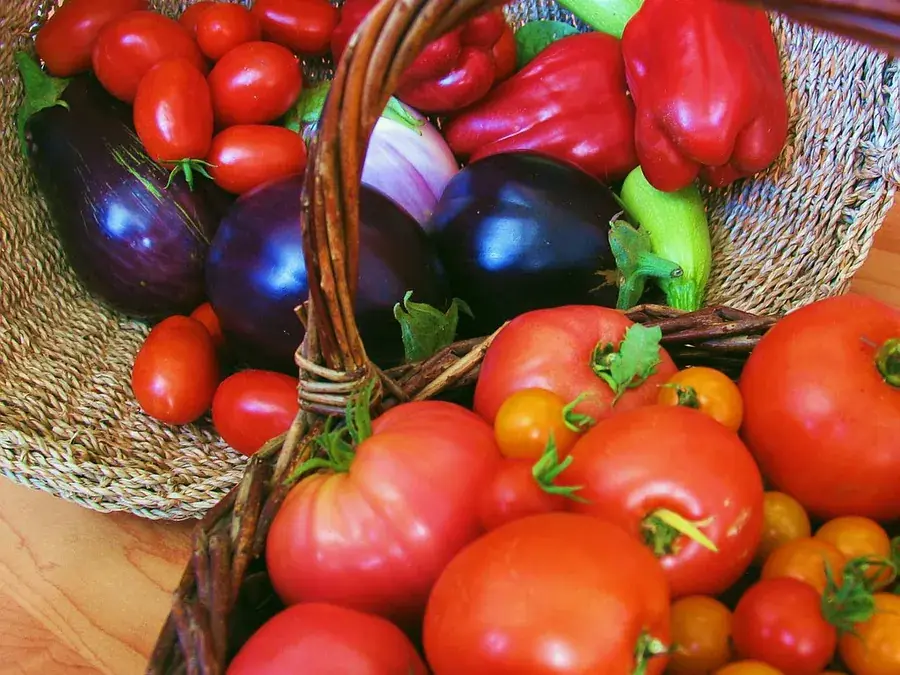
Photo naturalflow on Flickr · CC BY-SA 2.0
Before you start
What keeps this jar safe
- Measure everything in metric or everything in US cups — never mix the two, or the acid ratio shifts.
- What may not change: 6 cups tomatoes, 9 cups onions and/or peppers, 1½ cups bottled lemon or lime juice. These proportions were tested with many kinds of tomato, pepper and onion; shift them and the salsa may not be acidic enough for a boiling-water bath.
- What may change: which peppers (bell, jalapeño, habanero, any colour) and the onion-to-pepper split, as long as the total stays at 9 cups.
- Do not substitute vinegar for the lemon or lime juice, and do not use bottled key lime juice. Fresh citrus varies in acidity; the bottled juice standardizes it.
- No other vegetables (corn, beans, carrots, garlic) and no thickeners, flour or cornstarch — they were not tested. Season at the table with cilantro, cumin or garlic rather than in the jar.
- Wear gloves for hot peppers and keep hands away from eyes — and keep small helpers on tomato and onion duty.
This follows NCHFP: Choice Salsa. Quantities, acid and times are theirs; do not scale the vegetables without scaling everything, and do not change the vinegar, lemon juice or processing time.
Ingredients
- 1.5 L (6 cups) peeled, cored, seeded and chopped ripe tomatoes — about 2 kg (4½ lb) whole, measured level in dry measuring cups
- 2.25 L (9 cups) diced onions and/or peppers, any mix: sweet bell peppers of any colour, hot peppers, or both — measured level in dry measuring cups
- 375 ml (1½ cups) commercially bottled lemon or lime juice, measured in a liquid measuring cup
- 15 ml (3 teaspoons) canning or pickling salt
Processing
- Jars
- 500 ml (pint) or 250 ml (half-pint) — same time
- Headspace
- 1.25 cm (½ inch)
- Time at 0–300 m (0–1,000 ft)
- 15 min
- Higher up
- Both sizes: 20 min at 300–1,800 m (1,001–6,000 ft), 25 min above 1,800 m (6,000 ft).
Method
- 1
Set 6 washed 500 ml jars (or 12 × 250 ml) to heat in the canner and wash the lids. Peel and dice the onions into 6 mm (¼ inch) pieces. Wash and core the bell peppers, strip out seeds and membranes, and dice the same size.
- 2
Wear gloves for the hot peppers. Stem them, keep or discard as many seeds and membranes as the heat you want, and dice 6 mm. Measure the onions and peppers together: 9 level cups, no more, no less.
- 3
Dip the tomatoes in boiling water 30–60 seconds until the skins split, then into cold water. Peel, core, squeeze or scoop out the seeds and chop into 6 mm–1.25 cm pieces. Measure 6 level cups. A child can measure and level the cups.
- 4
Combine the vegetables in a large pot with the lemon juice and salt. Bring to a boil over medium heat, stirring, then lower the heat and simmer 3 minutes, stirring so it does not scorch.
- 5
Ladle the hot salsa into the hot jars, leaving 1.25 cm (½ inch) headspace. Free bubbles with a chopstick and top up to the same headspace, wipe the rims with a damp paper towel, centre the lids and screw the bands on fingertip-tight.
- 6
Lower the jars into the canner with at least 5 cm (2 inches) of water over the lids, bring to a full rolling boil and process 15 minutes for 500 ml or 250 ml jars at 0–300 m.
- 7
Turn off the heat, uncover, wait 5 minutes and lift the jars onto a towel. Leave 12–24 hours, check the seals, and refrigerate any that did not seal — plus whatever did not fit in a jar — to eat fresh.
Keeps: 12–18 months in a cool dark cupboard. Refrigerate once opened and use within a week.
Variations: Paste tomatoes give a thicker salsa than slicers. Go all sweet peppers for a salsa children will eat, or make the 9 cups mostly jalapeño for a hot one — the process time is the same.
Tested source: NCHFP: Choice Salsa. Checked October 2026. If a jar did not seal, refrigerate it and use it within a few days. Never taste anything from a jar that is bulging, leaking, spurting or smells wrong — when in doubt, throw it out without tasting.
The crop
Tomatoes: when to pick, how to store, what else to make →
Tomatoes are the home canner’s classic, but they sit right on the acidity line: every tested canned-tomato recipe adds bottled lemon juice or citric acid to each jar, and that is not optional whether you water-bath or pressure can. Whole tomatoes freeze well with no blanching — the skins slip off under the tap as they thaw — which is the fastest way to deal with a glut on a weeknight. Cherry and paste tomatoes dry beautifully. What does not work is a sauce you have thickened with flour or loaded with extra peppers, onions and oil to taste: the added low-acid vegetables change the safety of the recipe, so follow a tested salsa or sauce recipe exactly. Green tomatoes are more acidic than ripe ones and can be canned by the same recipes, with the same added acid.
More for tomatoes
- Water-bath canning
Crushed tomatoes, water-bath canned
The plainest, most useful jar in the pantry: tomatoes and nothing else, ready for any sauce in February.
About 7 × 1 L (quart) jars from 10 kg (22 lb) of tomatoes; 6.4 kg (14 lb) fills 9 × 500 ml (pint) jars · 1½ hours active
The recipe → - Water-bath canning
Whole or halved tomatoes in juice, water-bath canned
Whole peeled tomatoes under their own juice — the jar you open for a winter stew when you want pieces, not purée.
7 × 1 L (quart) jars from 9.5 kg (21 lb) of tomatoes, plus extra tomatoes for the juice; 5.9 kg (13 lb) fills 9 × 500 ml (pint) jars · 1½ hours active
The recipe → - Water-bath canning
Plain tomato sauce, water-bath canned
Unseasoned tomato sauce boiled down from juice — thin for soups, thick for pasta — with every flavour decision left for the day you open it.
About 7 × 1 L (quart) jars of thin sauce from 16 kg (35 lb) of tomatoes, or of thick sauce from 21 kg (46 lb); for 9 × 500 ml (pint) jars use 9.5 kg (21 lb) thin or 12.7 kg (28 lb) thick · 2 hours active
The recipe →