Whole or halved tomatoes in juice, water-bath canned
Whole peeled tomatoes under their own juice — the jar you open for a winter stew when you want pieces, not purée.
Makes
7 × 1 L (quart) jars from 9.5 kg (21 lb) of tomatoes, plus extra tomatoes for the juice; 5.9 kg (13 lb) fills 9 × 500 ml (pint) jars
Active time
1½ hours
Total
3½ hours, plus 12–24 hours cooling
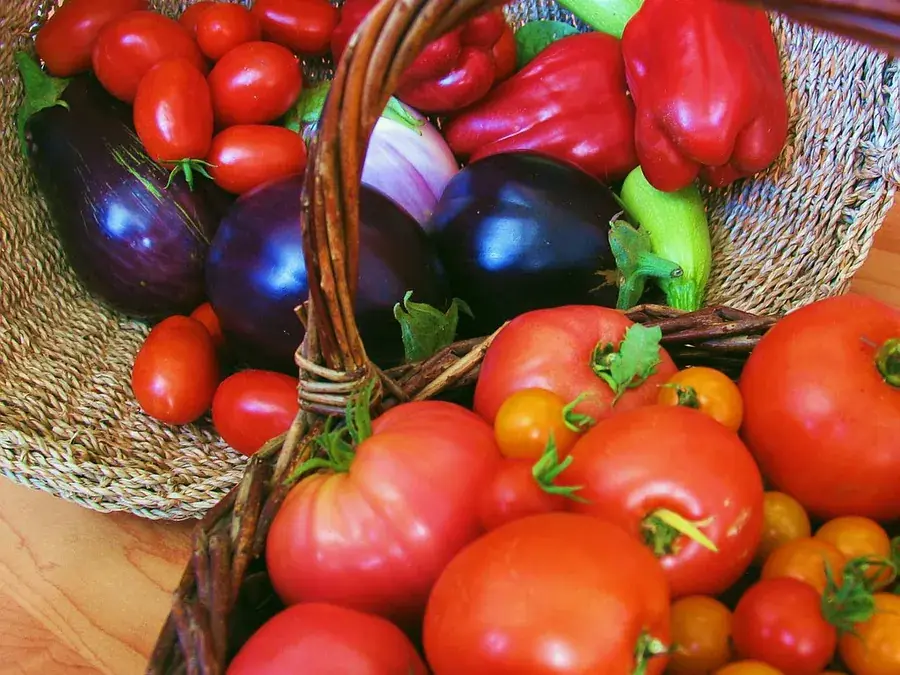
Photo naturalflow on Flickr · CC BY-SA 2.0
Before you start
What keeps this jar safe
- Acid goes in every jar before the tomatoes — the 85 minutes is about how slowly heat reaches the centre of a tight-packed jar, and it assumes the lemon juice or citric acid is there.
- The 85 minutes is for tomatoes covered in tomato juice. Tomatoes packed in water or with no added liquid are different recipes with different times; do not mix them up.
- Keep the jars under at least 5 cm of boiling water for the whole 85 minutes and restart the clock if the boil stops.
- No onions, peppers, celery or herbs in the jar; season when you cook with them in winter.
This follows NCHFP: Whole or Halved Tomatoes (packed in tomato juice). Quantities, acid and times are theirs; do not scale the vegetables without scaling everything, and do not change the vinegar, lemon juice or processing time.
Ingredients
- 9.5 kg (21 lb) firm ripe tomatoes, small to medium so they fit through the jar mouth
- Tomato juice to cover — about 2–3 L, pressed from an extra 3–4 kg (7–9 lb) of soft tomatoes by the tomato-juice method (heat, crush, press through a food mill)
- Bottled lemon juice: 2 tablespoons (30 ml) per 1 L jar, 1 tablespoon (15 ml) per 500 ml jar — or citric acid, ½ teaspoon per 1 L jar, ¼ teaspoon per 500 ml jar
- Salt, optional: 1 teaspoon (5 ml) per 1 L jar
Processing
- Jars
- 1 L (quart) or 500 ml (pint) — same time
- Headspace
- 1.25 cm (½ inch)
- Time at 0–300 m (0–1,000 ft)
- 85 min
- Higher up
- Both sizes: 90 min at 300–900 m (1,001–3,000 ft), 95 min at 900–1,800 m (3,001–6,000 ft), 100 min above 1,800 m (6,000 ft).
Method
- 1
Make the juice first from your softest tomatoes: quarter, heat and crush them in a pot, simmer 5 minutes, press through a food mill and keep hot. Set the washed jars in the canner to heat; wash the lids and set aside.
- 2
Wash the tomatoes for the jars — a child’s job — then dip them in boiling water 30–60 seconds until the skins split and drop them into cold water. Slip the skins and cut out the cores. Leave whole, or halve the big ones.
- 3
Put the lemon juice (or citric acid) into each hot jar, with salt if you like.
- 4
Hot pack: put the peeled tomatoes in a large pot, pour in enough hot juice to cover them completely and boil gently 5 minutes.
- 5
Fill the jars with the hot tomatoes to 1.25 cm (½ inch) from the rim, then ladle in hot juice to cover them, keeping that 1.25 cm headspace. Slide a chopstick around the inside to free bubbles, wipe the rims, centre the lids and screw the bands on fingertip-tight.
- 6
Lower the jars into the canner with water at least 5 cm (2 inches) over the lids — this is a long process and the level drops. Bring to a full rolling boil, then time it: 85 minutes for both 1 L and 500 ml jars at 0–300 m. Add boiling water around (not onto) the jars if the level falls.
- 7
Turn off the heat, uncover, wait 5 minutes, then lift the jars onto a towel. Leave 12–24 hours; check that every lid is concave and firm. Refrigerate any that did not seal and use within a week.
Keeps: 12–18 months in a cool dark cupboard. Refrigerate after opening and use within a week.
Variations: The same page gives a raw pack — raw peeled tomatoes in the jar with hot juice poured over, same headspace and the same 85 minutes — which is quicker on the stove but floats more and loses more liquid.
Tested source: NCHFP: Whole or Halved Tomatoes (packed in tomato juice). Checked October 2026. If a jar did not seal, refrigerate it and use it within a few days. Never taste anything from a jar that is bulging, leaking, spurting or smells wrong — when in doubt, throw it out without tasting.
The crop
Tomatoes: when to pick, how to store, what else to make →
Tomatoes are the home canner’s classic, but they sit right on the acidity line: every tested canned-tomato recipe adds bottled lemon juice or citric acid to each jar, and that is not optional whether you water-bath or pressure can. Whole tomatoes freeze well with no blanching — the skins slip off under the tap as they thaw — which is the fastest way to deal with a glut on a weeknight. Cherry and paste tomatoes dry beautifully. What does not work is a sauce you have thickened with flour or loaded with extra peppers, onions and oil to taste: the added low-acid vegetables change the safety of the recipe, so follow a tested salsa or sauce recipe exactly. Green tomatoes are more acidic than ripe ones and can be canned by the same recipes, with the same added acid.
More for tomatoes
- Water-bath canning
Crushed tomatoes, water-bath canned
The plainest, most useful jar in the pantry: tomatoes and nothing else, ready for any sauce in February.
About 7 × 1 L (quart) jars from 10 kg (22 lb) of tomatoes; 6.4 kg (14 lb) fills 9 × 500 ml (pint) jars · 1½ hours active
The recipe → - Water-bath canning
Plain tomato sauce, water-bath canned
Unseasoned tomato sauce boiled down from juice — thin for soups, thick for pasta — with every flavour decision left for the day you open it.
About 7 × 1 L (quart) jars of thin sauce from 16 kg (35 lb) of tomatoes, or of thick sauce from 21 kg (46 lb); for 9 × 500 ml (pint) jars use 9.5 kg (21 lb) thin or 12.7 kg (28 lb) thick · 2 hours active
The recipe → - Water-bath canning
Choice salsa, water-bath canned
The tested salsa that lets you choose the peppers and onions — mild or fierce — as long as the measured cups and the lemon juice stay exactly as written.
About 6 × 500 ml (pint) jars · 1¼ hours active
The recipe →