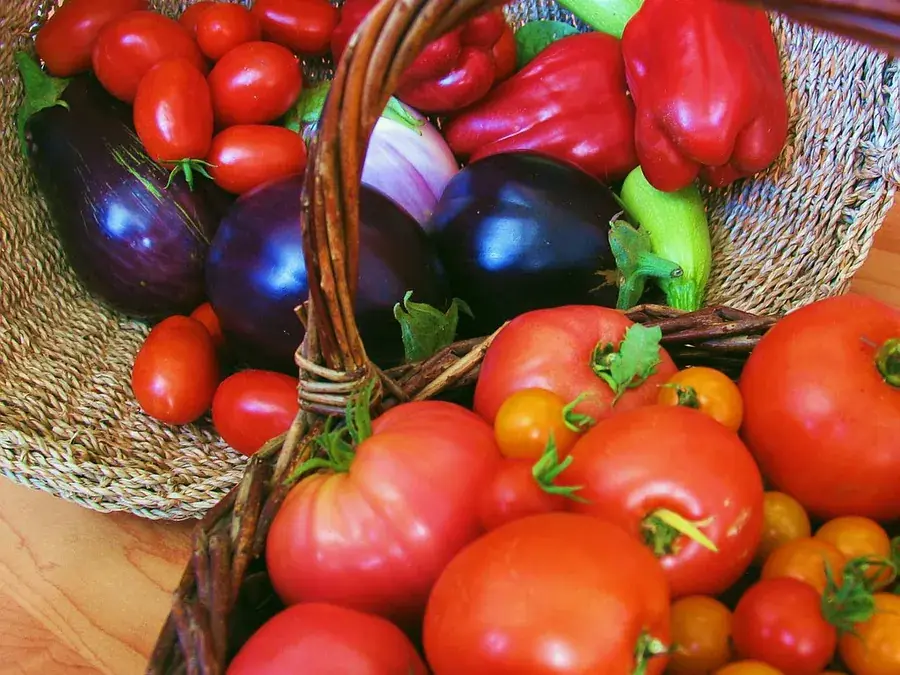
Photo naturalflow on Flickr · CC BY-SA 2.0
Tomatoes
Solanum lycopersicum
The crop every garden ends up with too many of at once — and the one most worth putting up.
- Ready when
- Full colour for the variety, slightly soft to a gentle squeeze, and it comes off with a light twist. A ‘mature green’ tomato — full size, glossy, pale or whitish at the blossom end — will ripen off the plant; a small, dull, dark-green one will not.
- How to pick
- Twist or snip with the calyx on. Pick every two or three days in August; a ripe tomato left on the vine splits after rain. Never refrigerate a tomato you mean to eat fresh — below about 10 °C the flavour compounds stop developing and the texture goes mealy.
- On a frost night
- Tomatoes die at 0 °C. If frost is forecast, pick everything with any blush of colour and anything full-sized and glossy green, and ripen it indoors out of the sun. A sheet or row cover over the plants buys one light frost, not a hard one. Pick before the frost, not after: fruit from frost-killed vines is fine to eat fresh but should not be canned — the canning guides are explicit about it.
Where it keeps
Storing tomatoes
| Where | Temperature | Humidity | Keeps | How |
|---|---|---|---|---|
| Kitchen counter, out of sun | 15–21 °C59–70 °F | moderate | 3–7 days ripe | Stem end down, one layer, not touching. |
| Cool room for green tomatoes | 13–18 °C55–64 °F | moderate | 3–6 weeks, ripening slowly | Wrapped singly in newspaper in a box, or spread on trays one layer deep; check twice a week and pull the ripe ones. Light is not needed — warmth is what ripens them. |
Putting it up
What to do with too many tomatoes
Tomatoes are the home canner’s classic, but they sit right on the acidity line: every tested canned-tomato recipe adds bottled lemon juice or citric acid to each jar, and that is not optional whether you water-bath or pressure can. Whole tomatoes freeze well with no blanching — the skins slip off under the tap as they thaw — which is the fastest way to deal with a glut on a weeknight. Cherry and paste tomatoes dry beautifully. What does not work is a sauce you have thickened with flour or loaded with extra peppers, onions and oil to taste: the added low-acid vegetables change the safety of the recipe, so follow a tested salsa or sauce recipe exactly. Green tomatoes are more acidic than ripe ones and can be canned by the same recipes, with the same added acid.
Jars boiled in a big pot — for high-acid food only.
The fastest route and the one that keeps flavour best.
A dehydrator or a low oven; light, keeps for a year.
Vinegar does the preserving; the canner just seals the jar.
- Water-bath canning
Crushed tomatoes, water-bath canned
The plainest, most useful jar in the pantry: tomatoes and nothing else, ready for any sauce in February.
About 7 × 1 L (quart) jars from 10 kg (22 lb) of tomatoes; 6.4 kg (14 lb) fills 9 × 500 ml (pint) jars · 1½ hours active
The recipe → - Water-bath canning
Whole or halved tomatoes in juice, water-bath canned
Whole peeled tomatoes under their own juice — the jar you open for a winter stew when you want pieces, not purée.
7 × 1 L (quart) jars from 9.5 kg (21 lb) of tomatoes, plus extra tomatoes for the juice; 5.9 kg (13 lb) fills 9 × 500 ml (pint) jars · 1½ hours active
The recipe → - Water-bath canning
Plain tomato sauce, water-bath canned
Unseasoned tomato sauce boiled down from juice — thin for soups, thick for pasta — with every flavour decision left for the day you open it.
About 7 × 1 L (quart) jars of thin sauce from 16 kg (35 lb) of tomatoes, or of thick sauce from 21 kg (46 lb); for 9 × 500 ml (pint) jars use 9.5 kg (21 lb) thin or 12.7 kg (28 lb) thick · 2 hours active
The recipe → - Water-bath canning
Choice salsa, water-bath canned
The tested salsa that lets you choose the peppers and onions — mild or fierce — as long as the measured cups and the lemon juice stay exactly as written.
About 6 × 500 ml (pint) jars · 1¼ hours active
The recipe → - Water-bath canning
Tomato juice, water-bath canned
A clear use for a glut of soft, juicy slicers: hot-pressed juice that will not separate in the jar.
About 7 × 1 L (quart) jars from 10.4 kg (23 lb) of tomatoes; 6.4 kg (14 lb) fills 9 × 500 ml (pint) jars · 1¼ hours active
The recipe → - Water-bath canning
Green tomato salsa verde
The frost-night answer for a counter full of green tomatoes: a sharp, cumin-scented salsa verde in small jars.
About 6 × 250 ml (half-pint) jars · 1 hour active
The recipe → - Freezing
Whole tomatoes, frozen without blanching
The zero-effort way to save tomatoes on a night you have none to spare: wash, core, bag. The skins slip off under the tap in January.
A 4 L freezer bag holds about 2 kg of medium tomatoes · 10 minutes active
The recipe → - Drying
Dried cherry and paste tomatoes
Halved cherry tomatoes dried to chewy, sweet-sour coins — the concentrated taste of the whole summer in a jar. Kept dry, not in oil.
About 70–150 g of dried tomatoes from 2 kg of fresh cherry or paste tomatoes · 30 minutes active
The recipe →
Saving seed
Easy to save — comes true
Tomatoes self-pollinate, so an open-pollinated or heirloom variety comes true from saved seed (an F1 hybrid — it will say so on the packet — will not). Squeeze the seeds and gel from a fully ripe fruit into a jar, add a splash of water, and leave it 2–3 days somewhere warm until a mould forms on top: the fermentation removes the germination-inhibiting gel and kills some seed-borne diseases. Pour off the floating pulp and hollow seeds, rinse the good ones in a sieve, and dry them on a plate or coffee filter (not paper towel — it sticks) for a week. Label and store cool and dry. A few metres between varieties is enough; potato-leaf and currant types want more.
Keeps: 5 years comfortably; often 10 if kept cool and dry.
The seed-saving guide →Next year
Planning tomatoes for next season
Rotate: not where tomatoes, potatoes, peppers, eggplant or tomatillos grew in the last three years if you have the space, two at minimum, to keep early and late blight down. Full sun, steady water, and a cage or stake from the day they go in; 45–60 cm (18–24 in) apart. Start seed indoors about 6 weeks before the last frost; plant out one to two weeks after it, once nights hold above 10 °C. In zones 3–5 pick varieties under 75 days to maturity and have a green-tomato plan for September.
Tomatoes at a glance
- Botanical name
- Solanum lycopersicum
- Group
- Fruiting vegetables
- Picked
- July, August, September, October
- Frost
- Tender: finished by the first frost.
- Best put up as
- water-bath canning, freezing, drying, pickling
- Seed
- Easy to save — comes true
Questions people ask about tomatoes
Will green tomatoes ripen indoors?
Yes, if they are mature: full-sized, glossy, and paler at the blossom end. Keep them at 13–21 °C out of direct sun — a windowsill is too hot by day and too cold at night. A ripe banana or apple in the box speeds things up with ethylene. Small, dull, dark-green fruit will not ripen; use it green for chutney or fried green tomatoes.
Do I have to add lemon juice when canning tomatoes?
Yes. Modern tomatoes vary in acidity and some sit above pH 4.6, the line that makes botulism possible in a sealed jar. Every tested recipe adds 1 tablespoon of bottled lemon juice (or ¼ teaspoon citric acid) per 500 ml (pint) jar and 2 tablespoons (or ½ teaspoon citric acid) per litre (quart) jar, whether you water-bath or pressure can. Bottled, not fresh — the acidity is standardised.
Can I freeze tomatoes without blanching?
Yes. Wash, core, and freeze whole on a tray, then bag them. The skins split and slip off under warm water as they thaw. They are soft when thawed, so use them for sauce, soup and chilli rather than salads.
Can I can tomatoes picked after a frost?
No. The canning guides say not to can tomatoes from dead or frost-killed vines, because their acidity is no longer reliable. Eat them fresh, cook them into something you freeze, or make them into a tested relish. The fix is to strip the plants the evening before the frost, not the morning after.
How do I save tomato seeds?
From an open-pollinated or heirloom variety (not an F1 hybrid), scoop seeds and gel into a jar with a little water and let it ferment 2–3 days until mould forms. Rinse, dry on a plate for a week, and store cool and dry. Good for 5 years or more.
What should kids know about tomatoes?
Ripe tomatoes are safe to pick and eat straight from the plant, rinsed. The leaves and stems are not food — they contain solanine-type alkaloids and can upset a stomach — so the rule is fruit only. Picking cherry tomatoes is one of the best first garden jobs for a three-year-old.
When do tomatoes ripen in Canada?
Late July to the first frost in most of southern Canada, with the main flush in August and September. In zone 3–4 gardens the season is short enough that early varieties (55–65 days) and a green-tomato plan matter; in zone 6–7 the plants can go on into October.
Your own frost dates
When does this come in where you are?
Enter a town, postal code or ZIP and the garden year, the frost watch and this week’s guide are built from your own weather.
Also in fruiting vegetables
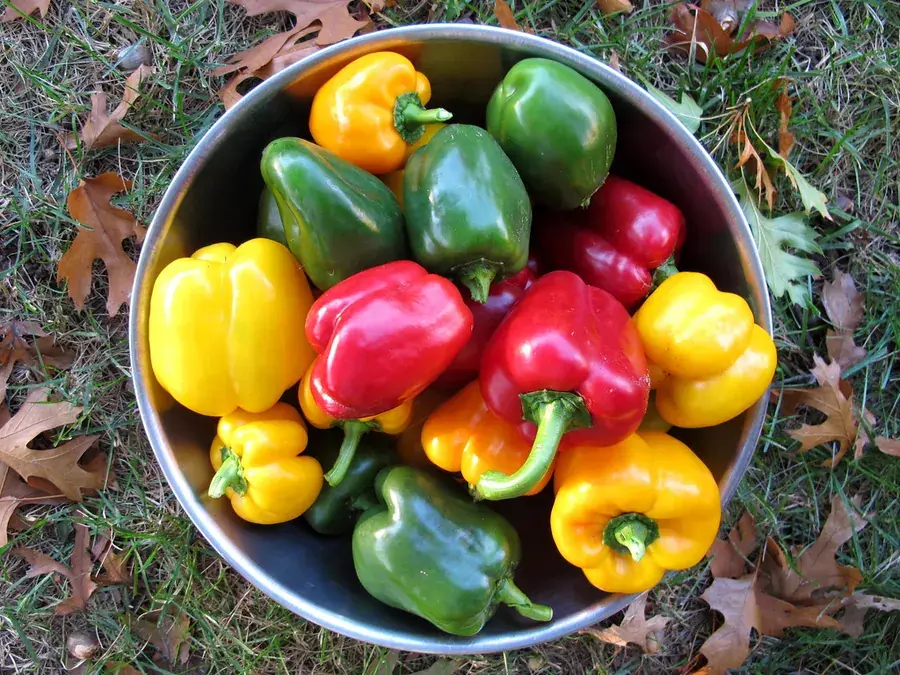 TenderFruiting vegetablesPicked Jul–Oct
Sweet peppers
Slow to colour, quick to freeze — the pepper harvest is a race between the plant and the first frost.
Freezing · Pickling · PressurePick, store, put up →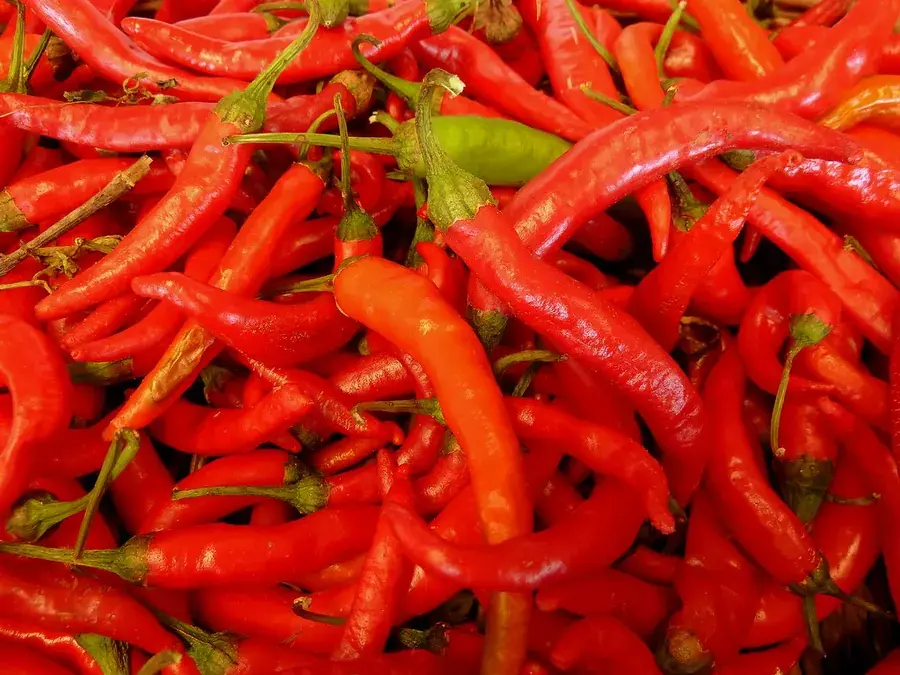 TenderFruiting vegetablesPicked Aug–Oct
Hot peppers
A handful of plants gives a year of heat — dried on a string, pickled in rings, or fermented into sauce.
Drying · Pickling · FermentingPick, store, put up →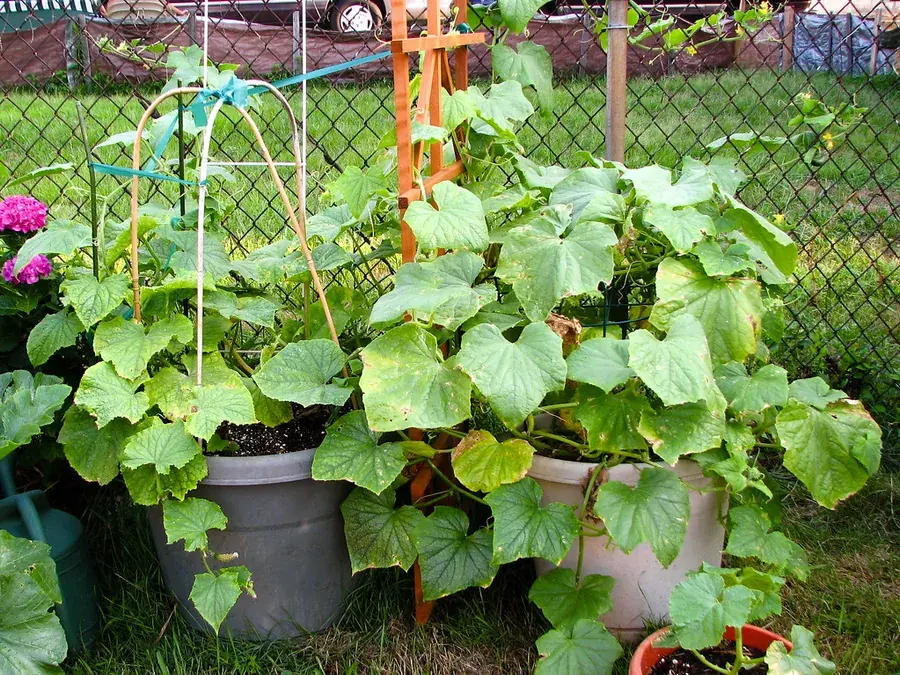 TenderFruiting vegetablesPicked Jul–Sep
Cucumbers
Eaten within a week or pickled within a day — a cucumber has no middle option.
Pickling · FermentingPick, store, put up →
Checked against these sources ·
- NCHFP: Tomato acidification directions
- NCHFP: Canning tomatoes, introduction
- University of Minnesota Extension: Growing tomatoes in home gardens
- University of Minnesota Extension: Harvesting and storing home garden vegetables
- Seed Savers Exchange: Tomato growing and seed saving guide
Harvest months are typical for zones 4–6 and move by weeks north and south. Storage figures are for the ideal; a house without a cold room will get the shorter end of each range.