Tomato juice, water-bath canned
A clear use for a glut of soft, juicy slicers: hot-pressed juice that will not separate in the jar.
Makes
About 7 × 1 L (quart) jars from 10.4 kg (23 lb) of tomatoes; 6.4 kg (14 lb) fills 9 × 500 ml (pint) jars
Active time
1¼ hours
Total
2½ hours, plus 12–24 hours cooling
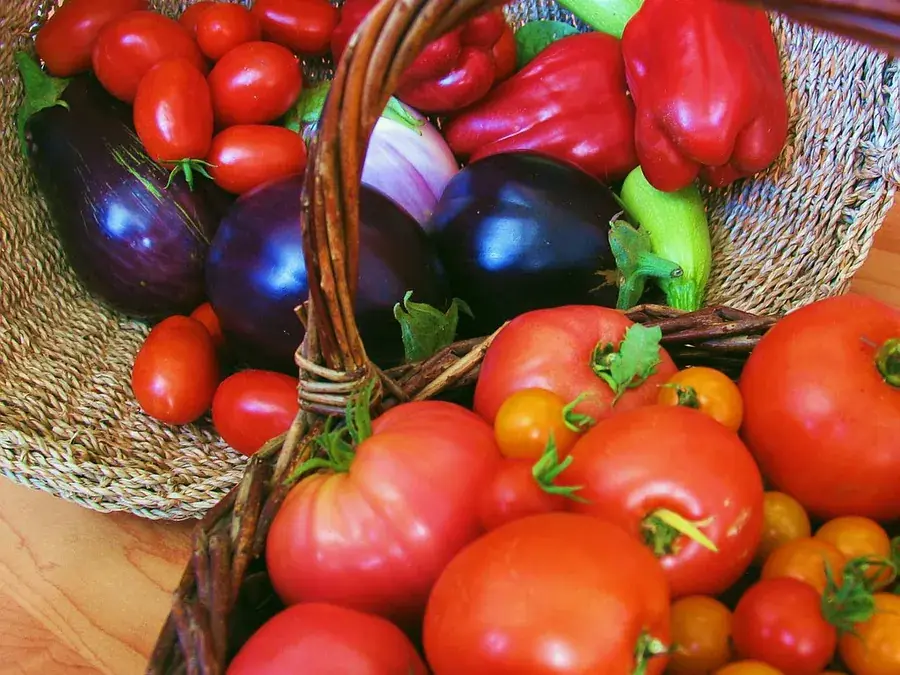
Photo naturalflow on Flickr · CC BY-SA 2.0
Before you start
What keeps this jar safe
- Acid in every jar, measured, before the juice — tomato juice is canned in boiling water only because the lemon juice or citric acid is added.
- Plain tomato only. Adding celery, onion, peppers or carrot makes a vegetable-juice blend, which has its own tested recipe and limits.
- Fresh, firm, ripe tomatoes; none from frost-killed vines and nothing going soft.
- A little sugar can balance the acid taste if you like, but the acid itself never comes out.
This follows NCHFP: Tomato Juice. Quantities, acid and times are theirs; do not scale the vegetables without scaling everything, and do not change the vinegar, lemon juice or processing time.
Ingredients
- 10.4 kg (23 lb) ripe juicy tomatoes — about 1.5 kg (3¼ lb) per litre jar
- Bottled lemon juice: 2 tablespoons (30 ml) per 1 L jar, 1 tablespoon (15 ml) per 500 ml jar — or citric acid, ½ teaspoon per 1 L jar, ¼ teaspoon per 500 ml jar
- Salt, optional: 1 teaspoon (5 ml) per 1 L jar
Processing
- Jars
- 500 ml (pint) · 1 L (quart) in brackets
- Headspace
- 1.25 cm (½ inch)
- Time at 0–300 m (0–1,000 ft)
- 35 min
- Higher up
- 1 L jars: 40 min. For both sizes add 5 min at 300–900 m (1,001–3,000 ft), 10 min at 900–1,800 m (3,001–6,000 ft), 15 min above 1,800 m (6,000 ft).
Method
- 1
Set the washed jars to heat in the canner and wash the lids. Wash the tomatoes — a good job for a child at the sink — pull the stems and trim away any bruised or dark spots.
- 2
To keep the juice from separating, work fast and hot: quarter about 500 g (1 lb) straight into a large pot and bring to a boil while crushing with a masher. Keep cutting quarters and adding them to the boiling pot, crushing as you go, so it never drops below a hard boil. Once all the tomatoes are in, simmer 5 minutes.
- 3
Press the hot pulp through a food mill or sieve to remove skins and seeds. Return the juice to the pot and bring it back to a boil.
- 4
Put the lemon juice (or citric acid) into each hot jar, plus salt if you like.
- 5
Fill the jars with boiling juice, leaving 1.25 cm (½ inch) headspace. Wipe the rims, centre the lids and screw the bands on fingertip-tight.
- 6
Lower into the canner with at least 5 cm (2 inches) of water over the lids, bring to a full rolling boil and time it: 500 ml jars 35 minutes, 1 L jars 40 minutes at 0–300 m.
- 7
Turn off the heat, uncover, wait 5 minutes, lift the jars onto a towel and leave them 12–24 hours. Check the seals; refrigerate any that did not seal and drink within a few days.
Keeps: 12–18 months in a cool dark cupboard. Refrigerate after opening and use within 5–7 days.
Variations: If you do not mind the juice separating into a clear layer and pulp, simply quarter all the tomatoes into the pot, crush, heat and simmer 5 minutes before pressing — the same times apply. Shake the jar before pouring.
Tested source: NCHFP: Tomato Juice. Checked October 2026. If a jar did not seal, refrigerate it and use it within a few days. Never taste anything from a jar that is bulging, leaking, spurting or smells wrong — when in doubt, throw it out without tasting.
The crop
Tomatoes: when to pick, how to store, what else to make →
Tomatoes are the home canner’s classic, but they sit right on the acidity line: every tested canned-tomato recipe adds bottled lemon juice or citric acid to each jar, and that is not optional whether you water-bath or pressure can. Whole tomatoes freeze well with no blanching — the skins slip off under the tap as they thaw — which is the fastest way to deal with a glut on a weeknight. Cherry and paste tomatoes dry beautifully. What does not work is a sauce you have thickened with flour or loaded with extra peppers, onions and oil to taste: the added low-acid vegetables change the safety of the recipe, so follow a tested salsa or sauce recipe exactly. Green tomatoes are more acidic than ripe ones and can be canned by the same recipes, with the same added acid.
More for tomatoes
- Water-bath canning
Crushed tomatoes, water-bath canned
The plainest, most useful jar in the pantry: tomatoes and nothing else, ready for any sauce in February.
About 7 × 1 L (quart) jars from 10 kg (22 lb) of tomatoes; 6.4 kg (14 lb) fills 9 × 500 ml (pint) jars · 1½ hours active
The recipe → - Water-bath canning
Whole or halved tomatoes in juice, water-bath canned
Whole peeled tomatoes under their own juice — the jar you open for a winter stew when you want pieces, not purée.
7 × 1 L (quart) jars from 9.5 kg (21 lb) of tomatoes, plus extra tomatoes for the juice; 5.9 kg (13 lb) fills 9 × 500 ml (pint) jars · 1½ hours active
The recipe → - Water-bath canning
Plain tomato sauce, water-bath canned
Unseasoned tomato sauce boiled down from juice — thin for soups, thick for pasta — with every flavour decision left for the day you open it.
About 7 × 1 L (quart) jars of thin sauce from 16 kg (35 lb) of tomatoes, or of thick sauce from 21 kg (46 lb); for 9 × 500 ml (pint) jars use 9.5 kg (21 lb) thin or 12.7 kg (28 lb) thick · 2 hours active
The recipe →