Apple butter, water-bath canned
A long, slow pot of apples, cider and spice cooked down to something that mounds on a spoon — the whole house smells of it.
Makes
About 9–10 × 500 ml (pint) jars, or twice as many 250 ml
Active time
1½ hours
Total
4–5 hours, plus 12–24 hours cooling
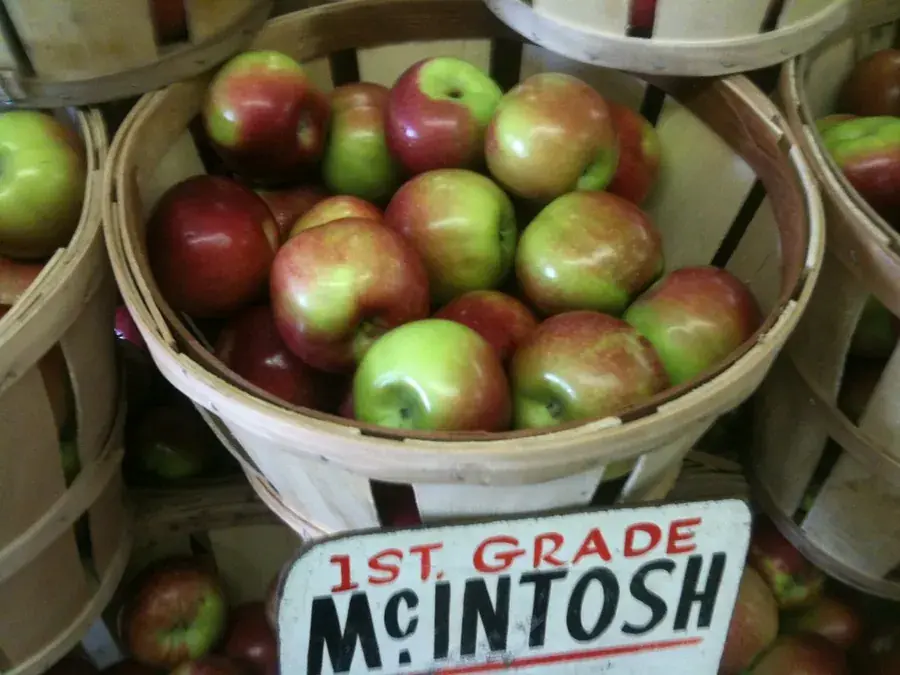
Photo JeepersMedia on Flickr · CC BY 2.0
Before you start
What keeps this jar safe
- Because 250 ml and 500 ml jars are processed only 5 minutes, they must be sterilized in boiling water for 10 minutes before filling. Quart jars get 10 minutes in the canner and skip the pre-boil.
- The cider and vinegar are part of the tested recipe; the vinegar sharpens and acidifies, so do not leave it out or swap it for water.
- Cook until it truly mounds — a thin butter weeps and was not what was tested.
- Headspace is a tight 6 mm (¼ inch).
This follows NCHFP: Apple Butter. Quantities, acid and times are theirs; do not scale the vegetables without scaling everything, and do not change the vinegar, lemon juice or processing time.
Ingredients
- 3.6 kg (8 lb) tasty apples — McIntosh, Golden Delicious, Cortland, Jonagold or a mix
- 500 ml (2 cups) apple cider (sweet, unfermented)
- 500 ml (2 cups) vinegar (5%) — cider vinegar is traditional
- 450 g (2¼ cups) white sugar
- 500 g (2¼ cups, packed) brown sugar
- 30 ml (2 tablespoons) ground cinnamon
- 15 ml (1 tablespoon) ground cloves
Processing
- Jars
- 250 ml (half-pint) or 500 ml (pint) · 1 L (quart) in brackets
- Headspace
- 6 mm (¼ inch)
- Time at 0–300 m (0–1,000 ft)
- 5 min
- Higher up
- 1 L jars: 10 min. 250/500 ml: 10 min at 300–1,800 m (1,001–6,000 ft), 15 min above 1,800 m. 1 L: 15 min at 300–1,800 m, 20 min above 1,800 m (6,000 ft).
Method
- 1
Wash the apples, pull the stems, quarter and core them — no need to peel. Put them in a large heavy pot with the cider and vinegar and cook slowly until soft.
- 2
Press the fruit through a food mill, colander or strainer to leave the skins behind. A child can turn the food-mill handle.
- 3
Return the pulp to the pot with both sugars and the spices. Cook slowly, stirring often and more often as it thickens — it spits, so a long spoon and a splatter screen help. Expect 1–2 hours.
- 4
Test for doneness: lift a spoonful, hold it away from the steam 2 minutes, and see if it stays mounded on the spoon. Or spoon a little onto a plate — when no ring of liquid separates around the edge, it is ready.
- 5
Sterilize the jars while the butter finishes, because the process is under 10 minutes: boil the empty 250 ml or 500 ml jars, covered by water, 10 minutes (one minute more per 300 m above sea level) and keep them in the hot water. Wash the lids.
- 6
Fill the hot jars with boiling-hot butter, leaving 6 mm (¼ inch) headspace. Free bubbles, wipe the rims, centre the lids and screw the bands on fingertip-tight.
- 7
Lower into the canner with at least 5 cm (2 inches) of water over the lids, bring to a full rolling boil and process 250 ml or 500 ml jars 5 minutes at 0–300 m (1 L jars, which need not be sterilized: 10 minutes).
- 8
Turn off the heat, uncover, wait 5 minutes and lift the jars onto a towel. Leave 12–24 hours, check the seals and store.
Keeps: 12–18 months in a cool dark cupboard. Refrigerate after opening and use within a month.
Variations: A slow cooker on low, lid ajar, will do the long reduction overnight — not part of the tested method, so the mound test still decides doneness, and the butter comes to a full boil on the stove before filling the jars. The NCHFP also publishes a reduced-sugar apple butter with its own method.
Tested source: NCHFP: Apple Butter. Checked October 2026. If a jar did not seal, refrigerate it and use it within a few days. Never taste anything from a jar that is bulging, leaking, spurting or smells wrong — when in doubt, throw it out without tasting.
The crop
Apples: when to pick, how to store, what else to make →
Apples are high-acid, so everything you make from them water-baths without added acid: applesauce (sugar optional, hot pack, 15 minutes for 500 ml jars and 20 for litres at 0–300 m), apple butter (the tested recipe cooks apples down with cider, vinegar and sugar until a spoonful mounds without weeping, then 5 minutes for 500 ml jars), and sliced apples in very light syrup, juice or water (hot pack, 20 minutes). Slices freeze well for pies if you hold them in water with ascorbic acid first or steam-blanch them 2 minutes, then tray-freeze; the texture is for cooking, not eating. Dried rings are the children’s favourite: dip 5 mm slices in ascorbic-acid water, dry at 60 °C (140 °F) for about six hours until leathery with no damp centre, and condition them in a loose jar for a week before sealing. Fresh-pressed cider is unpasteurized: bring it to a boil before giving it to children, older people or anyone with a weakened immune system — freezing keeps the flavour but does not make it safe. What does not work: canning pie filling thickened with flour or cornstarch (only Clear Jel, in a tested recipe, is safe — thickeners stop the heat reaching the centre of the jar), raw-packing apple slices (they float and brown), and putting windfalls in jars or juice — extension food-safety services say drops have been in contact with soil and animals, are often bruised enough for moulds to start inside, and are less acidic than picked fruit, and the mould toxin patulin survives cooking. Windfalls that are sound go in a pie this week; the rest go to the compost.
More for apples
- Water-bath canning
Applesauce, water-bath canned
Sound apples — seconds are fine once the bruises are cut away — into the easiest jar of the year; no added acid needed, and sugar optional.
About 7 × 1 L (quart) jars from 9.5 kg (21 lb) of apples; 6.1 kg (13½ lb) fills 9 × 500 ml (pint) jars · 1¼ hours active
The recipe → - Drying
Dried apple rings
Leathery, chewy, lunchbox-sized apple: the drying recipe to start with, because it forgives almost everything except skipping the dip.
About 500 g of dried rings from 5 kg of fresh apples (they lose about nine-tenths of their weight) · 40 minutes active
The recipe → - Drying
Fruit leather, apple or berry
Purée poured thin and dried into a roll-up: the snack children ask for by name, made from the fruit that was too soft for anything else.
500 ml (2 cups) of purée makes one 33 × 38 cm (13 × 15 inch) sheet, about 8 roll-ups · 20 minutes active
The recipe →